The Real Cost of Owning Rural Property in Virginia
The real cost of owning rural property in Virginia goes far beyond the purchase price, and it can vary significantly depending on where you buy. While some areas of the state offer relatively affordable properties, others come with higher ongoing expenses that are not always obvious at first glance.
This page covers the running costs. For what the land itself is worth county by county, and the checks that come before you ever get to a tax bill, see our guide to buying rural land in Virginia.
Understanding the real cost of owning rural property in Virginia is essential before making any decision. Unlike states where costs are more predictable, Virginia presents a mix of factors that can make ownership either more affordable or more expensive depending on the region. In this guide, you’ll learn how taxes, utilities, maintenance, and location-specific factors influence the true cost of owning rural property.
Looking for real opportunities instead of just information? Start here:
Property Taxes in Virginia
How Property Taxes Work in Virginia
Property taxes in Virginia are determined at the local level, which means rates can vary depending on the county or municipality where the property is located. Each jurisdiction sets its own tax rate based on local budgets and funding needs, which creates noticeable differences across the state.
Because of this variability, two similar rural properties in different counties can have very different tax obligations. Buyers should always check the specific tax rate for the exact location they are considering, rather than relying on statewide averages.
Average Property Tax Rates
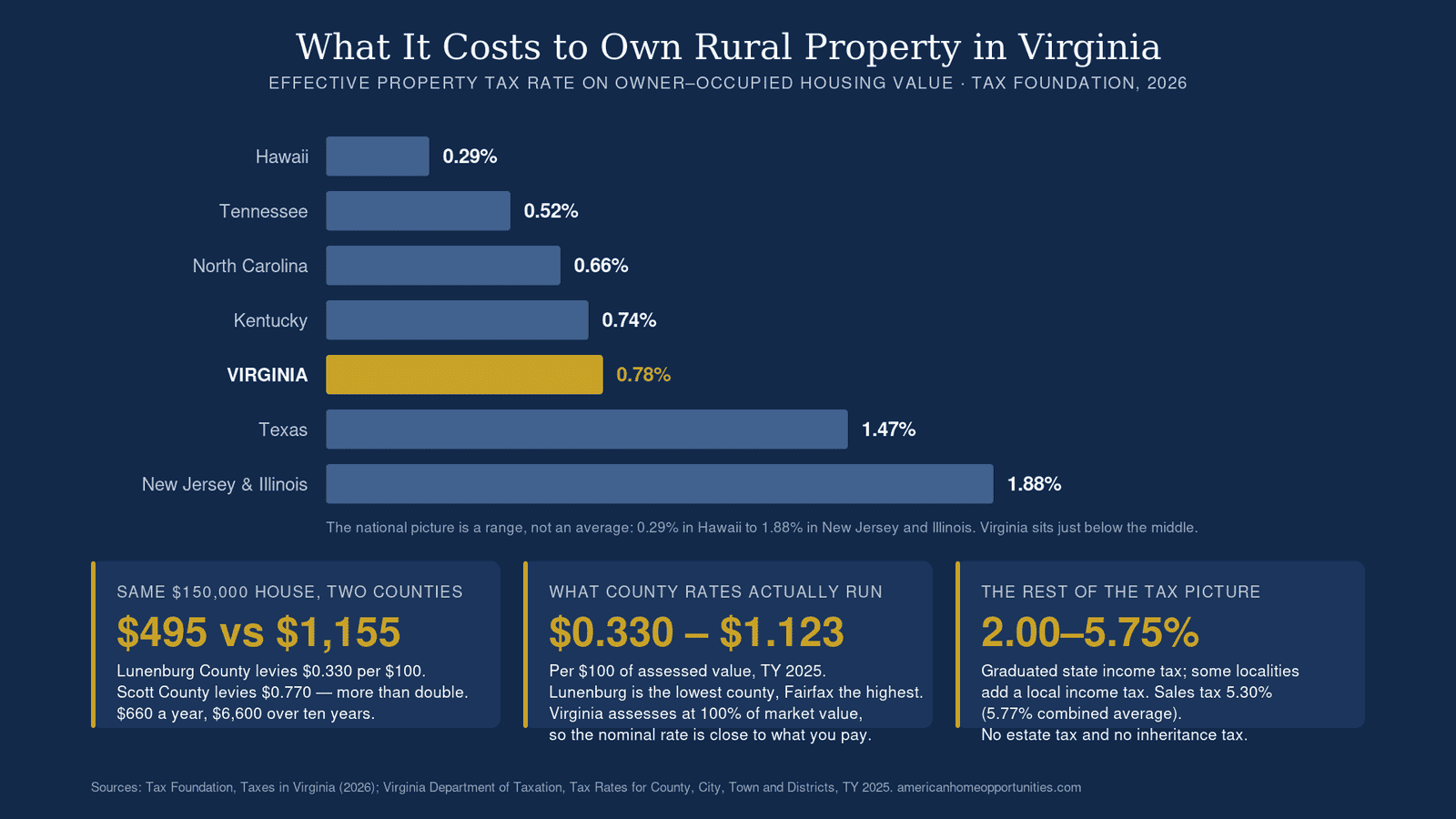
Virginia’s effective property tax rate on owner-occupied housing is 0.78%, according to the Tax Foundation. County rates vary far more than that average suggests — from $0.330 per $100 of assessed value in Lunenburg County to $1.123 in Fairfax — and Virginia assesses at 100% of fair market value, so the nominal county rate is close to what you actually pay. This is generally lower than in states like Pennsylvania, where tax rates are often higher, but still represents an important ongoing cost that must be factored into the total investment.
However, these averages can be misleading if taken out of context. Some counties may have higher or lower rates depending on local conditions, which reinforces the importance of researching each area individually. For updated data and comparisons, you can review the Virginia property tax rates data.
Utilities and Infrastructure Costs
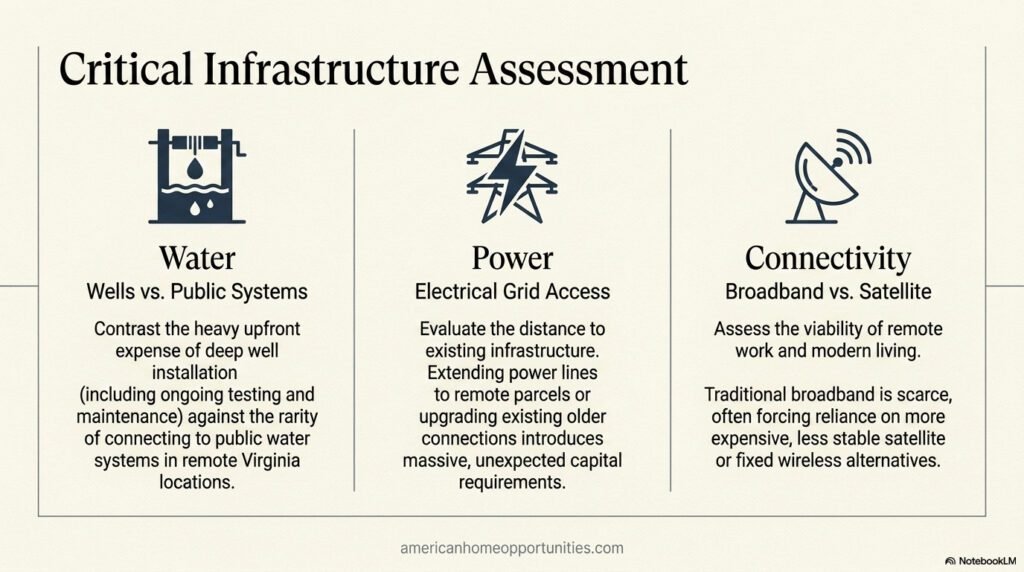
Utilities and infrastructure are a critical part of the real cost of owning rural property in Virginia, especially in areas where access to services is not always guaranteed. Depending on the location, these costs can vary significantly and may require upfront investment.
Electricity Access
In many rural areas, properties may already be connected to the electrical grid, but this is not always the case. Extending power lines or upgrading existing connections can add unexpected costs, particularly for properties located further away from established infrastructure.
Buyers should confirm whether electricity is already available and, if not, request estimates for connection costs before making a purchase.
Water: Wells vs Public Systems
Rural properties in Virginia often rely on private wells rather than public water systems. Installing a well can involve a significant upfront expense, depending on depth and location, and ongoing maintenance and water testing should also be considered.
While public water systems may be available in some areas, they are less common in more remote locations, making it important to understand how water access will impact both cost and usability.
Internet and Connectivity
Internet access can be limited in rural Virginia, with some areas relying on satellite or fixed wireless connections instead of traditional broadband. These alternatives can be more expensive and less reliable, which may be a concern for buyers who work remotely or depend on stable connectivity.
Evaluating internet availability before purchasing is essential, as it can directly affect both lifestyle and long-term value.
Heating and Energy Costs
Moderate Climate Impact
Compared to states like Pennsylvania, Virginia generally experiences milder winters, which can help reduce overall heating costs. While heating is still necessary during colder months, the demand is typically lower, resulting in more moderate energy expenses.
However, costs can still vary depending on the region, particularly in higher elevation areas where temperatures may drop more significantly.
Energy Efficiency of Older Homes
Many rural properties in Virginia are older homes that were not built with modern energy efficiency standards. Poor insulation, outdated windows, and aging HVAC systems can increase energy consumption and lead to higher utility bills.
Buyers should evaluate the condition of the heating system and overall energy efficiency of the property. While upgrades can improve long-term affordability, they also represent an additional cost that should be factored into the total investment.
Maintenance Costs
Maintenance is an ongoing cost that can significantly impact the real cost of owning rural property in Virginia, especially for larger properties or older homes.
Land Maintenance
Rural properties often include larger plots of land that require regular upkeep. This may involve mowing, clearing brush, trimming trees, and managing overgrowth. Depending on the size of the property, maintenance can require equipment, time, or professional services, all of which add to long-term costs.
Repairs and Upkeep
Many rural homes in Virginia are older and may require continuous repairs. Roofing, plumbing, electrical systems, and structural elements can all need attention over time. While the initial purchase price may be low, ongoing repair costs can significantly increase the total investment.
Seasonal Factors
Virginia’s climate can also influence maintenance costs. Humidity, rainfall, and seasonal temperature changes can contribute to issues such as mold, wood damage, and wear on exterior structures. These factors should be considered when evaluating long-term property ownership.
Hidden Costs Most Buyers Overlook
Access and Road Maintenance
Some rural properties are located on private roads or long driveways that require regular maintenance. Gravel roads, in particular, may need grading and repairs over time, especially after heavy rain or seasonal changes.
Insurance Costs
Insurance is another factor that can vary depending on location, property condition, and risk exposure. Rural properties may have higher premiums due to distance from fire services or environmental risks. Buyers should always obtain insurance quotes before purchasing to understand this ongoing expense. For general benchmarks and comparisons, you can review the average rural property insurance costs.
Distance to Services
Distance to essential services such as hospitals, grocery stores, and emergency services is often underestimated. While rural living offers privacy, it can also introduce indirect costs related to travel time, fuel, and accessibility, which may affect both daily life and long-term value.
If you’re still exploring where to buy, make sure to read our complete guide on cheap rural property in Virginia, where we break down the best areas and strategies.
What Most Buyers Underestimate in Virginia
One of the most important factors to understand about rural property in Virginia is how much costs can vary depending on location. Unlike some states where expenses are more predictable, Virginia presents a wide range of scenarios based on regional differences.
Buyers often underestimate how location impacts everything from taxes and utilities to maintenance and long-term value. What appears to be a good deal in one area may come with higher hidden costs in another.
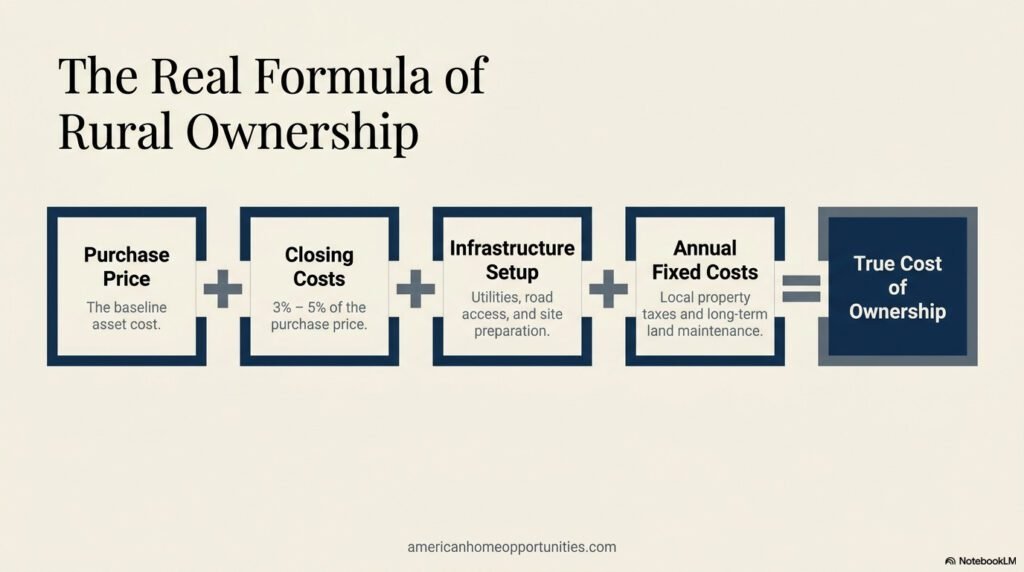
Another common mistake is focusing only on the purchase price without fully evaluating ongoing expenses. In reality, the total cost of ownership is determined by a combination of factors, including infrastructure, property condition, and access to services.
Understanding these variables is essential for making an informed decision and avoiding unexpected financial pressure after purchase.
Total Cost Example
To better understand the real cost of owning rural property in Virginia, let’s look at a realistic example based on a typical low-cost purchase.
Imagine you buy a rural property for $90,000. At first glance, this may seem like a solid deal, but the total cost goes beyond the initial price.
This is what you actually pay:
- Purchase price: $90,000
- Closing costs (3%–5%): $2,700 – $4,500
- Annual property taxes (0.8% average): ~$720 per year
- Utilities setup (if needed): $3,000 – $10,000
- Ongoing maintenance and upkeep: $1,500 – $4,000 annually
This brings your estimated total initial investment to:
👉 $95,700 – $104,500
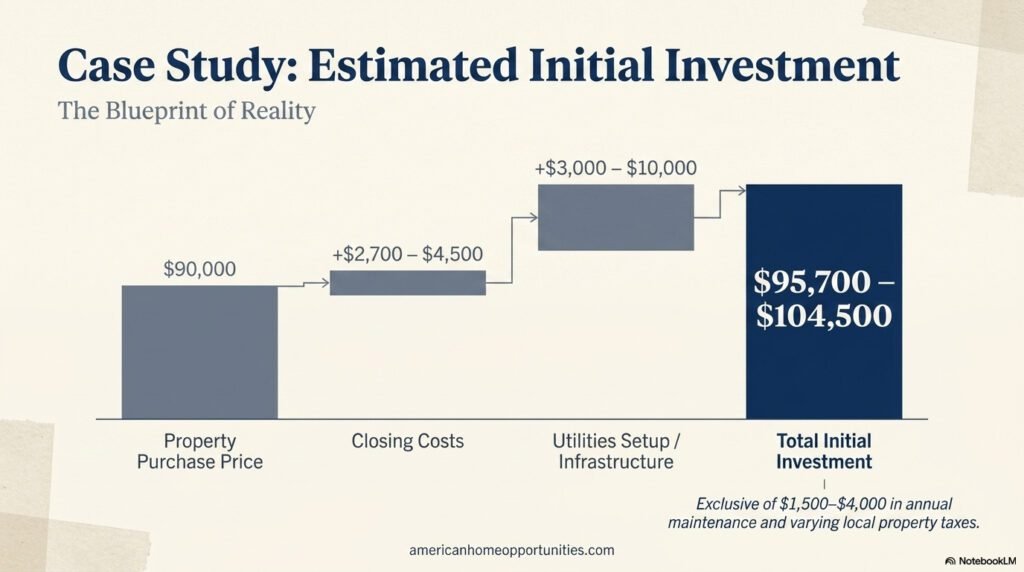
And your ongoing yearly costs will depend heavily on location, property condition, and infrastructure.
If you want to compare these costs with real listings, take a look at our breakdown of 10 dirt cheap farmhouses in Virginia with land, where we analyze real properties and prices.
Is Rural Property in Virginia Worth It
Rural property in Virginia can be a strong opportunity, but its value depends heavily on where you buy. While some areas offer genuine affordability and lower ongoing costs, others may appear cheap at first but come with higher expenses over time.
The key difference in Virginia is variability. Costs such as taxes, utilities, and maintenance can change significantly from one region to another, which means buyers need to evaluate each property carefully rather than relying on general assumptions.
For buyers who take a strategic approach, Virginia can offer excellent opportunities, especially in less competitive regions where price and value are better aligned. The most successful purchases are those where affordability, location, and long-term costs are all considered together.
Ready to explore real opportunities? Browse all available cheap rural properties in Virginia here.
Disclaimer
This article is for informational purposes only and does not constitute financial, legal, or real estate advice. Property prices, taxes, regulations, and market conditions may vary by location and can change over time. Buyers should conduct their own due diligence and consult with licensed real estate professionals, attorneys, or financial advisors before making any purchase decisions.