How to Find Cheap Rural Property in Virginia (Complete Guide)
Cheap rural property in Virginia may seem hard to find at first, especially when the state is often associated with high prices and strong demand in areas near Washington, D.C. However, the reality is more nuanced. While some parts of Virginia are among the most expensive in the country, there are still regions where affordable rural properties are available for buyers who know where to look.
For the full county-by-county picture — farmland values from the federal census, county tax rates and the traps specific to each region — see our main guide to buying rural land in Virginia.
Understanding where to find cheap rural property in Virginia is the key. The state’s pricing varies dramatically depending on location, and many of the most affordable opportunities are hidden in less competitive regions. In this guide, you’ll discover where those areas are, why prices differ so much, and how to identify real opportunities before other buyers do.
Looking for real opportunities instead of just information? Start here:
Why Is Property Expensive in Virginia (and Where It’s Not)
Northern Virginia and High Demand Areas
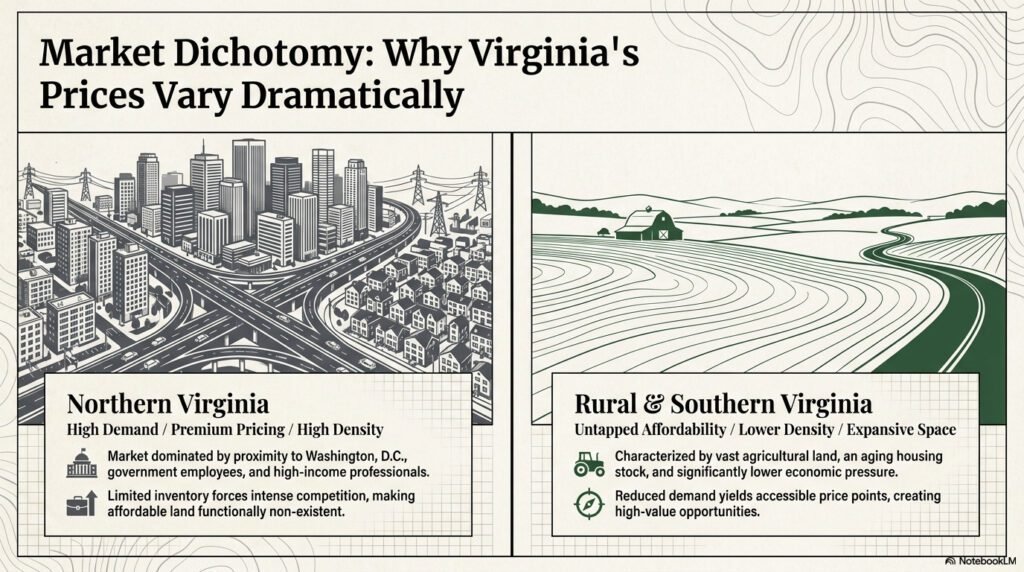
One of the main reasons Virginia is perceived as an expensive state is the influence of Northern Virginia. Areas close to Washington, D.C. attract a large number of professionals, government employees, and high-income buyers, which drives property prices significantly higher than the national average.
This strong demand, combined with limited inventory in some areas, creates a highly competitive market where even smaller properties can reach premium prices. As a result, buyers who only look at this region may assume that affordable rural property in Virginia simply doesn’t exist.
Rural and Southern Regions with Lower Prices
Outside of Northern Virginia, the picture changes considerably. Many rural and southern regions of the state offer significantly lower property prices, especially in areas with lower population density and less economic pressure.
These regions often include small towns, agricultural land, and older housing stock, which can create opportunities for buyers seeking affordability and space. While demand is lower, so are prices, making it possible to find rural properties at much more accessible price points. For broader context on how population and housing patterns vary across the state, you can review the Virginia population and housing trends.
Best Areas to Find Cheap Rural Property in Virginia
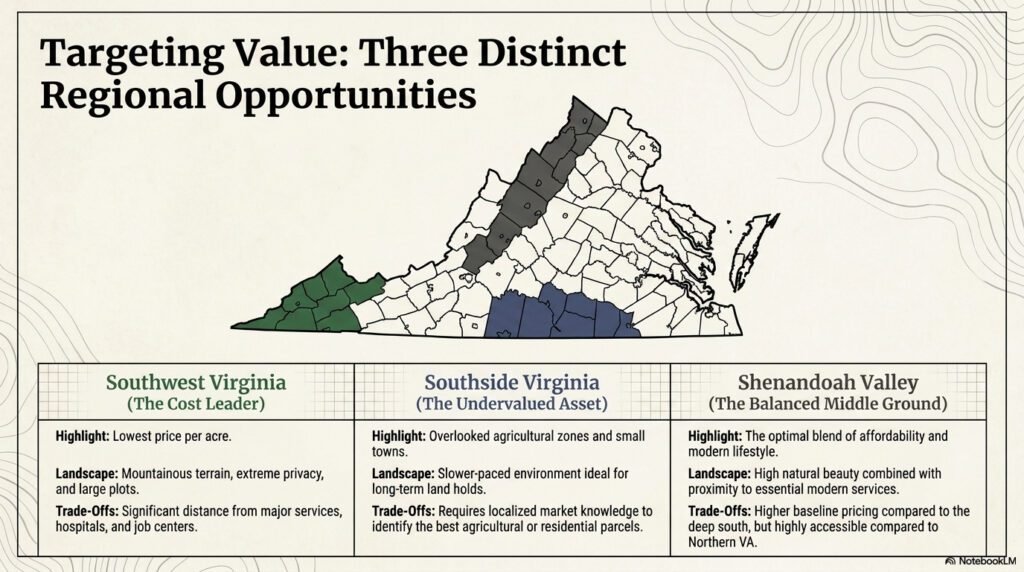
When searching for cheap rural property in Virginia, location is everything. While some regions remain expensive, others offer significantly lower prices and better opportunities for buyers willing to explore less competitive areas.
Southwest Virginia (Lowest Prices)
Southwest Virginia is one of the most affordable regions in the state, particularly in mountainous areas where demand is lower and population density is limited. Buyers can often find large plots of land and older homes at prices well below the state average.
However, these lower prices often come with trade-offs, including distance from major services and fewer job opportunities. For buyers focused on space, privacy, and long-term affordability, this region can offer some of the best value in Virginia.
Southside Virginia (Undervalued Areas)
Southside Virginia is another area where affordable rural property is still widely available. This region is characterized by small towns, agricultural land, and a slower pace of life, which contributes to lower property values.
Because demand is lower, buyers can find opportunities that are often overlooked by larger markets. These undervalued areas can be especially appealing for those looking to invest in rural property or relocate to a quieter environment.
Shenandoah Valley (Balanced Option)
The Shenandoah Valley offers a more balanced option between affordability and lifestyle. While prices may be higher than in more remote regions, this area remains relatively accessible compared to Northern Virginia and offers strong appeal due to its natural beauty and proximity to services.
For buyers who want rural living without sacrificing convenience, the Shenandoah Valley can be an attractive middle ground.
What Types of Cheap Properties Are Available
When exploring cheap rural property in Virginia, buyers will find a variety of property types depending on location, condition, and price point.
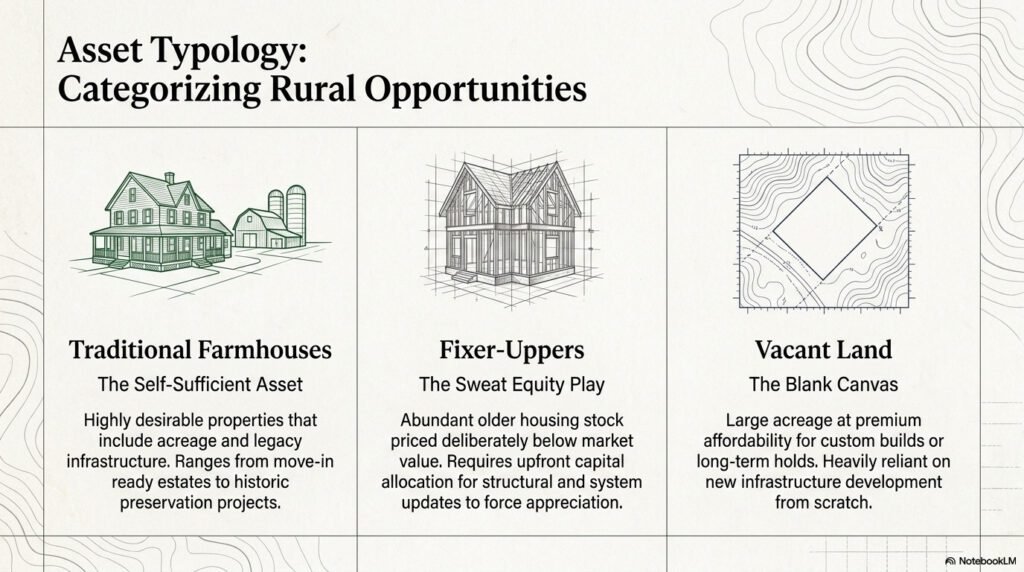
Farmhouses and Country Homes
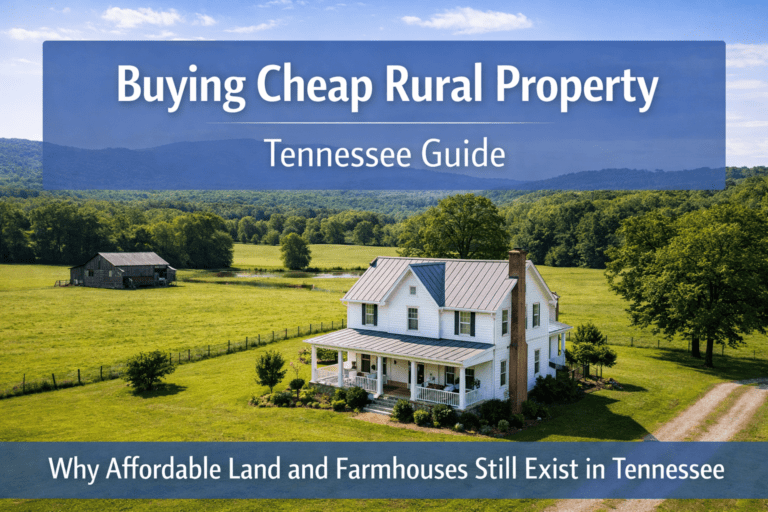
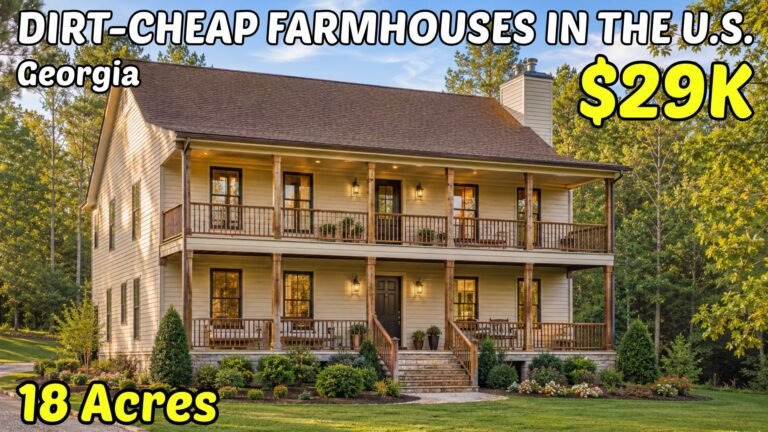
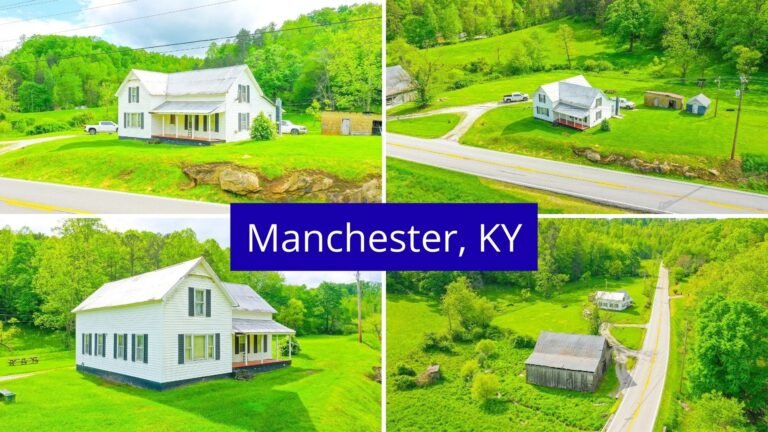
Traditional farmhouses and country homes are among the most desirable rural properties in Virginia. These often include land, outbuildings, and a setting that supports a slower, more self-sufficient lifestyle. Some are move-in ready, while others may require updates or renovation.
Fixer-Uppers
Fixer-uppers are very common in rural Virginia, particularly in areas with older housing stock. These properties are often priced lower due to their condition, creating opportunities for buyers willing to invest in repairs and improvements. However, renovation costs should always be carefully evaluated before purchasing.
Vacant Land
Vacant land is another affordable option, especially in less populated regions. Buyers interested in building a custom home or investing long-term may find attractive prices on larger parcels. However, it’s important to consider additional costs such as utilities, access, and zoning restrictions before making a decision.
If you want to see real examples currently available, take a look at our breakdown of 10 dirt cheap farmhouses in Virginia with land, where we analyze actual listings and highlight real opportunities.
What Buyers Should Know Before Buying in Virginia
Before buying cheap rural property in Virginia, it’s important to understand that regulations, infrastructure, and location-specific factors can vary significantly across the state. What works in one county may not apply in another, so doing proper research is essential.
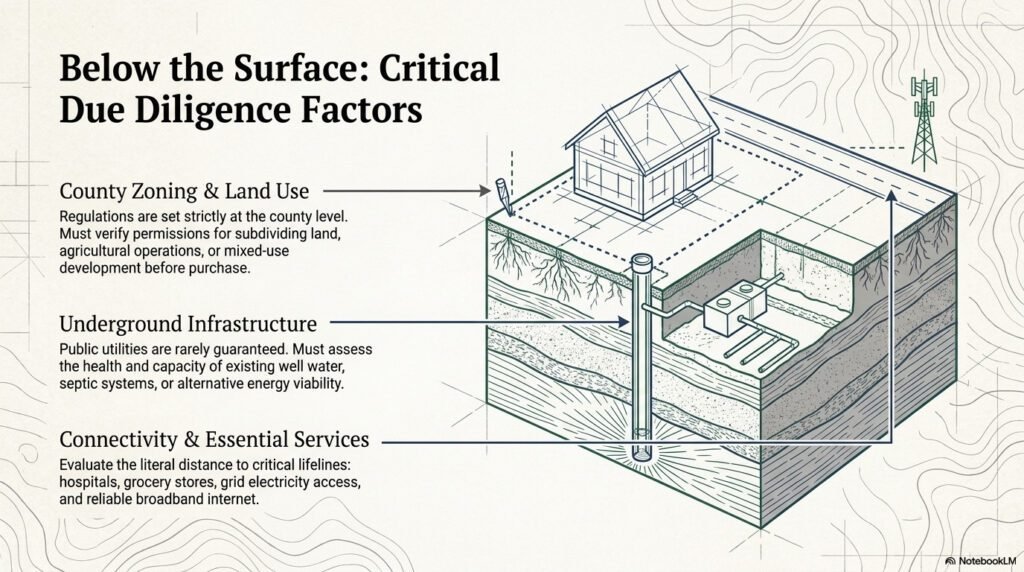
Zoning and Land Use Regulations
Zoning and land use regulations in Virginia are set at the county level, which means rules can vary widely depending on where the property is located. Some areas may allow agricultural, residential, or mixed-use development, while others may have restrictions on building, subdividing land, or operating certain types of businesses.
Understanding these regulations is critical before making a purchase, especially if you plan to build, renovate, or use the land for specific purposes. For official guidelines and detailed information, you can review the Virginia zoning and land use regulations.
Access to Utilities
In many rural areas of Virginia, access to utilities such as water, electricity, and internet is not always guaranteed. Properties may rely on wells, septic systems, or alternative energy sources, which can add to both upfront and ongoing costs.
Buyers should always confirm what infrastructure is already in place and what will need to be installed or upgraded. This is especially important in more remote areas where connecting to public utilities may be expensive or impractical.
Distance to Services
Rural properties often come with longer distances to essential services such as hospitals, grocery stores, and schools. While this may be part of the appeal for some buyers, it can also affect daily convenience and long-term value.
Evaluating proximity to key services is an important step in determining whether a property fits your lifestyle and long-term plans.
Common Mistakes When Buying Rural Property in Virginia
Assuming All Areas Are Affordable
One of the most common mistakes is assuming that all rural areas in Virginia offer similar levels of affordability. In reality, prices can vary dramatically depending on location, with some regions remaining significantly more expensive than others.
Buyers who don’t research specific areas may overlook better opportunities or end up paying more than necessary.
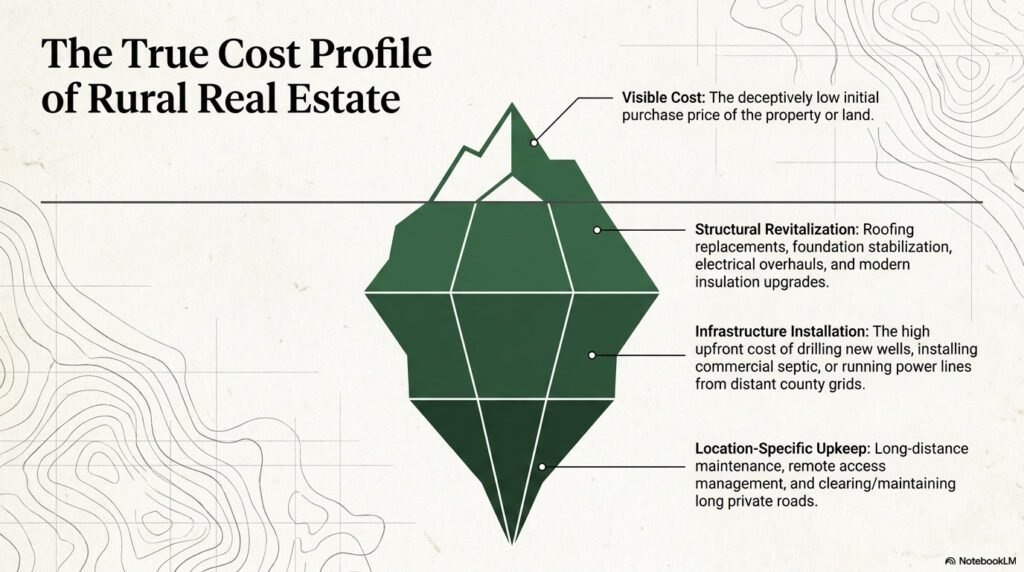
Underestimating Renovation Costs
Many rural properties, especially older homes, require repairs or updates. Buyers often focus on the low purchase price without fully considering the cost of renovations, which can quickly add up.
Structural repairs, roofing, electrical systems, and insulation upgrades are just a few of the potential expenses that should be factored into the total investment.
Ignoring Location-Specific Costs
Costs such as utilities, maintenance, and access can vary depending on the region. For example, a property in a more remote area may require additional spending on infrastructure, while properties in more accessible regions may have higher purchase prices.
Understanding these location-specific factors is key to making a smart and informed decision.
How to Find the Best Deals
Finding cheap rural property in Virginia is not just about browsing listings—it’s about knowing how to identify real opportunities before other buyers do.
Use Real Estate Platforms
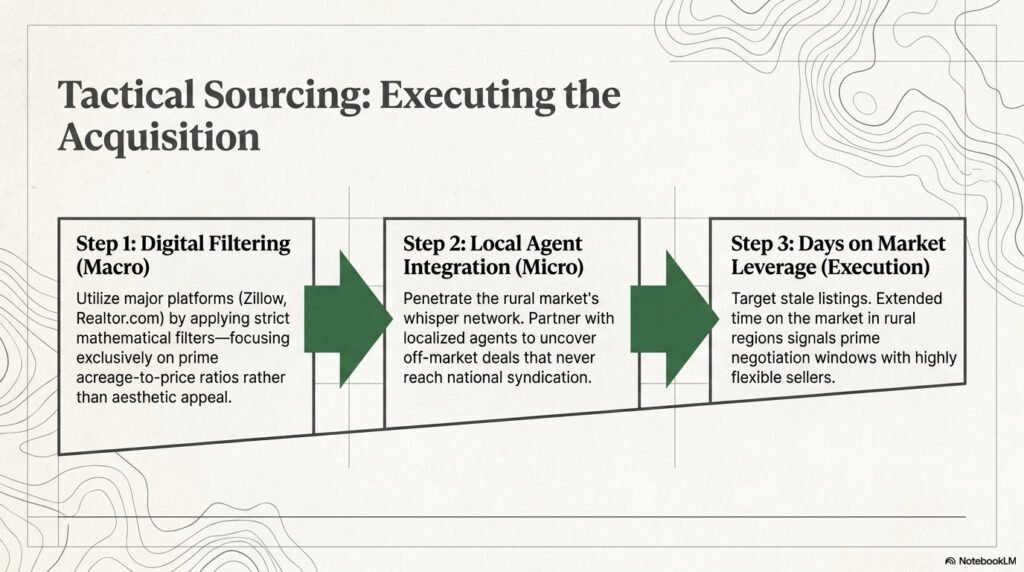
Websites like Zillow, Homes.com, and Realtor.com are the most common starting points for finding affordable rural property. These platforms allow you to filter by price, acreage, and property type, making it easier to compare listings and spot undervalued opportunities across different regions.
Work With Local Agents
Local real estate agents can provide valuable insights into specific areas, especially in rural markets where not all properties receive national exposure. They may also have access to off-market deals or upcoming listings that haven’t yet been widely advertised.
Look for Long Days on Market
Properties that have been on the market for extended periods often present the best negotiation opportunities. Sellers may be more flexible on price, particularly if the property requires repairs or is located in a less competitive area.
What Buyers Should Check Before Making an Offer
Before making an offer on cheap rural property in Virginia, it’s essential to evaluate key factors that can affect both the total cost and long-term value of the investment.
Property Condition
Older homes may have hidden issues that are not immediately visible. Checking the roof, foundation, and overall structure can help avoid unexpected repair costs after purchase.
Infrastructure and Access
Buyers should verify access to essential infrastructure, including electricity, water, and road access. Some properties may require additional investment to make them fully usable.
Long-Term Value Potential
Not all cheap properties offer the same long-term value. Location, demand, and access to services all influence whether a property will hold or increase its value over time.
Before making a final decision, it’s essential to understand the financial side of ownership. Make sure to read our complete guide on real cost of owning rural property in Virginia, where we break down taxes, utilities, and hidden expenses.
Is Cheap Rural Property in Virginia a Good Investment
Cheap rural property in Virginia can be a strong opportunity, but it depends heavily on where you buy. While some regions offer genuine affordability and long-term potential, others may appear cheap due to location-specific challenges or lower demand.
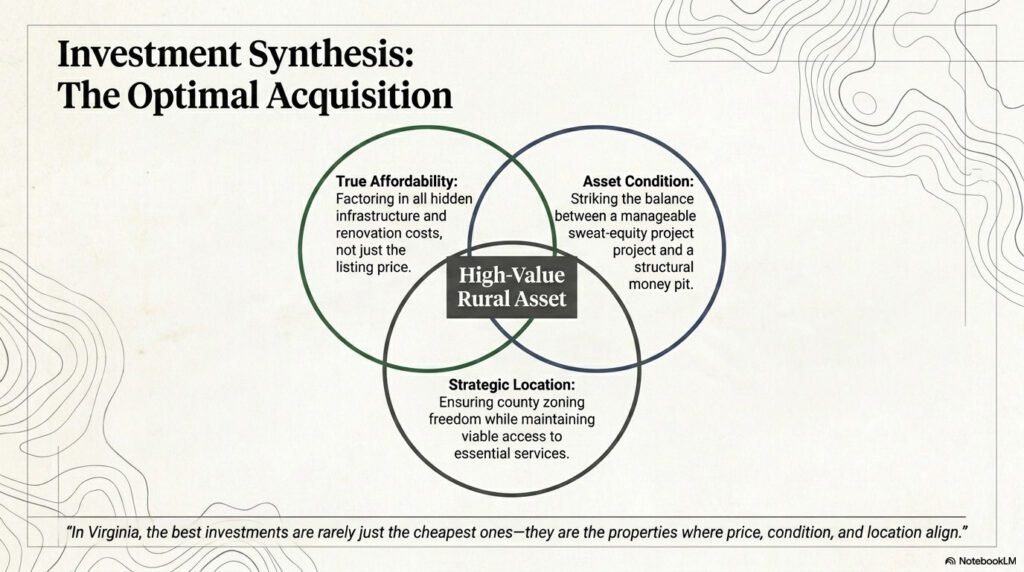
Understanding these differences is key. Buyers who focus only on price may miss important factors such as access, infrastructure, and future value. On the other hand, those who carefully evaluate both cost and location can find properties that offer a balance between affordability and opportunity.
In Virginia, the best investments are rarely just the cheapest ones—they are the properties where price, condition, and location align.
Ready to explore real opportunities? Browse all available cheap rural properties in Virginia here.
Disclaimer
This article is for informational purposes only and does not constitute financial, legal, or real estate advice. Property prices, taxes, regulations, and market conditions may vary by location and can change over time. Buyers should conduct their own due diligence and consult with licensed real estate professionals, attorneys, or financial advisors before making any purchase decisions.