Property Taxes in Tennessee: What Buyers Should Know Before Buying Property
For many buyers considering real estate in the southern United States, understanding property taxes in Tennessee is an important part of evaluating the true cost of ownership. While home prices and land values often attract attention first, taxes, closing costs, and other expenses can significantly influence the long-term affordability of a property.
Property taxes are one piece of the picture. For the rest — land values by region, closing costs and what to inspect before you buy — see our full guide to buying rural property in Tennessee.
Fortunately, Tennessee has developed a reputation as one of the more tax-friendly states for property owners. Compared with many other parts of the country, the state maintains relatively modest property tax rates and a tax structure that is generally considered favorable for homeowners, retirees, and rural property buyers.
According to data from the Tax Foundation, Tennessee consistently ranks among the states with lower effective property tax rates in the United States. This has helped make the state increasingly attractive for buyers searching for land, country homes, and smaller rural properties.
Many buyers who start researching taxes eventually begin exploring the broader market for cheap rural property in Tennessee.
At the same time, understanding property taxes in Tennessee requires looking beyond the basic tax rate. Buyers should also consider county assessments, closing costs, insurance requirements, and other expenses that may arise when purchasing rural property.
In this guide, we’ll explain how property taxes work in Tennessee, what buyers can typically expect to pay, and which additional costs should be considered before purchasing a home or rural land in the state.
How Property Taxes in Tennessee Work
Understanding how property taxes in Tennessee are calculated can help buyers better estimate the long-term cost of owning a home or rural property in the state. While the system is relatively straightforward, it differs in several ways from the property tax structures used in other parts of the United States.
In Tennessee, property taxes are primarily administered at the county level, which means tax rates and assessments can vary depending on where the property is located. Each county government determines the tax rate needed to fund local services such as schools, infrastructure, and public safety.
As a result, the amount a property owner pays in taxes will depend on both the assessed value of the property and the local tax rate established by the county.
Who Sets Property Taxes in Tennessee
Unlike some states where property taxes are administered centrally, property taxes in Tennessee are largely determined by local governments.
County commissions typically establish the tax rate required to fund public services within their jurisdiction. These rates are then applied to the assessed value of each property within the county.
This means two properties with the same market value could pay slightly different amounts in property taxes depending on the county in which they are located.
For buyers considering buying property Tennessee, reviewing county tax rates can provide a clearer picture of potential long-term costs before completing a purchase.
How Property Value Is Assessed
Before taxes are calculated, the property must first be assigned an assessed value by the county property assessor.
In Tennessee, residential properties are typically assessed at 25% of their market value. This assessed value is then multiplied by the county tax rate to determine the annual property tax owed.
For example, if a rural home has a market value of $200,000, the assessed value used for tax purposes would generally be around $50,000. The county tax rate is then applied to this assessed value to determine the final tax bill.
This assessment system helps explain why property taxes in Tennessee tend to remain relatively moderate compared with many other states.
How Often Property Is Reassessed
Property values are periodically reassessed by county governments to reflect changes in market conditions.
In Tennessee, reassessments typically occur every four to six years, depending on the county. During this process, property values may be adjusted upward or downward based on changes in local real estate markets.
Reassessments are designed to ensure that property taxes remain relatively fair and consistent across similar properties within the same county.
For buyers exploring rural homes or land in the state, understanding how reassessments work can help avoid surprises and provide a clearer picture of future tax obligations.
Average Property Tax Rates in Tennessee
One of the main reasons buyers continue exploring real estate opportunities in the state is that property taxes in Tennessee remain relatively low compared with many other parts of the United States. While tax amounts vary by county and property value, Tennessee consistently ranks among the states with lower effective property tax burdens.
This favorable tax environment is one of the factors that makes buying property Tennessee appealing for retirees, rural buyers, and families relocating from higher-tax states.
According to national comparisons published by the Tax Foundation, Tennessee’s average effective property tax rate is significantly lower than the national average. Lower tax rates can make long-term property ownership more affordable, particularly for buyers purchasing rural homes or land.
Average Effective Property Tax Rate
Across the state, the average effective property tax rate is typically around 0.5% to 0.7% of a property’s market value, although the exact figure varies depending on the county and local tax rates.
Compared with many northeastern and midwestern states where effective property tax rates can exceed 1.5% or even 2%, property taxes in Tennessee are considered relatively moderate.
This difference can translate into substantial long-term savings for homeowners, particularly for buyers purchasing larger rural properties or homes with acreage.
County Differences Across Tennessee
Although Tennessee maintains relatively low property taxes overall, individual tax bills can vary depending on the county in which the property is located.
Counties with larger populations or more developed infrastructure may have slightly higher tax rates because they must fund additional services such as schools, roads, and public safety.
On the other hand, many rural counties maintain lower tax rates due to smaller populations and lower public spending requirements.
For buyers exploring rural property Tennessee, this means that researching county tax rates before purchasing a property can provide a more accurate estimate of long-term ownership costs.
Example Property Tax Calculation
To better understand how property taxes in Tennessee work in practice, consider a simplified example.
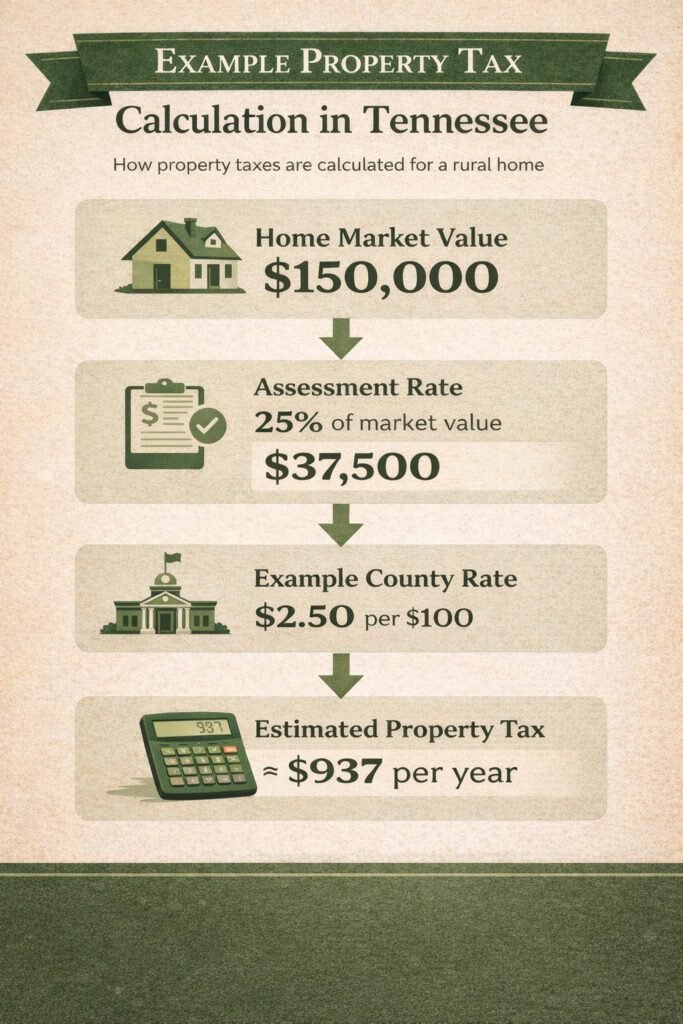
Suppose a buyer purchases a rural home with a market value of $150,000.
Because residential property in Tennessee is typically assessed at 25% of market value, the assessed value would be approximately $37,500.
If the county property tax rate were $2.50 per $100 of assessed value, the annual property tax would be calculated as follows:
- Assessed value: $37,500
- Tax rate: $2.50 per $100
- Annual property tax: approximately $937.50 per year
This simplified example illustrates why property taxes in Tennessee are often considered relatively affordable compared with many other states.
Closing Costs When Buying Property in Tennessee
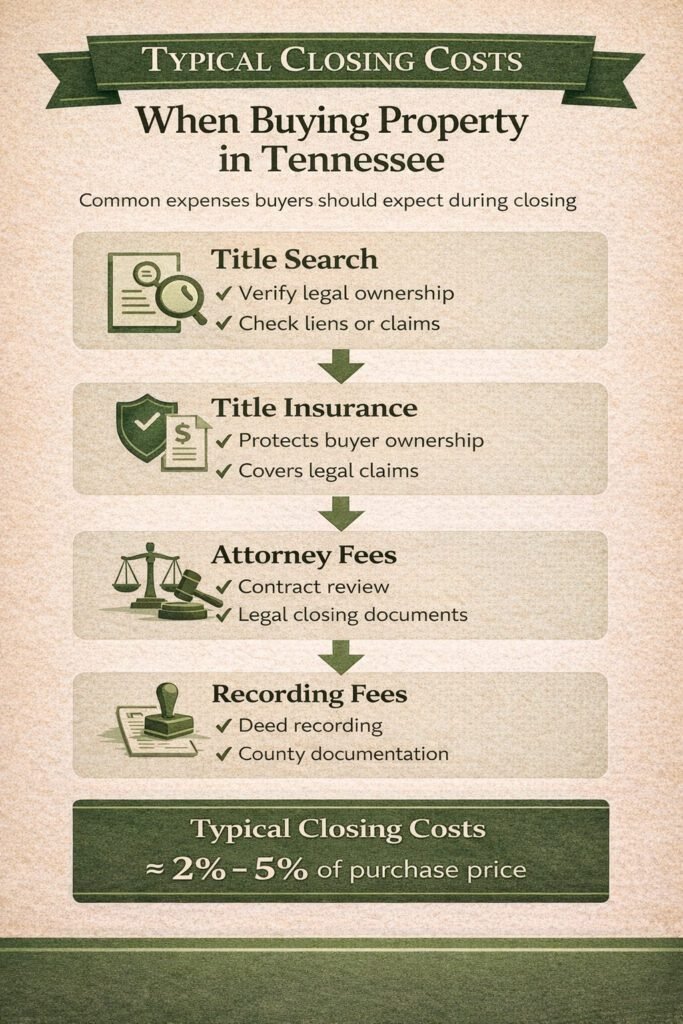
While property taxes in Tennessee are often relatively low compared with other states, buyers should also consider the closing costs associated with purchasing property. These expenses are typically paid at the time of purchase and can add several thousand dollars to the total cost of acquiring a home or rural property.
Closing costs vary depending on the purchase price, the type of property, and the services required to complete the transaction. However, buyers in Tennessee generally encounter a similar group of standard expenses during the closing process.
Understanding these costs in advance can help buyers plan their budgets more accurately when buying property Tennessee, especially when purchasing rural homes or land.
Title Search and Title Insurance
One of the first steps in a real estate transaction is verifying that the property has a clear legal title. A title search examines public records to confirm that the seller legally owns the property and that there are no unresolved liens, disputes, or ownership issues attached to the land.
Title insurance is often purchased at closing to protect the buyer and lender against potential legal claims related to the property’s ownership history.
Although costs can vary depending on the purchase price and provider, title-related services typically represent a significant portion of the total closing costs.
Attorney Fees
In many real estate transactions in Tennessee, an attorney may assist with reviewing contracts, preparing closing documents, and ensuring that the legal transfer of the property is completed correctly.
While attorney involvement can vary depending on the specific transaction, legal guidance is particularly common when purchasing rural land, farms, or properties with unique legal considerations such as easements or agricultural use.
Attorney fees for a property purchase typically depend on the complexity of the transaction but are generally considered a standard part of the closing process.
For buyers unfamiliar with rural property purchases, legal review can provide an additional layer of protection during the transaction.
Recording and Administrative Fees
Once a property sale is completed, the transaction must be officially recorded with the local county government. Recording the deed ensures that the new ownership is publicly documented and legally recognized.
These administrative costs usually include:
- deed recording fees
- document preparation costs
- administrative processing fees
Although these fees are usually relatively modest compared with other closing costs, they are still an essential part of the property transfer process.
Hidden Costs Buyers Should Expect
Although property taxes in Tennessee are generally moderate, buyers should also consider several additional costs that may arise after purchasing a home or rural property. These expenses are not always obvious during the initial property search, but they can influence the long-term affordability of owning land or a country home.
Understanding these potential costs in advance is particularly important when buying property Tennessee, especially in rural areas where infrastructure and services may differ from those found in urban neighborhoods.
Property Insurance
Property insurance is one of the most important ongoing expenses for homeowners. Lenders usually require insurance coverage when a property is financed, and even buyers paying cash often choose to insure their homes for protection against unexpected damage.
Insurance costs can vary depending on factors such as:
- the location of the property
- the age and condition of the home
- weather risks in the region
- the size and replacement value of the property
Homes located in rural areas may sometimes require additional coverage considerations, especially if they include barns, agricultural structures, or large amounts of land.
Maintenance and Rural Utilities
Maintaining rural property can involve different responsibilities compared with owning a home in a city or suburban neighborhood.
In many rural parts of Tennessee, properties rely on private wells, septic systems, and individual utility connections rather than municipal services. While this can provide greater independence, it may also require occasional maintenance or repairs.
Examples of potential expenses include:
- well pump maintenance
- septic system inspections or repairs
- driveway maintenance for long rural access roads
- fencing or land management
For buyers purchasing rural property Tennessee, these factors should be considered when estimating the true cost of ownership.
Land Surveys and Inspections
Before purchasing rural property, many buyers choose to obtain a professional land survey. A survey clearly defines property boundaries and confirms that the land description in the deed matches the physical property.
Surveys can be especially important when buying larger parcels of land, farmland, or wooded property where boundary lines may not be obvious.
In addition to surveys, buyers often request property inspections to evaluate the condition of structures, wells, septic systems, and other infrastructure on the property.
These inspections can help identify potential issues before completing the purchase and may prevent costly surprises later.
Why Tennessee Remains a Tax-Friendly State for Property Buyers
For many people considering relocation or rural home ownership, the overall tax environment plays a major role in deciding where to buy property. In this regard, Tennessee has developed a strong reputation as a tax-friendly state for homeowners and land buyers, particularly when compared with many higher-tax regions of the United States.
As discussed earlier in this guide, property taxes in Tennessee remain relatively moderate due to the state’s assessment system and generally lower county tax rates. When combined with other aspects of Tennessee’s tax structure, this can make long-term property ownership more affordable for many buyers.
No State Income Tax on Wages
One of the most attractive aspects of Tennessee’s tax system is that the state does not impose an income tax on wages. This can be a major advantage for both working households and retirees relocating from states with higher income tax burdens.
For property owners, this means that the overall tax load may remain lower even when property taxes and local expenses are taken into account.
Lower Property Taxes Compared to Other States
When compared nationally, property taxes in Tennessee tend to remain below the U.S. average. This difference becomes especially meaningful for buyers purchasing homes with land, farms, or larger rural properties.
Lower effective tax rates can translate into significant savings over the lifetime of property ownership, particularly when compared with states where annual property taxes represent a much larger percentage of home value.
For buyers researching buying property Tennessee, these relatively modest tax levels are one of the reasons the state continues to attract interest from people relocating from more expensive housing markets.
Appeal for Retirees and Rural Buyers
Because of its relatively favorable tax structure and moderate cost of living, Tennessee has become increasingly attractive to retirees, remote workers, and buyers seeking rural lifestyles.
Many buyers searching for land or country homes begin by exploring regions where the total cost of property ownership — including property taxes in Tennessee — remains manageable over time.
For those interested in exploring real examples of affordable rural homes and land opportunities across the state, you can also review our curated list of 10 dirt cheap farmhouses in Tennesse with land.
Explore Affordable Homes and Farmhouses in Tennessee
If you’re researching property taxes in Tennessee as part of your property search, the next step is exploring what types of homes and rural properties are currently available across the state.
Many counties still offer opportunities to purchase country homes, small farms, and rural properties at prices that remain far below those found in many other parts of the United States.
Understanding taxes, closing costs, and ownership expenses can help buyers make more informed decisions when evaluating rural properties. With the right research and preparation, Tennessee continues to offer accessible opportunities for those interested in owning land or a home in a quieter rural setting.