Why Cheap Rural Property in Tennessee Still Exists in 2026
Finding cheap rural property in Tennessee has become increasingly difficult across many parts of the United States. Rising housing prices, growing population migration, and increased demand for land have pushed property values higher in many rural regions. Yet Tennessee remains one of the few states where affordable homes, small farms, and rural land opportunities can still be found if buyers know where to look.
Over the past decade, Tennessee has experienced steady population growth as people relocate from higher-cost states in search of a lower cost of living, milder taxes, and a slower rural lifestyle. According to data from the U.S. Census Bureau, Tennessee has been among the states with consistent population gains driven by domestic migration, particularly into smaller towns and rural counties.
Despite this growing demand, large areas of the state remain agricultural, forested, or sparsely populated. This means that cheap land in Tennessee and older rural homes still appear regularly on the market, especially outside major metro areas like Nashville, Knoxville, or Chattanooga.
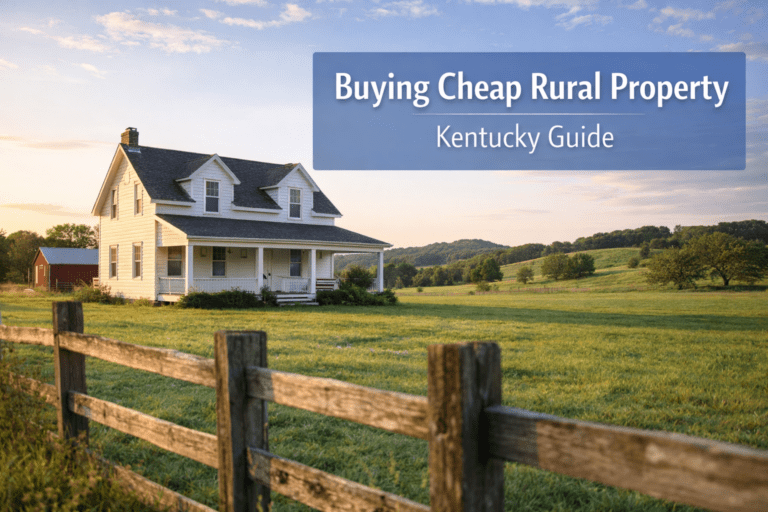
Many of these properties include traditional farmhouses, older country homes, or small parcels of land that once supported family farms. For buyers seeking affordable rural homes in Tennessee, these types of properties often represent one of the most accessible paths to owning land in the United States today.
In this guide, we’ll explore why cheap rural property in Tennessee still exists, what types of properties buyers can find, and which regions of the state offer some of the best opportunities for affordable land and homes.
If you’re actively searching for property in the state, you can also explore our full guide to affordable homes currently available across Tennessee.
Why Cheap Rural Property in Tennessee Still Exists Today
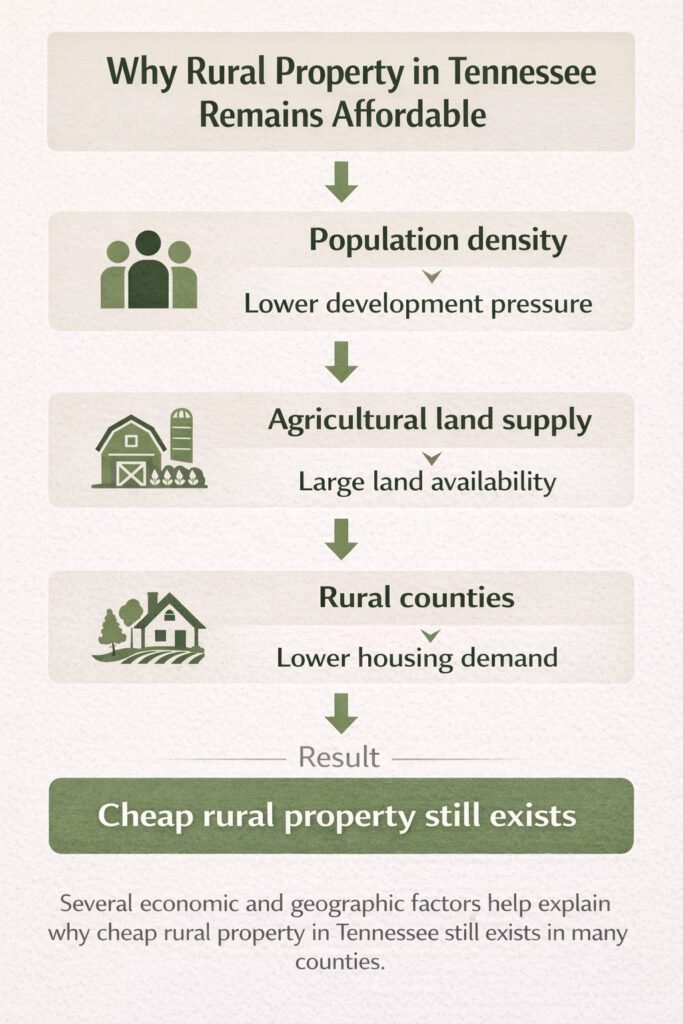
Although real estate prices have increased across much of the United States, cheap rural property in Tennessee continues to appear regularly in the market. The main reason is that Tennessee still has vast areas of agricultural land, forest, and low-density rural communities where development pressure remains relatively limited compared with large metropolitan regions.
Outside the growing urban corridors around Nashville, Knoxville, and Chattanooga, many counties still maintain traditional rural economies based on agriculture, forestry, and small local industries. In these areas, rural property in Tennessee often includes older farmhouses, country homes, and land parcels that were originally part of family farms. These properties frequently come to market when owners retire, relocate, or sell inherited land.
As a result, buyers searching for affordable homes in Tennessee often find that rural counties provide far more opportunities than suburban or urban markets, especially when the property includes acreage or older housing stock that may require modest renovation.
Population Growth and Migration
One factor influencing the Tennessee real estate market is the steady population growth the state has experienced in recent years. Many people have relocated from higher-cost states such as California, Illinois, and New York, seeking lower housing costs, favorable tax policies, and a more relaxed lifestyle.
Compared with many other parts of the United States, property taxes in Tennessee are generally considered moderate, which can make long-term homeownership more affordable. If you want a detailed breakdown of how property taxes work in the state, you can read our guide on property taxes in Tennessee and what buyers should know before buying property.
According to data from the U.S. Census Bureau, Tennessee has consistently gained residents through domestic migration over the past decade. Much of this migration initially concentrates around major cities, but it often spreads outward as buyers look for more space and lower prices.
This migration pattern has increased demand for property across the state, but it has also highlighted the continued availability of cheap rural property in Tennessee, particularly in smaller counties where land supply remains abundant.
Why Rural Areas Still Offer Lower Prices
Rural real estate markets function very differently from urban housing markets. In cities, land availability is limited, zoning restrictions are stricter, and demand tends to concentrate in a relatively small geographic area.
By contrast, many rural counties in Tennessee have:
- large amounts of undeveloped land
- smaller populations
- lower construction pressure
- slower development cycles
These factors contribute to more stable land prices and allow buyers to find houses with land in Tennessee at prices that would be difficult to imagine near major metropolitan regions.
In addition, many rural properties include older homes or traditional farmhouses that were built decades ago. While these homes may require updates, they often sit on valuable acreage and can represent excellent opportunities for buyers interested in country living, homesteading, or small-scale farming.
Average Land Prices in Rural Tennessee
While prices vary significantly depending on location, access to infrastructure, and land quality, rural Tennessee remains relatively affordable compared with many other states.
According to recent market listings compiled by LandSearch, the average price for inexpensive land listings in Tennessee is often around $8,000 per acre, though smaller parcels or remote properties can sometimes be found at lower prices.
Similarly, some listings for older homes and rural properties across the state appear in the $40,000 to $60,000 range, particularly when properties require renovation or are located in less populated counties.
These price ranges help explain why many buyers continue searching for cheap rural property in Tennessee when looking for affordable land or homes in the United States.
One of the best ways to see what these opportunities actually look like is by exploring real listings. In our guide to 10 dirt cheap farmhouses in Tennessee with land, we highlight several surprisingly affordable rural homes currently available across the state.
In the next section, we’ll look at the different types of rural properties buyers can still find across Tennessee, from traditional farmhouses to undeveloped land parcels and small homestead properties.
The Types of Cheap Rural Property You Can Still Find in Tennessee
One of the reasons cheap rural property in Tennessee continues to attract buyers is the wide variety of property types available across the state. Unlike many parts of the country where rural land has already been heavily developed, Tennessee still offers a mix of older homes, agricultural land, and undeveloped parcels that appeal to different types of buyers.
From traditional country houses to buildable land parcels, buyers searching for cheap houses in Tennessee or houses with land in Tennessee can still find opportunities in many rural counties. The key is understanding the types of properties that most commonly appear in the market.
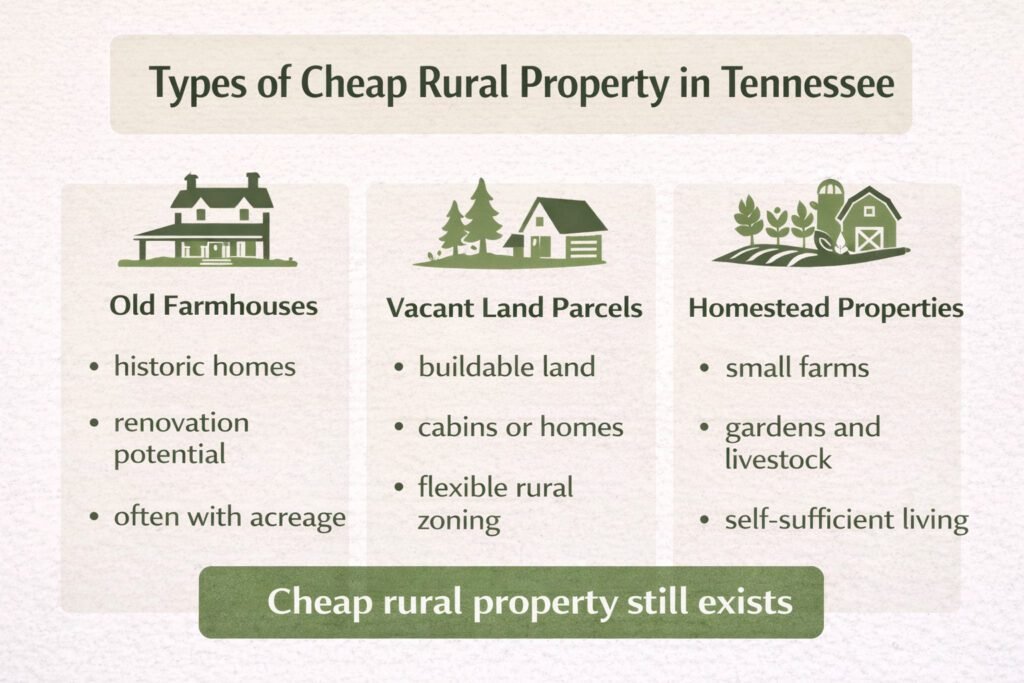
Old Farmhouses With Acreage in Tennessee
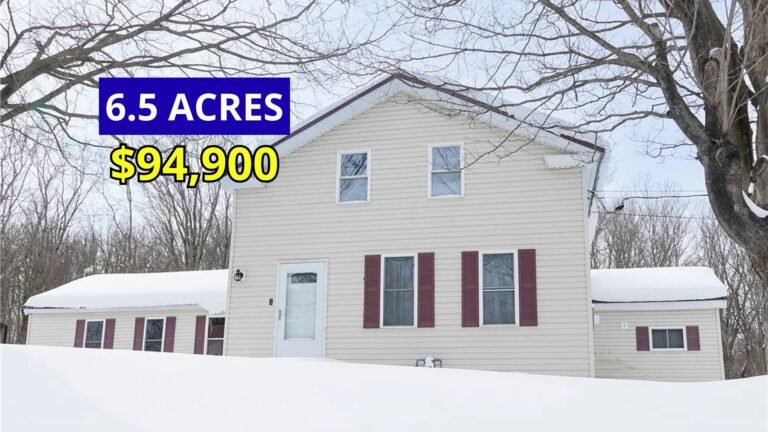
One of the most common types of affordable rural property in the state is the traditional farmhouse. Many of these homes were originally built for farming families decades ago and remain situated on several acres of land.
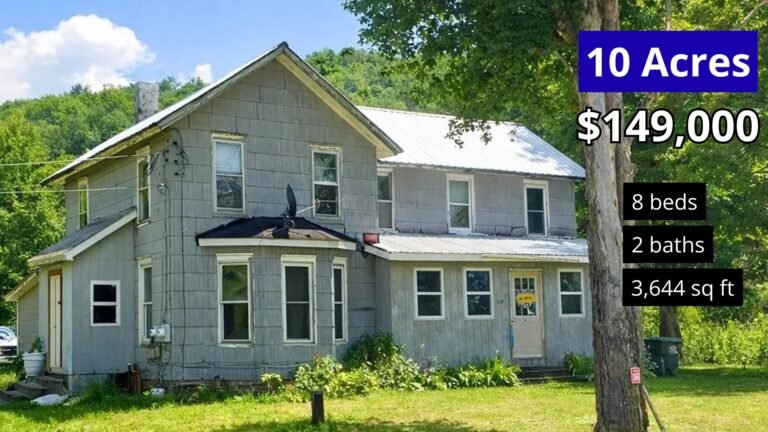
Properties like these often appear as farmhouses with land in Tennessee, sometimes including barns, storage buildings, or open pasture. While some farmhouses may require renovation or modernization, they frequently sit on valuable land and offer a lifestyle that many buyers find appealing.
Older farmhouses with acreage can often be found in counties where agriculture historically played a major role in the local economy. In these areas, properties may include five, ten, or even twenty acres of land, providing space for gardening, livestock, or small-scale farming.
For buyers interested in rural living, these homes represent some of the most attractive opportunities for houses with land in Tennessee, especially when compared with the cost of suburban properties in more densely populated regions.
Cheap Land Parcels for Building
Another category of affordable property involves vacant land parcels that can be used for building a home or cabin. These listings are especially common in rural counties where large areas of land remain undeveloped.
Buyers looking for cheap land in Tennessee may find parcels ranging from one acre to dozens of acres, depending on the location. Smaller parcels are often located near rural communities or along county roads, while larger tracts tend to be found in more remote areas.
These properties can appeal to buyers who prefer building their own home rather than renovating an older house. In many rural counties, zoning restrictions are relatively flexible, which makes it easier to build cabins, farmhouses, or small country homes.
However, buyers should still verify access to utilities, road access, and soil suitability before purchasing rural land, especially if the goal is to build a permanent residence.
Homestead Properties and Small Farms
A third category attracting growing interest in recent years is the homestead property Tennessee buyers are increasingly searching for. These properties typically include both a house and enough land to support gardening, small livestock, or a more self-sufficient rural lifestyle.
Small farms and homestead-style properties have become particularly popular among buyers interested in:
- sustainable living
- small-scale agriculture
- remote work lifestyles
- lower-cost rural housing
Many of these properties fall into the category of farmhouses with land in Tennessee, often including outbuildings, pastures, or wooded acreage.
Because Tennessee has a long agricultural history and relatively favorable land prices, it remains one of the states where this type of property is still accessible for buyers seeking a rural lifestyle.
Best Regions to Find Affordable Rural Homes in Tennessee
While cheap rural property in Tennessee can appear throughout the state, some regions consistently offer better opportunities for buyers searching for lower-priced land or homes.
Each region has its own landscape, economy, and housing market characteristics, which means property prices can vary widely depending on location.
Understanding these regional differences can help buyers identify where affordable rural homes in Tennessee are most likely to appear on the market.
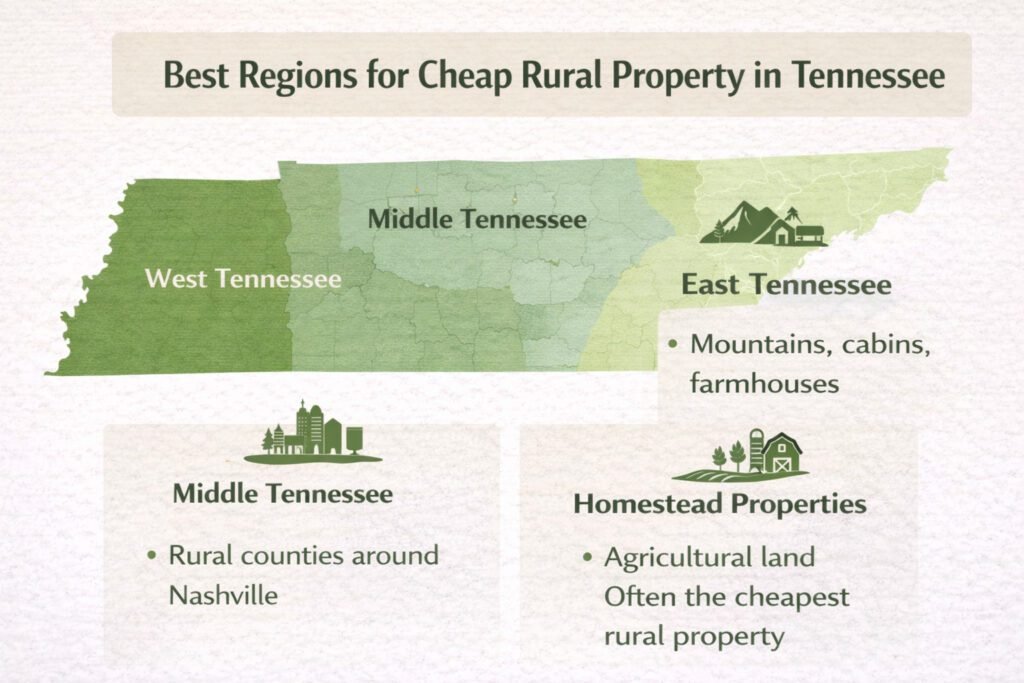
East Tennessee
East Tennessee is known for its scenic landscapes, rolling hills, and proximity to the Great Smoky Mountains. This region includes counties surrounding cities such as Knoxville, as well as many smaller rural communities.
The mountainous terrain and large forested areas mean that many properties include wooded land, cabins, or traditional country homes. Buyers often find farmhouses with land in Tennessee in this region, particularly in counties farther from tourist areas.
The presence of national parks and natural attractions also makes East Tennessee appealing to buyers interested in outdoor recreation or vacation properties.
Middle Tennessee
Middle Tennessee is the fastest-growing region of the state due largely to the economic expansion of Nashville. However, once buyers move outside the metropolitan area, many rural counties still offer relatively affordable property options.
In counties located an hour or more from Nashville, it is still possible to find affordable rural homes in Tennessee, including older houses, small farms, and rural acreage.
These areas attract buyers who want access to the economic opportunities of the city while maintaining a quieter country lifestyle.
West Tennessee
West Tennessee is often considered one of the most affordable regions in the state for rural land and agricultural properties. The landscape here is generally flatter and more agricultural compared with the mountainous terrain of the eastern part of the state.
Because farming remains a major economic activity in this region, buyers can often find cheap land in Tennessee at lower prices than in other parts of the state.
Large tracts of farmland, rural homes with acreage, and agricultural properties frequently appear in counties throughout this region.
For buyers specifically searching for inexpensive land or rural housing, West Tennessee often provides some of the most accessible opportunities in the state.
Why Many Buyers Are Looking for Rural Property in Tennessee
In recent years, interest in rural property Tennessee has increased significantly as buyers search for more affordable housing options and greater independence from expensive urban markets. From families relocating from large cities to retirees seeking a quieter lifestyle, many people are now exploring the possibilities of buying rural property Tennessee offers.
Several factors explain why Tennessee continues to attract attention from buyers looking for land, small farms, or country homes.
Lower Cost of Living
One of the strongest reasons people consider buying rural property Tennessee is the state’s relatively low cost of living compared with many other parts of the United States.
Housing prices, property taxes, and everyday expenses often remain significantly lower than in states such as California, New York, or Massachusetts. This makes rural Tennessee particularly attractive for buyers who want more space and land without the financial pressure that typically accompanies urban real estate markets.
According to data published by the Bureau of Economic Analysis, the cost of living in Tennessee consistently ranks below the national average in several key economic indicators.
Combined with the availability of land and rural housing, this affordability helps explain the growing interest in rural property Tennessee buyers continue to search for.
For many households, moving to a rural area means the possibility of owning acreage, maintaining gardens, or enjoying outdoor space that would be difficult to afford in larger metropolitan areas.
Homesteading and Self-Sufficient Living
Another trend contributing to the growing demand for rural land is the increasing popularity of homesteading and self-sufficient living.
Across the United States, more buyers are seeking properties where they can grow food, raise small livestock, or live a more independent lifestyle. Tennessee’s climate, fertile soil, and long agricultural tradition make it particularly attractive for this type of lifestyle.
Buyers interested in rural property Tennessee often look for homes with acreage that allow them to develop gardens, orchards, or small farms. In many counties, zoning rules are relatively favorable to small agricultural activities, which further supports the homesteading trend.
Properties that include barns, outbuildings, wells, or pasture land are especially appealing to buyers seeking this type of rural living environment.
Retirement and Remote Work Migration
A third factor driving demand for buying rural property Tennessee is the growing number of retirees and remote workers relocating to more affordable regions of the country.
Many retirees are attracted by Tennessee’s relatively favorable tax environment, including the absence of a state income tax on wages. This can make the state an appealing destination for those seeking to stretch retirement income while maintaining a comfortable lifestyle.
At the same time, remote work has allowed many professionals to move away from expensive cities while continuing their careers from smaller communities. For these buyers, owning rural property Tennessee offers both affordability and lifestyle benefits such as privacy, land, and access to natural landscapes.
What Buyers Should Know Before Purchasing Rural Land
While buying rural property Tennessee can offer many advantages, purchasing land or country homes requires careful evaluation. Rural properties often involve considerations that are less common in suburban or urban real estate transactions.
Before purchasing land or a rural home, buyers should take the time to understand several key factors that can affect the usability and long-term value of the property.
Zoning and Land Use
Zoning regulations determine how a property can be used and what types of structures can be built on the land. In rural areas, zoning rules are often more flexible than in cities, but they can still vary significantly from county to county.
Buyers should verify whether the land is zoned for residential use, agricultural use, or other purposes before completing a purchase. This is particularly important for buyers planning to build homes, operate small farms, or develop additional structures on the property.
Checking county zoning regulations early in the process can help avoid potential restrictions or unexpected limitations.
Soil Tests and Utilities
Another important step when evaluating rural land is determining whether the property can support utilities such as water, septic systems, and electricity.
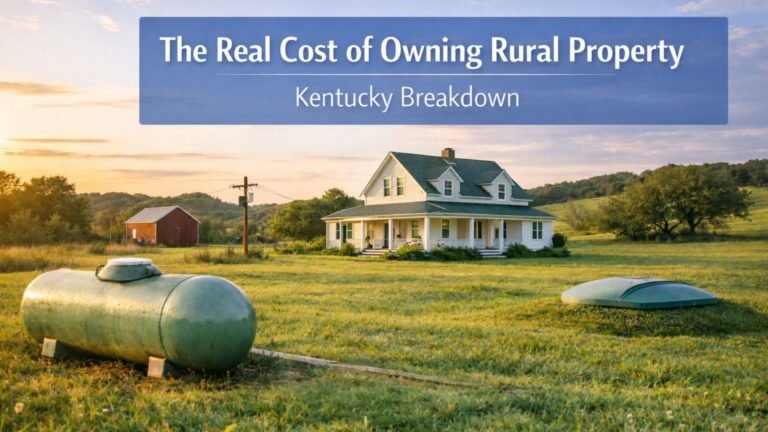
In many rural areas, homes rely on private wells and septic systems rather than municipal water or sewer connections. A soil test (often called a perc test) is typically required to confirm that the land can support a septic system.
Buyers should also verify access to electricity, internet availability, and the cost of installing any missing infrastructure. These factors can significantly influence both the total cost of developing the property and its long-term usability.
Road Access and Infrastructure
Road access is another critical element when purchasing rural property. Some land parcels may appear attractive in listings but have limited or unclear access routes.
Buyers should verify that the property has legal road access, either through a public road or a recorded easement. Without proper access, developing or financing the property can become complicated.
Experts also recommend confirming whether the property has been surveyed and whether property boundaries are clearly defined.
In general, experienced buyers recommend verifying zoning, soil tests, utilities, survey, and legal road access before purchasing rural land to avoid unexpected complications later.
Explore Affordable Homes and Farmhouses for Sale in Tennessee
For buyers searching for cheap rural property in Tennessee, the opportunities still exist — but they often appear in smaller counties, rural communities, and areas that receive less national attention than the state’s fastest-growing cities.
Across Tennessee, many properties still include traditional farmhouses, country homes with acreage, or land parcels suitable for building a rural residence. In many cases, these properties offer far more space and long-term potential than similarly priced homes in suburban housing markets.
Buyers who focus their search on rural counties often discover listings that include several acres of land, older farmhouses with renovation potential, or small homestead-style properties that allow for gardening, livestock, or recreational land use.
Exploring real listings can be one of the best ways to understand the types of opportunities still available across the state. From traditional country homes to undeveloped rural land, Tennessee continues to offer options for buyers seeking affordable property and a quieter lifestyle.
If you’d like to explore current listings and real examples of cheap rural property in Tennessee, you can browse our curated selection of affordable homes and farmhouses available across the state.
Understanding the regional differences, property types, and buying considerations discussed in this guide can help buyers navigate the market more confidently.
And while prices continue to rise in many parts of the country, cheap rural property in Tennessee remains one of the most accessible paths to owning land and rural housing in the United States.
For buyers willing to explore smaller towns and rural counties, Tennessee still offers opportunities that have become increasingly rare elsewhere.
RELATED ARTICLE: PROPERTY TAXES AND HIDDEN COSTS WHEN BUYING A HOME IN TENNESSEE