The Real Cost of Owning Rural Property in New York
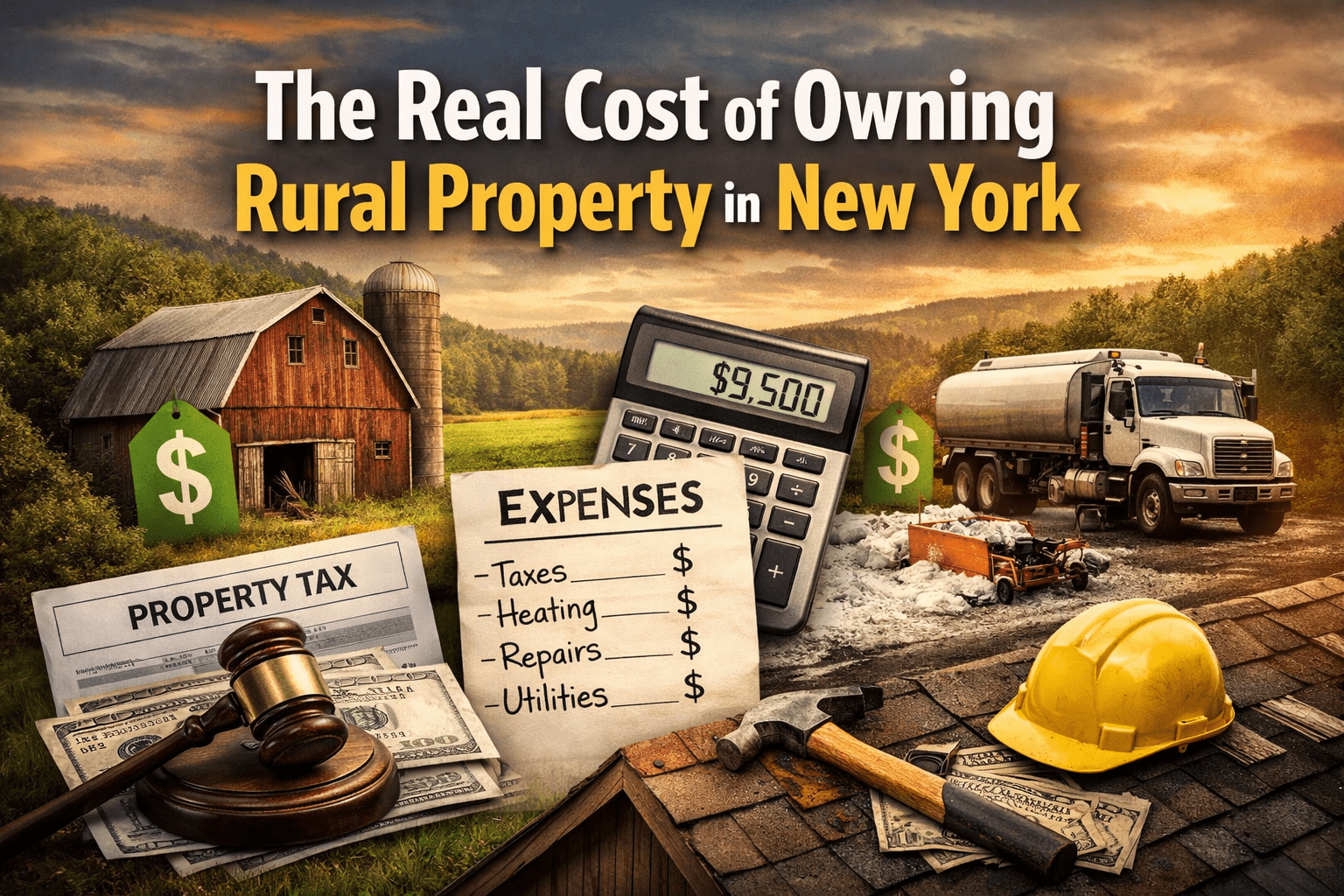
Buying cheap land may seem like a great deal, but the real cost of owning rural property in New York goes far beyond the purchase price.
For the county-level picture — what an acre is worth region by region, and why two rural counties can differ by twice the annual tax bill on the same house — see our guide to buying rural land in upstate New York.
Many buyers focus only on the listing price, but ongoing expenses like property taxes, heating, maintenance, and infrastructure can significantly impact the true cost of ownership.
In fact, data from the Tax Foundation shows that New York consistently ranks among the states with higher property tax burdens, which makes understanding long-term costs even more important when evaluating rural properties.
In this guide, we break down the actual numbers so you can clearly understand what it really costs to own rural property in New York — and whether these opportunities truly fit your budget and goals.
The Purchase Price vs The Real Cost
Before focusing only on costs, it’s important to understand how the buying process works and what to look for when evaluating rural properties. If you’re new to this, you can read our complete step-by-step guide here: How to Buy Cheap Rural Property in New York (Complete Guide).
Most buyers are initially attracted by low listing prices, especially when browsing cheap rural property in New York online.
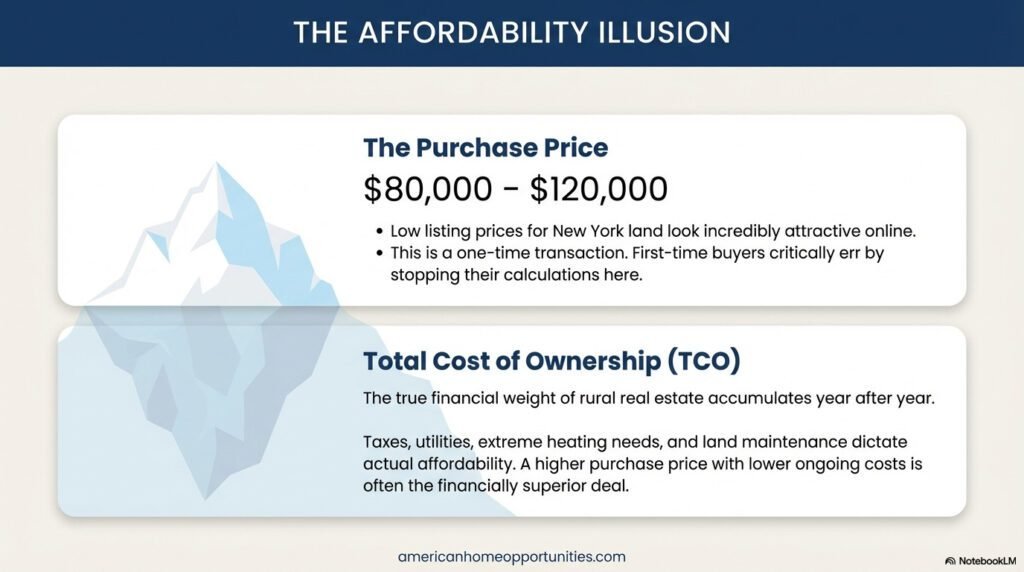
At first glance, a $80,000 or $120,000 property with land may seem like an incredible deal — and in many cases, it is.
However, the purchase price is only one part of the equation.
The real cost of ownership includes ongoing expenses that accumulate every year and directly impact affordability over time. These costs are not always visible upfront, which is why many first-time rural buyers underestimate what they will actually spend after closing.
Understanding this difference is critical.
A property that appears affordable based on price alone may become significantly more expensive once you factor in taxes, utilities, heating, and maintenance. On the other hand, a slightly higher purchase price with lower ongoing costs can sometimes be the better long-term decision.
This is why experienced buyers don’t just look at the listing price — they evaluate the total cost of ownership before making a decision.
Property Taxes in Rural New York (Real Numbers)
When evaluating the cost of owning rural property in New York, property taxes are one of the most important ongoing expenses to consider.
While rural areas are generally more affordable than urban regions, property taxes in New York rural areas can still vary significantly depending on location, assessed value, and local tax structures.
Typical Annual Property Taxes
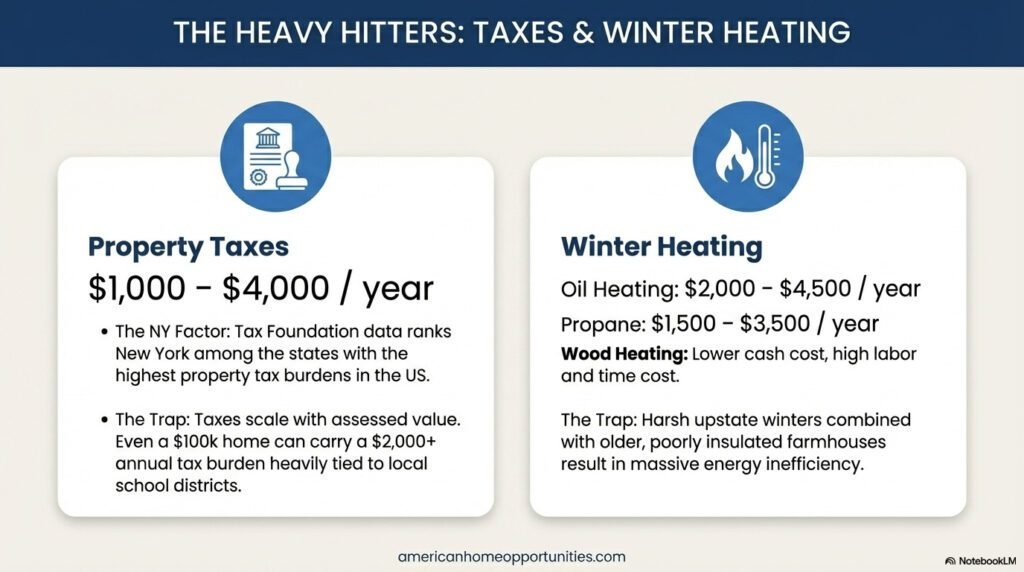
In rural areas of New York, property taxes can typically range from $1,000 to $4,000 per year.
This variation depends on several factors, including the county, the assessed property value, and especially the local school district, which often represents a large portion of the total tax bill.
According to data compiled by the Tax Foundation, property tax rates in New York are among the highest in the United States, although rural counties tend to fall on the lower end of the spectrum.
For buyers looking at lower-priced properties, this means that taxes may still represent a meaningful portion of the annual cost, even when the purchase price is relatively low.
Why Taxes Can Surprise Buyers
One of the most common surprises for buyers is how taxes scale relative to property value.
For example, a property purchased for $100,000 may still carry annual property taxes of $2,000 or more, depending on the location.
This creates a situation where the yearly tax burden can represent a significant percentage of the property’s value over time.
In other words, even if the entry price is low, taxes can quickly become one of the largest fixed expenses you will face as an owner.
This is why experienced buyers always calculate property taxes as part of the total cost — not as a secondary detail.
Heating Costs (One of the Biggest Expenses)
When it comes to the real cost of owning rural property in New York, heating is often one of the largest — and most underestimated — expenses.
New York winters can be long and harsh, especially in rural and upstate regions, making heating a critical factor in your yearly budget.
Typical annual heating costs can range from:
- Oil heating: $2,000 – $4,500 per year
- Propane: $1,500 – $3,500 per year
- Wood heating: lower cost, but requires time, labor, and maintenance
These costs can vary depending on:
- The size of the home
- Insulation quality
- Heating system efficiency
- Local fuel prices
For many rural homeowners, heating alone can represent a significant portion of total annual expenses.
This is especially important when evaluating older farmhouses or properties that may not be well insulated, as energy inefficiency can quickly increase costs.
Understanding heating expenses upfront can make a major difference in determining whether a property is truly affordable in the long term.
Utilities and Monthly Expenses
Beyond taxes and heating, everyday utilities are another important part of the cost of owning rural property in New York.
While these expenses may seem manageable on a monthly basis, they add up quickly over the course of a year and can significantly impact your total cost of ownership.
Electricity
Electricity costs in rural New York typically range from:
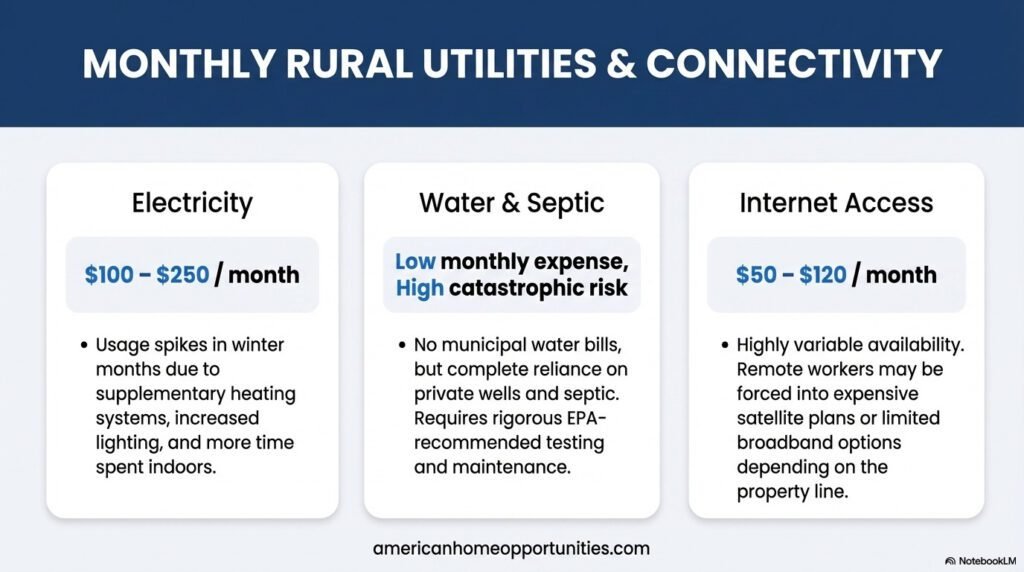
- $100 to $250 per month
This depends on factors such as home size, insulation, heating usage (if electric), and seasonal demand.
In colder months, electricity usage often increases due to additional heating needs, lighting, and overall indoor usage.
Water and Septic
Many rural properties rely on private well water and septic systems instead of municipal services.
Well systems generally have low ongoing costs, but they come with potential risks, including pump failure or water quality issues that may require testing or upgrades.
Septic systems, on the other hand, can represent a major unexpected expense.
Typical costs include:
- Septic system replacement: $5,000 to $15,000
According to the U.S. Environmental Protection Agency, proper septic system maintenance is essential to avoid costly failures and environmental issues.
This is one of the most important hidden cost factors that buyers should be aware of when evaluating rural property.
Internet in Rural Areas
Internet access in rural areas can vary significantly depending on location.
Typical costs range from:
- $50 to $120 per month
While some areas offer high-speed connections, others may rely on satellite or limited broadband options.
For remote workers or buyers who depend on connectivity, this is an important factor to evaluate before purchasing.
Maintenance Costs (What Most People Underestimate)
One of the most overlooked aspects of owning rural property is ongoing maintenance.
Unlike urban homes, rural properties often require more attention due to land size, exposure to weather, and the age of many structures.
Annual Maintenance Rule
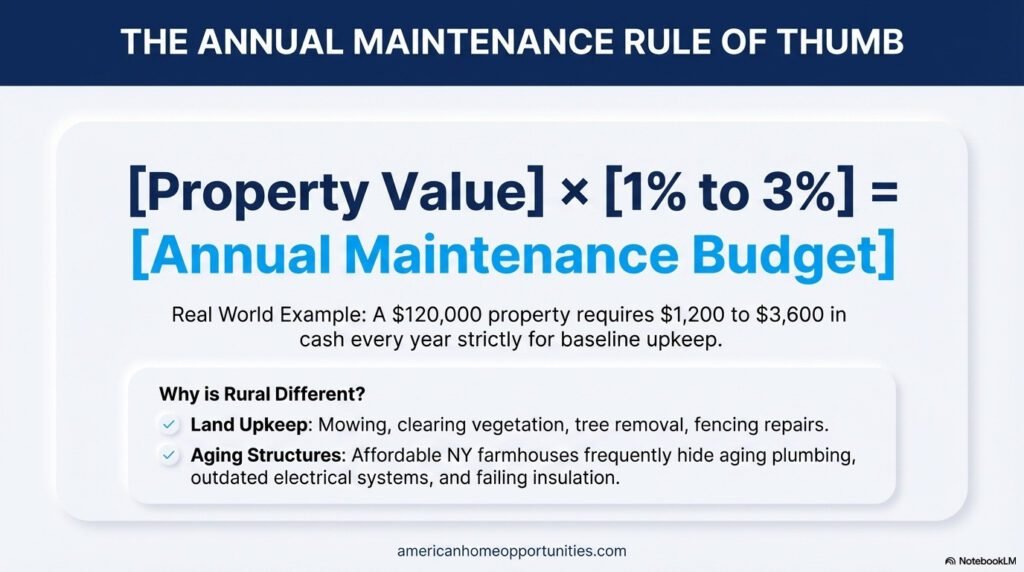
A common rule of thumb is to budget:
- 1% to 3% of the property value per year
For example:
- A $120,000 property may require $1,200 to $3,600 annually in maintenance
This includes routine repairs, system upkeep, and general property care.
Land Maintenance
Owning land adds another layer of responsibility and cost.
Typical maintenance tasks include:
- mowing and clearing vegetation
- tree trimming or removal
- fencing repairs or installation
These costs vary depending on the size and condition of the land, but they can quickly add up, especially for larger properties.
Older Homes = Higher Costs
Many affordable rural properties in New York are older homes, including farmhouses built decades ago.
While these properties offer character and value, they often come with higher maintenance needs.
Common issues may include:
- outdated electrical systems
- aging plumbing
- insulation inefficiencies
- roof wear and structural repairs
These factors can increase both short-term and long-term costs, making it essential to factor maintenance into your overall budget from the beginning.
Hidden Costs That Can Destroy Your Budget
Even when you account for taxes, utilities, and maintenance, there are still additional costs that many buyers simply don’t see coming.
These hidden expenses can quickly turn what seemed like an affordable property into a much more expensive investment.
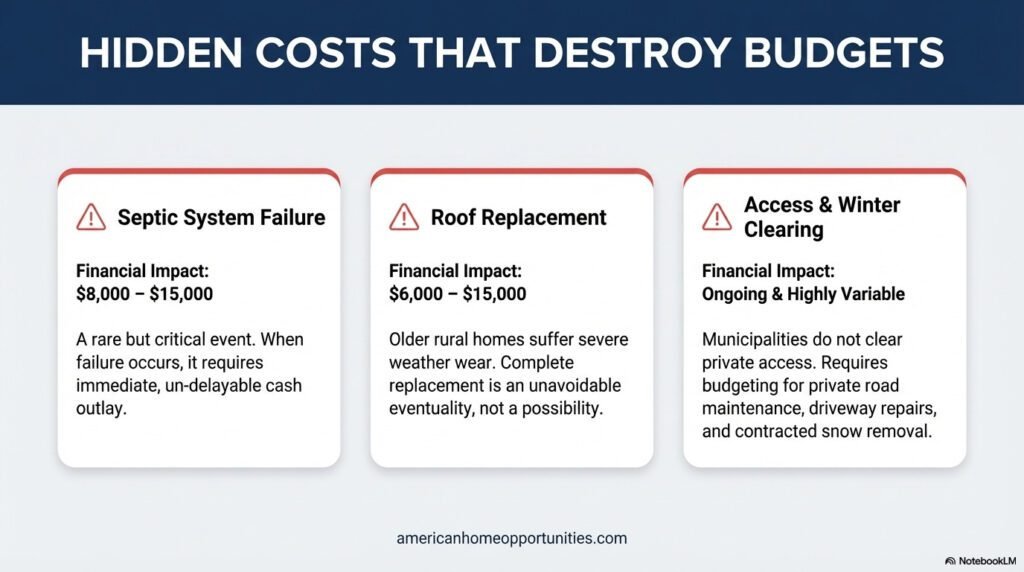
Septic Failure
One of the most expensive surprises for rural property owners is septic system failure.
Typical replacement costs range from:
- $8,000 to $15,000
This is not a frequent expense, but when it happens, it requires immediate attention and can significantly impact your finances.
Roof Replacement
Another major cost to consider is roof replacement.
Typical costs range from:
- $6,000 to $15,000
Older rural homes are especially prone to roof wear, and replacing a roof is often unavoidable over time.
Access and Snow Removal
In rural New York, access is not always as simple as it seems.
Additional costs may include:
- snow removal during winter
- private road maintenance
- driveway repairs
These are recurring expenses that can vary depending on the property’s location and accessibility.
Example: Real Cost Breakdown
To understand the true cost of owning rural property in New York, let’s look at a realistic example.
Purchase price: $120,000
Estimated annual costs:
- Property taxes: $2,500
- Heating: $3,000
- Utilities: $2,000
- Maintenance: $2,000
Estimated total yearly cost: ~$9,500
This means that beyond the purchase price, you could be spending close to $10,000 per year just to own and maintain the property.
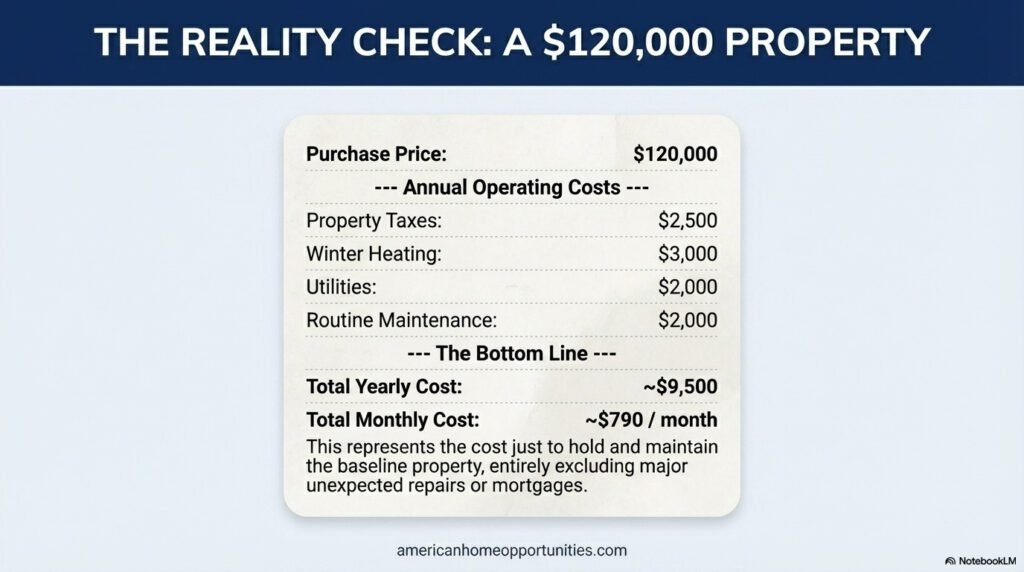
Total Monthly Cost of Owning Rural Property
Breaking that down into a monthly perspective makes the impact even clearer.
- $9,500 per year equals approximately $790 per month
And that does not include major repairs, unexpected expenses, or upgrades.
Understanding this monthly cost is essential when evaluating whether a property truly fits your financial situation.
Is It Still Worth It?
Owning rural property in New York can absolutely be worth it — but only if you approach it with the right expectations.
When you understand the full cost of ownership, you gain control over your investment and avoid the surprises that catch many buyers off guard.
For those looking for space, privacy, and long-term value, rural properties can still represent a strong opportunity.
The key is not just finding a cheap property — but finding one that remains affordable over time.
If you’re wondering what these opportunities actually look like in today’s market, we’ve put together a curated list of real properties across the state. You can explore them here: 10 Dirt Cheap Farmhouses with Land in New York – Real Estate Goldmines.
Want Help Finding Affordable Rural Properties in New York?
If you’re seriously considering buying rural property in New York, having access to the right opportunities can make all the difference.
Disclaimer
The information provided in this article about the cost of owning rural property in New York is for informational purposes only and should not be considered financial, legal, or real estate advice.
American Home Opportunities is not a licensed real estate broker or financial advisor. While we strive to provide accurate and up-to-date information, costs, taxes, and property conditions may vary depending on location and individual circumstances.
Buyers are strongly encouraged to conduct their own due diligence, verify all property details independently, and consult with licensed professionals before making any purchasing decisions.
Any cost estimates provided in this article are general examples and should not be interpreted as exact figures. Actual expenses may vary significantly.