The Real Cost of Owning Rural Property in North Carolina
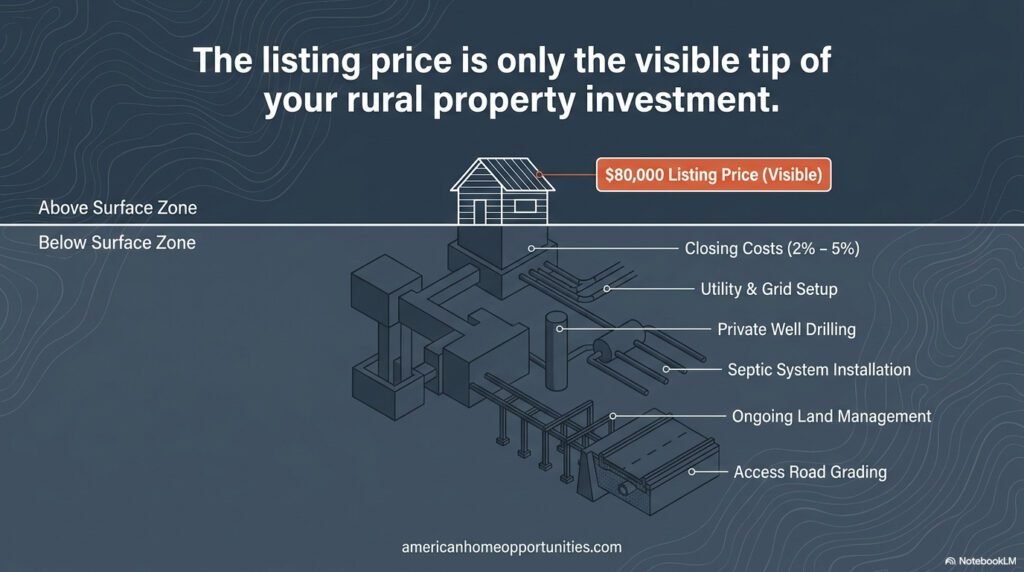
Buying rural property can seem affordable at first glance, but the real cost of owning rural property in North Carolina goes far beyond the listing price. Many buyers focus only on the purchase price, without fully considering property taxes, utilities, maintenance, and other ongoing expenses that can significantly impact the total investment.
New to this state? Start with our full guide to buying rural property in North Carolina — what land costs region by region, and what to verify before you make an offer.
In reality, understanding the real cost of owning rural property in North Carolina is essential before making any decision. From annual property taxes to infrastructure setup and long-term maintenance, each factor plays a critical role in determining whether a property is truly affordable. In this guide, you’ll discover real numbers, realistic expectations, and the hidden costs that every buyer should be aware of before moving forward.
Looking for real opportunities instead of just information? Start here:
Property Taxes in North Carolina
How Property Taxes Work in North Carolina
Property taxes in North Carolina are relatively low compared to many other states, which is one of the reasons rural property remains attractive to buyers. These taxes are calculated based on the assessed value of the property and are set at the county level, meaning rates can vary significantly depending on location.
Each county determines its own tax rate, and properties are periodically reassessed to reflect market value. This means that even if you purchase a property at a low price, the tax amount may change over time depending on local market conditions and county decisions.
Average Property Tax Rates
North Carolina’s effective property tax rate on owner-occupied housing is 0.66%, according to the Tax Foundation’s 2026 state tax data. Nationally the range runs from 0.29% in Hawaii to 1.88% in New Jersey and Illinois, so North Carolina sits comfortably in the lower third. County rates for 2025–26 run from $0.37 per $100 of value in Jackson County to $1.206 in Northampton, before any municipal or fire district levy — so the county you buy in matters more than the state average.
However, it’s important to understand that these rates are not fixed statewide. Some counties may be slightly higher or lower depending on local budgets and public service funding. For updated and detailed figures, you can review the North Carolina property tax rates data.
Closing Costs When Buying Rural Property
What Is Included in Closing Costs
When buying rural property, closing costs are an essential part of the total investment and should never be overlooked. In North Carolina, these costs typically include title insurance, legal fees, and recording fees required to officially transfer ownership of the property.
Title insurance protects the buyer against potential disputes over ownership or claims on the property, while legal fees cover the work of attorneys or closing agents handling the transaction. Recording fees are paid to the county to register the property transfer in public records. Although these costs may seem minor individually, together they can add a significant amount to the final purchase price.
Typical Closing Cost Range
In most cases, closing costs in North Carolina range between 2% and 5% of the purchase price. The exact percentage depends on factors such as the property value, the complexity of the transaction, and the professionals involved in the closing process.
For lower-priced rural properties, these costs can represent a much larger share of your total investment, which is why careful planning is essential from the beginning. Even small variations in fees can significantly impact your final budget, especially on lower-value purchases. According to recent estimates, closing costs in the U.S. typically range between 2% and 5% of the purchase price, depending on location and transaction details average mortgage closing costs for buyers.
Utilities and Infrastructure Costs
Electricity and Grid Access
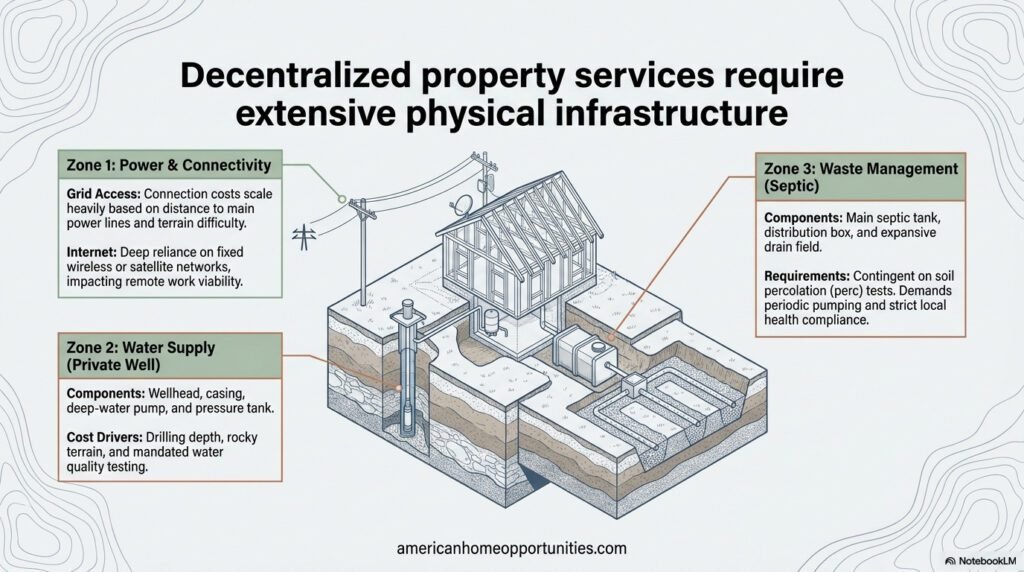
One of the most overlooked costs when buying rural property is access to electricity. While some properties are already connected to the grid, others may require new connections, which can be expensive depending on distance and terrain. Extending power lines or installing alternative energy systems such as solar panels can add thousands of dollars to the initial investment.
Water: Wells vs Public Supply
In many rural areas, properties rely on private wells instead of public water systems. Drilling a well can be a significant upfront cost, often ranging from several thousand dollars depending on depth and location. Additionally, ongoing maintenance and water quality testing should be considered as part of long-term ownership.
Internet and Connectivity
Internet access in rural North Carolina can vary widely. While some areas have access to broadband services, others may rely on satellite or fixed wireless connections, which can be more expensive and less reliable. For buyers who work remotely or depend on stable internet, this is a critical factor that should be evaluated before purchasing.
Septic Systems and Waste Management
Septic Installation and Maintenance Costs
In rural areas, most properties are not connected to a public sewer system and instead rely on septic systems for waste management. Installing a new septic system can cost anywhere from a few thousand dollars to over ten thousand, depending on soil conditions, system type, and local regulations.
In addition to the initial installation, septic systems require periodic maintenance, including inspections and pumping every few years. Neglecting maintenance can lead to expensive repairs or even full system replacement, making this an essential cost to consider from the beginning.
Inspection Requirements
Before purchasing rural property, a septic inspection is highly recommended. This helps ensure the system is functioning properly and complies with local health regulations. A failing septic system can quickly turn an affordable property into a costly investment, so verifying its condition upfront is critical.
Ongoing Maintenance Costs
Land Maintenance
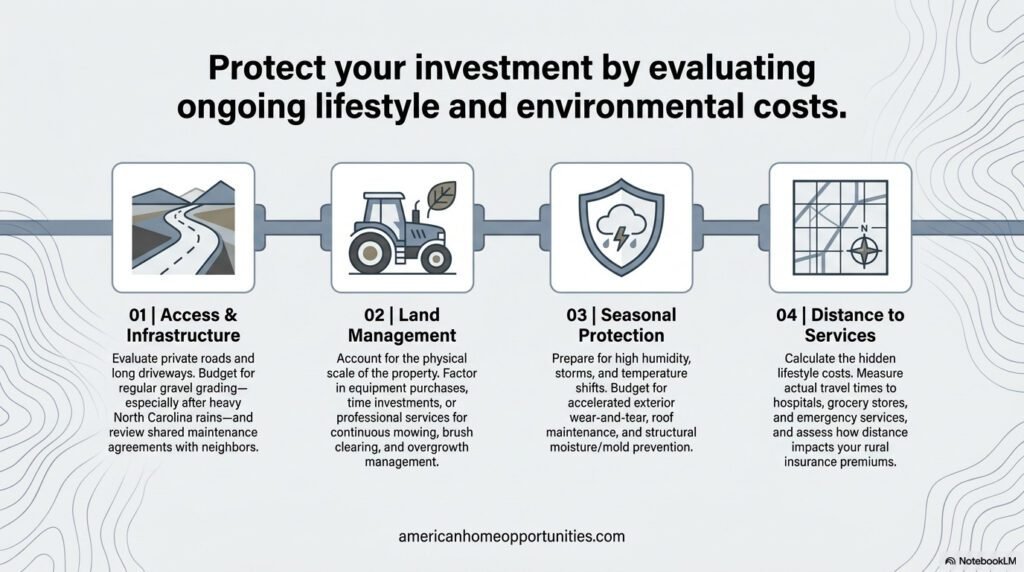
Owning rural property often means maintaining large areas of land. This includes mowing grass, clearing brush, trimming trees, and managing overgrowth. Depending on the size of the property, these tasks can require equipment, time, or professional services, all of which add to ongoing costs.
Repairs and Upkeep
Many rural homes, especially older farmhouses, require regular repairs and updates. Roofing, plumbing, electrical systems, and structural components may need attention over time. These maintenance expenses tend to be higher in rural properties due to age and exposure to the elements.
Seasonal Costs
Seasonal factors such as humidity, heavy rain, and temperature changes can impact rural properties more significantly than urban homes. Moisture can lead to mold or structural damage, while storms may affect roofs, driveways, or surrounding land. These seasonal challenges often translate into additional maintenance expenses throughout the year.
Hidden Costs Most Buyers Don’t Expect
Access Roads and Driveways
Many rural properties are accessed through long driveways or private roads that require maintenance. Gravel roads, for example, may need regular grading and repairs, especially after heavy rain. In some cases, shared access roads may also involve agreements or shared maintenance responsibilities with neighbors.
Insurance Costs in Rural Areas
Insurance for rural properties can be higher or more complex depending on location and risk factors. Distance from fire stations, exposure to natural elements, and property condition can all influence insurance premiums. Buyers should always obtain insurance estimates before finalizing a purchase.
Distance to Services
One of the most underestimated factors is the distance to essential services such as hospitals, grocery stores, and emergency services. Longer travel times not only affect daily life but can also influence property value and long-term convenience. What looks like a low purchase price may come with hidden lifestyle costs that are not immediately obvious.
If you’re still in the early stages of your search and want to understand how to approach the process step by step, make sure to read our complete guide on how to buy cheap rural property in North Carolina, where we break down the best areas, strategies, and opportunities across the state.
Total Estimated Cost Example
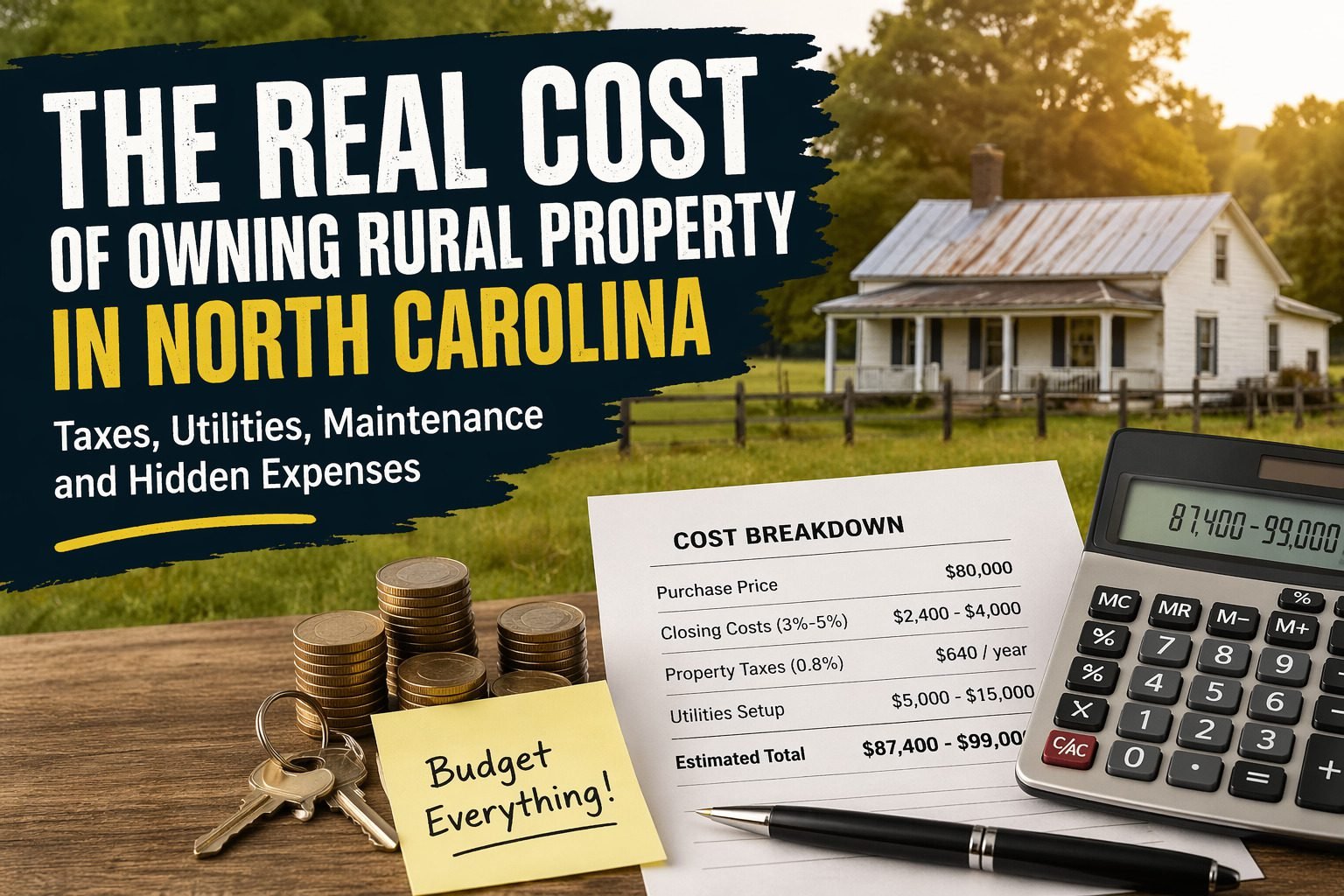
To better understand the real cost of owning rural property in North Carolina, let’s break down a simple example based on a typical low-cost purchase.
Let’s say you find a rural property priced at $80,000. At first glance, this may seem like a very affordable investment. However, the total cost goes beyond the purchase price.
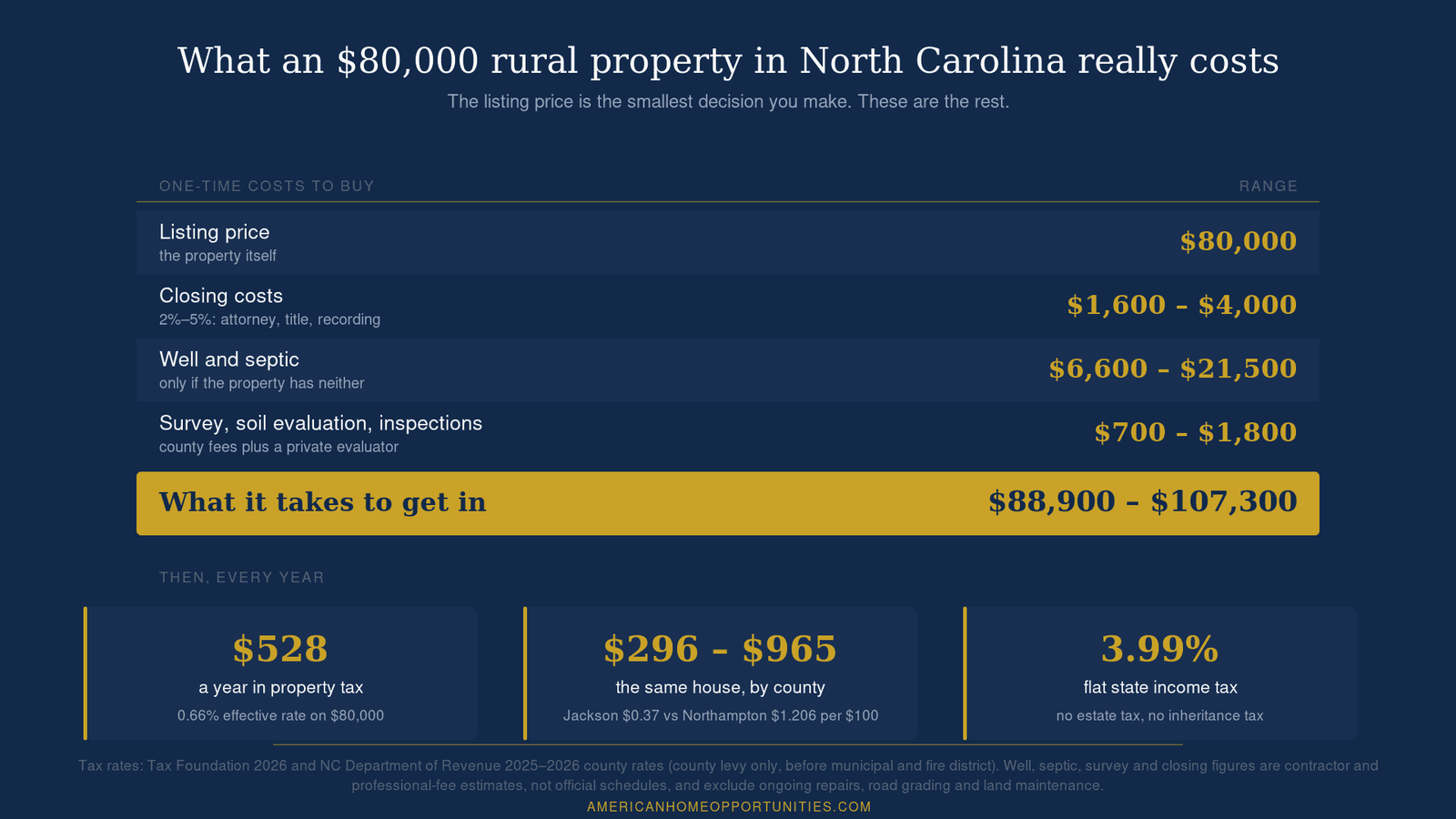
Here’s what you actually pay:
- Purchase price: $80,000
- Closing costs (2%–5%: attorney, title, recording): $1,600 – $4,000
- Annual property taxes (0.66% effective rate): ~$528 per year
- Well and septic, if the property has neither: $6,600 – $21,500
- Survey, soil evaluation and inspections: $700 – $1,800
This brings your estimated total initial investment to:
👉 $88,900 – $107,300 to get in, plus about $528 a year in property tax. And the tax line moves: county rates for 2025–26 run from $0.37 per $100 of value in Jackson County to $1.206 in Northampton.
And that’s before considering ongoing costs such as maintenance, repairs, and seasonal expenses.
This is why understanding the real cost of owning rural property in North Carolina is so important. A property that looks cheap at first can require a significantly higher total investment once all factors are included.
If you’re looking to compare these costs with real listings currently available, take a look at our breakdown of 10 dirt cheap farmhouses in North Carolina with land, where you can see actual prices and evaluate real opportunities.
Is Rural Property in North Carolina Still Worth It?
Rural property in North Carolina can absolutely be worth it, but only for buyers who approach it with the right expectations. The lower purchase prices, access to land, and lifestyle benefits make it an attractive option, especially compared to high-cost states.
However, the true value depends on how well you understand the full cost structure. Buyers who plan ahead, budget realistically, and carefully evaluate each property can find excellent opportunities. On the other hand, those who focus only on the listing price may face unexpected expenses that reduce the overall value of the investment.
In short, the opportunity is real, but so are the costs. The key is knowing both before making a decision.
Ready to explore real opportunities? Browse all available cheap rural properties in North Carolina here.
Disclaimer
This article is for informational purposes only and does not constitute financial, legal, or real estate advice. Property prices, taxes, regulations, and market conditions may vary by location and can change over time. Buyers should conduct their own due diligence and consult with licensed real estate professionals, attorneys, or financial advisors before making any purchase decisions.