The Real Cost of Owning Rural Property in Pennsylvania
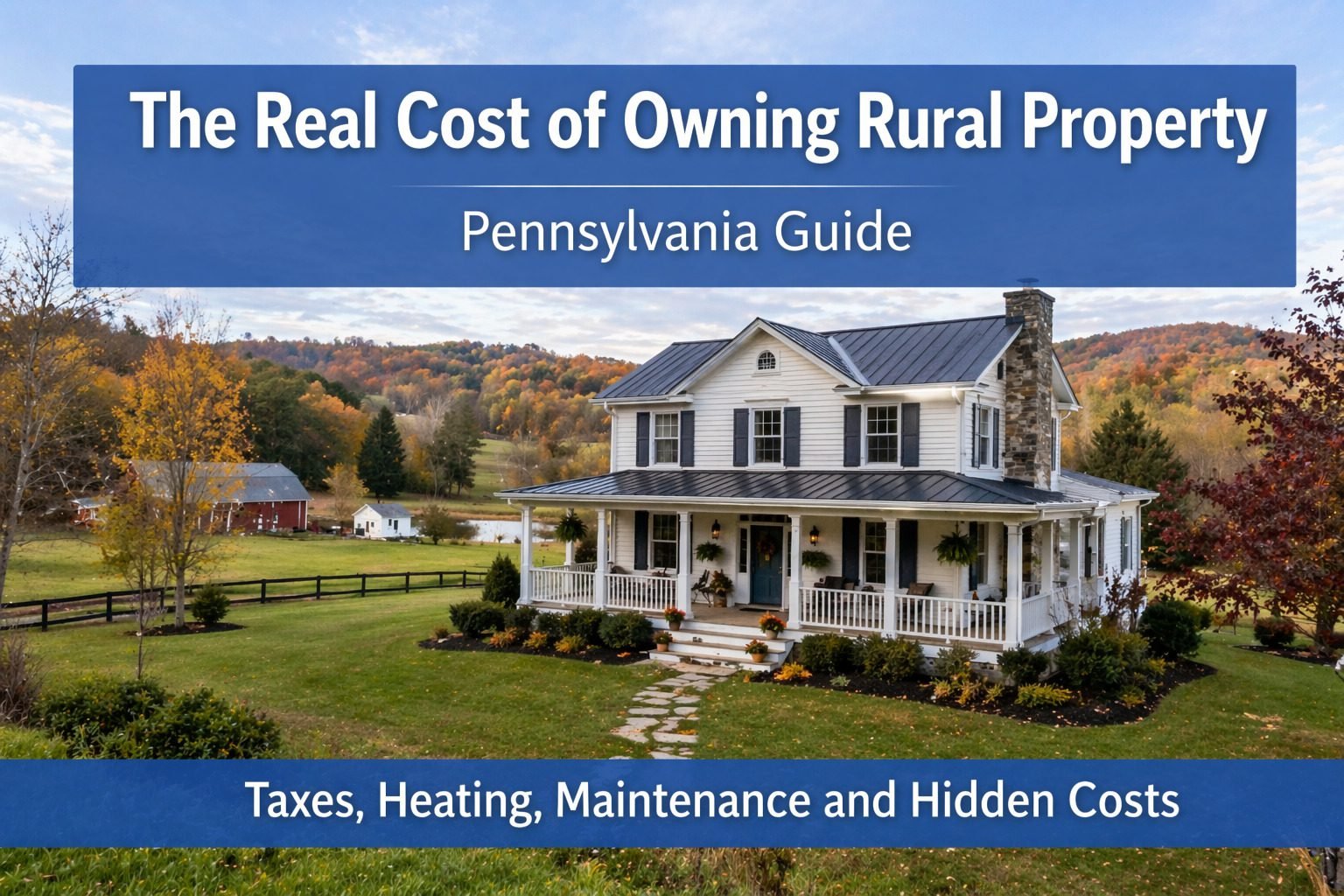
Buying rural property can seem like an affordable opportunity, but the real cost of owning rural property in Pennsylvania goes far beyond the purchase price. Many buyers focus only on how cheap a property looks upfront, without considering the ongoing expenses that can significantly increase the total cost over time.
Taxes are one piece. For land values county by county and the traps worth knowing before you buy, see our guide to buying rural land in Pennsylvania.
Understanding the real cost of owning rural property in Pennsylvania is essential before making any decision. Higher property taxes, heating expenses during long winters, and the maintenance of older homes all play a major role in the true cost of ownership. In this guide, you’ll discover what you actually need to budget for, including the expenses that many buyers overlook.
Looking for real opportunities instead of just information? Start here:
Property Taxes in Pennsylvania
Property taxes in Pennsylvania are one of the most important factors to consider when evaluating rural property. Compared to states like North Carolina, tax rates are generally higher, which can significantly impact long-term affordability.
Pennsylvania’s effective property tax rate on owner-occupied housing is 1.26%, the twelfth highest in the United States. There is no meaningful national average to compare it against — the real picture is a range, from 0.29% in Hawaii to 1.88% in New Jersey and Illinois — and Pennsylvania sits in the upper third of it. On a $150,000 house that is roughly $1,890 a year, every year, whatever you paid for the place.
Be careful with any figure quoted as a percentage of assessed value. Many Pennsylvania counties have not carried out a reassessment in decades, so assessed value is not market value and the ratio between the two differs enormously from one county to the next. That makes millage rates useless for comparing counties. The number that compares is the effective rate — median tax actually paid over median home value — and it runs from 0.79% in Bedford County to 1.62% in Delaware and Monroe. The lowest median bill in the state is Forest County at $1,145 a year; the highest is Chester at $6,308. Figures throughout are from the Tax Foundation.
The gap between neighbours can be large. Clarion and Venango share a border and the USDA census values their farmland within 2% of each other, but their effective rates are 0.91% and 1.22%. The same $150,000 house costs $1,365 a year in Clarion and $1,830 in Venango — $4,650 over ten years, decided by which side of a county line the driveway sits on. Cheap land does not guarantee a cheap bill either: Cameron County has the least expensive farmland in Pennsylvania and one of the higher rural rates, at 1.31%, because a small tax base needs a higher rate to fund the same schools and roads.
The local tax nobody quotes you
Property tax is not the only recurring charge. Pennsylvania’s flat 3.07% state income tax is topped up by a local Earned Income Tax levied under Act 32 by your municipality and your school district together. Outside Philadelphia the combined rate is typically 1% to 2%, and rural townships often land between 1.0% and 1.5%. There is usually a Local Services Tax as well, commonly up to $52 a year. For someone moving into a rural Pennsylvania property, the real rate on earned income is closer to 4.1% to 5.1% than to 3.07%. There is no single statewide figure to look up: the rate is tied to the PSD code for the exact address, so ask about the address rather than the township.
Heating Costs and Energy Expenses
Winter Heating Costs
Heating costs are a major factor when owning rural property in Pennsylvania, especially during the winter months. Unlike warmer states, Pennsylvania experiences long, cold winters, which means heating systems are used extensively for several months each year.
Depending on the property, heating may rely on natural gas, heating oil, propane, or electric systems. Oil and propane, in particular, can be significantly more expensive, especially during colder seasons when demand increases. Monthly heating costs can vary widely, but they are often one of the largest recurring expenses for rural homeowners.
Older Homes and Energy Efficiency
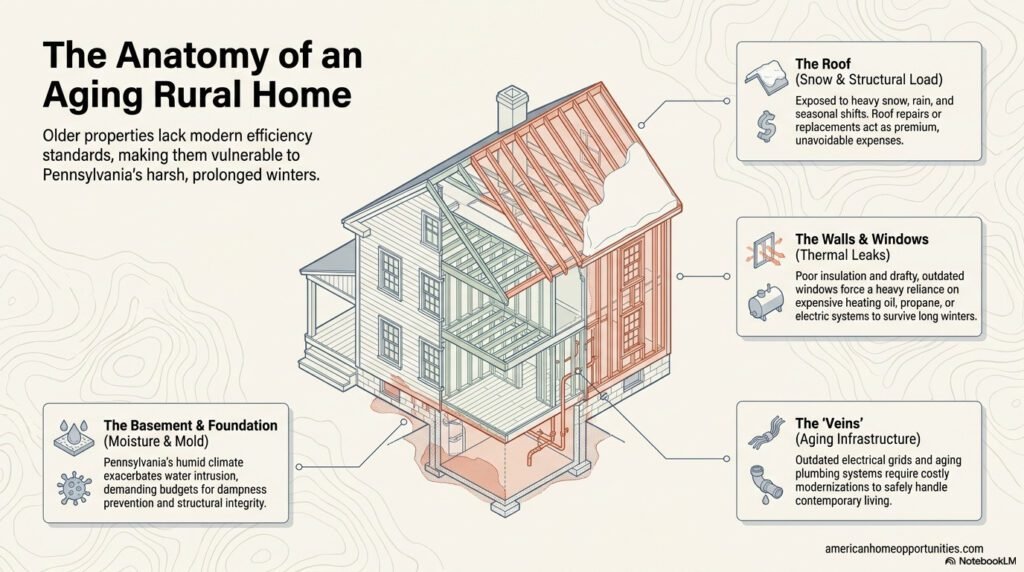
Many rural properties in Pennsylvania are older homes that were not built with modern energy efficiency standards. Poor insulation, outdated windows, and aging heating systems can result in higher energy consumption and increased utility bills.
Buyers should pay close attention to the condition of the heating system, insulation quality, and overall energy efficiency of the property. Investing in upgrades may reduce long-term costs, but it also adds to the initial investment that needs to be considered.
Closing Costs
When buying rural property in Pennsylvania, closing costs are another key part of the total investment that buyers need to account for from the beginning. These costs include expenses such as title insurance, legal services, and recording fees required to complete the transaction.
In most cases, closing costs typically fall between 2% and 5% of the purchase price, although the exact amount can vary depending on the property and the complexity of the deal. For lower-priced rural properties, these costs can represent a significant portion of the overall investment, making it essential to include them in your initial budget calculations.
Utilities and Infrastructure
Water Supply
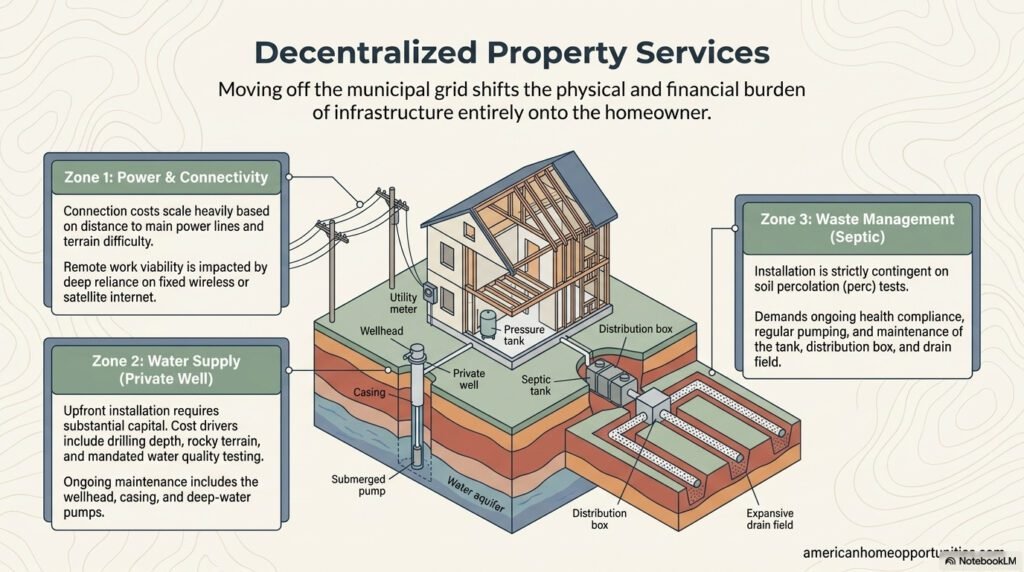
In many rural areas of Pennsylvania, properties rely on private wells rather than public water systems. Installing a well can involve a substantial upfront cost, and ongoing maintenance and water quality testing should also be considered as part of long-term ownership.
Electricity Access
While some rural properties are already connected to the electrical grid, others may require new connections or upgrades. Extending power lines or installing alternative energy systems can add unexpected costs, particularly in more remote locations.
Internet and Connectivity
Internet access can vary significantly depending on the location. Some areas may have access to broadband services, while others rely on satellite or fixed wireless connections. For buyers who depend on reliable internet, this is an important factor that can influence both cost and usability.
Maintenance Costs in Older Homes
Roofing and Structural Repairs
Many rural homes in Pennsylvania require ongoing maintenance due to their age. Roof repairs or replacements can be one of the most expensive aspects of ownership, especially in areas exposed to snow, rain, and seasonal weather changes.
Moisture and Humidity Issues
Older properties are more susceptible to moisture-related problems, including mold, leaks, and foundation issues. Pennsylvania’s climate can contribute to these challenges, particularly in homes that have not been updated or properly maintained.
Aging Structures and Systems
Outdated electrical systems, plumbing, and insulation are common in older homes. While these properties may be affordable to purchase, the cost of updating essential systems can quickly increase the total investment.
Hidden Costs
Snow Removal and Winter Maintenance
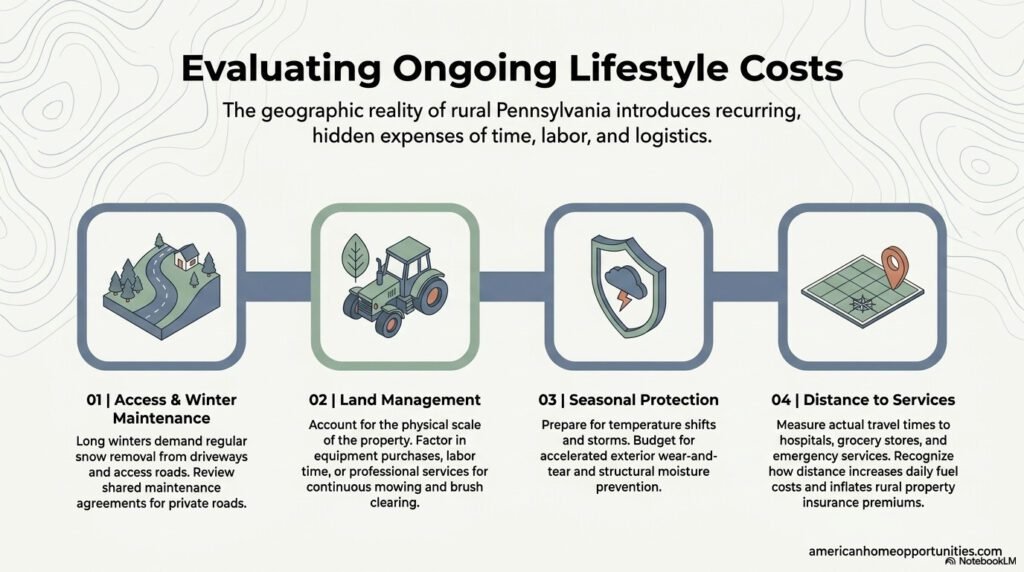
One of the most overlooked costs in Pennsylvania is snow removal. Long winters mean regular clearing of driveways, access roads, and walkways, which may require equipment or professional services. This is an ongoing seasonal expense that buyers should factor into their budget.
Insurance Costs in Rural Areas
Insurance premiums can vary depending on location, property condition, and risk factors such as distance from fire services. Rural properties may face higher costs or more limited coverage options, making it important to get quotes before purchasing.
Distance to Essential Services
Rural properties often come with longer distances to hospitals, grocery stores, and emergency services. This can affect both daily life and long-term value, as well as introduce indirect costs such as fuel and travel time.
If you’re still exploring your options and want to understand where to find the best opportunities, make sure to read our complete guide on cheap rural property in Pennsylvania, where we break down locations, strategies, and real examples across the state.
What Most Buyers Underestimate About Costs in Pennsylvania
One of the biggest mistakes buyers make is focusing only on the purchase price without fully understanding how ongoing costs behave over time. In Pennsylvania, expenses like heating, property taxes, and maintenance tend to increase the total cost of ownership more than expected.
These factors are often underestimated because they are not always visible during the buying process. However, over the long term, they can significantly impact affordability and overall investment performance.
Total Cost Example
To better understand the real cost of owning rural property in Pennsylvania, let’s look at a simple example based on a typical low-priced purchase.
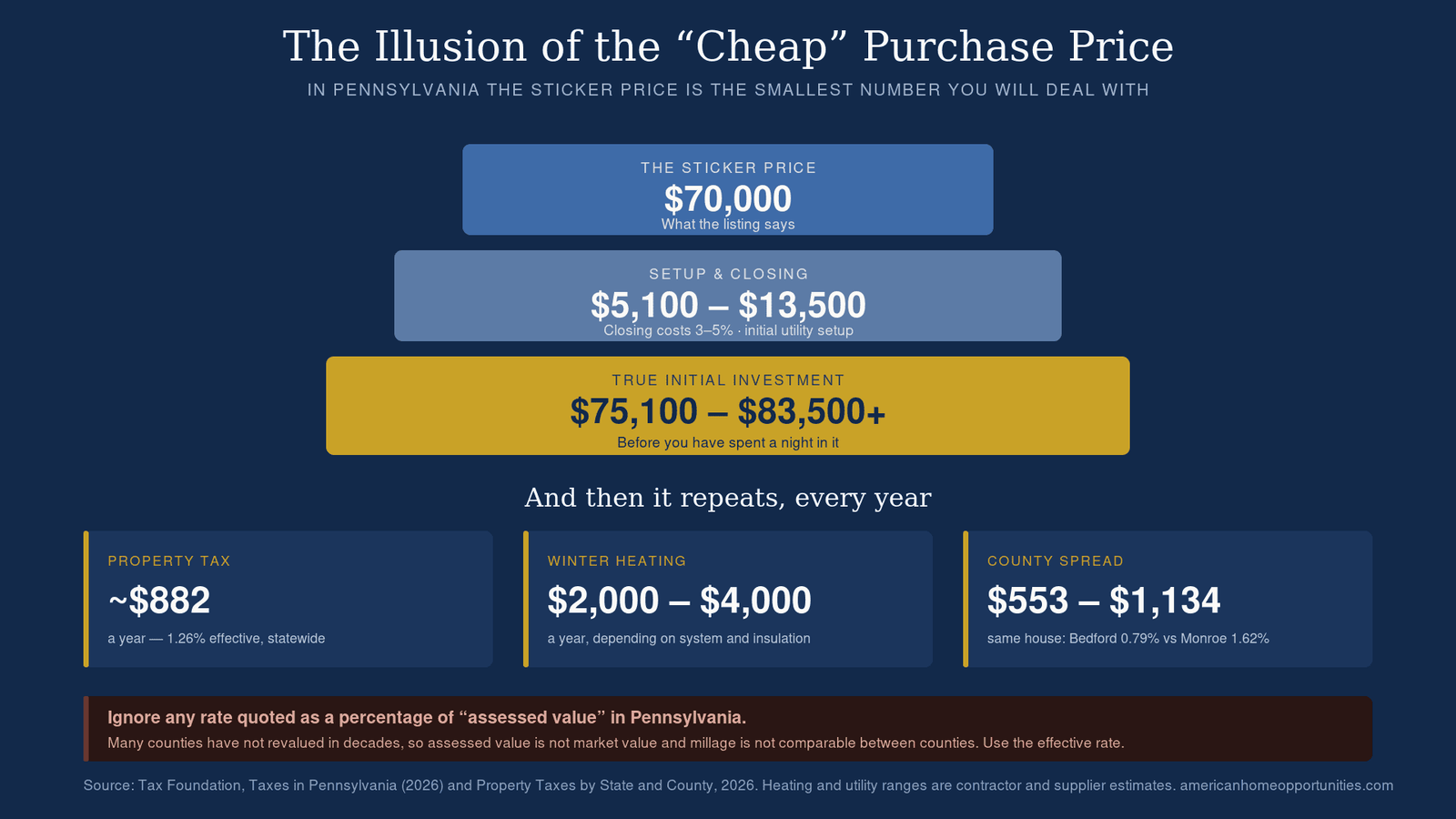
Imagine you buy a rural property for $70,000. At first glance, this may seem like a great deal, but the total cost goes well beyond the purchase price.
Here’s what you actually need to budget for:
- Purchase price: $70,000
- Closing costs (3%–5%): $2,100 – $3,500
- Annual property taxes (1.26% effective, statewide): ~$880 per year
- Heating costs (winter months): $2,000 – $4,000 annually depending on system and insulation
- Initial utilities setup (if needed): $3,000 – $10,000
This brings your estimated total initial investment to:
👉 $75,100 – $83,500
And your ongoing yearly costs can be significantly higher than expected due to heating and maintenance.
This is why understanding the real cost of owning rural property in Pennsylvania is essential. A property that looks very affordable upfront can quickly become a much larger financial commitment once all factors are included.
If you want to compare these costs with real properties currently on the market, take a look at our breakdown of 10 dirt cheap farmhouses in Pennsylvania with land, where we analyze actual listings and highlight real opportunities across different regions.
Is Rural Property in Pennsylvania Worth It
Rural property in Pennsylvania can offer real value, but it’s not the kind of market where the lowest price automatically means the best deal. In many cases, what looks affordable at first is tied to factors like older homes, higher ongoing costs, or location-specific challenges.
Unlike faster-growing states, Pennsylvania often rewards buyers who take a more analytical approach. Evaluating heating expenses, property taxes, and renovation needs upfront is essential to understanding whether a property truly makes sense financially.
For the right buyer, these conditions can actually create opportunities. Lower competition and a large inventory of older homes mean there is potential to find undervalued properties—but only if you approach the purchase with a clear understanding of the full cost structure.
Ready to explore real opportunities? Browse all available cheap rural properties in Pennsylvania here.
Disclaimer
This article is for informational purposes only and does not constitute financial, legal, or real estate advice. Property prices, taxes, regulations, and market conditions may vary by location and can change over time. Buyers should conduct their own due diligence and consult with licensed real estate professionals, attorneys, or financial advisors before making any purchase decisions.