
Buying Land in New Mexico: What an Acre Really Costs, County by County
The cheapest farmland in America, an eleven-to-one premium for water, and the checks that decide whether a cheap parcel is a homestead or a paper lot.
New Mexico has the cheapest farmland in America, and most of the price is water
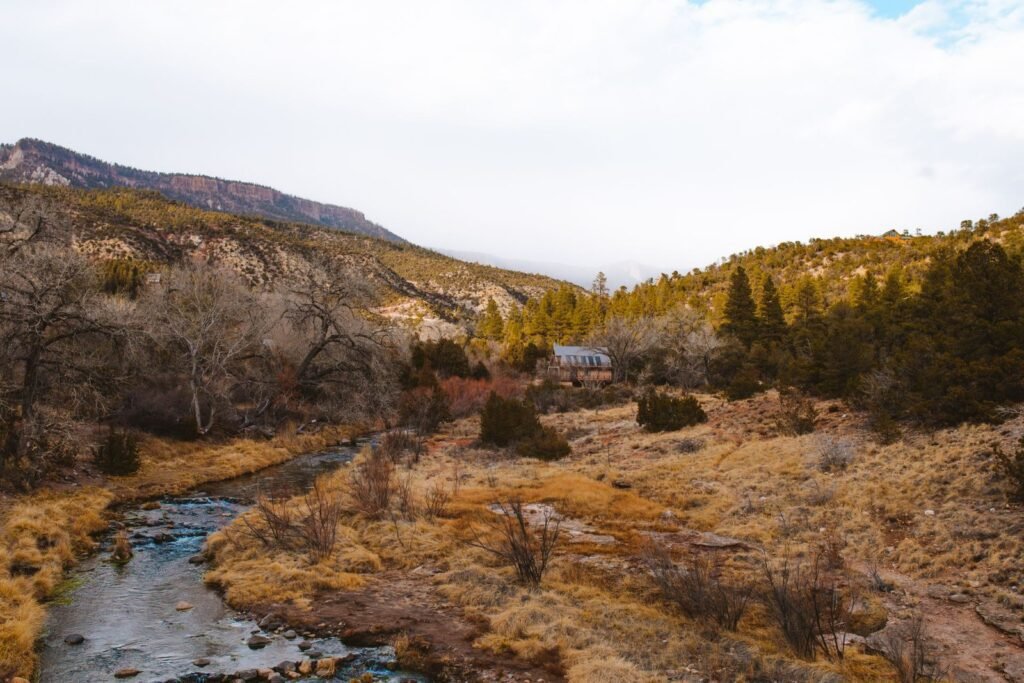
If you are buying land in New Mexico, start with the national picture, because it is unusually clear. In the USDA’s 2026 land values survey, farm real estate in New Mexico averaged $735 an acre, the lowest of the 48 states the survey covers. Wyoming came second at $1,030. The 2022 Census of Agriculture, which counts every farm rather than sampling them, says the same thing a different way: $838 an acre, again the lowest figure of any state.
Now look inside that number. The same 2026 survey puts irrigated cropland in New Mexico at $7,600 an acre and cropland without irrigation at $670. That is a gap of more than eleven to one, on ground that can look identical from the road. It is the widest gap between irrigated and dry cropland of any state the survey reports both for. When you are buying land in New Mexico, the acreage is the cheap part. The water is what costs money, and it is also the thing that most often turns out not to come with the deed.
On the properties we cover, the land is 1.7% of the price
We cross-checked the census against the ten New Mexico properties we covered in September 2026, all listed between $59,000 and $364,000. For each one we multiplied the acreage by its county’s census value per acre and compared that with the asking price. On average, the ground underneath came to 1.7 percent of what the seller was asking.
Buying land in New Mexico: the numbers in short
- Cheapest farmland in the country. $735 an acre for farm real estate in 2026 (USDA), and $838 in the 2022 census, the lowest of any state in both.
- Water is the price. Irrigated cropland averages $7,600 an acre against $670 without irrigation, a gap of 11.3 to 1.
- County range. $379 an acre in Guadalupe County up to $2,788 in Bernalillo. Los Alamos is an outlier at $24,134 on just 4 farms.
- Cheapest region. The southwest counties of Catron, Grant, Hidalgo, Luna and Sierra average $559 an acre together.
- Taxes. A 0.63% effective rate on owner-occupied homes, taxable value set at one-third of market value, no estate or inheritance tax, and a 3% cap on residential value increases that resets when you buy.
- Septic minimum. A conventional septic system cannot go on a lot smaller than 0.75 acre unless a system is already there (20.7.3 NMAC).
Farmland values by region: what an acre of land in New Mexico actually costs
We pulled all 33 counties out of the 2022 census and checked the extraction against the census’s own totals. The county farm counts add back to exactly 20,976, the published state figure. The county acres add to 38,871,133 against 39,128,563 for the state, and the gap is precisely the land the census withholds for Bernalillo and Los Alamos to protect the privacy of individual farms. Those two counties are marked below and left out of the weighted averages.
| Region | Farmland value per acre USDA, 2022 census | Land in farms |
|---|---|---|
| Southwest & Bootheel | $559 5 counties | 4,675,606 acres |
| Northwest & I-40 West | $605 3 counties | 6,539,093 acres |
| Eastern Plains | $701 7 counties | 9,046,917 acres |
| Central Rio Grande | $791 5 counties, 1 withheld | 4,370,200 acres |
| Permian Basin & Pecos Valley | $925 3 counties | 4,775,738 acres |
| North Central Mountains | $1,190 7 counties, 1 withheld | 6,451,949 acres |
| South Central | $1,201 3 counties | 3,011,630 acres |
| New Mexico statewide | $838 all 33 counties | 39,128,563 acres |
The cheapest region averages $559 an acre and the most expensive $1,201, a spread of 2.15 to one. That is wide enough that the region you shop in matters as much as the parcel. County by county the range is wider still: $379 in Guadalupe to $2,788 in Bernalillo, about 7.4 to one. The six cheapest counties are Guadalupe at $379, De Baca at $385, Cibola and Sierra at $406 each, Hidalgo at $414 and Harding at $447. Between them they hold 6.6 million acres in farms at a weighted $404 an acre.
One region looks expensive because of one county. Another is expensive all the way through
South Central reads as the priciest region in the state, but Doña Ana County is carrying that number. It holds Las Cruces and the irrigated Mesilla Valley, and it averages $2,316 an acre. Take it out and Otero and Lincoln counties together come to $854, close to the state average. If you want the Sacramento Mountains and the Tularosa Basin, the region’s reputation is not the price you will see.
The North Central Mountains are the opposite case. Remove Santa Fe, Taos and Los Alamos and the remaining four counties still average $1,149. That part of the state is expensive all the way through, and the reason is the same one running through this whole page: the old irrigated valleys of the north, with their acequias and river water, are where the water is.
Where the cheapest land in New Mexico is, and the honest reason it is cheap
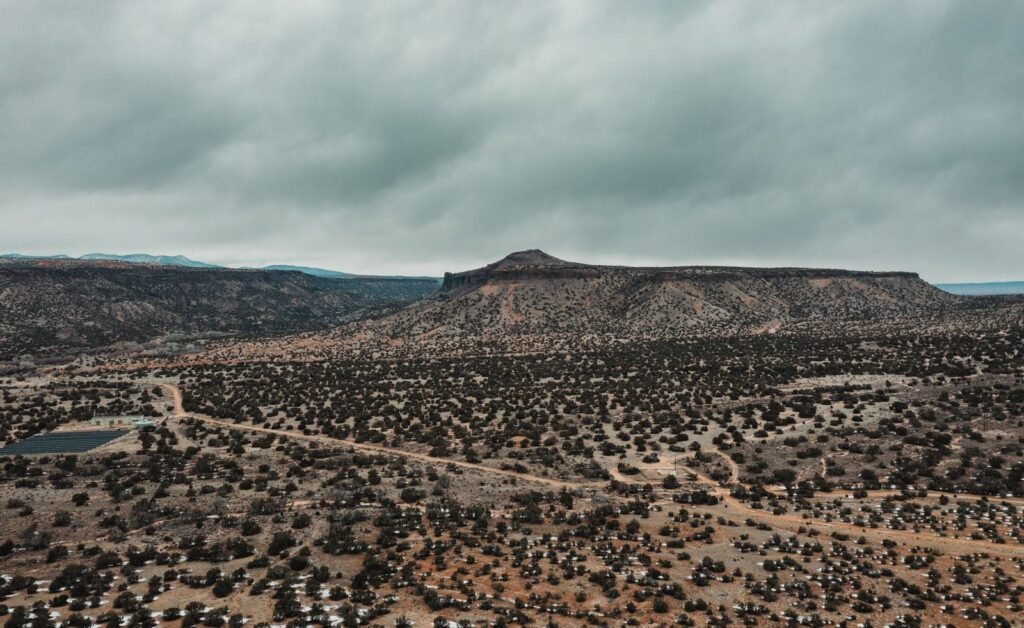
The southwest is cheap because it is far from everything and much of it belongs to the federal government. Catron County is one of the least populated counties in the state, and most of it is national forest. Hidalgo County, the Bootheel, runs down to the Mexican border with a handful of towns in it. Sierra County has Truth or Consequences and Elephant Butte and a great deal of empty desert between them. Private land in counties like these is priced by what a rancher can earn from it, and grass in this climate does not earn much.
The northwest is cheap for a different reason. McKinley and San Juan counties include large parts of the Navajo Nation, and around its edges the ownership is a checkerboard of tribal, allotted, federal, state and private parcels. Cibola County runs along Interstate 40 and takes in Acoma Pueblo, part of Laguna Pueblo and part of the Cibola National Forest. What private land comes up for sale there is often scattered, sometimes without clean access, and priced to match. That is a reason to be careful, and it is also why a $406 acre exists.
The Eastern Plains are ranch country. Guadalupe, De Baca and Harding counties are almost entirely grazing land, and grazing land without irrigation is the cheapest ground in the state. Curry and Roosevelt counties, out on the Llano Estacado, sit higher in the regional range because they farm, pumping from the Ogallala aquifer, which lifts the average and brings the same water question with it.
The counties at the top, and why
Los Alamos, at $24,134 an acre, is not a farm market at all. The census found 4 farms in the whole county, and it is the home of a national laboratory with almost no private land to spare. Bernalillo at $2,788 is Albuquerque. Doña Ana at $2,316 is Las Cruces and irrigated valley farmland. Taos at $2,095 has only 229,129 acres in farms, the least of any county whose acreage is published, in a place people pay to live in. Rio Arriba at $1,689, Mora at $1,359 and Santa Fe at $1,245 complete the picture: a metro, or a river valley, or both.
What to check before buying land in New Mexico
Six checks that are specific to this state, in the order we would run them. The first one decides more deals than the other five together.
We check the water before a New Mexico property makes our list
Every property we feature has been run against its county census value, its water source and its access before it reaches the channel. Leave your email and you get the next list, with the checks already done.
What it costs to own rural land in New Mexico
The headline number is low. The Tax Foundation puts New Mexico’s effective property tax rate at 0.63 percent of home value for 2026. There is no estate tax and no inheritance tax, income tax runs from 1.5 to 5.9 percent, and the combined sales tax averages 7.67 percent. But that 0.63 percent describes owners who have lived in their homes for years, and a buyer is not one of them.
Here is how the bill is built. The county values the property, and the taxable value is one-third of that. A head of household can subtract $2,000. The local tax rate, in mills, is applied to what is left. Residential property then gets a cap: its value for tax purposes cannot rise more than 3 percent a year, or 6.1 percent over two years. The cap does not apply in the year after a change of ownership, so when you buy, the house is revalued at market, and a neighbor who has owned for twenty years can pay a fraction of what you pay on an identical home. Land with no house on it is non-residential property. It has no cap at all, and non-residential tax rates are almost always higher than residential ones.
Agricultural valuation needs enough land to feed a cow
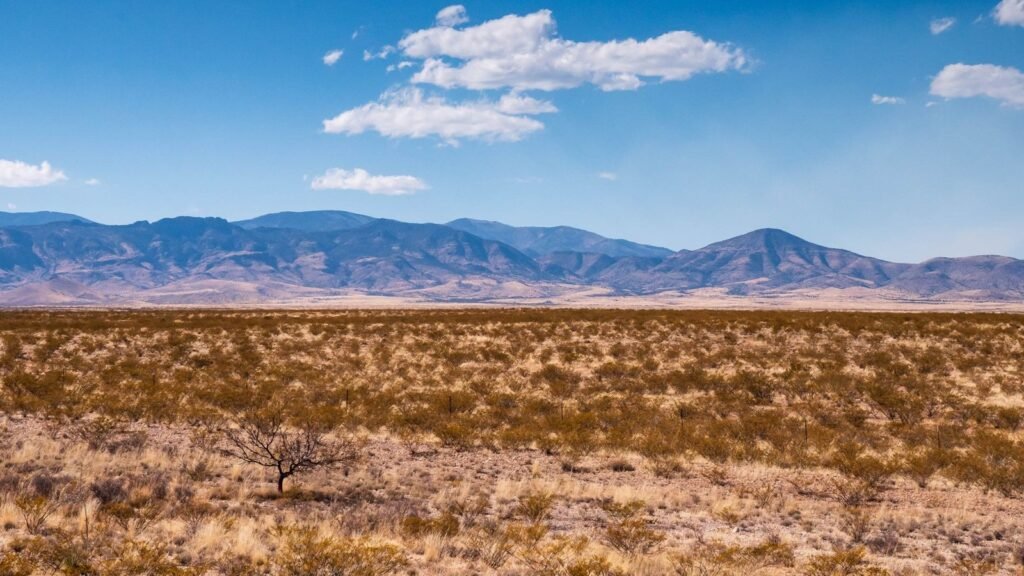
New Mexico values land used primarily for agriculture on what it can produce rather than what it would sell for, under section 7-36-20, and on grazing land the difference is enormous. You apply to the county assessor within 30 days of the notice of valuation, and you do not reapply while the use stays the same. If the use changes, you must report it by the end of February, and the penalty for not reporting is $25 or 25 percent of the tax difference, whichever is greater.
The catch is the size. Grazing land has to be able to carry at least one animal unit, which is one cow or five sheep or goats, for the year. Grant County’s assessor puts that minimum at 53.3 acres or 80 acres, depending on the grazing class. The state regulation also presumes the homesite is at least one acre and says it is not valued as agricultural land. On a 10-acre or 20-acre homestead in dry country, grazing valuation is simply out of reach, and you should budget for the full bill.
The arithmetic, with a real rural tax rate
Doña Ana County publishes its 2025 rates. In the Hatch area, outside the village limits, property pays 25.007 mills if residential and 27.727 mills if non-residential. Take 40 acres of pasture at the state’s 2026 average of $650 an acre, and a $200,000 house bought on a few acres nearby.
Closing, broadband and hospitals
New Mexico has no real estate transfer tax, so the state takes nothing when the deed changes hands. Closings are normally run by a title company, and no state law requires an attorney. Title insurance rates are set by the state Superintendent of Insurance rather than competed on, and the seller customarily pays for the owner’s policy, although that is negotiable. Seller financing on rural land often takes the form of a real estate contract, with the deed held in escrow by a third party until the buyer finishes paying. Use a licensed escrow company and get a title policy even when the seller is financing.
Broadband money is committed, but the build is only starting. Federal regulators approved New Mexico’s $382 million broadband plan in January 2026 to reach more than 42,500 unserved and underserved locations, with 42 percent of them planned for fiber, 43 percent for fixed wireless and 15 percent for low-earth-orbit satellite. Check the address on the state’s map rather than assuming a timeline. Hospitals are a harder question. According to the University of New Mexico’s College of Population Health, about a third of the state’s counties have little or no obstetric care, and roughly 18 percent of New Mexicans live more than 30 minutes from a hospital that delivers babies, nearly double the national share. Ask what the nearest hospital still does, not whether there is one.
Why the price per acre on a listing site is not the price of land
LandSearch, a land listing site, showed an average asking price of $6,892 an acre across 4,763 New Mexico listings in September 2026. That is 9.4 times the USDA figure, more than double the national gap of about 4.3 to 1.
Neither number is wrong. They measure different things. A listing-site average is dominated by small parcels, and a one-acre lot is priced as a place to put a house, not as grazing. The USDA figure describes working farms and ranches that average hundreds of acres. The rule that follows is useful: the smaller the parcel, the further its price will sit above the census value, and the census tells you what the land would be worth if nobody wanted to live on it.
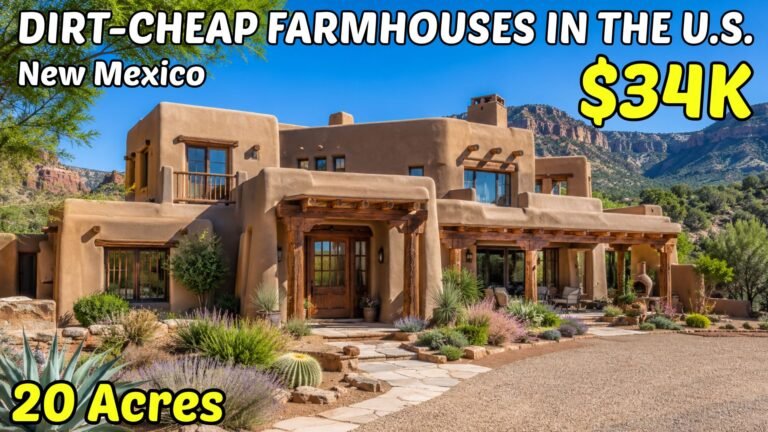
Cheap land and homes we have covered in New Mexico
Every property below was checked against its county census value, its water source and its access before we featured it. Prices are asking prices at the time of each report, and some of these will have sold.
Go deeper on New Mexico land
This page gives you the overview. Each guide below takes one hard question and answers it with New Mexico’s own rules and numbers, starting with how to live off the grid legally and who will actually lend on bare land.
Keep exploring before you commit to New Mexico
New Mexico wins on price, and loses on water and distance. These are worth reading while it is still one of several states on your list.
- Homesteading in New Mexico – the county ranking in full and ten real properties, with what the land is worth under each one.
- The cheapest states to buy land in America – New Mexico against the other 47, measured with the same federal survey.
- Rural property guides – every state guide and national guide we publish, in one place.
- Why cheap rural homes do not sell – what is really going on when a house sits unsold at a price that looks impossible.
- The Rural Property Field Guide and how the AHO Score works – the checks we run, and how a property earns a place on our lists.
Get the next batch of New Mexico listings first
We come back to New Mexico on a rotation, and the southwest and the Eastern Plains are where most of the value turns up. Leave your details and the next New Mexico list reaches you before it goes public.
Common questions about buying land in New Mexico
Why is land so cheap in New Mexico?
Mostly because it is dry. The USDA’s 2026 survey puts New Mexico farm real estate at $735 an acre, the lowest of the 48 states it covers, and pasture averages $650. Irrigated cropland averages $7,600 an acre, eleven times dry cropland, so in New Mexico the price follows water rather than acreage.
How much does an acre of land cost in New Mexico?
Farmland and farm buildings in New Mexico averaged $838 an acre in the 2022 USDA census and $735 in the USDA’s 2026 survey. By county it runs from $379 in Guadalupe to $2,788 in Bernalillo. Irrigated cropland averages $7,600 an acre, eleven times dry cropland, so water matters more than location.
Is land cheaper in Arizona or New Mexico?
Slightly cheaper in New Mexico. The 2022 USDA Census of Agriculture valued farmland and farm buildings at $838 an acre in New Mexico and $883 in Arizona, the two lowest of all 50 states. In both states small parcels list far above those averages, so compare water and legal access on the parcel before comparing states.
Do water rights come with land in New Mexico?
Not automatically. In New Mexico, surface water and irrigation rights are separate property that can be sold away from the land, so a parcel can be sold without its water. Ask for the permit or license number and verify it with the Office of the State Engineer. A new domestic well also needs a State Engineer permit.
How are property taxes calculated on land in New Mexico?
New Mexico taxes one-third of a property’s value at the local mill rate, after a $2,000 head-of-household exemption where it applies. Residential value increases are capped at 3 percent a year, but the cap resets when the property sells. Vacant land counts as non-residential, has no cap, and usually carries a slightly higher rate.
Who pays closing costs in New Mexico?
By custom, the seller pays for the owner’s title insurance policy everywhere in New Mexico except Los Alamos County, and the rest is split however the purchase contract says. The state charges no real estate transfer tax. Title insurance rates are set by the Superintendent of Insurance, so the premium is the same whichever title company closes.
What is the minimum lot size for a septic system in New Mexico?
New Mexico’s liquid waste rule, 20.7.3 NMAC, bars a conventional septic system on a lot smaller than 0.75 acre unless an established system already exists. Flow cannot exceed 500 gallons a day per acre, the drainfield must sit 100 feet from a private well, and every new system needs a New Mexico Environment Department permit.
Who owns most of the land in New Mexico?
Private owners hold less than half of New Mexico, about 46.5% by a 2020 Congressional Research Service count, and the federal government owns roughly a third. The New Mexico State Land Office manages about 9 million surface acres of trust land for schools, mostly leased for grazing, oil and gas, and it seldom sells any outright.
Before you buy, the important part
American Home Opportunities is a publisher. We are not a real estate broker, agent, lender, appraiser, attorney or financial advisor, and nothing on this page is legal, tax or financial advice. County farmland values come from the USDA Census of Agriculture 2022, Table 8, and measure farmland and the buildings on working farms rather than asking prices for small parcels. State farm real estate, pasture and cropland values come from the USDA NASS Land Values 2026 Summary. Tax rates come from the Tax Foundation for 2026, the New Mexico Legislative Finance Committee, sections 7-36-20 and 7-36-21.2 NMSA, 3.6.5.27 NMAC, the Grant County Assessor and the Doña Ana County Assessor. Water rules come from the Office of the State Engineer; septic rules from 20.7.3 NMAC and the New Mexico Environment Department; building permits from the Construction Industries Division. Well costs come from DrillerDB, a contractor data aggregator, not a state agency. Subdivision history comes from the Natural Resources Journal, University of New Mexico, 1984. State Trust land figures come from the Legislative Finance Committee, 2023, and land grant figures from the Land Trust Alliance. Broadband figures come from the Office of the Governor, January 2026, and maternity care figures from the University of New Mexico College of Population Health as reported by Source NM. Listing-site prices come from LandSearch, September 2026. Any price we quote for a property is an asking price at the time of writing, not a sale price. Rural land carries risks this page can introduce but not resolve for your parcel, including water rights, wells, septic suitability, legal access, surveys, easements, title, flood exposure, repairs, insurance and financing. Verify everything with the county, the State Engineer and licensed professionals before you commit money. Page published September 2026.