
Buying Rural Property in Tennessee
What land actually costs by region, what to check before you make an offer, and where the value still is.
0.52%
Property tax
US range: 0.29% to 1.88%
$0
Income tax
None, at any level
$3,848
Per acre, West TN
cheapest of three divisions
4.5×
Cheapest to priciest county
Chester $2,781 to Davidson $12,414
There is no such thing as “the Tennessee land market”
Farmland in Chester County, out in the west, is worth about $2,781 an acre according to the USDA census. In Davidson County, which is Nashville, the same census puts it at $12,414. Same state, same laws, same weather, four and a half times the price. Move from farmland to building lots near Nashville and the gap widens far beyond that.
That spread is the entire opportunity, and it is also where most buyers get hurt. People searching for affordable land here are usually looking at listings without knowing which Tennessee they are looking at, and the difference between a bargain and a mistake is often one county line.
This guide breaks the state into the three markets that actually exist, gives you the price bands for each, and walks through the specific things you have to verify here that you would not think about somewhere else. If you have watched our videos, this is the ground the listings sit on.
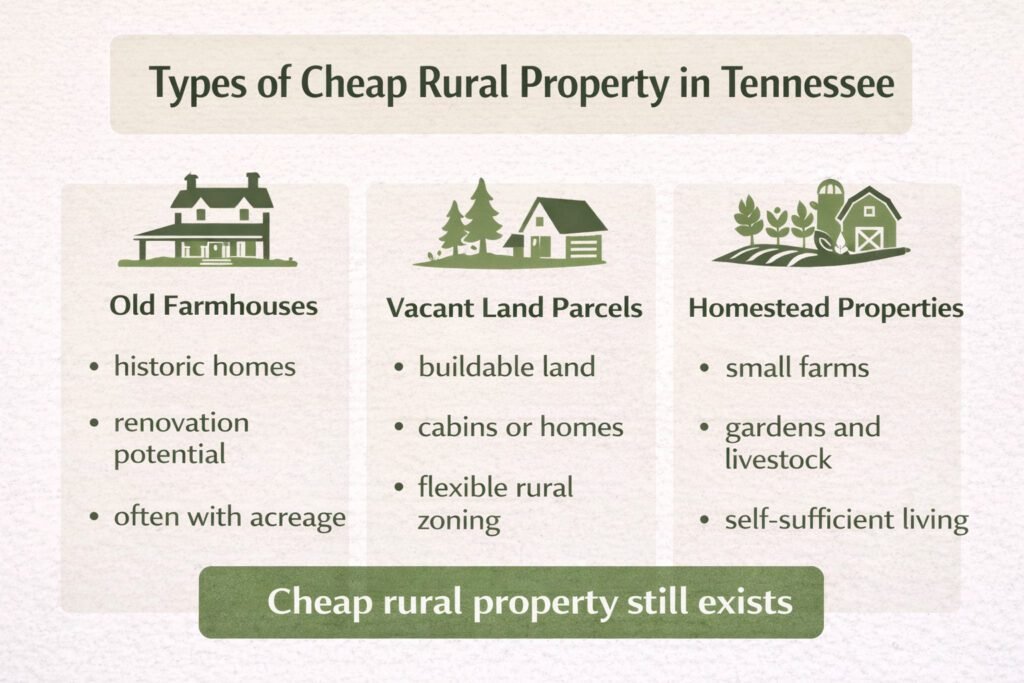
What land costs, region by region
Tennessee runs about 440 miles from the Mississippi River to the Appalachian ridgeline, and the land changes completely along the way. Three markets, three price bands.
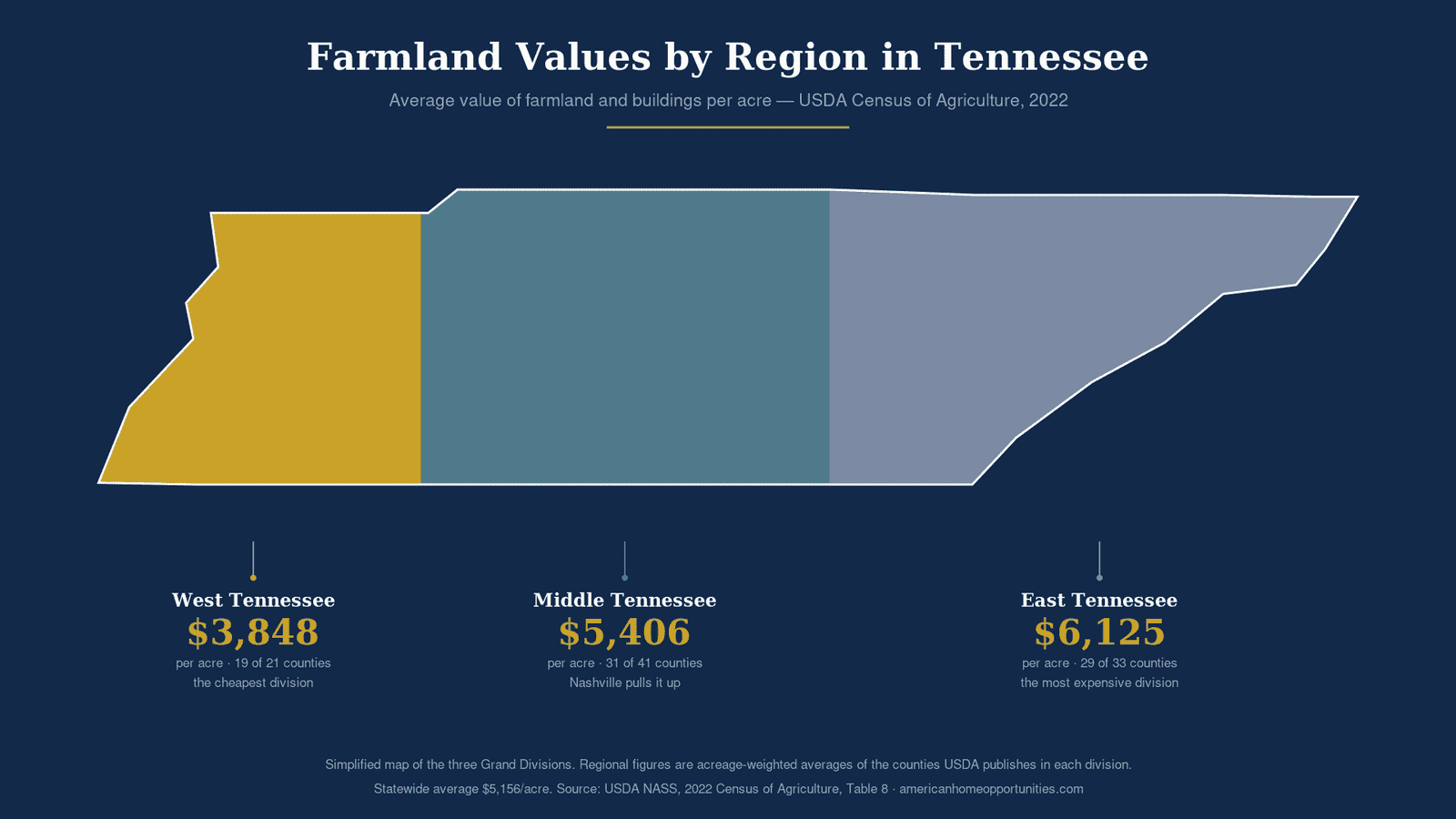
| Grand Division | Farmland value per acre USDA, 2022 census | Range across counties | What that means for a buyer |
|---|---|---|---|
| West Tennessee lowlands, Mississippi delta | $3,848 19 of 21 counties | $2,781 in Chester to $5,264 in Shelby | The cheapest division, and it is not close. Flat, agricultural, good soil, a long way from any city. |
| Middle Tennessee limestone basin | $5,406 31 of 41 counties | $3,130 in Perry to $12,414 in Davidson | The widest spread in the state. Price tracks distance to Nashville. Perry, Wayne and Lewis stay cheap; Williamson and Rutherford do not. |
| East Tennessee Cumberland Plateau and ridges | $6,125 29 of 33 counties | $3,190 in Hancock to $12,302 in Knox | Counter-intuitively the most expensive division on average — small high-value parcels around Knoxville and the Smokies pull it up. Hancock and the far northeast are still cheap. |
| Tennessee statewide | $5,156 all 95 counties | USDA 2022 census, farmland and buildings on farms. | |
One warning about the numbers you will see elsewhere. Listing sites quote averages above $19,000 per acre for Tennessee rural land. That is an average of what is currently for sale, not of what sells, and expensive parcels sit unsold far longer than cheap ones, which drags the average up. The USDA survey figure is the defensible one.
Where the cheap land is, and why it is cheap
The cheapest farmland in the state is in West Tennessee. Chester County comes in at $2,781 an acre, Hardeman at $2,804, Decatur at $2,946 and McNairy at $2,954. Over in the east, Hancock County on the Virginia line runs $3,190 and Perry County, in Middle Tennessee, $3,130. Those are USDA census values for farmland including buildings, which is not the same thing as the asking price on a recreational or timber tract.
Land is cheap for reasons, and it is better to know them before you buy than after. In the far west it is distance: farming counties a long way from any city, with small populations and limited employment. On the plateau and in the eastern hollows it is terrain and access, plus the long economic tail of coal and timber.
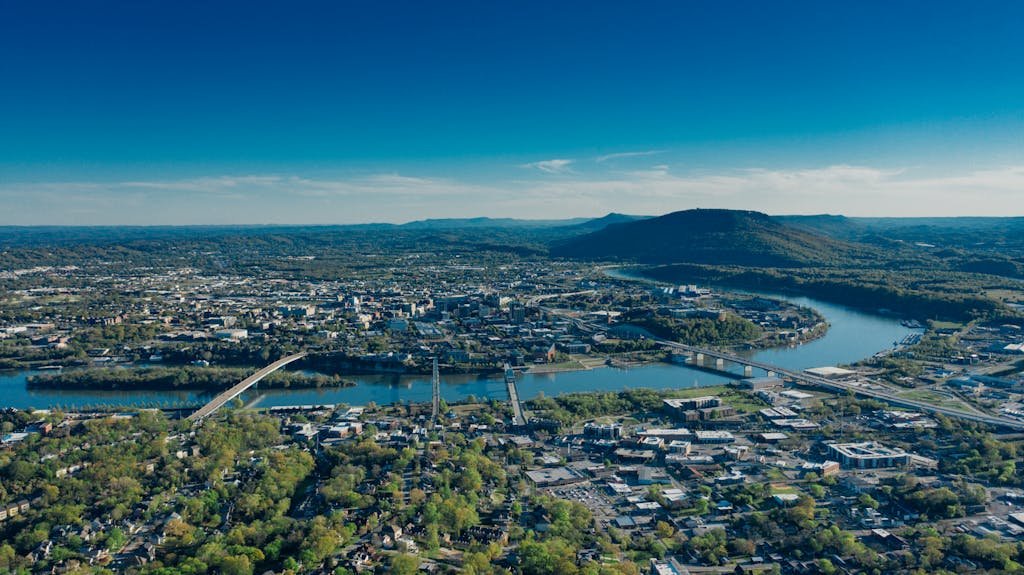
None of that makes the land bad. Some of the most beautiful property in the eastern United States is in those counties. But the price is telling you something true, and the only question that matters is whether what it is telling you affects the life you want to live there.
There is also a middle tier worth knowing. Hickman County sits about an hour from Nashville and still prices like the country. Stewart County borders the Land Between the Lakes. Fentress County has affordable forested land near Big South Fork. These are the places where you get rural prices without being four hours from a hospital.
What to check before buying rural property in Tennessee
Every state has its own traps. These are the ones specific to this one, and a listing page will not mention a single of them.
Sinkholes and karst ground
Roughly 20% of Tennessee sits on terrain prone to sinkholes, concentrated in the Valley and Ridge province of East Tennessee, the Eastern Highland Rim and parts of the Central Basin, where limestone and dolomite dissolve underground.
Unlike Florida, where sandy soil collapses suddenly and visibly, Tennessee’s clay-heavy soil sinks gradually. You will almost certainly not see it on a walkthrough. Check the county sinkhole maps before you fall in love with a parcel.
The perc test decides how many bedrooms you get
Almost every rural home here runs on septic, and the state requires a percolation test before it will issue a septic permit. The test costs $200 to $600 and is run by a licensed engineer.
Here is the part people miss: it does not just decide whether you can put in a septic field, it decides how many bedrooms the property can legally support. You can buy land intending to build four bedrooms and find the soil permits two.
Landlocked parcels are common here
Rural Tennessee has a real problem with parcels that have no recorded legal access to a public road. Land without documented access is hard to finance, hard to insure and hard to resell, which is exactly why some of it looks so cheap.
Confirm deeded road frontage or a recorded easement. If access depends on an easement, have an attorney read it: what it permits, whether it survives a sale, and who maintains the road.
Some counties have no building code at all
Tennessee does not apply one standard statewide. Some counties enforce strict codes; others have effectively none. That cuts both ways: freedom to build what you want, or a neighbour’s house built with no inspection and no plans.
Request a zoning verification letter from the county planning department before you make an offer, and know that converting agricultural zoning to residential can trigger penalties and back taxes.
The Greenbelt trap
Tennessee’s Greenbelt program taxes qualifying agricultural, forest and open-space land on its use value instead of its market value. Under development pressure that can cut the bill by 60% to 90%. It is a genuinely good program.
The catch is qualification. Agricultural land needs at least 15 acres in active farm use and must be capable of producing an average of $1,500 a year over any three-year period. Buy a Greenbelt property, stop farming it, and you lose the classification with back taxes possible. Ask whether the parcel is enrolled and what happens when you take title.
Internet is better here than you would expect
Fewer than 2% of Tennesseans now lack access to adequate broadband, and the state is targeting full coverage by the end of 2028, backed by more than $400 million across 128 projects in 74 counties.
The caveat: about half the households still waiting are in East Tennessee. If you work remotely, confirm service at the specific address. Coverage maps are optimistic; a call to the provider is not.
We run these checks before we feature a property
Every week we go through Tennessee listings and publish the ones that hold up — sinkholes, perc tests, legal access, the lot. Join the list and you will see them as they go out.
What it costs to own once you have it
This is where Tennessee separates itself, and it is why a lot of people land here rather than in a neighbouring state.
The effective property tax rate is 0.52%, against a national range of 0.29% in Hawaii to 1.88% in New Jersey and Illinois. On a $120,000 rural home that is roughly $625 a year. In parts of the Northeast that is a monthly bill. The statewide median property tax bill runs about $1,400.
Rates are set at county level and the range is wide. Nashville sits around $3.25 per $100 of assessed value and Memphis around $4.05, but rural counties can be as low as $1.50. The average is not what you will pay; the county is.
On top of that, Tennessee has no state income tax at any level. For a retiree on a pension, or anyone earning remotely, that changes the arithmetic of a move more than the purchase price does.
Tennessee properties we have featured
Everything above is the background. These are the actual listings, with the walkthroughs, our scoring and the direct links.
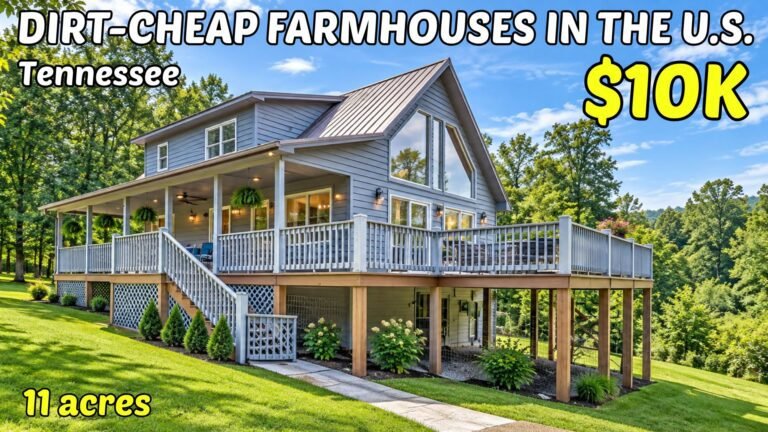
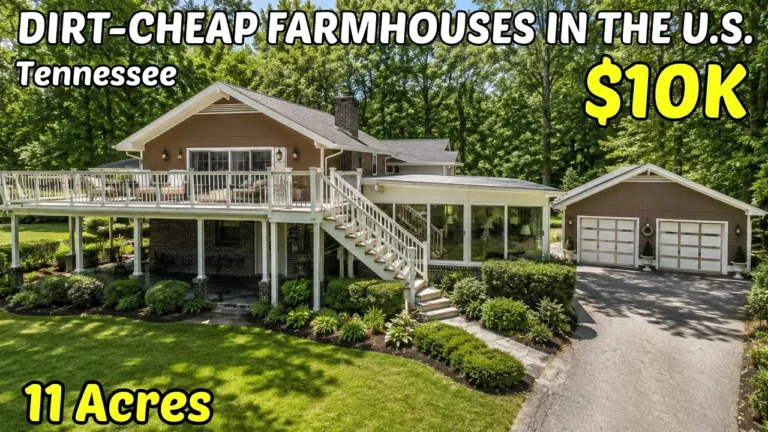
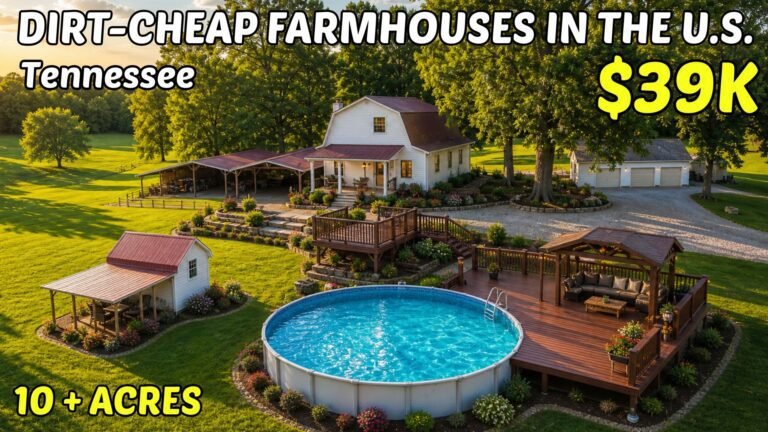

More Tennessee guides
Deeper on the parts of this page that deserve their own answer.
Keep exploring
Everything above is Tennessee. What follows applies wherever you end up buying.
The guides library collects every state page and every rule we have written up, in one place. Why cheap rural homes do not sell is the one to read first: eight mechanisms that push a liveable house onto the market at a price that looks like a mistake, and the loan routes that still work on it. How we score a property sets out what we weigh before anything reaches this page, and the Rural Property Field Guide is the free checklist to take to a viewing.
Get the next batch of Tennessee listings first
You have just seen what we have covered so far. We publish a new set of rural Tennessee properties most weeks, and the ones worth having rarely sit long. Join the list and you will see the next batch the day it goes out, rather than finding it after somebody else did.
One email when a new batch goes out. No sales calls, and you can leave any time.
Common questions about buying rural property in Tennessee
What is the cheapest county in Tennessee to buy land?
By USDA census figures the cheapest farmland is in West Tennessee: Chester County at about $2,781 an acre, with Hardeman, Decatur and McNairy all under $3,000. In the east, Hancock County runs $3,190. Remember these are farm values with buildings included; bare recreational and timber tracts are priced on a different logic, so compare individual listings rather than county averages.
Do I need a perc test before buying?
If the property does not already have an approved septic system, yes. Tennessee requires a percolation test before issuing a septic permit, and the result determines how many bedrooms the property can support. Make it a contingency in your offer rather than a surprise after closing.
Is Tennessee cheaper than Kentucky for rural property?
Land itself is broadly comparable, but ownership is cheaper in Tennessee. The effective property tax rate is 0.52% against Kentucky’s 0.74%, and Tennessee has no state income tax. Over a decade that gap is substantial.
Can I put a manufactured home on rural land in Tennessee?
It depends entirely on the county, and sometimes on the individual subdivision. Some counties permit it with standard septic and setback approval; others restrict or prohibit it. Ask the county planning department in writing before you buy.
Get Tennessee listings before they are gone
Tell us your price range and how soon you are planning to buy, and we will email you when we feature Tennessee properties that fit. You will also get our free Rural Property Buyer’s Guide, the checklist we run through before featuring any listing.
One question before you go
What is the biggest thing stopping you from buying a rural property: price, repairs, location, financing, or not knowing what to verify? Tell us and we will build the answer.
Prices and tax rates on this page are drawn from the USDA 2022 Census of Agriculture (county farmland values, Table 8), the USDA land value survey, the Tennessee Comptroller of the Treasury, the Tennessee Department of Economic and Community Development and Tax Foundation 2026 state tax data, current as of July 2026. Land prices move and county rules differ. Nothing here is legal, tax or financial advice, and every buyer should verify these details with the relevant county office and their own professionals before making an offer.