
What to Know Before Buying Land in Arizona
The only state where the government does not publish a price for dry farmland. What every county actually costs, and the four checks that decide whether cheap Arizona land is a bargain or a trap.
What land actually costs in Arizona
Arizona has fifteen counties. That is few enough that we can show you every single one, with no averaging and nothing hidden. The figures below come from the 2022 Census of Agriculture, which is a census and not a survey: the USDA counts every farm in every county rather than sampling a few. Our extraction reconciles exactly with the published state total, 16,710 farms across 25,525,087 acres, with no county suppressed.
The first thing to know is that the statewide average of $883 an acre is almost useless on its own. Navajo County comes in at $325 an acre. Yuma County comes in at $8,662. That is a spread of 26.7 times inside one state, and it is the widest gap we have measured anywhere. Florida, the previous record holder on this site, spans 12.1 times.
| County | Farmland value per acre USDA, 2022 census | Land in farms acres | Farms |
|---|---|---|---|
| Yuma | $8,662 | 212,153 | 397 |
| Maricopa | $7,203 | 502,029 | 1,527 |
| Greenlee | $5,515 | 23,269 | 95 |
| Cochise | $2,695 | 1,035,831 | 1,002 |
| La Paz | $2,604 | 235,666 | 107 |
| Santa Cruz | $2,575 | 119,188 | 166 |
| Yavapai | $2,325 | 661,643 | 727 |
| Pinal | $2,148 | 1,476,279 | 718 |
| Mohave | $1,045 | 753,799 | 274 |
| Graham | $736 | 1,215,892 | 359 |
| Pima | $504 | 2,275,756 | 478 |
| Gila | $356 | 1,328,043 | 191 |
| Coconino | $344 | 5,513,546 | 2,057 |
| Apache | $329 | 5,534,505 | 5,343 |
| Navajo | $325 | 4,637,488 | 3,269 |
| Arizona | $883 | 25,525,087 | 16,710 |
Read that table with one caution, or it will mislead you
The five cheapest counties on that list, Navajo, Apache, Coconino, Gila and Pima, all contain enormous areas of tribal trust land: the Navajo Nation, the Hopi Reservation, the Tohono O’odham Nation and the San Carlos Apache Reservation. That land is counted by the census as land in farms because it is grazed. It is not for sale, to you or to anyone else. So the $325 figure for Navajo County is correct as a measurement, and completely wrong as a shopping guide.
The USDA itself draws the same line. Its separate Land Values survey puts Arizona farm real estate at $4,300 an acre for 2026, roughly five times the census figure, and it carries a footnote on every Arizona number: excludes American Indian Reservation land. The two figures do not contradict each other. They are counting two different Arizonas. Anyone who quotes one of them at you without saying which is not being careful.
The five regions a buyer actually shops in
| Region | Farmland value per acre USDA, 2022 census, weighted by acres | Share of the state’s farmland |
|---|---|---|
| Colorado Plateau Apache, Coconino, Navajo | $333 | 61.5% |
| Central Highlands Yavapai, Gila | $1,011 | 7.8% |
| Southeast and borderlands Cochise, Graham, Greenlee, Santa Cruz, Pima | $1,128 | 18.3% |
| Lower Colorado River Mohave, La Paz, Yuma | $2,696 | 4.7% |
| Sun Corridor Maricopa, Pinal | $3,431 | 7.8% |
What the listing sites say, and why the number is so different
On the day we wrote this, LandSearch listed 9,623 Arizona properties covering 232,164 acres, at an average of $12,223 an acre. The census says $883. That is a factor of 13.8, and it is the largest gap of any state we have looked at.
| County | Listing sites average asking price per acre | USDA census 2022 | Multiple |
|---|---|---|---|
| Apache | $5,820 | $329 | 17.7x |
| Navajo | $3,431 | $325 | 10.6x |
| Mohave | $9,429 | $1,045 | 9.0x |
| Yavapai | $5,416 | $2,325 | 2.3x |
| Cochise | $5,444 | $2,695 | 2.0x |
| Arizona | $12,223 | $883 | 13.8x |
Look at the bottom two rows. In Yavapai and Cochise, where the farmland the census measures and the land actually being sold are more or less the same thing, the gap collapses to about two times. In Apache and Navajo it explodes, because the census is weighed down by reservation grazing land and the listings are dominated by small desert parcels sold off in splits. Neither number is the price. The honest answer is that an average price per acre for Arizona does not exist, and any site that gives you one is averaging what is for sale rather than what sells.
Where the cheap land is, and why it is cheap
In most states the price of rural land tracks soil, rainfall and how far you are from a job. In Arizona it tracks one thing, and the USDA’s own numbers say so out loud.
Every summer the USDA publishes a table of what cropland is worth in states with significant irrigation, split into irrigated and non-irrigated. Twenty-two states appear in the 2026 edition. Twenty of them get two lines, one for irrigated ground and one for dryland. Two states get only one. Nevada is one. Arizona is the other.
Colorado, Idaho, Montana, New Mexico, Utah and Wyoming all farm dry country, and all six have a published dryland cropland value. Arizona does not, and the reason is not an oversight. Arizona’s all-cropland figure for 2026 is $8,300 an acre and its irrigated figure is $8,400. The two are almost identical because there is barely any cropland in Arizona that is not irrigated. There is no dryland farmland market for the government to measure.
Now put that next to pasture. Arizona pasture is worth $980 an acre. Irrigated cropland is worth $8,300. That is a ratio of 8.5 to 1, and it is not a close call: the next widest spread in the country is Nebraska at 4.4 to 1, then California at 4.3. Arizona is nearly double the runner-up.
The one sentence to take away: in Arizona you are not buying land, you are buying the water that has been assigned to it. Everything else on this page follows from that.
And the cheapest land in Arizona is not the desert
This is the part that catches out almost every buyer who has only seen Arizona from a plane or a postcard. The three cheapest counties by farmland value, Navajo, Apache and Coconino, are not sun-baked flats near Phoenix. They are the Colorado Plateau, high, open and cold in winter. The National Weather Service records an average of 90.1 inches of snow at Flagstaff between October and May. Clear a mile of private road in February and you will stop thinking of Arizona as a warm state.
That is not a reason to avoid the plateau. Cold and altitude are why the north has real forests, real seasons and summers you can work in, and it is one of the few parts of the Southwest where the summer heat is not the organizing fact of daily life. It does mean the winter costs are real and the well is deep, and both of those are further down this page.
Where we keep finding the cheap houses
Across the Arizona properties we have covered, from $255,000 down to $17,999, six of the ten sat in Mohave County: Meadview, Golden Valley and Mohave Valley. That is not a coincidence and it is not a recommendation on its own. Mohave has the cheapest genuinely purchasable land in the state, a lot of it sold as small parcels, and it also sits partly inside a groundwater restriction area. Cheap land and restricted water tend to arrive together in Arizona, which is exactly why the checks in the next section matter more here than in almost any other state.
What to check before you buy land in Arizona
Six checks. The first four are where Arizona buyers lose money. The last two are where Arizona quietly gives something back that most states do not.
1. Find out whether the parcel is inside an Active Management Area
Arizona regulates groundwater by geography, and the map has grown. There are now eight Active Management Areas: Prescott, Phoenix, Pinal, Tucson, Santa Cruz, Douglas, Willcox and Ranegras Plain. There are also four Irrigation Non-Expansion Areas, where no new acreage may be brought under irrigation: Harquahala, Joseph City, Douglas and Hualapai Valley.
Inside an AMA, a developer has to prove an Assured Water Supply against seven criteria, including a supply that holds up for one hundred years, before lots can be sold. Outside an AMA the standard is Adequate Water Supply, only five criteria, and unless the county or town has passed its own ordinance requiring it, the finding is a disclosure rather than a condition. In plain terms: outside an AMA a seller can legally sell you a lot while disclosing that the water supply is not adequate. The disclosure is the protection. Read it.
Willcox covers ground in Cochise and Graham. Hualapai Valley sits in Mohave. Those are two of the places where Arizona land is cheapest, and most of the buyer guides online were written before either designation existed.
2. Ask whether it is a platted lot or a lot split, because they are not the same purchase
Arizona draws its line at six. Divide land into six or more lots and it is a subdivision: a recorded plat, a state public report, verified legal access, a water finding, roads and utilities addressed on paper before anything is sold. Divide it into five or fewer and it is a lot split, and almost none of that applies. Parcels of 36 acres and up can be sold with only minimal public report requirements at all.
What a lot split buyer does not get, according to the University of Arizona Cooperative Extension: no public report listing schools, medical services, liens, taxes and restrictions; no verification of legal access; no assessment of water adequacy; no utility planning, so the cost of bringing power is nobody’s problem until it is yours; no guarantee that anyone maintains the road; and no pre-approved septic, so a failed percolation test is something you discover after closing rather than before.
Arizona does require a seller in an unincorporated area to complete an Affidavit of Disclosure, twenty questions covering access, utilities, flooding and legal road status. It is a real document and you should demand it. The Extension also notes plainly that many Arizona counties do not have the capacity to enforce the requirement. Treat the affidavit as the start of your homework, not the end of it.
This is also the honest answer to why so much Arizona land looks impossibly cheap online. A great deal of it is lot-split parcels, sold without the protections a platted lot carries.
3. Price the well before you price the land
Here is the turn that catches people. The two cheapest counties in the state by farmland value, Apache at $329 an acre and Coconino at $344, are also the two most expensive places in Arizona to drill for water. On the plateau you are drilling through sandstone, basalt, limestone and shale rather than soft basin fill, and both the depth and the price per foot roughly double.
The ranges below are contractor estimates drawn from ADWR well logs, not an official state schedule. Use them to size the risk, then get a quote from a licensed driller for the specific section before you commit.
| County | Typical depth | Typical installed cost |
|---|---|---|
| Cochise, San Pedro Valley | 200 to 350 ft | about $12,600 |
| Mohave, Kingman area | about 300 ft | about $13,200 |
| Yavapai, Prescott and Verde Valley | 260 to 450 ft | $11,440 to $15,360 |
| Navajo, Show Low and White Mountains | 320 to 500 ft | $14,080 to $16,100 |
| Coconino, Flagstaff area | 500 to 800 ft | $27,500 and up |
| Apache, Colorado Plateau | 400 to 1,500 ft | $55 to $95 per foot in hard rock |
On a 1,200-foot hard-rock well in Apache County at $75 a foot you are looking at $90,000 before the pump, the tank and the trench. On the same land the acre cost you $329. That is the whole Arizona story in one arithmetic problem, and it is the reason a cheap plateau parcel is not automatically a cheap place to live.
4. Get the power quote in writing, and understand how the co-op bills it
Rural Arizona is served largely by electric cooperatives, and they do not publish a single cost per mile because there is no such thing. What they publish is a process, and it is worth knowing before you fall in love with a parcel.
Sulphur Springs Valley Electric Cooperative, which serves much of Cochise and Santa Cruz, is a fair example. A residential extension up to 400 feet carries a design fee of nothing to $150. Beyond 400 feet you add $0.20 a foot. You pay the design fee first, an engineer then produces the real estimate, you pay that as an Aid-to-Construction charge, and additional invoices can follow for anything unforeseen. There may be a line extension credit; ask for it by name.
The number that matters is the one on the engineer’s estimate for your parcel, and you can usually get it before you close. Any figure per mile you read on a land sales blog is a guess. Treat off-grid solar as a serious alternative rather than a fallback, and price it the same way, in writing.
5. In Cochise County you are allowed to build it yourself
Cochise County runs an Owner-Builder Amendment that has no real equivalent in most of the country. On rural unincorporated property zoned at one dwelling per four acres or larger, an owner building for themselves can choose between two routes. Option one is plan review plus a limited set of inspections, mechanical, electrical, plumbing and fire, and it can end in a conditioned Certificate of Occupancy. Option two is no plan review and no building inspections at all, and it does not produce a Certificate of Occupancy.
Zoning, floodplain, septic and well approvals still apply under both routes, the codes themselves still apply, and the owner-builder carries the responsibility for meeting them whether anyone inspects or not. You may use the amendment once every five years on property you own in unincorporated Cochise County.
Be clear-eyed about the trade. Route two means a lower build cost and no inspection queue, and it also means a house with no Certificate of Occupancy, which narrows your pool of lenders and of future buyers. It is a genuine opportunity for someone building to live in it, and a problem for someone building to flip it.
6. The agricultural classification is worth chasing, and it has a deadline
Arizona taxes qualifying agricultural land on its income-producing capacity rather than its market value, which on grazing ground is a large difference. The thresholds are real, though: 20 acres for commercial field crops, 10 acres for permanent crops such as trees or vines, 40 animal units for commercial grazing, 10 horses for commercial boarding or training, 3 for breeding.
The part people miss is the history requirement. The land must show commercial agricultural production in three of the past five years, so the classification does not transfer to you simply because you bought it and intend to farm. There are narrow exceptions for newly irrigated cropland and for acreage acquired next to an existing operation. The application goes to the county assessor by September 30 for the following tax year, and a physical inspection happens before approval.
Ask the assessor’s office directly whether the parcel currently carries the classification and what its production history looks like. That single phone call is free, and it can move the annual tax bill by a factor you will feel.
We run these checks before we feature a property
Every Arizona listing we publish gets read against the AMA map, the split history and the well record first. Leave your email and the ones that survive come to you.
What it actually costs to own it
This is where Arizona pays you back. The effective property tax rate on owner-occupied housing is 0.48 percent, the second lowest in the United States, level with Utah and beaten only by Hawaii. Income is taxed at a flat 2.50 percent. There is no estate tax and no inheritance tax. Sales tax is 5.60 percent at the state level and averages 8.52 percent once local rates are added, which matters when you are buying materials for a build.
On a $150,000 rural house that rate works out to roughly $720 a year in property tax. Across the Arizona properties we have covered the real bills have often come in lower still: one remodeled home in Golden Valley, in Mohave County, carried a property tax bill of $91 a year. That is not a typo and it is not typical of every parcel, but it tells you what the low end of Arizona ownership looks like.
And then there are the costs the listing never shows
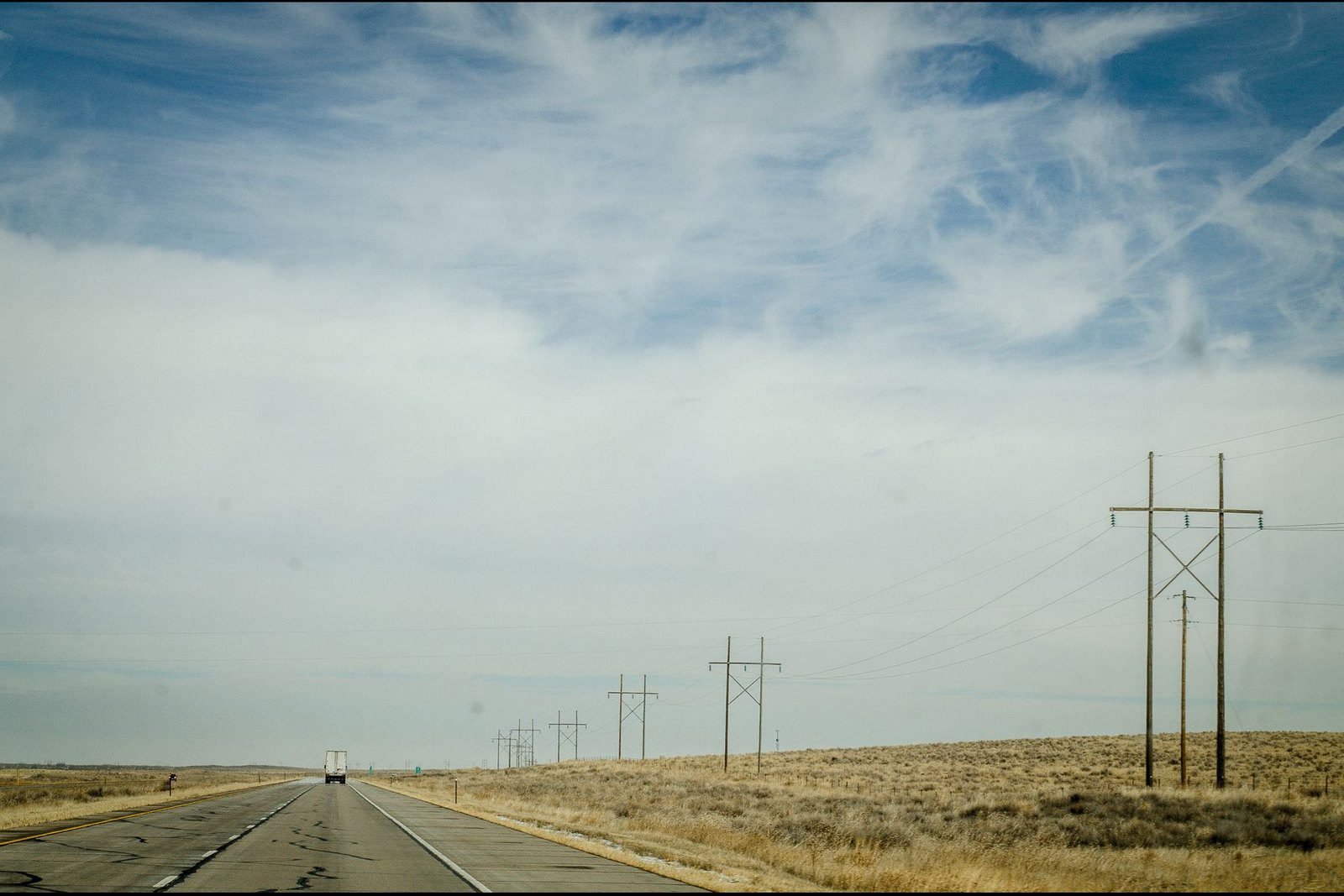
A cheap Arizona parcel is rarely expensive to hold. It is frequently expensive to make habitable. Before you compare two listings on price, put the same four numbers next to each: the well quote for that section, the co-op’s engineering estimate for power, the septic design and percolation test, and the cost of a legal, maintained way in. In the north, add snow. The National Weather Service records an average of 90.1 inches of it at Flagstaff between October and May, and clearing a private mile of road is a real winter line item.
Two more items belong on the list. Floodplain authority in unincorporated Arizona sits with the county flood control district under state law, not with the seller and not with FEMA, so the question of whether your building envelope and your access road cross a wash is a county question and worth asking early. And connectivity is improving on a published schedule rather than a promise: Arizona’s federal broadband proposal was approved on December 2, 2025, with $993.1 million committed across 70 projects and construction beginning in 2026. Ask the county broadband office whether your parcel is inside a funded project area before you assume satellite is the only option.
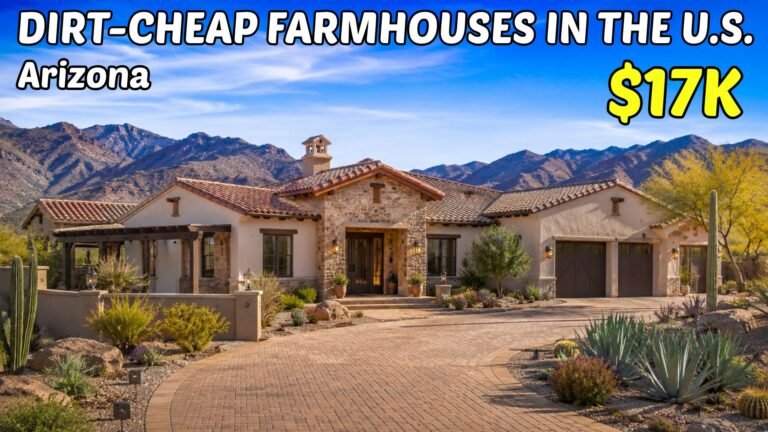
Cheap Arizona farmhouses we have covered
Real listings, checked against the county record before we published them. Prices are asking prices on the day we wrote each piece, and they move.
Arizona guides
The long reads behind the checks on this page: how the purchase actually works, and what the land costs you once it is yours.
Keep exploring
Arizona is the extreme case of a pattern that runs through the whole country: land is priced by what it can do, not by how it looks. These are the pieces where that pattern gets explained.
- Rural property guides — every guide on this site, sorted by what you are trying to work out.
- The cheapest states to buy land — where Arizona sits against the other 47, and why the ranking changes depending on whether you measure cropland or pasture.
- Why cheap rural homes do not sell — the reasons a house sits for two years at a price that looks impossible. Several of them are the checks on this page.
- How we rate a property — the AHO Score, and what we look at before a listing makes one of our lists.
- The Rural Property Field Guide — the checklist version of all of this, free.
Get the next batch of Arizona listings first
The good ones in Mohave and Cochise do not sit long. We send the new batch to the list before it goes anywhere else.
Questions people ask before buying land in Arizona
What is the cheapest county in Arizona to buy land?
By the USDA 2022 census, Navajo County at $325 an acre, followed by Apache at $329 and Coconino at $344. That measurement includes very large areas of tribal trust grazing land that is not for sale, so it understates what you would actually pay. Among counties where the census and the open market line up reasonably well, Mohave is the cheapest at $1,045 an acre.
How much is an acre of land in Arizona?
There is no single honest answer. The USDA census puts Arizona farmland and its buildings at $883 an acre. Listing sites average their current Arizona inventory at about $12,223 an acre. Those two numbers are 13.8 times apart because they count different things: the census counts working farmland including vast rangeland, the listing sites average what is currently for sale, which skews to small parcels near towns.
Do you need water rights to build a house on rural land in Arizona?
Not water rights in the sense of a surface water claim, but you do need a legal way to get water, and where the parcel sits decides how hard that is. Inside one of the eight Active Management Areas, groundwater use is regulated and a subdivision cannot be sold without a hundred-year Assured Water Supply determination. Outside them, the Adequate Water Supply finding is usually disclosure only. Check the parcel against the ADWR map before you make an offer, not after.
Are there parts of Arizona where you can build without a building permit?
Cochise County comes closest. Its Owner-Builder Amendment lets an owner building their own home on rural land zoned at one dwelling per four acres or more choose a route with no plan review and no building inspections. Zoning, floodplain, septic and well approvals still apply, the codes still apply, and a house built that way gets no Certificate of Occupancy, which affects financing and resale. It is a real option, not a loophole.
One question, one click
Pick the one that matches what you are stuck on. It opens an email with the subject already written. We read every one, and we answer with information and sources, never with advice.
Sources, and what this page is not
Farmland values by county: USDA 2022 Census of Agriculture, Volume 1, Chapter 2, Table 8, Arizona. State-level cropland, pasture and farm real estate values, and the irrigated and non-irrigated cropland table: USDA National Agricultural Statistics Service, Land Values 2026 Summary, July 2026. Every Arizona figure in that report carries the USDA’s own footnote, excludes American Indian Reservation land.
Tax rates: Tax Foundation, 2026. Water regulation: Arizona Department of Water Resources. Lot splits and subdivisions: University of Arizona Cooperative Extension, with Arizona Revised Statutes sections 11-831, 32-2101 and 33-422. Owner-builder rules and agricultural classification thresholds: Cochise County. Well depths and costs: contractor estimates compiled from the ADWR Wells 55 database, presented as ranges rather than quotes. Line extension charges: Sulphur Springs Valley Electric Cooperative. Snowfall: National Weather Service, Flagstaff. Broadband: Arizona Commerce Authority. Asking prices: LandSearch, September 2026. Page last reviewed September 2026.
American Home Opportunities is not a broker, an agent, a lender, a financial adviser or a law firm, and nothing on this page is legal, tax or financial advice. Property data comes from public listings and public records; prices and availability change, and the prices we quote are asking prices rather than sale prices. Verify everything through the official listing and the county before you act, and use licensed professionals. Rural property in Arizona involves wells, septic systems, legal access, surveys, easements, floodplain rules, repairs, insurance and financing, and any one of them can change what a parcel is worth to you.