
How to Buy Land in Oklahoma: Prices, Rain and Minerals
How to buy land in Oklahoma, all 77 counties: why the price of an acre follows the rain, who owns what lies beneath it, and the checks to run on wells, septic, storms and taxes before you sign.
How to buy land in Oklahoma: follow the rain, not the price tag
If you are working out how to buy land in Oklahoma, start with the number the federal government publishes and then look at a rainfall map. The 2022 Census of Agriculture counts every farm in all 77 Oklahoma counties and puts the average value of farmland and its buildings at $2,192 an acre. The USDA’s 2026 survey puts Oklahoma farm real estate at $2,620, barely more than half the national $4,500. Oklahoma is cheap land, and it is also the cheapest state in the country to live in.
But the price follows the rain. Oklahoma runs from more than 50 inches of rain a year in the southeast to under 20 in the Panhandle, and the census price falls with it. The eight cheapest counties in the state are all in the dry west, where the Panhandle and northwest average $1,351 an acre. The wetter east costs more, and the southeast, at $2,428 an acre, is where cheap land and real rainfall meet. So the first decision when buying land in Oklahoma is not the county. It is how much rain you need, and how much you are willing to pay for it.
On the ten Oklahoma homes we covered, the land was 8.4% of the price
We checked the census against the ten properties in our list of the best counties in Oklahoma for homesteading, priced from $43,000 in Mangum to $295,000 in Webbers Falls. For each one we multiplied the acreage by its county’s census value and compared the result with the asking price. On average the ground underneath came to 8.4 percent of what the seller was asking. The highest share was 25.4 percent, on 25.2 acres outside Webbers Falls in Muskogee County. The lowest was 0.9 percent, on a quarter-acre town lot in Mangum.
That is how the cheap end of the Oklahoma market works. When land costs $1,500 to $3,000 an acre, five acres add only $7,500 to $15,000 to a house, so the price you see is almost all house, roof and wiring. Judge an Oklahoma property by the house, the storm shelter and the paperwork under the surface, not by the price per acre.
Buying land in Oklahoma: the numbers in short
Oklahoma land prices by region: what an acre actually costs
We pulled all 77 Oklahoma counties from the census and grouped them into the seven regions people actually shop in. Each average is weighted by the acres in farms, so a county with a lot of farmland counts for more than one with a little. The last column names the cheapest county inside each region.
| Region | Farmland value per acre USDA, 2022 census | Land in farms | Cheapest county in the region |
|---|---|---|---|
| Oklahoma City and Tulsa metro counties | $3,136 | 5,046,589 acres 14 of 77 counties | Osage, $1,883 |
| Northeast (Green Country) | $3,061 | 2,687,221 acres 10 counties | Nowata, $2,515 |
| South-central | $2,560 | 3,272,773 acres 10 counties | Jefferson, $1,957 |
| Southeast (Kiamichi and Little Dixie) | $2,428 | 4,305,771 acres 14 counties | Atoka, $2,051 |
| North-central wheat country | $2,167 | 3,444,264 acres 7 counties | Grant, $1,664 |
| Southwest | $1,868 | 5,160,772 acres 11 counties | Harmon, $1,346 |
| Panhandle and northwest | $1,351 | 8,980,173 acres 11 counties | Beaver, $1,100 |
| Oklahoma, all counties | $2,192 | 32,897,563 acres 77 counties | Beaver, $1,100 |
Why the metro average hides the cheapest county in the east
The metro group mixes two very different markets. Oklahoma County ($8,800), Tulsa ($7,122) and Cleveland ($6,757), the counties of Oklahoma City, Tulsa and Norman, have little farmland and suburban prices. Osage County, inside the Tulsa metro, averages only $1,883 an acre across its tallgrass ranches, cheaper than any county in the southeast. If you want to be within an hour of a big city, look at the edges of the metro areas, where ranch land is still priced as ranch land.
Where the cheapest land in Oklahoma is, and the honest reason it is cheap
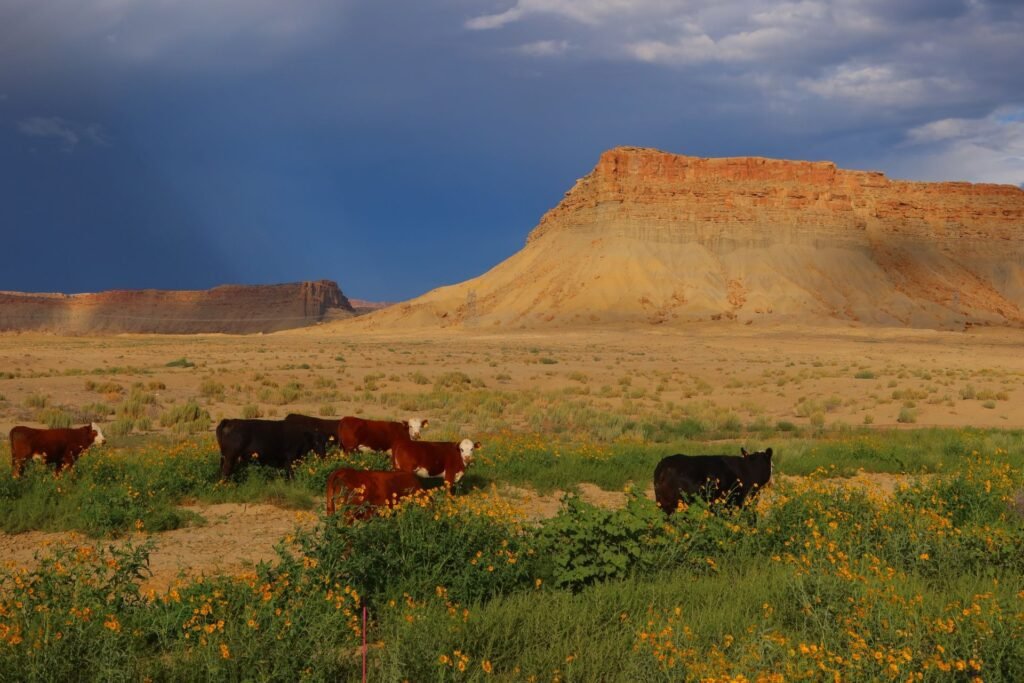
The eight cheapest counties in Oklahoma are Beaver ($1,100 an acre), Harper ($1,147), Cimarron ($1,186), Ellis ($1,200), Texas ($1,212), Harmon ($1,346), Roger Mills ($1,374) and Greer ($1,439). Every one of them lies in the west, beyond the line where yearly rainfall drops below about 25 inches. This is not a handful of odd parcels: the Panhandle and northwest hold almost nine million acres of farms, more than a quarter of the state’s farmland.
The reason is water. Dry rangeland feeds fewer cattle per acre, dryland wheat yields less, and wells in parts of the Panhandle draw on the Ogallala aquifer, which is being pumped faster than it refills. The towns are small and far apart, and the drive to a full hospital can run well over an hour. None of that makes the land bad. It makes it priced for ranchers and for people who want big skies and a lot of space, and who are ready to haul water and plan around drought.
If you want cheap land with rain, look southeast. Below the Arkansas River the census puts Atoka at $2,051 an acre, Coal at $2,116, Pittsburg at $2,168, Hughes at $2,225 and Pushmataha at $2,244, with 40 to 50 inches of rain a year. That is the country we would start with for homesteading in Oklahoma: grass grows, ponds fill, and the price is still below the state average.
The southeast trade-off
The southeast is hilly, wooded and rough in places, and its counties are among the poorest in the state, with small towns, thin services and long drives to specialist care. The Kiamichi Mountains and the lakes around Broken Bow draw cabin buyers, so McCurtain County, at $2,347, costs a little more. For a buyer who works remotely or is retired, that mix of rain, timber and low prices is hard to find anywhere else in the country.
What to check before you buy land in Oklahoma
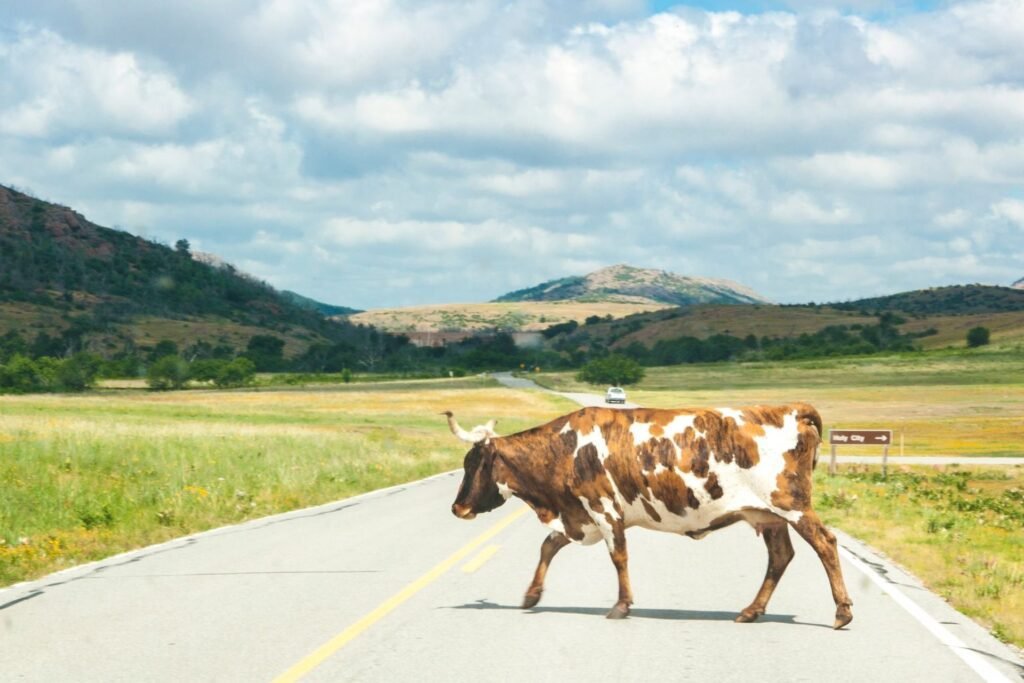
If you are learning how to buy land in Oklahoma from another state, these are the six checks specific to it, in the order we would run them. Oklahoma is an oil and gas state, and that shapes the first three: who owns what lies beneath the land, what is already drilled on it, and what an operator can do to it after you close.
The last three decide whether you can live there comfortably: the septic permit and the minimum lot size, the well, and a plan for the weather. Oklahoma averages about 59 tornadoes a year, and 2024 set the state record with 152, so a storm shelter is not a luxury here.
None of these checks shows up in the asking price, and on a cheap parcel any one of them can be worth more than the land. Each one costs far less to check before you sign a contract than after you close, and most of them start with the county clerk’s land records and a call to the county with the parcel number in hand.
1. Find out who owns the minerals
2. Look for wells, pits and pipelines on the land
3. Know what an operator can do on your surface
4. Confirm the septic permit and the minimum lot size
5. Plan the well and test the water
6. Plan for storms, and ask the county what it enforces
We check the census value, the flood map and the access before an Oklahoma home makes our list
Every property we feature is run against its county’s farmland value, its flood zone and its road in before it reaches the channel. Leave your email and you get the next list, with those checks already done.
What it costs to own rural land in Oklahoma
If you buy land in Oklahoma, the taxes are low. The Tax Foundation puts the effective property tax rate on owner-occupied homes at 0.79 percent, against a national range of 0.29 percent in Hawaii to 1.88 percent in New Jersey and Illinois. The top state income tax rate fell to 4.5 percent in 2026, sales tax averages 8.99 percent with local add-ons, and there is no estate or inheritance tax.
The mechanics: each county assesses real property at between 11 and 13.5 percent of its fair cash value, and the local taxing bodies, mainly the schools and the county, apply a millage rate, where one mill is $1 of tax for every $1,000 of assessed value. Farmland is valued on its agricultural use, with no minimum acreage and no income test. The taxable value of a homestead or farmland can rise no more than 3 percent a year, and other property no more than 5 percent, but the cap does not apply in the year a property changes hands: when you buy, the value resets to market. State Question 847, on the November 3, 2026 ballot, would lower those caps to 1.75 and 4 percent from 2027.
The arithmetic, with one county’s real levy
Take Atoka County in the southeast, where the mean levy for fiscal year 2025 was 87.82 mills, according to Oklahoma State University’s county government program. Because Oklahoma counties may assess anywhere from 11 to 13.5 percent, we show the range. A $150,000 house that is your homestead pays about $1,361 to $1,690 a year after the $1,000 homestead exemption. A $60,000 weekend cabin pays about $580 to $711. Your county’s ratio and levy will differ, so ask the county assessor before you make an offer.
Homestead exemptions, the senior freeze and the 3% cap
Once the house is your home, file for the homestead exemption with the county assessor: it takes $1,000 off the assessed value, and a second $1,000 is available if your household income was $30,000 or less the year before, refiled every year by March 15. Owners 65 or older can freeze the taxable value of their homestead if household income is under a limit tied to the local median, $99,000 for 2026 in Oklahoma County. And remember the reset: the 3 percent cap protects you from the second year on, not in the year you buy.
Closing, broadband and the drive to a hospital
Oklahoma closings still run on abstracts of title. Under the standard contract the seller pays to bring the abstract up to date and pays the documentary stamp tax, $0.75 for every $500 of the price, and the buyer pays for the attorney’s title opinion or the title insurance commitment; title insurance can be issued only after an Oklahoma attorney has examined the abstract. Budget for a survey, especially on older ranch tracts described by section lines and fences.
Internet and health care are the weak points. The state’s federal broadband plan awards $428 million in grants to reach 40,509 locations in all 77 counties, but check the exact address before you trust a provider’s map. Ten rural Oklahoma hospitals have closed or converted since 2005, two of them in 2025, according to the University of North Carolina’s Sheps Center. Find the nearest emergency room and the nearest hospital that admits patients, and drive the route before you commit. In eastern Oklahoma, also ask your title attorney whether a parcel is ordinary fee land or restricted tribal land, which has its own federal rules for transfers.
Why the price per acre on a listing site is not the price of land
Search online for land for sale and you will see averages far above the census. In September 2026 LandSearch showed Oklahoma listings asking an average of $13,473 an acre, about 6.1 times the census value of farmland, and its listings covered about 243,000 acres, less than 1 percent of the state’s farmland. A listing-site average divides asking prices, houses included, by acres, and small parcels near the cities carry most of their price in the location and the improvements. Compare price per acre only between parcels of similar size in the same county.
Cheap land and homes we have covered in Oklahoma
Every list we have published for people looking to buy land in Oklahoma, with the county data behind each property. Asking prices are from the date of each list and many of these homes have since sold.
Oklahoma guides
Step-by-step guides for buying land and living in Oklahoma, with the state’s own rules and the numbers behind them.
Keep exploring before you settle on Oklahoma
Oklahoma gives you the cheapest living costs in the country and a choice between dry, wide-open range and wetter, wooded hills. These are worth a look while you are still deciding how to buy land in Oklahoma, and whether Oklahoma is the right state at all.
- The best counties in Oklahoma for homesteading – ten real homes from Mangum to Webbers Falls, ranked against rainfall and the census.
- Why cheap rural homes don’t sell, and how to buy one anyway – the financing and inspection traps behind the lowest prices.
- The cheapest states to buy land in America – where Oklahoma sits against Texas, Kansas and Arkansas, measured with the same federal survey.
- The best states to homestead – land, tax and rain scored together.
- Rural property guides, the Rural Property Field Guide and how the AHO Score works – every guide we publish, the checks we run, and how a property earns a place on our lists.
Get the next batch of Oklahoma listings first
We keep coming back to Oklahoma, because a house on real acreage still costs less here than almost anywhere in the country. Leave your details and the next Oklahoma list reaches you before it goes public.
Common questions about buying land in Oklahoma
How much is 1 acre of land in Oklahoma?
Oklahoma farmland and farm buildings averaged $2,192 an acre in the 2022 USDA Census of Agriculture, and farm real estate averaged $2,620 in the USDA’s 2026 survey, about 58 percent of the national $4,500. Pasture averaged $2,200. By county the census runs from $1,100 an acre in Beaver County in the Panhandle to $8,800 in Oklahoma County.
Where is the cheapest place in Oklahoma to buy land?
In the Panhandle and the dry northwest. The eight cheapest counties in the 2022 USDA census, led by Beaver at $1,100 an acre, Harper at $1,147 and Cimarron at $1,186, all lie in the western, driest part of the state. For cheap land with real rainfall, the southeast averages $2,428 an acre, with Atoka County at $2,051.
Is land cheaper in Oklahoma or Texas?
On average, Oklahoma. In the USDA’s 2026 Land Values survey, Oklahoma farm real estate averaged $2,620 an acre against $4,500 for the US. Oklahoma is also the cheapest state to live in on the MERIC cost of living index, at 83.0 in the second quarter of 2026. Compare like with like, though: pasture in both states sells far above the cheapest dry rangeland.
Do you get mineral rights when you buy land in Oklahoma?
Only the minerals the seller still owns. A deed passes everything unless it is reserved, but many Oklahoma tracts had their minerals severed decades ago. The standard Oklahoma purchase contract provides a surface-rights-only abstract and accepts title subject to severed minerals, so you must pay for extra title work to learn who owns them.
How are property taxes calculated in Oklahoma?
Each county assesses real property at 11 to 13.5 percent of its fair cash value and applies the local millage. Taxable value on a homestead or farmland can rise no more than 3 percent a year, 5 percent on other property, but the cap resets to market value when the property sells. In Atoka County, at 87.82 mills, a $150,000 homestead pays about $1,361 to $1,690.
Can you live off grid in Oklahoma?
Oklahoma has no state law against it, and counties may choose whether to adopt building codes at all. A domestic well needs no water permit for household use, livestock and up to 3 acres of irrigation, but a septic system needs a state permit, and the minimum lot is half an acre with public water or three quarters of an acre with a well.
Do you need a permit for a septic system in Oklahoma?
Yes. The Oklahoma Department of Environmental Quality permits septic systems, and new systems need a soil profile or percolation test, except lagoons and aerobic systems with spray. The minimum lot is 0.5 acre if the home has public water and 0.75 acre if it uses a private well, which rules out a new septic system on many small town lots.
Before you buy, the important part
American Home Opportunities is a publisher. We are not a real estate broker, agent, lender, appraiser, attorney or financial advisor, and nothing on this page is legal, tax or financial advice.
County farmland values come from the USDA Census of Agriculture 2022, Oklahoma, Table 8, and measure farmland and the buildings on working farms rather than asking prices for small parcels; the regions are our own grouping of all 77 counties, weighted by land in farms. State farm real estate and pasture values come from the USDA NASS Land Values 2026 Summary; the two surveys measure different things and are not a time series. The effective property tax rate and the income and sales tax rates come from the Tax Foundation; the cost of living index from MERIC (C2ER data), second quarter 2026. The worked tax example uses Atoka County’s mean levy from Oklahoma State University’s report on fiscal year 2025 mill levies.
Legal references are to Okla. Const. Art. X, Secs. 8 and 8B (assessment ratios and caps), 68 O.S. 2817 (agricultural use valuation), 2890 (additional homestead exemption), 3201 and 3202 (documentary stamp tax) and 1001 (gross production tax), 52 O.S. 318.2 to 318.10 (surface damages and setbacks), 52 O.S. 52 (pipeline condemnation), 36 O.S. 5001 (title insurance), and the Oklahoma Real Estate Commission’s 2024 residential sale contract. Septic rules come from the Department of Environmental Quality, well rules from the Water Resources Board, abandoned-well counts from the Corporation Commission’s January 2025 plan, tornado records from the National Weather Service in Norman, hospital closures from the UNC Sheps Center. Listing-site prices come from LandSearch, September 2026.
Any price we quote for a property is an asking price at the time of writing, not a sale price. Rural land carries risks this page can introduce but not resolve for your parcel, including severed minerals, oil and gas activity, flooding, water and wells, septic suitability, legal access, surveys, easements, title, repairs, insurance and financing. Verify everything with the county assessor and clerk, the agencies named, an Oklahoma title attorney and licensed professionals before you commit money. Page published October 2026.