
The Best States to Homestead in 2026
All 48 states ranked on what a homestead runs on: cheap land, low property tax and rain. Alabama comes out on top.
Alabama tops our ranking of the best states to homestead in 2026, on the numbers that decide whether a homestead works: farmland at $4,250 an acre, the lowest effective property tax rate in the continental United States at 0.37 percent, and 56.9 inches of rain a year. West Virginia, Mississippi, Louisiana and South Carolina round out the top five.
Most lists of the best states to homestead are built on opinion: a writer’s favorite climate, a forum thread, a vague sense that Idaho feels free. This one is built on three public data sets and nothing else. The USDA tells us what an acre of rural land is worth in every state. The Tax Foundation tells us what it costs to hold property there every year. And thirty years of NOAA rainfall records tell us whether the sky will water your garden or whether you will be buying, drilling or hauling every gallon.
That third number is the one the other rankings leave out, and it changes the answer. The four states with the cheapest land in the country, New Mexico, Wyoming, Nevada and Montana, all fall out of the top ten once water is on the scale. The states that rise are the ones almost nobody calls a homesteading destination.
Below you will find the full ranking of all 48 states the USDA surveys, the method behind it, the states that look cheap and are not, the rainwater laws that matter if you plan to live off grid, and the homestead guides we have already published state by state.
Best states to homestead: the numbers in short
- Number one: Alabama, with a homestead index of 80 out of 100 — $4,250 an acre, 0.37% property tax, 56.9 inches of rain.
- Cheapest land in the top ten: Oklahoma, at $2,620 an acre.
- Cheapest land with 40+ inches of rain: Maine at $3,400 an acre, then West Virginia at $3,640 and Mississippi at $3,650.
- The cheapest land in the country is the driest: New Mexico sells for $735 an acre and gets 13.8 inches of rain. It ranks 15th.
- Rain on one roof: a 1,500 sq ft roof in Alabama sheds about 52,900 gallons a year. The same roof in Nevada sheds about 9,500.
- Last place: New Jersey, where land costs $17,000 an acre and property tax runs 1.88%.
How we ranked the best states to homestead
To find the best states to homestead, we started from what a homestead is. It is a place where you intend to live on the land and get part of your living from it: a garden, some animals, firewood, maybe a well and a septic system you maintain yourself. Three costs decide whether that works financially, and each one has a public, state-level number behind it.
| Factor | Weight | What we measured | Source |
|---|---|---|---|
| Land | 40% | Farm real estate value per acre, 2026. Scored on a log scale, so the gap between $735 and $3,000 counts more than the gap between $14,000 and $17,000. | USDA NASS, Land Values 2026 Summary |
| Holding cost | 30% | Effective property tax rate, the share of a home’s value paid in tax each year. | Tax Foundation, 2024 data |
| Water | 30% | Average annual precipitation, 1991–2020. Full marks at 40 inches or more; zero at 10 inches or less. | NOAA NCEI, Climate at a Glance |
Why 40 inches for full marks? It is roughly the line where a vegetable garden and a pasture can run on rainfall alone through most seasons, and where the USDA’s own figures show irrigation stops adding much to what land is worth. Above it, more rain does not make a homestead cheaper. Below it, water becomes something you buy.
What the index does not score: growing season, winters, schools, jobs, distance to a hospital, building codes, or how the county treats a tiny house. Those matter, and they vary more inside a state than between states. We list average temperature in the full table so you can see the climate, but we did not bake it into the score, because a long hot summer is a gift to one homesteader and a problem for another.
AHO Homestead Index 2026
The top 15 states, out of 100
Gold: top ten. Land 40%, property tax 30%, rainfall 30%. Sources: USDA NASS 2026, Tax Foundation 2024, NOAA NCEI 1991–2020.
The 10 best states to homestead in 2026
These are the best states to homestead in 2026, with the one thing you most need to know about each state before you start looking at listings.
1. Alabama
Index 80 · land $4,250/acre · property tax 0.37% · rain 56.9 in/yr · average temperature 63.6°F
Alabama wins because it does well on all three factors at once. Its land is a little below the national average of $4,500 an acre, its property tax is the lowest of any continental state, and it gets more rain than all but two of the 48 states ranked. On a $150,000 property, 0.37 percent works out to about $555 a year in tax. The trade-off is summer heat and humidity. We cover the counties, current-use valuation and what the land really costs in our guide to buying land in Alabama.
2. West Virginia
Index 79 · land $3,640/acre · property tax 0.51% · rain 47.1 in/yr · average temperature 52.6°F
West Virginia has the 12th cheapest land in the country and one of the lowest property tax rates, with 47 inches of rain and a cooler climate than the Deep South. The ground is steep, so flat, usable acreage costs more than the state average suggests. In much of the state the mineral rights have been sold separately from the surface over the past century, so check who owns what is under the land before you buy it.
3. Mississippi
Index 77 · land $3,650/acre · property tax 0.58% · rain 58.5 in/yr · average temperature 64.2°F
Mississippi is almost as cheap as West Virginia per acre, it is flatter, and at 58.5 inches it is one of the wettest states in the country. Pasture there is valued at $3,310 an acre, close to the value of cropland, which tells you grazing land is not a scarce, premium thing here. Long humid summers are the cost, and the southern counties carry hurricane and flood exposure that belongs in any insurance quote.
4. Louisiana
Index 77 · land $3,950/acre · property tax 0.55% · rain 59.7 in/yr · average temperature 67.1°F
Louisiana has the most rain of any state on this list, at 59.7 inches, with land under $4,000 an acre and a 0.55 percent tax rate. The number that decides a Louisiana homestead is not in this table: flood zone, elevation and the cost of insurance vary parish by parish and have risen sharply. Pull the FEMA flood map and get a real insurance quote on the specific address before anything else.
5. South Carolina
Index 76 · land $4,900/acre · property tax 0.49% · rain 48.3 in/yr · average temperature 63.4°F
South Carolina has one of the lowest property tax rates in the country, at 0.49 percent, and 48 inches of rain. Land is pricier than its neighbors at $4,900 an acre. One detail matters for homesteaders: the low rate applies to your legal residence, which is assessed at 4 percent of value. A second home or other property is assessed at 6 percent, so the same house held as a weekend place pays roughly half again as much.
6. Arkansas
Index 76 · land $4,350/acre · property tax 0.56% · rain 52.5 in/yr · average temperature 61.0°F
Arkansas pairs $4,350 land with a 0.56 percent tax rate and 52.5 inches of rain. The Ozarks in the north are the classic homesteading country, with springs, hardwoods and small pastures; the Delta in the east is flat, fertile row-crop land priced accordingly. Read our Arkansas land guide for the county-by-county picture.
7. Washington
Index 74 · land $3,800/acre · property tax 0.75% · rain 43.2 in/yr · average temperature 47.3°F
Washington looks great on paper: $3,800 land, 43 inches of rain and no state income tax. Read it carefully. That rainfall is a statewide average, and almost all of it falls west of the Cascades, where land is expensive. The cheap acreage is mostly in the dry eastern half, where rainfall can be under ten inches a year. The state average is a real number, but it describes two very different places.
8. Oklahoma
Index 73 · land $2,620/acre · property tax 0.79% · rain 36.4 in/yr · average temperature 60.3°F
Oklahoma has the cheapest land in the top ten, at $2,620 an acre, and 36 inches of rain on average. That average hides a steep east-to-west slope, from wet, wooded hills in the southeast to the dry Panhandle. For a homestead, the eastern third of the state is where the numbers work. We went through it county by county in the best counties in Oklahoma for homesteading.
9. Tennessee
Index 72 · land $6,500/acre · property tax 0.52% · rain 55.1 in/yr · average temperature 58.4°F
Tennessee’s land is expensive for this list, at $6,500 an acre, but its 0.52 percent tax rate and 55 inches of rain carry it into the top ten. It is also the state that already sends us the most homesteading search traffic. See the best counties in Tennessee for homesteading and our Tennessee buying guide.
10. North Carolina
Index 71 · land $5,750/acre · property tax 0.66% · rain 50.8 in/yr · average temperature 59.6°F
North Carolina closes out the top ten with 51 inches of rain, a 0.66 percent tax rate and land at $5,750 an acre. The mountains in the west and the Piedmont have very different prices and very different growing seasons, so treat the state average as a starting point. Our North Carolina guide breaks it down.
Just outside the top ten: Maine (11th) has the cheapest wet land in the country at $3,400 an acre, held back by a 0.98 percent tax rate and long winters. Georgia and Kentucky follow. Wyoming and New Mexico come in 14th and 15th, the best of the dry states.
What state has the cheapest land for homesteading?
New Mexico has the cheapest land in the United States, at $735 an acre in 2026, followed by Wyoming at $1,030, Nevada at $1,230 and Montana at $1,260. If you only count states that get at least 40 inches of rain a year, the cheapest are Maine at $3,400, West Virginia at $3,640 and Mississippi at $3,650.
Those two lists barely overlap, and that is the whole story of homestead land prices. In the arid West, the land is cheap because the water is not included. The USDA’s own report shows it: in New Mexico, irrigated cropland is worth $7,600 an acre and dry cropland $670, less than a tenth as much. We go through that water premium state by state in the cheapest states to buy land in 2026.
| State | Land $ per acre | Rain inches per year | Index rank |
|---|---|---|---|
| New Mexico | $735 | 13.8 | 15 |
| Wyoming | $1,030 | 16.0 | 14 |
| Nevada | $1,230 | 10.2 | 24 |
| Montana | $1,260 | 18.9 | 16 |
| Colorado | $2,360 | 18.0 | 23 |
| Oklahoma | $2,620 | 36.4 | 8 |
None of this makes a dry-state homestead a mistake. Plenty of people homestead successfully in New Mexico and Wyoming, with a good well, a cistern, a small garden under shade cloth and livestock sized to the range. But the budget has to include the well, which can run to tens of thousands of dollars where the water table is deep, and the land has to come with a legal right to use that water. In a wet state you get the water with the land. In a dry state you buy it separately.
The best states to live off grid
Many of the best states to homestead are also the best states to live off grid, and the reason is water. For off-grid living, water decides more than power. Solar panels work in all 48 states, and a well works wherever the aquifer is shallow enough. Rainwater is the difference-maker: it is the one water source that costs nothing once the tank is in, and how much of it you get varies enormously from state to state.
Here is the arithmetic. Every inch of rain that falls on a square foot of roof yields about 0.62 gallons. A modest 1,500 square foot roof therefore sheds roughly 930 gallons per inch of rain, before losses to evaporation and the first flush.
Rain on one roof
Gallons a year off a 1,500 sq ft roof, by state
Navy: 40 inches of rain or more. Gold: under 40. Average annual precipitation 1991–2020 (NOAA NCEI) × 1,500 sq ft × 0.62 gallons per sq ft per inch, before losses. State averages; local rainfall varies.
In Mississippi or Alabama, one ordinary roof collects more than 50,000 gallons in an average year, enough to cover a large share of a frugal household’s use with good storage and treatment. In Nevada or Arizona the same roof collects about 10,000, which is a supplement, not a water supply.
Where collecting rainwater is restricted
Rainwater harvesting is legal in every state, but three western states limit it, because under their water law rain that falls on your land belongs to downstream rights holders until it has been accounted for.
| State | The rule | Source |
|---|---|---|
| Colorado | Two rain barrels per household, 110 gallons combined, outdoor use on the same property only. Rural owners with an exempt well can apply for a separate rooftop collection permit. | HB16-1005; SB09-080 |
| Utah | Up to two covered containers of 100 gallons each without registering. With free registration, up to 2,500 gallons total, used on the same parcel. | Utah Code 73-3-1.5 |
| Nevada | Rooftop collection from a single-family home is allowed for domestic, non-drinking use, such as watering a family garden. | NRS 533.027 (AB 138, 2017) |
Everywhere else, the question is not whether you may collect rain but whether your county allows a rain-fed cistern as a home’s only drinking water supply, which is a health department and building permit question. The same goes for off-grid living in general: no state bans it, but counties set the rules on septic systems, minimum home size, composting toilets and how long you can live in an RV or camper while you build. Call the county before you buy, not after. For a full example of how those rules work in a dry state, see our guide to off-grid living in New Mexico.
Best states to homestead: the full ranking of all 48
Every contiguous state, ranked by the homestead index, from the best states to homestead down to the most expensive. Alaska and Hawaii are left out because the USDA land value survey does not cover them.
| # | State | Index out of 100 | Land $ per acre | Property tax effective rate | Rain in per year | Avg temp °F |
|---|---|---|---|---|---|---|
| 1 | Alabama | 80 | $4,250 | 0.37% | 56.9 | 63.6 |
| 2 | West Virginia | 79 | $3,640 | 0.51% | 47.1 | 52.6 |
| 3 | Mississippi | 77 | $3,650 | 0.58% | 58.5 | 64.2 |
| 4 | Louisiana | 77 | $3,950 | 0.55% | 59.7 | 67.1 |
| 5 | South Carolina | 76 | $4,900 | 0.49% | 48.3 | 63.4 |
| 6 | Arkansas | 76 | $4,350 | 0.56% | 52.5 | 61.0 |
| 7 | Washington | 74 | $3,800 | 0.75% | 43.2 | 47.3 |
| 8 | Oklahoma | 73 | $2,620 | 0.79% | 36.4 | 60.3 |
| 9 | Tennessee | 72 | $6,500 | 0.52% | 55.1 | 58.4 |
| 10 | North Carolina | 71 | $5,750 | 0.66% | 50.8 | 59.6 |
| 11 | Maine | 70 | $3,400 | 0.98% | 45.5 | 41.8 |
| 12 | Georgia | 70 | $4,950 | 0.79% | 50.4 | 64.2 |
| 13 | Kentucky | 69 | $5,600 | 0.74% | 50.4 | 56.3 |
| 14 | Wyoming | 69 | $1,030 | 0.53% | 16.0 | 42.3 |
| 15 | New Mexico | 69 | $735 | 0.63% | 13.8 | 54.5 |
| 16 | Montana | 68 | $1,260 | 0.61% | 18.9 | 42.5 |
| 17 | Missouri | 67 | $5,200 | 0.89% | 43.5 | 55.2 |
| 18 | Virginia | 67 | $6,300 | 0.78% | 45.8 | 56.0 |
| 19 | Delaware | 67 | $9,700 | 0.54% | 45.9 | 56.2 |
| 20 | Oregon | 64 | $3,880 | 0.81% | 32.1 | 47.9 |
| 21 | Indiana | 63 | $9,150 | 0.76% | 43.6 | 52.4 |
| 22 | Florida | 63 | $9,150 | 0.78% | 54.4 | 71.4 |
| 23 | Colorado | 62 | $2,360 | 0.50% | 18.0 | 46.2 |
| 24 | Nevada | 62 | $1,230 | 0.50% | 10.2 | 51.0 |
| 25 | New York | 61 | $4,500 | 1.30% | 43.6 | 46.0 |
| 26 | Idaho | 60 | $4,750 | 0.50% | 23.7 | 43.9 |
| 27 | Maryland | 59 | $9,950 | 0.92% | 45.2 | 55.4 |
| 28 | Vermont | 56 | $4,490 | 1.51% | 46.0 | 43.0 |
| 29 | Kansas | 55 | $3,200 | 1.21% | 29.0 | 55.1 |
| 30 | North Dakota | 54 | $2,450 | 0.92% | 18.8 | 41.0 |
| 31 | Pennsylvania | 54 | $8,700 | 1.26% | 45.0 | 49.5 |
| 32 | Utah | 53 | $3,650 | 0.48% | 13.5 | 49.2 |
| 33 | Massachusetts | 53 | $15,200 | 1.00% | 48.6 | 48.8 |
| 34 | New Hampshire | 52 | $6,670 | 1.50% | 47.9 | 44.1 |
| 35 | South Dakota | 52 | $3,100 | 1.00% | 21.2 | 45.6 |
| 36 | Michigan | 52 | $7,000 | 1.19% | 33.9 | 45.2 |
| 37 | Texas | 52 | $3,100 | 1.40% | 28.6 | 65.8 |
| 38 | Ohio | 51 | $9,650 | 1.36% | 41.1 | 51.7 |
| 39 | Minnesota | 50 | $6,950 | 1.00% | 28.6 | 41.6 |
| 40 | Wisconsin | 50 | $6,700 | 1.32% | 34.1 | 43.8 |
| 41 | Arizona | 49 | $4,300 | 0.48% | 11.6 | 61.1 |
| 42 | Iowa | 46 | $10,100 | 1.33% | 35.5 | 48.3 |
| 43 | Rhode Island | 45 | $23,600 | 1.12% | 49.1 | 50.7 |
| 44 | Nebraska | 42 | $4,400 | 1.44% | 24.2 | 49.4 |
| 45 | Connecticut | 42 | $14,600 | 1.54% | 48.7 | 49.9 |
| 46 | California | 42 | $14,100 | 0.70% | 22.3 | 59.0 |
| 47 | Illinois | 41 | $9,250 | 1.88% | 40.7 | 52.6 |
| 48 | New Jersey | 34 | $17,000 | 1.88% | 47.6 | 53.6 |
States that look cheap for homesteading and are not
Some states show up on every list of the best states to homestead because their land is cheap. On the full numbers, several of them do not hold up.
Texas is the clearest case. Its land is the ninth cheapest in the country at $3,100 an acre, and it is on nearly every homesteading list. But Texas has the seventh-highest effective property tax rate in the United States, at 1.40 percent, and its statewide rain average of 28.6 inches hides a state that runs from over 50 inches in the east to under 12 in the far west. It ranks 37th. East Texas is a different story, and we cover it in the best counties in East Texas for homesteading.
Nebraska and Kansas have cheap land and some of the highest property tax rates in the country, 1.44 and 1.21 percent. Arizona has a low tax rate and $4,300 land, but 11.6 inches of rain puts it 41st. Idaho, a favorite of homesteading forums, lands in the middle at 26th: low taxes, but land above the national average and under 24 inches of rain.
Which states are the worst for homesteading?
On our three factors, the most expensive places to homestead are New Jersey, Illinois, California, Connecticut and Nebraska. New Jersey and Illinois share the highest effective property tax rate in the country, 1.88 percent. California and Connecticut have land above $14,000 an acre. Nebraska combines 24 inches of rain with a 1.44 percent tax rate.
Common questions about the best states to homestead
What is the best state to homestead in 2026?
Alabama, by our homestead index. It combines farmland at $4,250 an acre (USDA, 2026), the lowest effective property tax rate in the continental United States at 0.37 percent (Tax Foundation), and 56.9 inches of average annual rain (NOAA). West Virginia, Mississippi, Louisiana and South Carolina complete the top five of the 48 states ranked.
What state has the cheapest land for homesteading?
New Mexico has the cheapest land in the United States at $735 an acre, according to the USDA’s 2026 land values report, but it gets only 13.8 inches of rain a year. Among states with at least 40 inches of rain, Maine is cheapest at $3,400 an acre, followed by West Virginia at $3,640 and Mississippi at $3,650.
What state is easiest for off-grid living?
No state bans off-grid living; the rules that matter are set by counties. Water is the deciding factor, and the wet Southeast makes it easiest: a 1,500 square foot roof in Alabama or Mississippi collects over 50,000 gallons of rain a year, against about 10,000 in Nevada or Arizona. Colorado, Utah and Nevada restrict rainwater collection by law.
Can you still homestead in the US for free?
No. Free federal homesteading ended in 1976, when the Federal Land Policy and Management Act repealed the Homestead Acts, with a ten-year extension in Alaska that closed in 1986. Today homesteading means buying land. A few small towns, mostly on the Great Plains, still offer free residential lots to people who build a house and live in it.
How many acres do you need to homestead?
A vegetable garden, a flock of chickens and a few fruit trees fit on one to two acres. Grazing animals change that. In the rainy Southeast, a cow can live on about two acres of good pasture; on arid Southwest rangeland it can need dozens. Rainfall, not the size of the state, sets how much land you need.
Which states restrict collecting rainwater?
Colorado, Utah and Nevada. Colorado allows two rain barrels and 110 gallons per household, for outdoor use. Utah allows two 100-gallon containers without registration and up to 2,500 gallons with free registration (Utah Code 73-3-1.5). Nevada allows rooftop collection from a single-family home for domestic, non-drinking use. Every other state permits it with few limits.
Which state has the best homestead exemption?
A homestead exemption is a property tax break on your primary residence, not a homesteading law. Texas offers one of the largest: $140,000 off a home’s taxable value for school taxes, approved by voters in 2025. Florida exempts up to $50,000. A large exemption matters more in states with high tax rates, such as Texas at 1.40 percent.
Homesteading guides, state by state
We publish a county-level homesteading guide every time we cover a new state, with real land values from the USDA census and real properties for sale. These are the ones already live, starting with several of the best states to homestead in our ranking.
 Tennessee
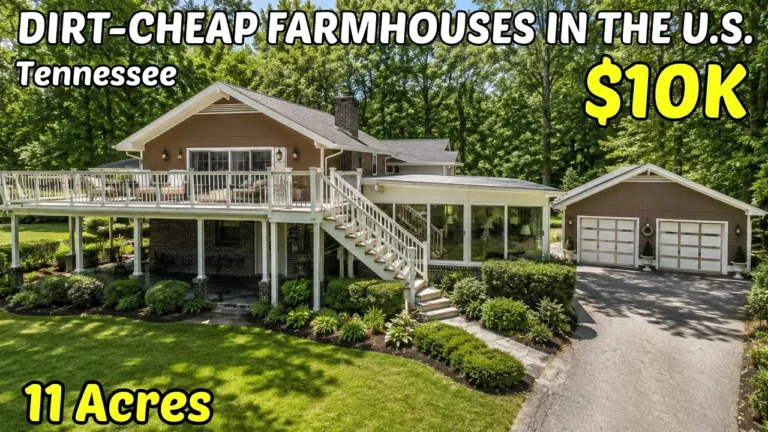
Best Counties in Tennessee for Homesteading
What land really costs county by county, and ten farmhouses with acreage for sale.Read the guide →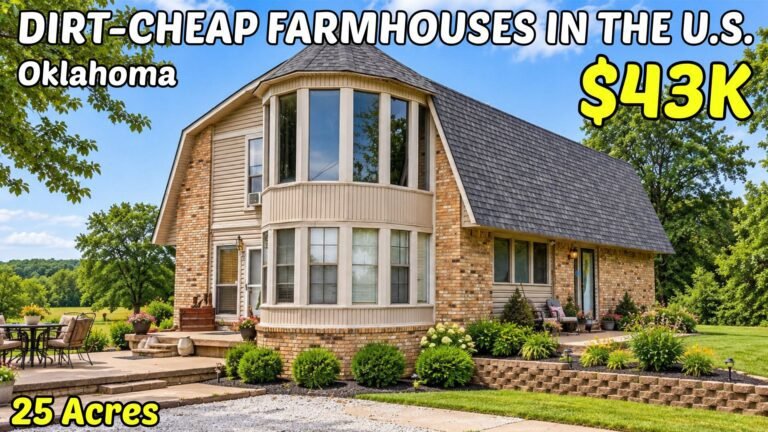 Oklahoma
The Best Counties in Oklahoma for Homesteading
The cheapest land in our top ten, and where in the state the rain actually falls.Read the guide →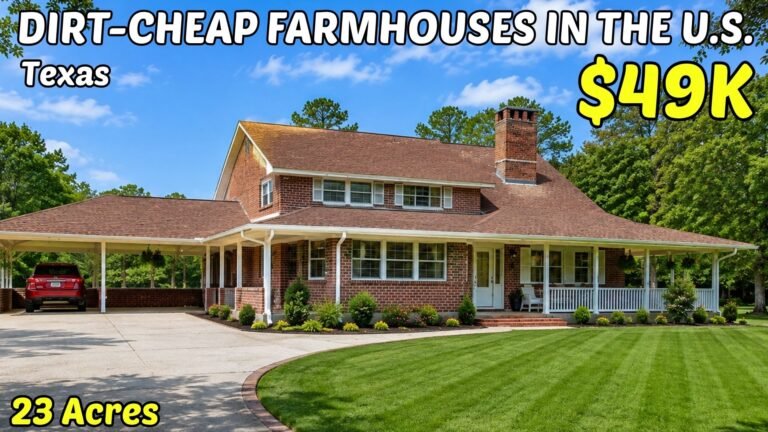 East Texas
The Best Counties in East Texas for Homesteading
The wet side of Texas, where the state’s cheap land comes with real rainfall.Read the guide →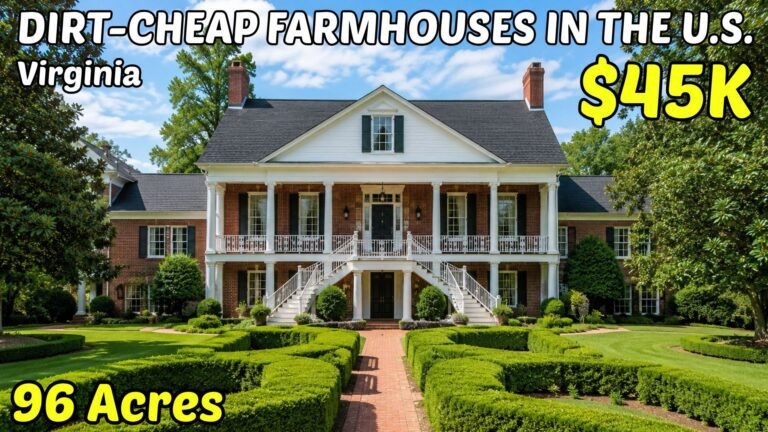 Virginia
Best Counties in Virginia for Homesteading
County land values across Southside and the mountains, with ten real listings.Read the guide →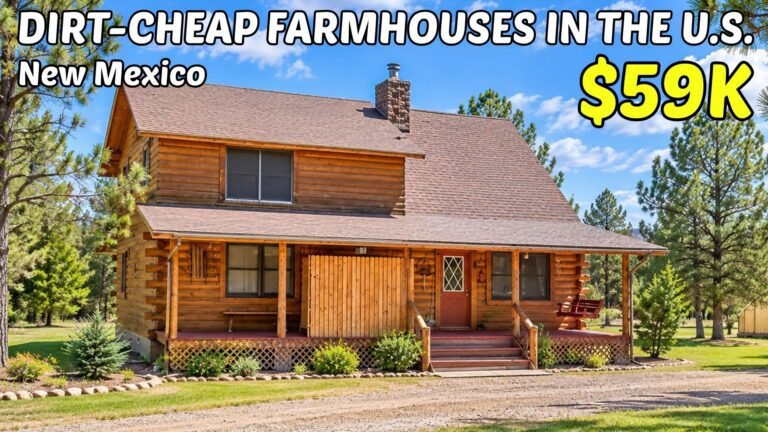 New Mexico
Homesteading in New Mexico
The cheapest land in the country, what it costs to make it livable, and ten real listings.Read the guide →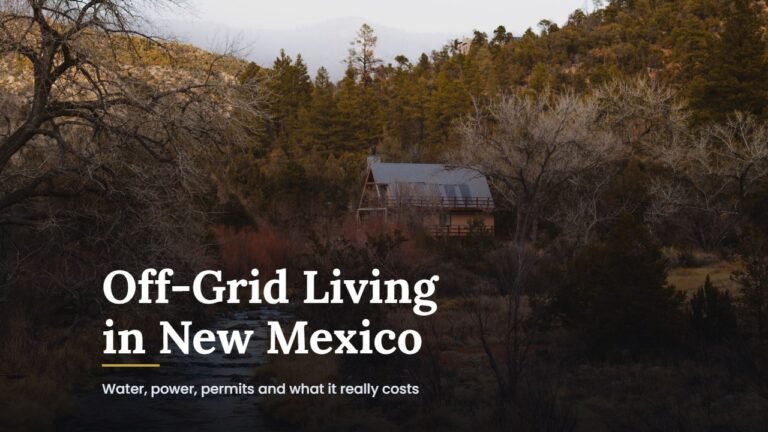 New Mexico
Off Grid Living in New Mexico
Water, power, permits and what an off-grid homestead really costs in a dry state.Read the guide →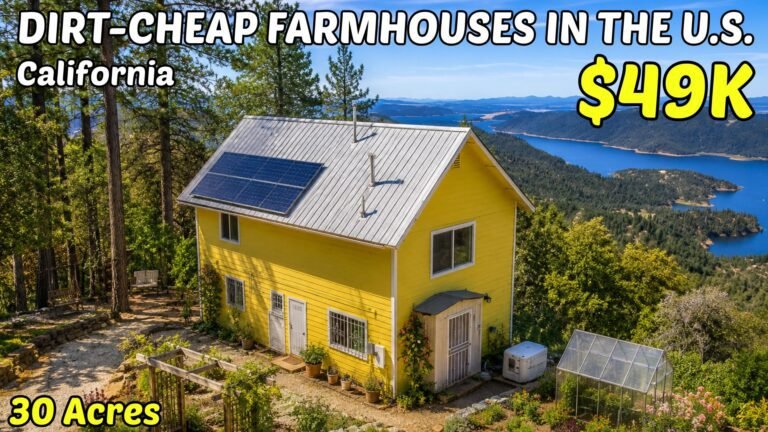 Northern California
Best Places to Homestead in Northern California
Where California’s expensive land gets affordable, and what comes with it.Read the guide →For the national picture, start with our rural property guides, and if the plan is to build rather than buy, see what it costs to build a barndominium, land included.
New homestead guides, as they go up
Every week we publish one data guide that goes county by county, plus the properties that clear our own checks. Leave your email and you will get each one as it goes up.
Sources
- USDA National Agricultural Statistics Service, Land Values 2026 Summary, released July 31, 2026. Farm real estate value per acre by state. Alaska and Hawaii are not surveyed.
- Tax Foundation, Property Taxes by State and County, 2026, using 2024 data. Effective property tax rate on owner-occupied housing.
- NOAA National Centers for Environmental Information, Climate at a Glance: Statewide Time Series. Annual precipitation and average temperature, averaged over 1991–2020.
- Colorado State University Extension, Rainwater Collection in Colorado (HB16-1005 and SB09-080).
- Utah Division of Water Rights, Rainwater Harvesting Registration (Utah Code 73-3-1.5).
- Nevada Legislature, Assembly Bill 138 (2017), codified at NRS 533.027.
Before you act on any of this
American Home Opportunities is a publisher. We are not a real estate broker, agent, lender, appraiser, attorney, tax professional or financial advisor, and nothing on this page is investment, legal, tax or financial advice. The index on this page is our own editorial ranking built from state-level public data. It is not a valuation of any property and it will not predict what any specific parcel costs, what it will be taxed or how much water it has.
Land values, tax rates and water laws change, and the sources above update on their own schedules. Rural property carries issues no state average can capture: water rights and well capacity, septic feasibility and perc testing, legal access and easements, survey and boundary questions, flood zone and insurance availability, zoning and permitted use, mineral rights, and financing that works differently from a conventional mortgage. Verify everything that matters with the county assessor, the county planning and health departments, the state water agency, a licensed local agent, a title company, a surveyor and an attorney licensed in that state before you commit money.