Hunting Land in Alabama: What It Sells For, What It Leases For, and What to Check Before You Buy
Deer season in Alabama is long. In Zone A for 2026 to 2027, archery opens October 15. Gun season on private and leased land runs from November 21 all the way to February 10. That is a big reason hunting land for lease in Alabama is a real market. Hunting clubs, timber companies and the state itself all rent ground by the acre.
What is hard to find is a straight answer on the numbers. Brokers quote wide bands and lease platforms show asking prices. Almost none of them say where a figure comes from. The best public data turns out to be the state’s own. In 2025, Alabama auctioned five-year hunting leases on 140 of its tracts and published a minimum bid for every one. We pulled all 140 and did the arithmetic.
This guide is for someone thinking about buying, not only renting. It covers what hunting land sells for in Alabama and what a lease on it brings in. It also asks whether that lease covers the cost of holding the land, and it walks through the liability law and the checks that matter before you sign. Where no official source publishes something, we say so rather than guess.
What hunting land sells for in Alabama
The most complete measure of rural land value in the state is the USDA Census of Agriculture. It counts every farm, including the timber and pasture most hunting tracts are made of. Its 2022 edition put Alabama at $3,659 an acre across 8,629,101 acres in farms.
The spread by region is wide. The Black Belt is the cheapest at $2,493 an acre. The Tennessee Valley in the north is the most expensive at $4,890, almost twice as much. Inside the Appalachian foothills, the regional average also hides a second cheap Alabama. Take out the Birmingham metro counties, and Winston, Marion, Fayette, Lamar and Walker average $2,811. Lamar, on the Mississippi line, is the cheapest county in the state at $1,910. Our guide to buying land in Alabama has the full county and regional breakdown.
Keep two cautions in mind before you use those numbers on a real parcel. First, the census measures farmland and the buildings on working farms. It does not measure asking prices for recreational tracts, and small tracts marketed as hunting land often list well above it. Second, prices have moved since 2022. Alabama Ag Credit, a farm lender, publishes $3,908 an acre statewide for 2026, up 9.80% on the year. In short, the county census figure is a reference point to argue from, not a price.
What a hunting land lease in Alabama pays: the state’s own numbers
The State Lands Division of the Alabama Department of Conservation and Natural Resources auctions five-year hunting leases on land that various state agencies own. For the cycle that ends June 30, 2030, it offered 140 tracts in 32 counties at a live auction in Columbiana on May 31, 2025. The tracts ranged from 34 acres in Walker County to 1,400 acres in Tuscaloosa County. Fifteen of them were bow hunting only.
Every tract carried a published minimum bid. The bid deposit, about a fifth of that minimum, went toward the first year’s rent. Across all 28,939 acres, the minimums add up to $309,281 a year. That works out to $10.69 an acre weighted by acreage, and the median tract sits at $9.49. The lowest is $5.00 an acre. The highest is $29.54, on a 40-acre tract in Madison County.
What the minimums tell you, and what they do not
Read those figures for what they are. The state set these minimums for its own land, and they are not what bidders finally paid. The state also does not publish how it arrived at each one. After the auction it posted an unofficial list of high bids. We could not locate that file on its site any longer, so we have not used it. Even so, the minimums offer something a broker band does not: 140 real tracts, a public document and a number you can check.
Two details stand out. Walker County had 36 tracts in the auction, and 20 of them carried a minimum of exactly $5.00 an acre. At the other end, the large tracts in the Black Belt and the southwest carried the highest minimums in the listing. Lowndes County offered 514 acres at $20.80 an acre. Washington County offered 536 acres at $20.00, and Clarke County 635 acres at $18.17.
Private leases
Private leases are a separate market. Lease platforms and land brokers advertise hunting land for lease in Alabama at asking prices. A hunting club also splits the rent among its members, so the per-acre figure is only part of what a lessee weighs. If a private quote is far above the state’s minimum for the same county, ask what justifies it. Water, food plots, a camp, road access or simply more acres can all move the price.
The cheapest land to buy is not the land that leases best
Put the first two sections side by side and a pattern shows up. The northwest hill counties sell at $2,811 an acre in the census and lease at $8.24 in the state listing. The Black Belt is cheaper to buy, at $2,493. Yet Greene, Lowndes and Perry, three Black Belt counties in the auction, carried minimums averaging $18.33 an acre. That last figure rests on only 5 tracts and 1,534 acres, so treat it as a direction rather than a measurement.
In rough terms, a year of lease at the state’s minimum equals about 0.3% of the land’s census value in the hill counties. In those Black Belt counties it is closer to 0.7%. Neither pays for the land on its own, and nobody should buy hunting ground expecting it to. For anyone comparing hunting land for lease in Alabama against buying, the gap matters for a narrower question. Does the lease cover what the land costs to hold each year? Section 4 answers that.
Public land next door
No official source explains why the two areas price so differently, and we are not going to invent a reason. One fact is worth knowing either way. Several of the largest Wildlife Management Areas in the state sit in exactly those hill counties. Black Warrior covers 91,263 acres in Lawrence and Winston counties. Mulberry Fork covers 35,260 acres in Tuscaloosa and Walker, and Sam R. Murphy 16,372 acres in Lamar and Marion. Public land next door can mean more hunters along your property line. On the other hand, it can mean a large block of habitat that nobody will ever subdivide. Find out which one it is before you buy.
Does the lease on Alabama hunting land pay the tax?
Our Alabama pillar worked out the property tax on 40 acres of average timber ground valued at $2,400 an acre. It used 26 mills, the total for unincorporated Cullman County. The answer depends on how the county carries the land. Land nobody has assessed as farm or forest sits in Class II, taxed on 20% of market value. Assessed as forest, timberland is Class III, taxed on 10% of market value. Approved for current use as well, it is taxed on 10% of a productivity value instead of market. For bills from October 1, 2026, the state’s schedule puts average timberland at $638 an acre.
Current use is applied for, and it does not come with the deed
The Alabama Department of Revenue defines qualifying forest property as land used “for the growing and sale of timber and forest products”. Hunting is not on that list, so wooded land qualifies because of what it grows. The assessor may ask for aerial photographs. On parcels of 5 acres or less, the assessor may also ask for a management plan from the Alabama Forestry Commission. We found no official statement that a hunting lease on qualifying timberland disqualifies it, and none that rules it out. Ask the county assessing official before you count on the lower bill.
The timing is the part buyers miss. The application window runs from October 1 to January 1. After a sale, the new owner has to apply again in that window, or the land goes back to market value. Close in February, and you can wait most of a year to file while you pay tax on market value. So ask the seller in writing whether the parcel is in current use. Then put the October date in your calendar the day you go under contract.
The rollback, and who ends up paying it
Then there is the rollback. Suppose land in current use changes to a use that does not qualify, including within two years after a sale. The county then collects additional tax for the three years before the change. According to the Department of Revenue, the county recalculates those years on the sales price or the market value, whichever is higher, at the 10% Class III ratio. The bill goes to whoever owns the land on the October 1 after the change. As a result, a buyer can end up paying for something a seller did. Clearing timber for house lots counts as a conversion. Whether a cabin site counts is a question for the assessor, and you should ask it before you clear anything.
If a hunter gets hurt: Alabama’s Landowners Protection Act
Alabama passed a statute aimed squarely at this in 2011, and it is the first thing to read before you lease hunting land to anyone. Section 35-15-40 of the Code of Alabama reads: “A landowner who leases property for hunting or fishing purposes shall not be liable for any damages to any person based on the use of the leased property for hunting or fishing purposes.”
The section has two exceptions, and both are worth reading slowly. First, the protection does not apply if you knew about a hidden danger when you signed the lease and did not tell the lessee. That means a dangerous condition that is not open and obvious, and that goes on to cause the injury. Second, it does not apply if you intentionally or willfully cause an injury. The statute also says that it does not affect the liability of a third party leasing the land. In other words, the hunting club that rents from you does not get this protection.
What to put in writing
The first exception tells you what to do. Maybe you know of a hazard a hunter would not see, such as an old well, a collapsed building or old mine workings in the coal counties. Put it in the lease, in writing. Disclosure is what keeps you inside the protection.
The section itself requires neither a written lease nor insurance, but you want both. The Alabama Farmers Federation recommends a written lease that both sides sign. It should include the legal description of the land, the game allowed, the term, and the rent with its due date. It should also include an agreement to follow game laws, limits on members and guests, and a requirement that the hunters carry liability insurance. The state itself requires general liability insurance from whoever leases its tracts.
Seven checks before you buy hunting land in Alabama
We would run these checks on any hunting land in Alabama before signing, whether you plan to hunt it yourself or lease it to a club.
1. Is there a lease on it already?
A lot of Alabama timberland comes with a hunting club already on it. Ask for any written lease, its term, when the rent is due and who is on the member list. Have the title search look for anything recorded at the probate office, too. Then make the purchase contract say whether the lease ends at closing or stays in place. If it stays, you are buying an income and a group of people with a key to your gate.
2. Who owns the timber?
An owner can sell timber separately from the land, sometimes with years left to cut. A tract that looks like mature hardwood bottom in the photographs may already belong to a timber buyer. Ask for any timber deed or cutting contract, and have the title company look for one.
3. Is the access recorded?
Hunters often reach a tract across someone else’s woods, on a road everyone has used for decades. Section 18-3-1 gives the owner of a parcel with no public road frontage a way to acquire a right of way of up to 30 feet across neighboring land. However, it is a legal action with a lawyer and a cost, not a form. Buy with the access in writing.
4. Do the neighbors hunt with dogs?
Dog deer hunting is legal in parts of Alabama during its own season. On private and leased land in Zone A, that season runs from November 21, 2026 to January 15, 2027. Other counties and parts of counties allow stalk hunting only. In Chambers and Coosa counties, individual owners may hunt with dogs on their own property without a special permit. If you plan to sit in a stand, check your county in the ADCNR deer season rules before you buy. Your neighbor’s hounds do not read the property line.
5. Is it inside the CWD Management Zone?
Alabama confirmed its first case of chronic wasting disease in January 2022, in Lauderdale County. The management zone covers all of Lauderdale, Colbert and Franklin counties. It has had 21 detections since 2022, nine of them in the 2025 to 2026 season. Hunters cannot carry a whole deer out of the zone, only deboned meat, cleaned skull plates and similar parts. Gun season also brings mandatory sampling weekends, and extra rules apply to feeding and baiting. None of that makes the land a bad buy. It does change how you hunt it and who will lease it.
6. Where is the water, and where is the flood map?
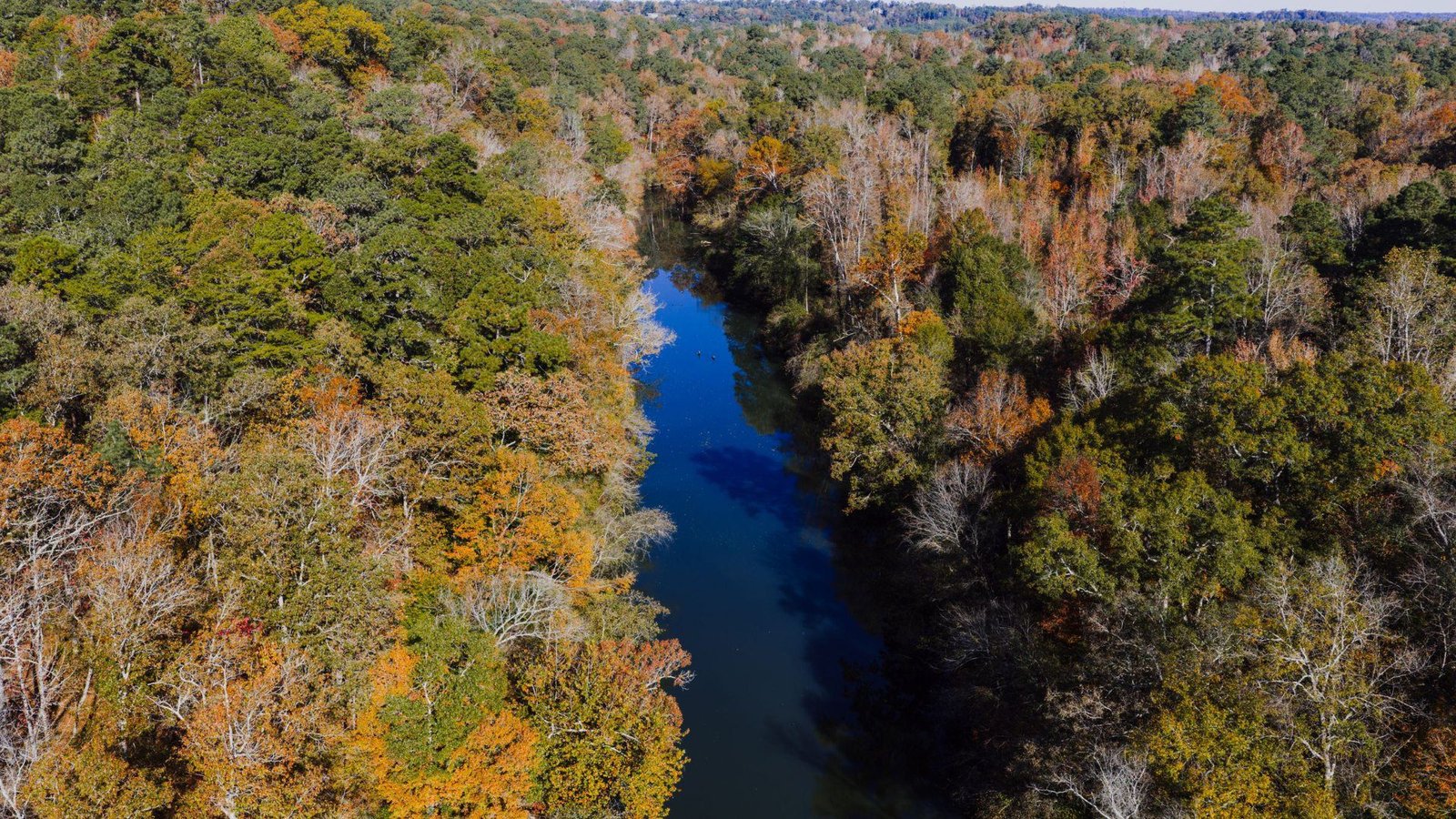
The best deer ground in Alabama tends to sit along creeks, rivers and bottomland. Unfortunately, that is also where the flood zones are. Check the FEMA flood panel for the parcel, and check whether the community takes part in the National Flood Insurance Program. Where a community does not take part, NFIP flood insurance is not available. Federally backed loans such as VA, FHA and Rural Housing also cannot fund buying or building in the special flood hazard area there.
7. Who owns what is underneath?
In Alabama, one owner can hold the surface and another the minerals. The Warrior basin of west central Alabama also has a long history of coal and coalbed methane development, and a mineral owner can have rights to use the surface. Ask the title company to trace the minerals. Our Alabama land guide shows where that activity has been concentrated.
Owning hunting land in Alabama from out of state
An Alabama resident who owns land can hunt that property without buying a hunting license. So can a spouse, and certain immediate family who also live in Alabama. The exemption is for residents only. A non-resident who owns the same acreage buys a non-resident license like any other visitor. Even a landowner’s child who has moved to another state counts as a non-resident, with or without an Alabama driver’s license.
What the license costs
The difference is large. For the license year that ended August 31, 2026, ADCNR listed the resident all-game license at $34.35. The non-resident annual all-game license cost $399.50, about 11.6 times as much. Non-residents could also buy a 10-day trip license for $246.60 or a 3-day license for $173.90. Hunting deer or feral hogs over bait requires a separate baiting privilege at every age, with no exemption. It cost $18.45 for residents and $63.40 for non-residents, and baiting is not allowed on public land. ADCNR updates the schedule each license year, so check the current fees before you budget.
Now put that next to section 4. A single non-resident owner’s annual license costs about six times the current use tax on 40 acres of timber. For a buyer from another state, the license is part of the cost of holding hunting land in Alabama. A lease to a local club is one way to have someone on the property the days you are not.
Where to find hunting land for lease in Alabama
Still deciding where to buy? A season on hunting land for lease in Alabama, in the county you are considering, is cheap reconnaissance. These are the main routes.
The state
ADCNR’s State Lands Division runs the five-year hunting lease cycle, and the current cycle ends June 30, 2030. After the 2025 auction, the division began taking written bids by email for tracts that did not lease or later became available. Its Hunting Leases notices on Outdoor Alabama list what is open, and you can sign up there for program emails.
Wildlife Management Areas
The Wildlife and Freshwater Fisheries Division manages more than 750,000 acres of public hunting land. ADCNR and the Forever Wild Land Trust own about 366,670 acres of it. Another 345,323 acres are federal land, managed under agreements with the Forest Service, the Fish and Wildlife Service, TVA and the Corps of Engineers. Roughly 38,000 acres are private land under in-kind lease agreements. To hunt a WMA you need a hunting license, a WMA license at $22.75 and an AREA permit. You also check in through the Outdoor Alabama app or carry a paper daily permit.
Timber companies
Large timberland owners lease hunting rights on their land. Rayonier, for example, says it has 250,000 acres of hunting land in Alabama, near Conecuh National Forest, the Poarch Creek Reservation and Fort Rucker. That is the company’s own figure.
Private owners, brokers and lease platforms
Most hunting land for lease in Alabama is advertised here, at asking prices. Compare any quote against the state’s minimum for the same county in section 2. And get the lease in writing before anyone pays.
Alabama land with the access, flood and title questions already asked
Before a property goes on our list we look at the road, the flood panel, the tax classification and what the title says about timber and minerals, and when something fails we say so in the write-up. Leave your email and the next Alabama batch reaches you with that work done.
Questions people ask about hunting land in Alabama
Keep reading
- Buying land in Alabama – farmland values for all 67 counties, the two cheap Alabamas, and the seven checks that decide a parcel.
- Alabama property tax on rural land – the three ways the same 40 acres gets taxed, county by county, and what resets when you buy.
- 10 cheap farmhouses with land in Alabama – real properties we covered, from the Black Belt to the Tennessee Valley.
- The cheapest states to buy land in America – where Alabama ranks against the other 49, on the same federal figures.
- The Rural Property Field Guide – our free walkthrough of the checks, in the order to run them.
Before you buy or lease, the important part
American Home Opportunities is a publisher. We are not a real estate broker, agent, lender, appraiser, attorney, insurance agent or financial advisor, and nothing here is legal, tax or financial advice. Lease figures are the minimum bids published by the Alabama Department of Conservation and Natural Resources, State Lands Division, for its 2025 hunting lease auction, not final bids or private market rents; groupings and averages are our own calculations.
Land values come from the USDA Census of Agriculture 2022 and measure farmland and the buildings on working farms rather than asking prices for recreational tracts. Current use values and assessment rules come from the Alabama Department of Revenue, the millage example from the Cullman County Revenue Commissioner, license fees from ADCNR for the license year ending August 31, 2026, and statutory references from the Code of Alabama as published, which may be amended. Company acreage figures are the company’s own.
Rural land involves wells, septic, access, surveys, easements, timber and mineral rights, flood zones, insurance and financing that vary by parcel. Verify every figure with the county assessing official, the probate office, ADCNR and a licensed Alabama attorney before you buy, lease or sign.