Land Loans in New Mexico: Who Lends on Bare Land, and What They Ask For
Land loans in New Mexico are easy to find and hard to love. The land itself is cheap: New Mexico farm real estate averaged $735 an acre in the USDA’s 2026 land values survey, the lowest of the 48 states it covers. The loan for it is not. One Albuquerque-area credit union publishes its land loan at 8.50%, for 12 years at most, with 30% down, on raw parcels of 5 acres or less.
The long, cheap money exists, but it comes attached to something else. USDA Rural Development lends at 5.25% for 33 years and the Farm Service Agency at 6.00% for up to 40, and neither finances a bare homesite on its own. That gap is one reason New Mexico recorded 27,132 real estate contracts between 2005 and 2024, the eighth most of any state, according to The Pew Charitable Trusts.
This guide takes the ways to pay for land in New Mexico in the order most buyers meet them, with the rate, the rule and the source behind each number. It explains how each one works; it does not recommend a lender or a loan. For what the land is worth in all 33 counties, see our guide to buying land in New Mexico. For what it costs to live on that land without utilities, see off grid living in New Mexico.
Land loans in New Mexico: the numbers in short
- Bank or credit union land loan. 8.50% fixed for up to 12 years, at no more than 70% of value, on raw land of 5 acres or less, in the terms Sandia Area Federal Credit Union publishes.
- Typical down payment. 35% for raw land, 25% for unimproved land and 15% for improved lots, with credit scores around 700, in a 2024 national summary by LendingTree.
- Real estate contract. New Mexico contracts carried a median 7% interest rate and 5.6% down, against 5.9% and 7.9% on mortgages, in Pew’s study of 2005 to 2024 records.
- USDA 502 Direct. 5.25% from September 1, 2026, for 33 years and usually with no down payment, for a site plus a modest home, within income limits.
- FSA farm ownership. 6.00% direct, up to $600,000 and 40 years. The down payment loan is 2% with 5% down, for applicants who have farmed 3 of the last 10 years.
- 30-year mortgage. 6.76% national average on September 10, 2026, according to Freddie Mac, once there is a house to lend against.
What land loans in New Mexico cost a month, next to the alternatives
Before the details, here is the comparison that explains most of this guide. Each bar is the monthly payment on the same $100,000, using the rate and term each source publishes.
What lenders mean by raw, unimproved and improved land
Lenders sort land into rough classes before they quote anything. Raw land has no road, power, water or septic. Unimproved land has some of that nearby but nothing on the parcel. Improved land has a road, a utility connection and usually a buildable lot. In LendingTree’s 2024 summary of land loan requirements, typical down payments run 35%, 25% and 15% across those three, and terms of 2 to 5 years with a balloon payment at the end are common.
In practice, most cheap land in New Mexico is raw by that definition. The six counties with the cheapest farmland in the 2022 Census of Agriculture, Guadalupe, De Baca, Cibola, Sierra, Hidalgo and Harding, average $404 an acre, and a well on that ground can cost more than the ground itself. A lender sees the same thing you do: a parcel with no water and no house is hard to resell if the loan goes bad, so it asks for more of your money up front. The checks that decide whether a parcel is usable are in our New Mexico land buying guide.
Is it hard to get a land loan in New Mexico?
Land loans in New Mexico are harder to get than a mortgage, and shorter. There is no standard land loan the way there is a standard 30-year mortgage, so each lender writes its own rules. As a result, terms vary widely from one lender to the next, and the parcel matters as much as your credit.
One published example
Sandia Area Federal Credit Union is one of the few New Mexico lenders that publishes its land loan terms. On its rates page, checked in September 2026, the loan is fixed at 8.50% APR for up to 144 months, on raw land of 5 acres or less, at no more than 70% of value and $100,000. It requires a full appraisal and a survey, and it lends in 11 counties: Bernalillo, Sandoval, Santa Fe, Valencia, Torrance, Cibola, Doña Ana, Rio Arriba, Mora, San Miguel and Los Alamos. We cite it because the terms are public, not as a recommendation.
However, notice what sits outside that list. Of the six New Mexico counties with the cheapest farmland in the census, only Cibola is in it. The cheapest ground in the state is often ground a local lender will not write a land loan on at all, which is where Farm Credit and seller financing come in.
What a land lender looks at
- Credit. Most land lenders want a score around 700, according to LendingTree, and some approve scores in the high 600s. There is no legal minimum; each lender sets its own.
- Debt. A debt-to-income ratio of 43% or less is the usual ceiling in the same summary.
- Cash. 15% to 35% down, depending on how developed the land is, and 30% in the New Mexico example above.
- The parcel. A full appraisal and a survey, both required in the New Mexico example above.
- Your plan. Whether you will build, and when. Land you intend to build on soon can open the door to a construction loan instead, covered in step 6.
Farm Credit land loans in New Mexico
The Farm Credit System is a network of lending cooperatives owned by their borrowers, set up to finance farms, ranches and rural property. Four Farm Credit institutions serve New Mexico: AgTrust Farm Credit, American AgCredit, CoBank and Farm Credit Bank of Texas. At the end of 2025 they had 2,516 customers in the state, $3.1 billion in loans and $24.7 million in patronage dividends, according to Farm Credit.
Farm Credit of New Mexico is now American AgCredit
If you are looking for Farm Credit of New Mexico, it no longer exists under that name. It merged with American AgCredit on October 1, 2023, bringing a $2 billion cooperative into a lender with nearly $21 billion in assets across seven states. American AgCredit lists land loans, lot loans and one-step construction loans, and says custom, modular, log and manufactured homes are eligible.
The other lender with New Mexico offices is AgTrust Farm Credit, formed when Lone Star Ag Credit and Ag New Mexico Farm Credit Services combined. It has offices in Albuquerque, Clovis, Las Cruces and Roswell, and finances farm, ranch and recreational land, country homes, barndominiums and cabins.
What patronage means for your rate
Because the borrowers own the cooperative, part of its profit comes back to them as a patronage dividend. AgTrust says its 2022 payout of $24.1 million cut its customers’ effective interest rate by 1.35%. That is the lender’s own figure, and patronage changes from year to year. Neither lender publishes land loan rates or terms online, so any comparison has to start with a written quote.
Can you buy land with a USDA loan in New Mexico?
Not bare land on its own, if you are an individual buyer. USDA Rural Development runs three programs people have in mind when they ask, and none of them buys a vacant homesite by itself. The Farm Service Agency, a separate USDA agency, does finance land, but only for people who farm it.
Section 502 Direct: a site and a modest home
The 502 Direct loan can pay to “purchase and prepare sites, including providing water and sewage facilities,” and to build the house. From September 1, 2026, the rate is 5.250%, and payment assistance can bring it as low as 1%. The term is 33 years, or 38 for very low-income borrowers, and no down payment is typically required. Your adjusted income has to be at or below the low-income limit for the county.
In addition, two federal rules shape the land. Under 7 CFR 3550.56, the site “must not be large enough to subdivide into more than one site under existing local zoning ordinances,” and it cannot include farm service buildings, though a small shed is allowed. And the loan cannot buy or improve land used mainly to produce income.
Section 502 Guaranteed: through a private lender
The guaranteed program backs loans made by approved private lenders for new or existing homes, and site preparation such as grading, a foundation and fences can be part of the loan. The site rule in 7 CFR 3555.201 is shorter: “The site size must be typical for the area,” and it cannot include income-producing land. Both programs only work in eligible rural areas, so check the address on the USDA eligibility map before anything else.
Rural Housing Site Loans are not for individuals
USDA also has loans that buy land outright, the Section 523 and 524 site loans. They go to nonprofit organizations and federally recognized tribes, for 5 years, at 3% under Section 523. Those groups develop the sites and sell them to low- and moderate-income families, who then finance the home with another loan.
FSA farm ownership loans: for people who farm
The Farm Service Agency lends to buy farmland. A direct farm ownership loan goes up to $600,000 for up to 40 years, and the September 2026 rate is 6.000%, or 4.000% when FSA shares the financing with another lender. The down payment loan asks for 5% down, lends up to 45% of the price at 2.000% for 20 years, and lets a commercial lender carry the rest.
Still, the conditions are the point. Under 7 CFR 764.152, an applicant needs to have taken part in running a farm for at least 3 of the 10 years before applying, and must own and operate the farm after closing. FSA also has to find that you cannot get enough credit elsewhere at reasonable rates. It finances a working farm or ranch, not a homesite with a garden.
How a real estate contract works in New Mexico
A real estate contract is seller financing. The seller keeps legal title, you get the right to use the property and make payments, and the deed changes hands only at the end. In New Mexico it is common. Pew counted 27,132 contracts recorded between 2005 and 2024, the eighth most of any state even though New Mexico ranks 36th in population. They made up 4.6% of home sales statewide, and far more in a few rural counties.
| County | Share of home sales by real estate contract Pew, 2005 to 2024 records | Farmland value per acre USDA, 2022 census |
|---|---|---|
| Torrance | 28.5% | $784 |
| Socorro | 14.1% | $768 |
| Valencia | 13% | $1,055 |
| New Mexico | 4.6% | $838 |
In other words, the terms tell you who uses them. Contracts carried a median 7% interest rate against 5.9% on mortgages, with a median 5.6% down against 7.9%. Buyers pay more for the loan and less up front, which suits someone a bank has turned down or a parcel a bank will not lend on.
The escrow and the two deeds
The standard New Mexico form places the contract and two deeds with an escrow agent, and you make your payments through that agent, as a New Mexico Law Review analysis of the form describes. When you finish paying, the agent delivers the warranty deed to you. If you fall behind, the seller sends a written demand and you have 30 days to cure. If you do not, the seller can end the contract, keep everything you have paid as rent, and receive the special warranty deed back from escrow.
However, courts can step in, but only after the fact. In Eiferle v. Toppino, in 1977, the New Mexico Supreme Court refused to enforce a forfeiture that would “shock the conscience of the court.” Contracts are negotiated, so the default clause in yours may differ from the standard form. A company that holds contract payments in escrow on an ongoing basis must be licensed by the state’s Financial Institutions Division, which lists 36 licensed escrow companies.
What New Mexico law does not do
Pew’s finding is blunt: “New Mexico has no state laws that specifically protect land contract buyers.” Two attempts have failed. Senate Bill 320 in 2011 would have created a Real Estate Installment Contract Act, and Senate Bill 449 in 2023 would have required sellers to record contracts within 30 days and given buyers 30 days to cure a default. The 2023 bill was postponed indefinitely.
The risk is real. For example, in 2016 the New Mexico Attorney General sued over a contract scheme in Bernalillo, Sandoval and Valencia counties in which buyers paid $1,000 to $46,000 and never received title. The office’s consumer alert urged buyers to confirm through a title company or an attorney that the seller actually owns the property, to read the interest rate and late fees, and to understand that a seller does not need a foreclosure to take the property back.
Financing land and a manufactured home in New Mexico
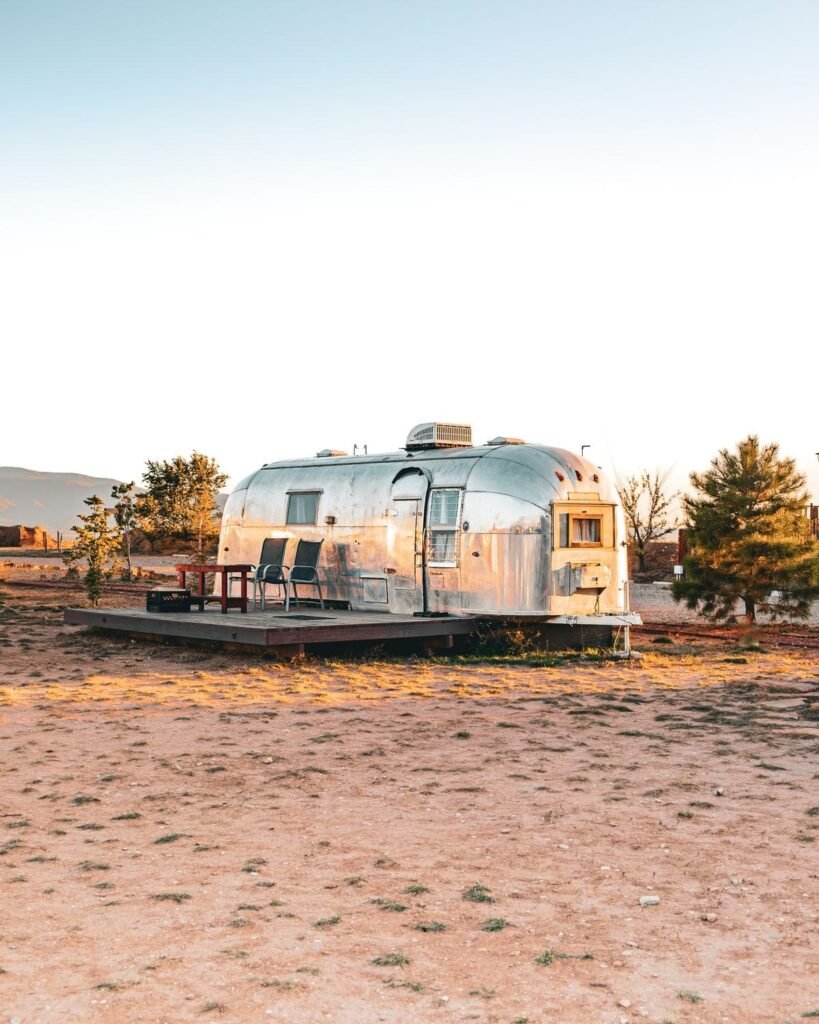
A manufactured home changes the math on land loans in New Mexico, but only once the law treats it as part of the land. In New Mexico a manufactured home is titled through the Motor Vehicle Division, much like a vehicle. Until that title is deactivated, the home and the land are two separate pieces of property, taxed and financed separately.
Price is one reason people ask. New single-section manufactured homes sold in the West for an average of $102,000 in April 2026, and double-section homes for $175,900, according to the Census Bureau’s Manufactured Housing Survey. Those figures leave out the land, delivery, set-up and foundation. New Mexico MFA offers manufactured home financing for qualified borrowers, used together with FHA, VA, USDA and conventional loan programs.
Turning the home into real property: five steps
The state’s Manufactured Housing Division guide lays out the sequence:
- The Manufactured Housing Division checks for any earlier foundation inspection on record.
- You apply for a foundation permit with a certified structural engineer’s report, and the home gets a green tag once it passes inspection.
- The county assessor issues a Manufactured Housing Tax Release after the taxes are paid.
- The Motor Vehicle Division deactivates the title. Every lien has to be released first.
- The county assessor values the home and the land together as real property.
The question that comes up most often is whether the loan covers the work on the land. USDA’s guaranteed program lists site preparation, including grading, a foundation and fences, among its eligible costs. A dealer’s financing on the home alone does not buy or prepare the land, so ask any lender in writing what the loan pays for.
Using land you own as the down payment on a build
On the other hand, owning the land first can work in your favor. Under Fannie Mae’s Selling Guide, when a borrower already holds title to the lot before the first construction draw, a single-closing construction-to-permanent loan is treated as a limited cash-out refinance. The loan-to-value ratio is measured against the “as completed” appraised value of the lot and the house together. In plain terms, land you own outright counts toward your equity in the finished home.
What it really costs to buy land and start a home in New Mexico
Put the pieces side by side for 10 acres of grazing land and a new single-section home, before the foundation, the road or the fence. The land is the smallest line.
This also matches what we found when we covered 10 homesteads for sale in New Mexico: the census value of the bare land averaged 1.7% of the asking price. In other words, land loans in New Mexico finance the smallest line of the budget.
Where the numbers line up by county
No single county wins on every count, and which one fits depends on your plans. These are the figures that overlap:
- The cheapest farmland. Guadalupe ($379 an acre), De Baca ($385), Cibola ($406), Sierra ($406), Hidalgo ($414) and Harding ($447), in the 2022 Census of Agriculture.
- Where seller financing is most common. Torrance, where 28.5% of home sales used a real estate contract, then Socorro at 14.1% and Valencia at 13%, in Pew’s data.
- A published credit union land loan. 11 central and northern counties in the example in step 2, of which only Cibola is among the six cheapest.
- Farm Credit offices. AgTrust Farm Credit in Albuquerque, Clovis, Las Cruces and Roswell.
- USDA eligibility. Set by address, not by county, so check the specific parcel on the USDA map.
Cheap New Mexico land, looked at before it reaches you
We cover New Mexico properties in batches, and before any of them makes the list we look at the water, the access and the flood panel. Leave your email and the next New Mexico batch reaches you first.
Common questions about land loans in New Mexico
Is it hard to get a loan for land in New Mexico?
Harder than getting a mortgage. New Mexico lenders that publish land loan terms ask for more down and lend for less time: Sandia Area Federal Credit Union lists 8.50% for up to 12 years, at 70% of value at most, on raw land of 5 acres or less. A 30-year mortgage averaged 6.76% in September 2026, per Freddie Mac.
Do you have to put 20% down on a land loan in New Mexico?
Often more. A 2024 LendingTree summary puts typical land loan down payments at 35% for raw land, 25% for unimproved land and 15% for improved lots. One New Mexico credit union lends up to 70% of value, which means 30% down. USDA’s 502 Direct loan usually needs no down payment, but only for a site plus a home.
What credit score do you need for a land loan?
There is no legal minimum, and each land lender sets its own. LendingTree’s 2024 summary says most want a score around 700 and a debt-to-income ratio of 43% or less, and some approve scores in the high 600s. In New Mexico, buyers without that credit often use a real estate contract, where the seller sets the terms.
Can you buy land with a USDA loan in New Mexico?
Not bare land on its own. USDA’s Section 502 Direct loan can buy and prepare a site in New Mexico only together with a modest home, at 5.25% for 33 years from September 2026. The site cannot be large enough to subdivide under local zoning. USDA’s land-only site loans go to nonprofits and tribes, not to individuals.
How does a real estate contract work in New Mexico?
The seller keeps title and finances the sale. Under the standard New Mexico form, the contract and two deeds go to an escrow agent, which collects payments. When you finish paying, you receive the warranty deed. If you default and do not cure within 30 days of written notice, the seller can end the contract and keep what you paid.
What is the downside of a land contract in New Mexico?
The buyer carries most of the risk. Pew found that New Mexico has no state laws that specifically protect land contract buyers, and bills to add protections died in 2011 and 2023. Contracts carried a median 7% rate against 5.9% on mortgages, and a buyer who defaults can lose every payment without a foreclosure.
How much is a $200,000 land loan per month?
It depends on the rate and the term more than on the land. At 8.50%, the rate one New Mexico credit union publishes for land loans, $200,000 costs about $2,220 a month over 12 years, or $1,736 over 20. At September 2026’s 6.76% average for a 30-year mortgage, it is about $1,299. Figures are principal and interest only.
Are there grants to buy land in New Mexico?
We found no state or federal grant that pays an individual to buy land in New Mexico. The closest help is a loan: the Farm Service Agency’s down payment loan at 2% for 20 years, for applicants who have farmed 3 of the last 10 years. New Mexico MFA’s down payment assistance is for buying a home, not bare land.
Keep reading
- Buying land in New Mexico – farmland values for all 33 counties, the eleven-to-one premium for water, and the checks that decide a cheap parcel.
- Off grid living in New Mexico – wells, rainwater, septic, solar and permits, with what each one costs.
- Homesteading in New Mexico – 10 real properties we covered, and what the land under each one is worth.
- Why cheap rural homes don’t sell – the lending rules that keep a low price from turning into a sale.
- The Rural Property Field Guide – our free walkthrough of the checks, in the order to run them.
Before you borrow, the important part
American Home Opportunities is a publisher. We are not a lender, mortgage broker, real estate broker, agent, escrow agent, appraiser, attorney or financial advisor, and nothing here is legal, tax or financial advice or a recommendation of any lender or loan. Lenders named here are cited because their terms are published, and we have no relationship with any of them.
Rates and terms are quoted as published in September 2026 and change often: USDA Rural Development and Farm Service Agency rates are reset monthly, the credit union rate is as posted on its website, and the mortgage average is Freddie Mac’s Primary Mortgage Market Survey for September 10, 2026. Real estate contract figures come from The Pew Charitable Trusts’ March 2026 fact sheet, and land values from the USDA Census of Agriculture 2022 and the USDA Land Values 2026 Summary. Monthly payments and totals were calculated by American Home Opportunities; well, solar, battery and septic costs are contractor or marketplace aggregates.
Any loan or contract for rural land involves credit approval, appraisal, survey, title, access, easements, water, septic, flood zones, insurance and closing costs that vary by parcel and by lender. Get written terms from each lender, have a title company or a New Mexico attorney review any real estate contract, and consult a licensed professional before you sign.