Agricultural Exemption in Texas: How It Works, What It Saves and How to Keep It
The agricultural exemption in Texas is the single biggest number on a rural tax bill, and it is not an exemption at all. It is a different way of valuing the land. Instead of taxing an acre on what it would sell for, the county taxes it on what it can produce as pasture, cropland or timber. In Trinity County, in the Piney Woods, that turns an acre of improved pasture worth about $3,266 into an acre taxed as if it were worth $72.90.
That gap is why every rural listing in Texas mentions whether the land is “ag exempt,” and why buyers ask how many cows, how many acres or how many beehives it takes. The honest answer is that the state does not set a number. Each county appraisal district does, within rules written in the Texas Tax Code. And the valuation belongs to the land’s history, not to its new owner.
This guide takes the rules in the order a buyer runs into them, with the statute or the county document behind every number. For land prices in all 254 counties, start with our guide to buying land in Texas. This one is about what that land will cost you to hold.
Agricultural exemption in Texas: the numbers in short
- History. The land must have been in agricultural use for 5 of the preceding 7 years (Tax Code 23.51).
- Acreage. No statewide minimum. Smith County recommends 10 to 20 acres of native pasture for grazing; Hill County needs more than 5 acres of open land.
- Bees. The only use with limits in the statute: at least 5 and no more than 20 acres. Counties then ask for about 6 hives on the first 5 acres.
- Savings. On 20 acres of improved pasture in Trinity County, about $868 a year in tax at market value against about $19 under agricultural valuation.
- Deadline. File form 50-129 with the appraisal district before May 1, and file again when the land changes hands (Tax Code 23.54).
- Rollback. Stop the agricultural use and you owe the tax difference for the 3 previous years, with no interest since September 1, 2021.
It is not an exemption: what the agricultural valuation in Texas really is
Everyone in Texas calls it the ag exemption. The Tax Code calls it appraisal of qualified open-space land, and appraisers call it 1-d-1, after the section of the Texas Constitution that allows it. The land is still taxed. The appraisal district simply values it on its capacity to produce, using a formula based on typical rents and yields for that land type in that county, instead of on its market value.
There is an older, stricter version called 1-d, which requires agriculture to be the owner’s primary occupation and source of income. Almost nobody buying rural land uses it. When a listing says ag exempt, it means 1-d-1.
The other “ag exemption” is a sales tax number
Search for the Texas ag exemption and the first result is often the Comptroller’s agricultural and timber registration number. That is a different thing. It lets a farmer or rancher buy feed, fencing and some equipment without paying sales tax. It has nothing to do with your property tax bill, and the numbers expire every four years and must be renewed. You may want one if you run cattle. It will not lower what the county charges you for the land.
What qualifies for an agricultural exemption in Texas
Section 23.51 of the Tax Code lists what counts as agricultural use. It covers grazing livestock, growing crops and hay, orchards, raising or keeping exotic animals for food or other products, keeping bees, and wildlife management on land that already qualified. Timber has its own valuation under the same principle.
Two tests decide whether your use counts. The first is history: the land must be devoted principally to agriculture now, and must have been for five of the preceding seven years. The second is intensity: the use has to meet the “degree of intensity generally accepted in the area.” A few goats on 40 acres of East Texas pasture may not pass. The same goats on 40 acres of Trans-Pecos desert might be all the land can carry.
What animals qualify for ag exemption in Texas
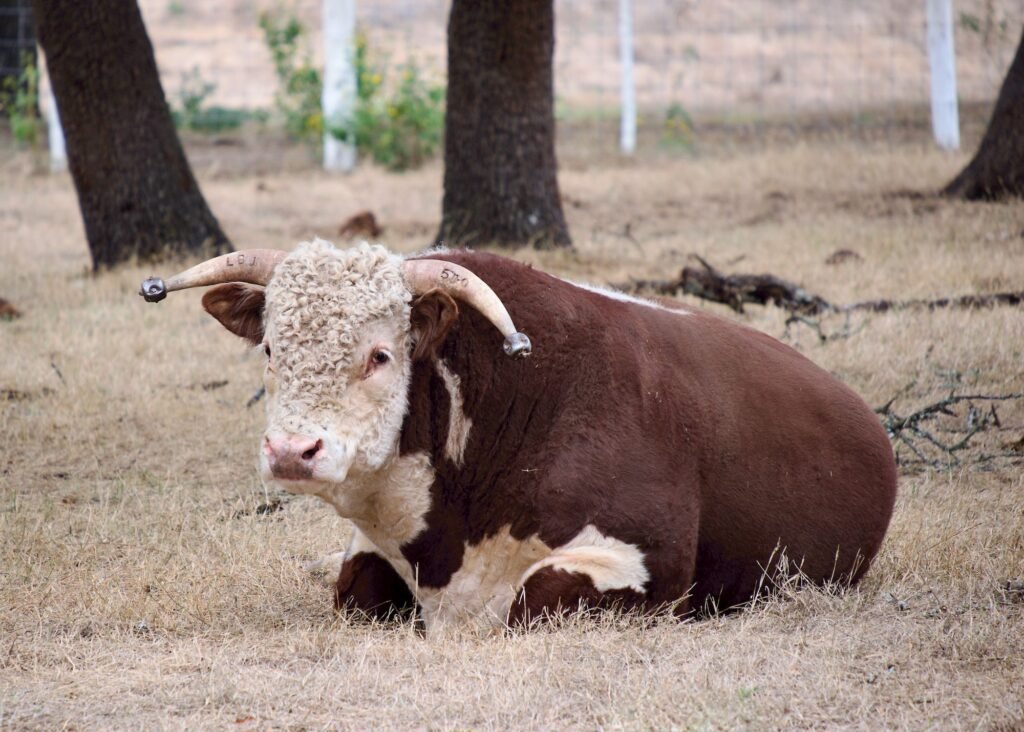
Cattle, goats and sheep on pasture are the standard case. Appraisal districts count them in animal units: Collin County defines one unit as 1,000 pounds of livestock, and Hill County counts 5 sheep or goats as one unit. Horses usually count when they are part of a breeding or commercial operation, and usually do not when they are kept for riding. Poultry and hogs can qualify in some counties with their own minimums. Smith County, for example, recommends 15 acres for poultry.
The rule of thumb that works: ask the appraisal district for its written guidelines before you buy animals. Every district publishes them, and they are specific.
How many acres and how many animals you need
There is no statewide minimum acreage for agricultural valuation in Texas. We checked the published guidelines of three appraisal districts, one in East Texas, one in North Texas and one in Central Texas. They show how much the answer moves.
| Appraisal district | Grazing minimum published guideline | Stocking rate | Beekeeping |
|---|---|---|---|
| Smith County Tyler, East Texas | 10–20 acres native pasture 5–10 acres improved; nothing under 5 | 1 cow per 10 acres native, 1 per 5 improved | 5–20 acres, 1 extra hive per 2.5 acres |
| Collin County north of Dallas | 8–12 acres native pasture 6–10 acres improved | At least 2 animal units, 180 days a year | 6 hives on 5 acres, then 1 per 2.5 acres |
| Hill County between Waco and Fort Worth | More than 5 acres unimproved over 6.01 acres with a home site | 1 animal unit per 3–4 acres improved, 5–7 native | 6 hives on 5 acres, then 1 per 1.5 acres |
Read the table as a range, not a rule. A 10-acre tract of improved pasture can qualify in Collin County and fall short in Smith County if the grass is native. In the dry west the numbers get much larger, because it takes far more land to feed one cow. Hill County also treats any tract under 6 acres with a house on it as residential, which is typical. The home site itself, usually an acre, is never valued as agricultural.
Can you get an ag exemption with bees in Texas?
Yes, and it is the only use where the statute sets the size. Beekeeping qualifies on at least 5 and no more than 20 acres. The land still needs its five years of agricultural history, and the district still sets the intensity. Both Collin and Hill counties ask for six colonies on the first 5 acres, then add hives as the acreage grows. Bees are popular with small-acreage buyers for a reason: they cost less to run than cattle and they fit a 10-acre homestead.
What an agricultural exemption in Texas actually saves
The Texas Comptroller publishes productivity values for every county each year, as part of its property value study. They show how far below market value agricultural land is taxed. In 2025 the Comptroller valued improved pasture in Trinity County at $72.90 an acre and native pasture at $37.60. In Cass County, in the far northeast, native pasture was $47.60. In Jeff Davis County, in the Trans-Pecos, it was $10.60.
The same comparison in the west is even starker in percentage terms, and much smaller in dollars. In Jeff Davis County the census puts land at $1,101 an acre and the Comptroller’s productivity value is $10.60. That is under 1 percent. But the tax on 40 acres of that land at market value is already low, so the saving is a few hundred dollars a year rather than a few thousand.
Buying land that already has the agricultural valuation
This is where most buyers get the valuation, and where most of them get tripped up. The history belongs to the land. If the seller has run cattle on it for years, you inherit the five years of use you need. But the valuation itself does not pass to you automatically.
Section 23.54 of the Tax Code says the land stays eligible without a new application “unless the ownership of the land changes.” So after you close, you file your own application, form 50-129, with the appraisal district, before May 1. The district can grant a 60-day extension for good cause. Miss it and your first tax year may come at full market value.
Four things to ask before you sign
- The current appraisal notice. It shows the market value and the productivity value side by side, so you can see the tax at stake.
- What the seller actually does on the land. Whose cattle, how many, on which acres, and whether a lease is in place you could take over.
- The district’s guidelines for that use. Make sure you can keep up the same intensity once the seller’s animals are gone.
- The rollback paragraph in the contract. The standard Texas forms say who pays additional taxes if the sale or your use after closing triggers them. Read it before you initial it.
A common arrangement on small ranches is a grazing lease. A neighbor runs cattle on your land for a modest rent or for free, and the land keeps its use. It works, as long as the lease is written down and the stocking meets the district’s guidelines.
Starting from scratch, and the wildlife option
If the land you buy has no agricultural history, there is no shortcut. You start the use, keep it at the county’s intensity, and apply once the land has five years in the last seven. Bees and hay are the usual starting points on small tracts, because they are the cheapest uses to keep going.
Wildlife management keeps a valuation, it does not create one
Texas lets owners switch qualified land from grazing to wildlife management and keep the lower valuation. People call it the wildlife exemption. The catch is in section 23.51(7): the land must already be appraised as open-space or timber land when the wildlife use begins. You cannot buy bare land with no history and start with wildlife.
To qualify, the owner must actively use the land in at least three of seven listed ways. Those are habitat control, erosion control, predator control, supplemental water, supplemental food, shelters, and census counts of the wildlife. Most districts also want a written wildlife management plan, and many use the Texas Parks and Wildlife Department’s form. For owners who want the land for hunting or simply for quiet, it is the most common way to drop the cattle and keep the tax.
The rollback: what happens when you stop
Selling the land does not end the valuation, and neither does a new owner who keeps the use. What ends it is a change of use: building a subdivision, clearing it for a home site, or simply letting the pasture go idle. When that happens, section 23.55 charges an additional tax. It equals the difference between the agricultural tax and the market-value tax for each of the three years before the change.
Until 2021 that bill also carried interest. House Bill 3833 removed it for changes of use on or after September 1, 2021. In our Trinity County example, stopping the use would cost about $2,546 in rollback, plus the higher tax from then on. Build that number into any plan to subdivide or build more than one house.
Texas land with the tax picture already checked
When we feature a Texas property, we look up its county’s land value, its appraisal and what the tax will really be for the next owner. Leave your email and get the next list with that work done.
Common questions about the agricultural exemption in Texas
How many acres do you need for an ag exemption in Texas?
Texas sets no statewide minimum. Each county appraisal district publishes its own guidelines. Smith County recommends 10 to 20 acres of native pasture for grazing, Collin County 8 to 12, and Hill County needs more than 5 acres of open land. Beekeeping is the exception, fixed by the Tax Code at 5 to 20 acres.
How many cows do you need for an ag exemption in Texas?
It depends on the county and the pasture. Smith County asks for about one cow per 10 acres of native pasture and one per 5 acres of improved pasture. Collin County wants at least two animal units for most of the year. Ask your appraisal district for its written stocking rates before you buy cattle.
Can you get an ag exemption with bees in Texas?
Yes. Texas Tax Code 23.51 lets beekeeping qualify on at least 5 and no more than 20 acres. The land still needs agricultural use in five of the last seven years. Collin and Hill counties require six hives on the first 5 acres and more as the acreage grows.
How much does an ag exemption save in Texas?
It can remove most of the land’s share of the tax bill. On 20 acres of improved pasture in Trinity County, tax at the census market value is about $868 a year. At the Comptroller’s 2025 productivity value of $72.90 an acre, it is about $19. The house and home site are still taxed normally.
What animals qualify for ag exemption in Texas?
Cattle, goats and sheep on pasture are the standard case, counted in animal units. Horses usually qualify in a breeding or commercial operation, not when kept for riding. Poultry, hogs, exotic animals raised for food and bees can also qualify. Each Texas appraisal district publishes the minimums it accepts for each animal.
Does the ag exemption transfer when you buy land in Texas?
The land’s agricultural history transfers, but the valuation does not carry on by itself. Texas Tax Code 23.54 requires a new application when ownership changes. File form 50-129 with the appraisal district before May 1 of the year after you buy, and keep the same use at the county’s intensity.
Can you lose your ag exemption in Texas?
Yes, if the agricultural use stops or no longer meets the county’s intensity standards. Changing the use triggers a rollback tax under Tax Code 23.55: the difference between the agricultural and market-value tax for the three prior years. Since September 1, 2021, the rollback carries no interest.
How do you get an ag exemption in Texas?
Use the land for agriculture at the intensity typical for your county, for at least five of the last seven years. Then file form 50-129, the open-space appraisal application, with your county appraisal district before May 1. Include proof of the use, such as leases, receipts or sales records.
Keep reading
- Buying land in Texas – farmland values for all 254 counties, the rain line that sets the price, and the checks only Texas asks of you.
- The best counties in East Texas for homesteading – ten real properties, and what the land under each one is worth.
- The best states to homestead – where Texas ranks once land, tax and rain are scored together.
- Land loans in Texas – who lends on rural land, from Farm Credit to the Veterans Land Board, and what each one asks for.
- The Rural Property Field Guide – our free walkthrough of the checks, in the order to run them.
Before you buy, the important part
American Home Opportunities is a publisher. We are not a real estate broker, agent, lender, appraiser, attorney, tax consultant or financial advisor, and nothing here is legal, tax or financial advice. Rules are quoted from the Texas Tax Code, sections 23.51, 23.54 and 23.55, as published in September 2026, and from House Bill 3833 of the 87th Legislature.
County guidelines come from the Smith, Collin and Hill County appraisal districts. Productivity values come from the Texas Comptroller’s 2025 County Productivity Values Report, market values from the USDA Census of Agriculture 2022, Table 8, and tax rates from the Trinity County Appraisal District for 2025. Each appraisal district sets its own values and standards every year, and your tax depends on them, not on this page. Confirm eligibility with your county appraisal district and a qualified tax professional before you buy land counting on the valuation. Page published September 2026.