
How Much Does It Cost to Build a Barndominium?
Between $65 and $160 per square foot for the building. Then there is the land, which no cost guide includes, and which changes by a factor of twenty-seven across the country.
A finished barndominium costs between $65 and $160 per square foot, according to the cost guides published across the industry — roughly $130,000 to $320,000 for a 2,000 square foot build. Every one of those guides ends with the same three words: land not included. This page includes it.
That omission matters more than it sounds. A barndominium is almost always a rural build, and rural land is the one cost in the project that changes by a factor of twenty-seven between one state and the next. Five acres of pasture costs $3,250 in New Mexico and $87,500 in Rhode Island, on the USDA’s own 2026 numbers. No cost per square foot captures that.
The second thing missing from most barndominium cost guides is the comparison that would test the premise. The Census Bureau measures what conventional houses actually cost to build, and its 2024 median for a contractor-built single-family home, excluding the lot, was $166 per square foot. Set that next to the top of the barndominium range, $160, and the famous saving is about four percent. The shell is genuinely cheap. The house that goes inside it is not.
Below: what the price per square foot covers and what it hides, the barndominium versus house cost comparison on primary data, the price of five acres in all 48 states the USDA surveys, the region where building costs least, and the site costs no per-square-foot figure has ever included.
How much does it cost to build a barndominium: the numbers in short
- Finished build, industry range: $65 to $160 per square foot. A 2,000 square foot barndominium: $130,000 to $320,000, land excluded.
- The shell is the cheap part: a steel or post-frame kit runs about $20 to $35 per square foot, plus roughly $10 to $15 per square foot to erect. Everything after that is an ordinary house.
- The comparison nobody runs: the Census Bureau’s 2024 median for a contractor-built single-family house was $166 per square foot without the lot, and $153 for a spec-built house. A barndominium at $160 saves four percent against one and costs more than the other.
- Cheapest region to build: East South Central — Alabama, Kentucky, Mississippi and Tennessee — at a $129 per square foot median, $122,000 less than New England on the same 2,000 square feet.
- The land, which no cost guide includes: five acres of pasture is $3,250 in New Mexico and $87,500 in Rhode Island. National average, $10,000 (USDA, 2026).
- What $11,000 buys: 100 more square feet of barndominium, or 16.9 acres in New Mexico, or 0.6 acres in Rhode Island.
What the $65 to $160 per square foot actually buys
A range that runs from $65 to $160 is not really a range. It is two different buildings sharing a name. At the bottom sits a shell with a concrete slab, a bathroom and a kitchen wall. At the top sits a house with spray foam, a heat pump, hardwood, tile and cabinetry, which happens to be wrapped in metal. The barndominium cost per square foot you end up paying is set by which of those you build, and almost never by the fact that the frame is steel.
Only two layers of the project are meaningfully cheaper than conventional construction, and the industry guides agree on both. The kit — steel or post-frame, with the trusses, purlins, panels and hardware — runs roughly $20 to $35 per square foot. Putting it up adds about $10 to $15. That is a weathertight building for somewhere near $35 to $50 per square foot, and it is the honest source of the barndominium’s reputation.
| Layer | What it covers | What moves the number |
|---|---|---|
| The kit | Frame, trusses, purlins, wall and roof panels, fasteners, doors and windows in most packages. | $20–$35 per sq ft (industry guidance). Steel pricing and span width. |
| Erecting it | Crew and equipment to stand the frame and close the envelope. | $10–$15 per sq ft (industry guidance). Local labor rates and access to the site. |
| Slab and site work | Clearing, grading, driveway, footings and the concrete slab. | Priced locally, per job, never per square foot of house. Slope and soil decide it. |
| Insulation and mechanicals | Insulation, HVAC, plumbing, electrical, water heater. | Identical to any house of the same size. A metal envelope does not make a furnace cheaper. |
| Interior finish | Drywall or paneling, flooring, kitchen, bathrooms, trim, fixtures. | The single largest swing in the whole project, and the reason the range is two and a half times wide. |
This is why two people quoting the same barndominium cost can be $190,000 apart on the same floor plan. It is also why a quote given in dollars per square foot, with no finish schedule attached, describes almost nothing.
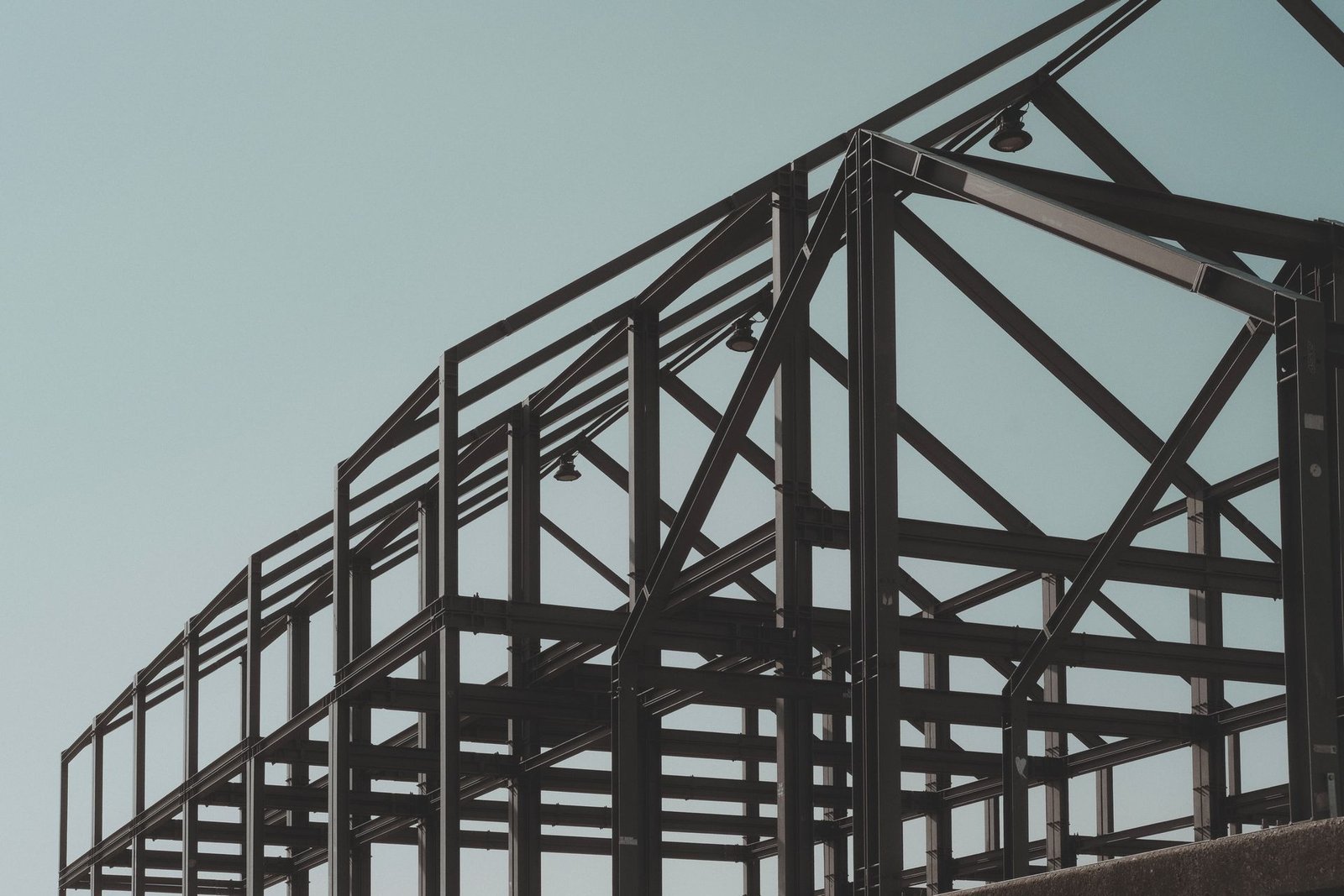
Barndominium vs house cost: where the saving disappears
The barndominium versus house cost question usually gets answered with another builder’s estimate. There is a better source. The Census Bureau’s Survey of Construction tracks what single-family houses actually cost to build in the United States, and it reports the figure excluding the value of the improved lot — which makes it directly comparable to a barndominium quote, since those exclude land too.
| Build | Per square foot | 2,000 sq ftbuilding only, no land | Against the contractor-built median |
|---|---|---|---|
| Barndominium, low end (industry) | $65 | $130,000 | $202,000 less |
| Barndominium, midpoint (industry) | $110 | $220,000 | $112,000 less |
| Barndominium, high end (industry) | $160 | $320,000 | $12,000 less |
| Spec-built house, median (Census SOC 2024) | $153 | $306,000 | $26,000 less |
| Contractor-built house, median (Census SOC 2024) | $166 | $332,000 | — |
Read the last column honestly and the picture is uncomfortable for the category. A barndominium built to a normal residential finish standard, at $160 per square foot, comes in $12,000 under the contractor-built median on a 2,000 square foot house — and $14,000 over the spec-built median. The saving that gets quoted everywhere lives at the bottom of the range, in the version with an open floor plan, exposed framing, polished concrete and one bathroom.
The barndominium is not a cheaper house. It is a cheaper shell, and a normal house priced from there.
That is worth knowing before the design stage rather than after it, because it changes which decisions carry the savings. The frame is settled on day one and saves what it saves. The finish schedule is decided over months and controls a swing of roughly $190,000 on a 2,000 square foot build.
The cost every barndominium guide leaves out: the land
Search barndominium cost and every result stops at the building. That is defensible for a suburban infill house, where the lot is roughly the lot next door. It is not defensible for a barndominium, which is overwhelmingly a rural build on acreage, in a country where an acre of pasture costs $650 in one state and $17,500 in another.
So we built the missing half. There is no national figure for what barndominium land costs, but there is a federal one for what rural land costs: the USDA’s Land Values 2026 Summary reports pasture value per acre for the 48 states it surveys. Hold the building constant at the midpoint of the industry range — 2,000 square feet at $110, or $220,000 — add five acres of pasture, and the only variable left is geography.
$11,000 of barndominium budget
100 more square feet of house — or this many acres of pasture
Acres of pasture that $11,000 buys at USDA 2026 values. At $110 per square foot, the same $11,000 adds 100 square feet to the building.
Eleven thousand dollars is not an abstract number. At $110 per square foot it is exactly 100 more square feet of house: a second bathroom, or a real pantry and mudroom instead of a hallway. That is the trade the chart above is describing. In New Mexico the same money is 16.9 acres. In Rhode Island it is six tenths of one acre. Twenty-eight times the land, for the price of one room.
Five acres of pasture, state by state
Sorted cheapest land first. The building column never changes: it is the same 2,000 square foot barndominium at $110 per square foot in every row. Everything that moves in the total is the ground it stands on.
| State48 states the USDA surveys | Pasture, per acreUSDA, 2026 | 5 acres | Building + land2,000 sq ft at $110 | Land share | Acres for $11,000 |
|---|---|---|---|---|---|
| New Mexico | $650 | $3,250 | $223,250 | 1.5% | 16.9 |
| Wyoming | $770 | $3,850 | $223,850 | 1.7% | 14.3 |
| Nevada | $870 | $4,350 | $224,350 | 1.9% | 12.6 |
| Montana | $940 | $4,700 | $224,700 | 2.1% | 11.7 |
| Washington | $980 | $4,900 | $224,900 | 2.2% | 11.2 |
| Arizona | $980 | $4,900 | $224,900 | 2.2% | 11.2 |
| Oregon | $1,120 | $5,600 | $225,600 | 2.5% | 9.8 |
| Colorado | $1,200 | $6,000 | $226,000 | 2.7% | 9.2 |
| North Dakota | $1,200 | $6,000 | $226,000 | 2.7% | 9.2 |
| South Dakota | $1,400 | $7,000 | $227,000 | 3.1% | 7.9 |
| Nebraska | $1,590 | $7,950 | $227,950 | 3.5% | 6.9 |
| Utah | $2,000 | $10,000 | $230,000 | 4.3% | 5.5 |
| New York | $2,040 | $10,200 | $230,200 | 4.4% | 5.4 |
| Oklahoma | $2,200 | $11,000 | $231,000 | 4.8% | 5.0 |
| Kansas | $2,400 | $12,000 | $232,000 | 5.2% | 4.6 |
| West Virginia | $2,400 | $12,000 | $232,000 | 5.2% | 4.6 |
| Minnesota | $2,400 | $12,000 | $232,000 | 5.2% | 4.6 |
| Texas | $2,420 | $12,100 | $232,100 | 5.2% | 4.5 |
| Idaho | $2,500 | $12,500 | $232,500 | 5.4% | 4.4 |
| Maine | $2,700 | $13,500 | $233,500 | 5.8% | 4.1 |
| Missouri | $2,850 | $14,250 | $234,250 | 6.1% | 3.9 |
| Indiana | $2,850 | $14,250 | $234,250 | 6.1% | 3.9 |
| Vermont | $2,920 | $14,600 | $234,600 | 6.2% | 3.8 |
| Michigan | $3,200 | $16,000 | $236,000 | 6.8% | 3.4 |
| Mississippi | $3,310 | $16,550 | $236,550 | 7.0% | 3.3 |
| Alabama | $3,500 | $17,500 | $237,500 | 7.4% | 3.1 |
| Arkansas | $3,500 | $17,500 | $237,500 | 7.4% | 3.1 |
| Wisconsin | $3,500 | $17,500 | $237,500 | 7.4% | 3.1 |
| Louisiana | $3,600 | $18,000 | $238,000 | 7.6% | 3.1 |
| Iowa | $3,800 | $19,000 | $239,000 | 7.9% | 2.9 |
| Kentucky | $4,050 | $20,250 | $240,250 | 8.4% | 2.7 |
| Ohio | $4,250 | $21,250 | $241,250 | 8.8% | 2.6 |
| California | $4,250 | $21,250 | $241,250 | 8.8% | 2.6 |
| Illinois | $4,300 | $21,500 | $241,500 | 8.9% | 2.6 |
| Pennsylvania | $4,350 | $21,750 | $241,750 | 9.0% | 2.5 |
| South Carolina | $4,500 | $22,500 | $242,500 | 9.3% | 2.4 |
| Georgia | $5,100 | $25,500 | $245,500 | 10.4% | 2.2 |
| Virginia | $5,430 | $27,150 | $247,150 | 11.0% | 2.0 |
| Tennessee | $5,910 | $29,550 | $249,550 | 11.8% | 1.9 |
| North Carolina | $6,380 | $31,900 | $251,900 | 12.7% | 1.7 |
| Florida | $7,650 | $38,250 | $258,250 | 14.8% | 1.4 |
| Delaware | $7,800 | $39,000 | $259,000 | 15.1% | 1.4 |
| New Hampshire | $8,120 | $40,600 | $260,600 | 15.6% | 1.4 |
| Maryland | $8,300 | $41,500 | $261,500 | 15.9% | 1.3 |
| Connecticut | $13,000 | $65,000 | $285,000 | 22.8% | 0.8 |
| Massachusetts | $15,400 | $77,000 | $297,000 | 25.9% | 0.7 |
| New Jersey | $15,600 | $78,000 | $298,000 | 26.2% | 0.7 |
| Rhode Island | $17,500 | $87,500 | $307,500 | 28.5% | 0.6 |
| United States average | $2,000 | $10,000 | $230,000 | 4.3% | 5.5 |
Thirteen states where five acres costs less than 100 square feet of house
In New Mexico, Wyoming, Nevada, Montana, Washington, Arizona, Oregon, Colorado, North Dakota, South Dakota, Nebraska, Utah and New York, five acres of pasture costs less than the $11,000 that buys 100 more square feet of building. In those thirteen states the land is a rounding error on the project: between 1.5 and 4.4 percent of the total. New Mexico sits at 1.5 percent.
New York on that list surprises people. The USDA’s statewide pasture figure is $2,040 an acre, because the survey covers the whole state and most of New York is not within two hours of the city. State averages describe states, not counties, and inside a state the spread is wide — which is the reason our state guides work county by county.
And twelve where the land is more than a tenth of the project
Georgia, Virginia, Tennessee, North Carolina, Florida, Delaware, New Hampshire, Maryland, Connecticut, Massachusetts, New Jersey and Rhode Island all cross ten percent. At the top of that list the land stops being a line item and becomes a design constraint: in Rhode Island five acres is 28.5 percent of the whole build, and $84,250 more than the same five acres in New Mexico.
Across all 48 states the median land share is 7 percent. The national average, at $2,000 an acre, puts five acres at $10,000 and the land at 4.3 percent of a $230,000 project. Most of the country, in other words, is closer to the cheap end than the headline states suggest — and the expensive end is concentrated in the Northeast corridor.
Where a barndominium costs least to build
Land is only half the geography. Labor, materials and code enforcement vary too, and the Census Bureau measures that directly. Its regional medians below are for conventional single-family houses, not barndominiums — no federal survey breaks out post-frame homes — but a barndominium is built by the same crews buying from the same suppliers under the same county inspectors, so the gradient it sits on is this one.
| Census division | Per sq ftmedian, 2024 | 2,000 sq ft | vs the cheapest |
|---|---|---|---|
| East South Central Alabama, Kentucky, Mississippi, Tennessee | $129 | $258,000 | — |
| West South Central Arkansas, Louisiana, Oklahoma, Texas | $138 | $276,000 | +$18,000 |
| South Atlantic Delaware to Florida, plus West Virginia | $155 | $310,000 | +$52,000 |
| Pacific California, Oregon, Washington, Alaska, Hawaii | $167 | $334,000 | +$76,000 |
| Mountain Arizona to Wyoming | $169 | $338,000 | +$80,000 |
| East North Central Illinois, Indiana, Michigan, Ohio, Wisconsin | $186 | $372,000 | +$114,000 |
| Middle Atlantic New Jersey, New York, Pennsylvania | $188 | $376,000 | +$118,000 |
| New England Connecticut to Vermont | $190 | $380,000 | +$122,000 |
One division wins both halves of the question, and it is not the one the barndominium internet talks about. East South Central — Alabama, Kentucky, Mississippi and Tennessee — is the cheapest place in the country to put up a building, at $129 per square foot against New England’s $190. It also has cheap land: Mississippi at $3,310 an acre, Alabama at $3,500, Kentucky at $4,050. Building cost and land cost usually pull against each other. Here they pull the same way.
We publish county-level guides for three of those four states. Buying land in Alabama covers current use valuation and what the state’s $3,500 average hides at the county line. Buying rural property in Tennessee and buying rural property in Kentucky do the same for their markets, with USDA census values county by county and real listings attached.
The Mountain division is the mirror image, and worth naming plainly. It has the cheapest land in the country — New Mexico, Wyoming, Nevada, Montana — and the second most expensive construction, at $169 per square foot. Saving $6,750 on five acres in New Mexico against the national average, then paying $80,000 more to build than you would in Alabama, is a trade that only works if you want to be in New Mexico. We looked at exactly that pattern in the cheapest states to buy land.
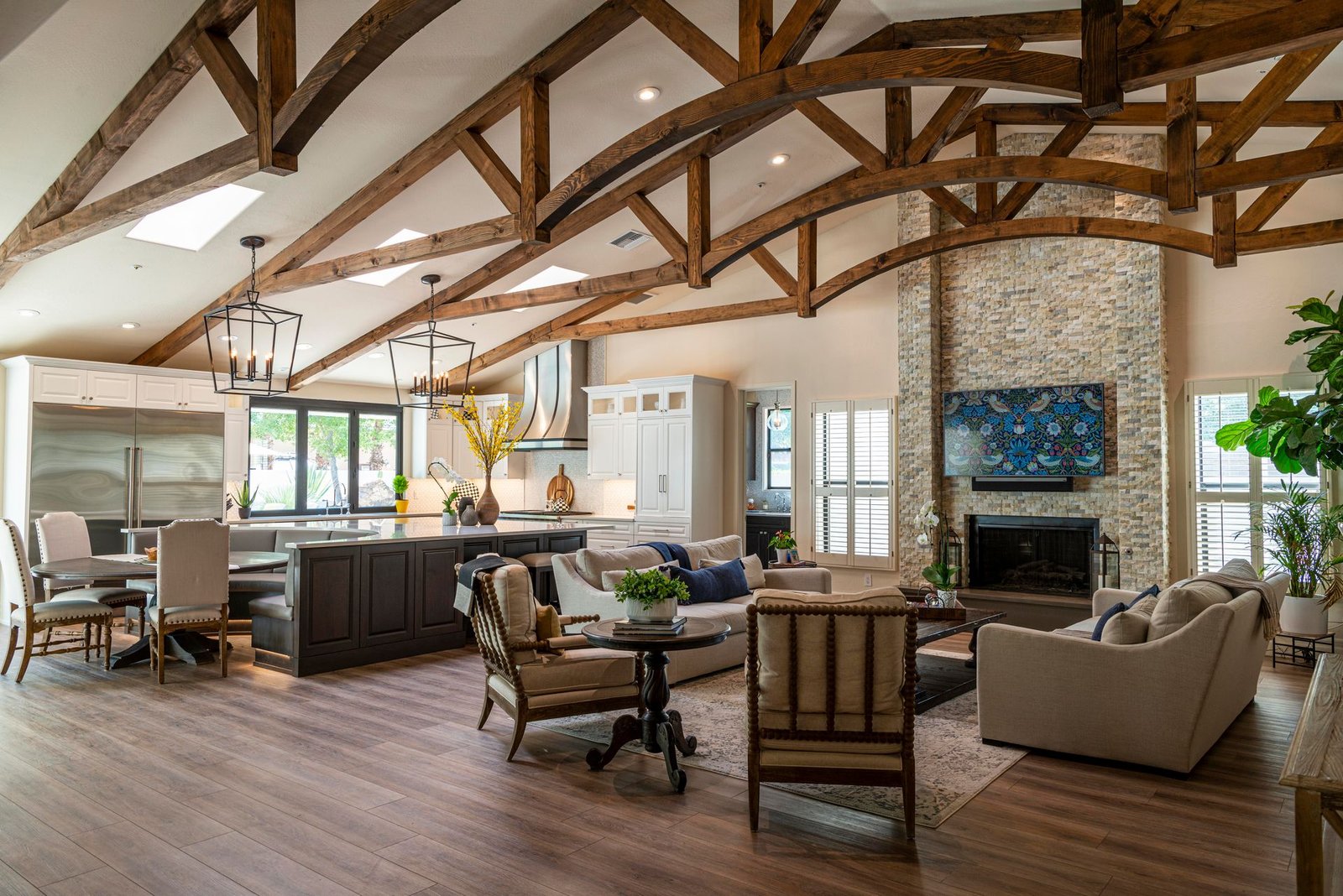
What a price per square foot never includes
Both the industry range and the Census medians describe a building. A rural site carries costs that sit outside the building entirely, are priced per job rather than per square foot, and vary by parcel rather than by state. They are the reason two identical barndominiums on neighboring parcels can land tens of thousands apart, and no national figure will ever predict them.
- Getting to the site. Clearing, grading and a driveway that a concrete truck and a crane can actually use. Length, slope and what the culvert costs are parcel questions.
- Water. A well, its depth, and whether the first attempt finds usable water. Depth is set by local geology, and neighbors’ well logs are usually public at the state water agency.
- Waste. A septic system, sized and permitted by the county health department after a percolation test. Soil that fails a perc test changes the system type, and the price with it.
- Power. The run from the nearest line. Utilities quote this by the foot, and a long run can rival a finished bathroom.
- Permits, plans and engineering. Building permit, septic permit, driveway or access permit, and in many counties an engineer’s stamp on a post-frame or steel structure. Some counties also charge impact fees.
- Financing and insurance. A barndominium is not always treated as a conventional house by lenders or insurers, and both tend to price it as its own category rather than as a standard single-family home.
Every item on that list is answered by a county office, a utility or a licensed professional for one specific parcel. None of them is answered by an average, including the averages on this page.
Common questions about barndominium cost
How much does it cost to build a barndominium?
Industry cost guides put a finished barndominium between $65 and $160 per square foot, or $130,000 to $320,000 for a 2,000 square foot build. None of those figures include land. The steel shell is the cheap part, roughly $20 to $35 per square foot as a kit; insulation, wiring, plumbing and interior finish cost what they cost in any house.
How much does a 2,000 square foot barndominium cost?
At the midpoint of the industry range, about $110 per square foot, a 2,000 square foot barndominium runs near $220,000 for the building alone. Add five acres of pasture and the total is $223,250 in New Mexico and $307,500 in Rhode Island, using the USDA’s 2026 land values. The building does not move; the land does.
Is a barndominium cheaper than a regular house?
At the low end, clearly. At the high end, barely. The Census Bureau’s Survey of Construction put the 2024 median for a contractor-built single-family house at $166 per square foot, excluding the lot, and $153 for a spec-built house. A barndominium at the top of its $160 range costs more than that spec-built median.
What is the cost per square foot of a barndominium?
Industry guides quote $65 to $160 per square foot for a finished barndominium. That is a two-and-a-half-times spread, and it is decided by finish level, not by the building type. The bare steel or post-frame shell is $20 to $35 per square foot as a kit, plus roughly $10 to $15 per square foot to erect.
How much land do you need for a barndominium?
There is no national minimum. County zoning sets lot size, setbacks and, where there is no municipal water or sewer, the acreage a septic system needs. Five acres is a common working figure for a rural build with a shop and a driveway. The county planning and health departments are the only authority on a specific parcel.
How much does the land for a barndominium cost?
No barndominium cost guide includes it, so here it is. USDA 2026 pasture values run from $650 an acre in New Mexico to $17,500 in Rhode Island, with a national average of $2,000. Five acres therefore costs $3,250 at the cheap end and $87,500 at the expensive end, a difference of $84,250 on identical land.
What is the cheapest state to build a barndominium?
Two answers, because two costs move. On construction alone, the Census Bureau’s cheapest division is East South Central, Alabama, Kentucky, Mississippi and Tennessee, at a $129 per square foot median. On land, New Mexico is cheapest at $650 an acre. Alabama and Mississippi are the states that sit near the front of both lists.
Where to look next
A barndominium budget is two decisions, not one: what you build, and where you put it. These cover the second half in detail.
And once it is built, it has to be insured. Our guide to barndominium insurance covers the three questions underwriters ask, the 80% rule in dollars, and what a year of premiums costs against the land in every state.
 National data
The Cheapest States to Buy Land in 2026
Where an acre really costs $650, and why the top of that list is a trap once water is on the scale.Read the guide → National data
Best States to Homestead in 2026
All 48 states ranked on land price, property tax and rainfall, with the index behind the ranking.Read the guide → Alabama
Buying Land in Alabama
The cheapest division to build in, county by county: land values, current use valuation and taxes.Read the guide →For the rest of the country, our rural property guides go state by state, and the two East South Central guides not shown above are Tennessee and Kentucky.
New land and build-cost guides, as they go up
Every week we publish one data guide that goes county by county, plus the rural properties that clear our own checks. Leave your email and you will get each one as it goes up.
Sources
- U.S. Census Bureau, Survey of Construction: Characteristics of New Housing, 2024 data. Median contract price per square foot for single-family houses, by census division, excluding the value of the improved lot. This is the primary construction-cost source on this page.
- U.S. Census Bureau, Highlights of Annual 2025 Characteristics of New Housing. Median floor area of a completed single-family house, 2,142 square feet, and median sale price, $417,400.
- USDA National Agricultural Statistics Service, Land Values 2026 Summary, released July 31, 2026. Pasture value per acre by state. Alaska and Hawaii are not surveyed.
- The $65 to $160 per square foot range, and the $20 to $35 kit and $10 to $15 erection figures, are industry cost guidance, not government data. They are the range published across the construction-pricing sites and kit suppliers that cover this category, including HomeGuide and CostToBuildAHouse, which agree closely on the band. We report the range as an industry consensus and compare it against the Census Bureau, which is the primary source.
Before you act on any of this
American Home Opportunities is a publisher. We are not a builder, contractor, real estate broker, agent, lender, appraiser, insurance producer, attorney, tax professional or financial advisor, and nothing on this page is construction, investment, legal, tax, insurance or financial advice. The figures here are state and regional averages drawn from public data and published industry ranges. They are not a quote, an estimate or a valuation, and they will not predict what any specific building on any specific parcel will cost.
Construction prices, land values and county rules change, and the sources above update on their own schedules. A rural build carries issues no national average can capture: well depth and water rights, septic feasibility and percolation testing, legal access and easements, survey and boundary questions, flood zone and insurance availability, zoning and permitted use, engineering requirements for post-frame and steel structures, impact fees, mineral rights, and financing that works differently from a conventional mortgage. Get written bids from licensed local builders, and confirm every requirement with the county building, planning and health departments, the utility, the state water agency, a title company, a surveyor, a licensed insurance producer and an attorney licensed in that state before you commit money.