
Buying Land in Texas: What an Acre Really Costs, East to West
Buying land in Texas, all 254 counties: the rain line that sets the price, and the checks only Texas asks of you on minerals, wells, the ag valuation and a county that will not inspect your house.
Buying land in Texas gets cheap west of the 100th meridian, and the rain is the reason
If you are buying land in Texas, start with this: the state is too big for one price. The 2022 Census of Agriculture counts every farm in the state. It puts the average value of Texas farmland and its buildings at $2,499 an acre. That figure hides a state split in two. Almost half of the farmland in Texas, 48.3 percent of it, lies west of the 100th meridian. That is the line along the eastern edge of the Panhandle, just east of San Angelo. Out there the census averages $1,417 an acre. East of the 98th meridian, which runs between Fort Worth and Abilene, it averages $4,408.
The line is not an accident of geography. The Texas Water Development Board puts average rainfall at more than 55 inches a year in Beaumont. In El Paso it is less than 10. Land that grows grass and timber on rain alone costs more than land that needs a well. So when you are buying land in Texas, the first question is not which county. It is which side of that gradient you can live with. The cheap side is cheap for a reason, and you pay for it in water, distance and heat.
On the East Texas properties we covered, the land was 11.4% of the price
We checked the census against the ten Texas properties we covered in August 2026, listed between $49,500 and $280,000. For each one we multiplied the acreage by its county’s census value and compared it with the asking price. On average, the ground underneath came to 11.4 percent of what the seller was asking.
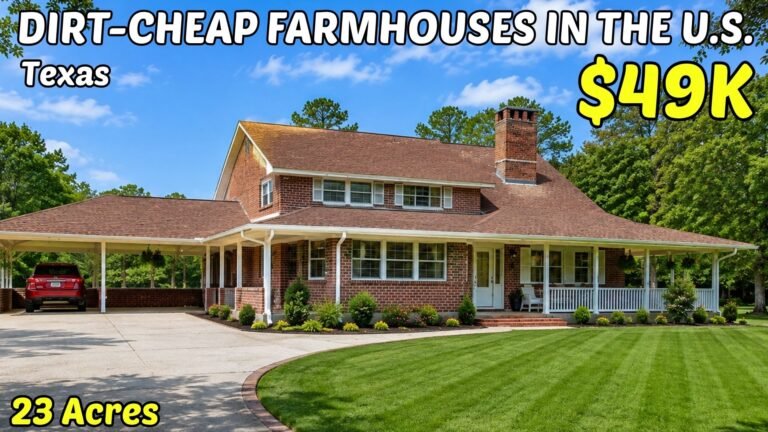
The exception proves the rule. On a 23-acre place near Gilmer, in Upshur County, the land alone was worth almost 45 percent of the price. The one West Texas property was 10.89 acres in Fort Davis, in the eighth cheapest county in the state at $1,101 an acre. Its land came to 6.9 percent. On small Texas parcels you are mostly buying the house, the well and the septic. Past 20 acres, the land starts to be the thing you are paying for.
Buying land in Texas: the numbers in short
- Statewide average. $2,499 an acre for farmland and farm buildings in the 2022 census, across 125.5 million acres. The USDA’s 2026 survey puts farm real estate at $3,100, pasture at $2,420 and cropland at $2,790.
- County range. $950 an acre in Roberts County, in the Panhandle, up to $15,245 in Galveston County, a spread of 16 to 1.
- Cheap half. 83 counties west of the 100th meridian hold 48.3% of the state’s farmland at $1,417 an acre.
- Taxes. No state income tax, and a 1.40% effective property tax rate, the 7th highest in the country. Farm and ranch land can be taxed on what it produces instead of what it would sell for.
- Building. A Texas county cannot require approval before you start building a house outside city limits (Local Government Code 233.153), but septic systems need a permit almost everywhere.
- Water. A household well is exempt from groundwater district permits only on a tract of more than 10 acres (Water Code 36.117).
Texas land prices by region: what an acre actually costs
We pulled all 254 Texas counties out of the 2022 census and checked the extraction against the census’s own state totals. The county figures add back to exactly 230,662 farms and 125,471,325 acres, the published numbers, and their weighted average comes to exactly $2,499. No county is withheld. Texas has no official set of regions that buyers shop by. So we grouped the counties the way the price moves: by longitude, east to west, in bands two degrees wide.
| Region | Farmland value per acre USDA, 2022 census | Land in farms | Cheapest counties |
|---|---|---|---|
| Trans-Pecos, Permian Basin & western Panhandle west of 102°W | $1,399 30 counties | 28,159,814 acres | Oldham $1,053 · Hudspeth $1,068 · Presidio $1,070 · Jeff Davis $1,101 |
| Rolling Plains, Edwards Plateau & South Plains 100–102°W | $1,432 53 counties | 32,398,331 acres | Roberts $950 · Val Verde $1,000 · Crockett $1,050 · Cottle $1,059 |
| Cross Timbers, Hill Country & South Texas brush 98–100°W | $2,637 62 counties | 32,959,387 acres | Hardeman $1,525 · Duval $1,532 · Zapata $1,569 · Foard $1,694 |
| Piney Woods & upper Gulf Coast east of 96°W | $4,394 47 counties | 9,596,803 acres | Marion $2,245 · Jefferson $2,443 · Panola $3,130 · Trinity $3,266 |
| Blackland Prairie, I-35 corridor & Coastal Bend 96–98°W | $4,415 59 counties | 22,256,064 acres | Kleberg $1,396 · Kenedy $1,827 · Aransas $1,831 · Refugio $2,528 |
| Texas statewide | $2,499 all 254 counties | 125,471,325 acres | Roberts, $950 |
Between the cheapest band and the most expensive the gap is a little over three to one. County by county it is sixteen to one, from $950 in Roberts County to $15,245 in Galveston. The eight cheapest counties in Texas are all in the dry west. Roberts, Val Verde, Crockett, Oldham, Cottle, Hudspeth, Presidio and Jeff Davis all sit between $950 and $1,101 an acre. Forty-eight counties average under $1,500, and together they hold 40.4 million acres, almost a third of all the farmland in the state.
The cities do not explain the gap. Take them out and it holds
The obvious objection is that the eastern bands are expensive because Houston, Dallas, Austin and San Antonio sit in them. We tested it. We removed twenty metro counties, from Collin and Dallas to Harris and Montgomery. The Blackland and I-35 band still averages $4,018. The Piney Woods, with Harris, Galveston and Montgomery gone, still averages $4,094. Rural East Texas is still close to three times the price of rural West Texas. The suburbs lift the top of the table, but the rain sets the floor.
Two counties break the pattern, and both are worth knowing. Kleberg County, south of Corpus Christi, sits in an expensive band but averages $1,396. Much of it is the King Ranch. At the other end, El Paso County is the priciest in the far west at $2,912. That is a city and its irrigated river valley, not a sign that the Trans-Pecos is expensive.
Where the cheapest land in Texas is, and the honest reason it is cheap
The Trans-Pecos is cheap because it is desert, mountains and distance. Presidio, Hudspeth, Jeff Davis and Brewster counties cover an area larger than several states, with a handful of towns between them. A ranch out there is measured in sections, not acres. It takes a lot of creosote and grama grass to feed a cow. The land is priced by what grazing can earn, and grazing on ten inches of rain does not earn much. That same emptiness is exactly what some buyers are paying for: dark skies, mountains, and no neighbor in sight.
The Panhandle and the Edwards Plateau are cheap for a working reason. Roberts, Oldham and Cottle counties are rangeland and dryland wheat. Val Verde and Crockett counties, on the western Edwards Plateau, are thin-soiled goat, sheep and hunting country. A tract of a few hundred acres is small there. Here the question is less about the land than about the services around it. The next grocery store, hospital or building supply yard can be an hour away.
Why East Texas costs twice as much, and where it does not
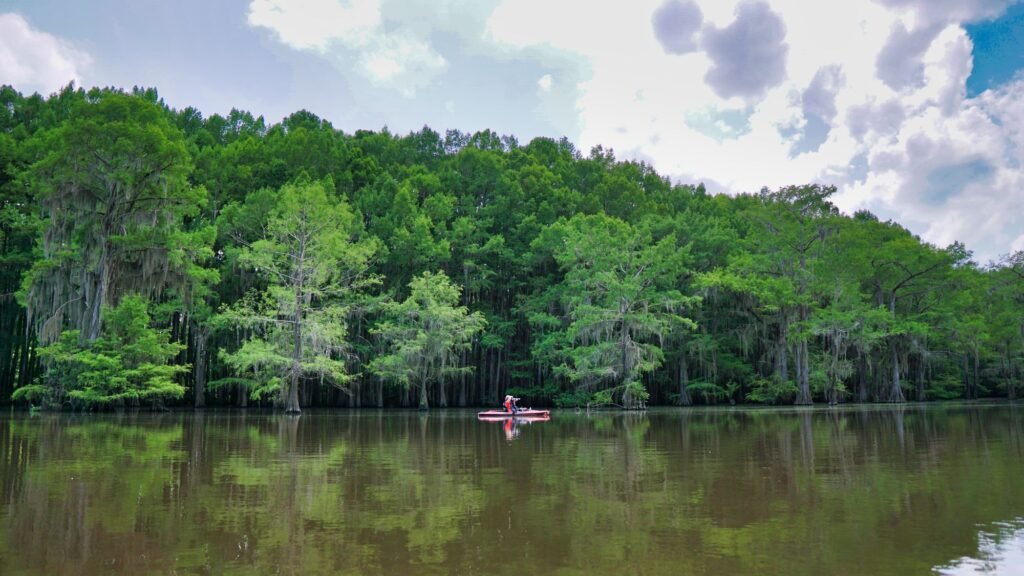
East Texas costs more because it works harder. The Piney Woods grow timber on rain alone. Pastures there carry several times the cattle of a West Texas pasture. And Houston, Tyler, Longview and the Dallas exurbs are close enough to commute from. Even so, it is where small-acreage homesteading in Texas actually happens, and there are cheaper corners. Marion County, around Jefferson and Caddo Lake, averages $2,245 an acre, the cheapest in the region and only 111th of 254 statewide. Jefferson County, around Beaumont, comes next at $2,443, with coastal flood risk to weigh. Panola, Trinity, Titus and Red River counties all sit between $3,130 and $3,400.
Want to go deeper on that side of the state? Our guide to the best counties in East Texas for homesteading ranks the region county by county. It covers ten real properties and what the land is worth under each one.
The counties at the top, and why
The five most expensive counties in Texas are all suburbs. Galveston at $15,245 an acre is barrier island and Houston commuter land. Montgomery at $13,070, Collin at $13,066 and Denton at $12,287 are the northern growth rings of Houston and Dallas. Hays, at $11,177, sits between Austin and San Antonio. Farmland there is priced as future subdivisions, which is what most of it is about to become. If a listing near one of those metros is cheap, there is a reason. It is usually on the plat or in the floodplain.
What to check before buying land in Texas
Six checks that are specific to Texas, in the order we would run them. The first catches more out-of-state buyers than any other, because in most of the country it simply does not come up.
Texas is also looser than most states in ways that feel like freedom and work like risk. The county will not inspect the house you are buying. It may not require a permit for the one you want to build. And it has almost no power to stop what your neighbor builds next. That makes the checks below your job, not the county’s.
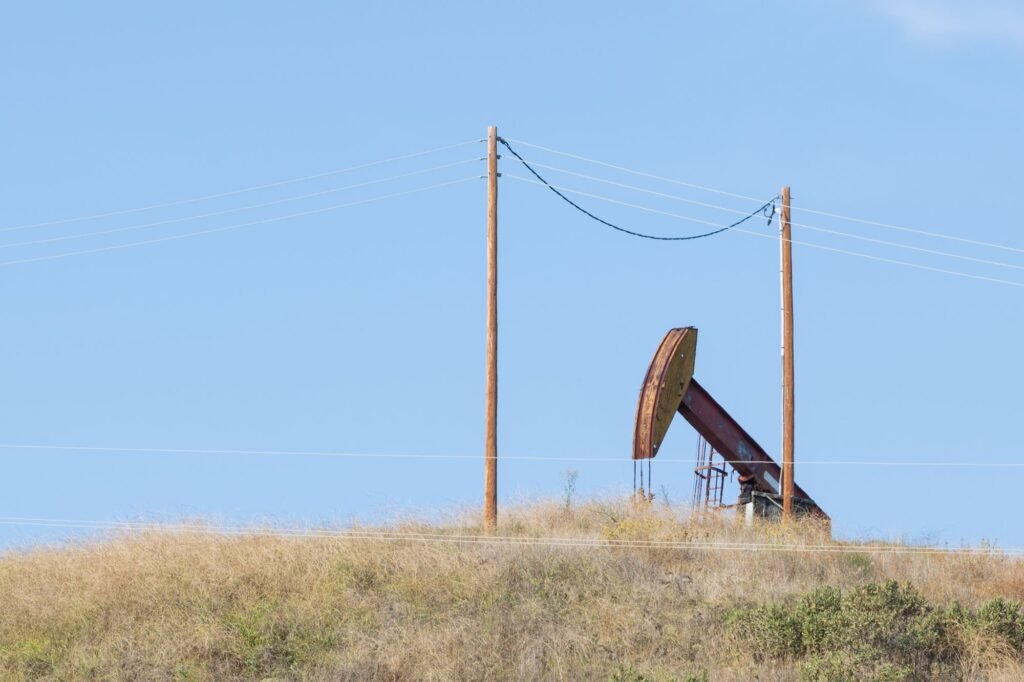
1. Find out who owns the minerals, because they can use your land to get them
2. The water: ten acres is the number that changes the rules
3. No county permit also means no county inspection of the house you are buying
4. Septic needs a permit almost everywhere, with one large-tract exception
5. If the land has an agricultural valuation, you inherit its history and its rollback
6. Legal access and the floodplain, the two that sink cheap tracts
We check the county numbers before a Texas property makes our list
Every property we feature has been run against its county census value, its water source and its access before it reaches the channel. Leave your email and you get the next list, with the checks already done.
What it costs to own rural land in Texas
Texas has no state income tax, and it pays for that with property tax. The Tax Foundation puts the state’s effective property tax rate at 1.40 percent, the seventh highest in the country. Nationally the range runs from 0.29 percent in Hawaii to 1.88 percent in New Jersey and Illinois. There is no state property tax. Your bill is the sum of the county, the school district and any special districts, such as a hospital district. Each levies its own rate on the value the county appraisal district sets.
Two things bring that bill down, and neither transfers to you automatically. The first is the residence homestead exemption. It takes $140,000 off the value school districts can tax, the level voters approved in November 2025. It covers the house and up to 20 acres around it, but only once it is your principal home and you apply. The second is agricultural valuation. Land in farm or ranch use can be appraised at its productive value instead of its market value. For grazing land that is usually a small fraction of the sale price.
The arithmetic, with a real rural tax rate
Take Trinity County, in the Piney Woods, where we have covered more than one property. Outside the city limits in the Groveton school district, the 2025 rates add up to 1.3285 percent. That is 0.5390 for the county, 0.1276 for the hospital district and 0.6619 for Groveton ISD. Now put a $150,000 house on 10 acres there. At the county’s census value of $3,266 an acre, the total taxable value is about $182,660.
The agricultural valuation, in one paragraph
Texas has no statewide minimum acreage for agricultural valuation. Each county appraisal district publishes its own guidelines for how many acres and animals it expects for each use. The intensity has to match what is typical in that county. Beekeeping is the one use with limits written into the Tax Code: at least 5 and no more than 20 acres. Wildlife management can keep a valuation alive on land that already qualified for agriculture. The owner has to carry out at least three of seven listed practices. The savings can be large, and the rollback when you stop is three years of the difference. The full rules, with three counties’ published minimums and the savings worked out, are in our agricultural exemption guide.
Closing, broadband and hospitals
Most Texas land closes through a title company, with a deed of trust securing any loan. Texas title insurance premiums are set by the state, not the market. And the Texas Constitution bars any tax on the transfer of real estate, so there is no transfer tax to budget for. Who pays for the owner’s title policy is negotiable and written into the contract. Veterans who live in Texas have a lender most states do not. The Veterans Land Board lends up to $200,000 for land, on tracts of at least one acre, with 5 percent down. The loan is a 30-year fixed rate, 7.25 percent when we checked in September 2026. For every other lender, from Farm Credit to owner financing, see our guide to land loans in Texas.
Rural internet is being built out now. In November 2025 federal regulators approved the Texas Broadband Development Office’s $1.3 billion plan. It aims to reach about 243,000 unserved and underserved locations within four years. Roughly half will get fiber, and the rest fixed wireless or low-orbit satellite. Hospitals are moving the other way. The Texas Organization of Rural and Community Hospitals counts 26 rural hospital closures in 22 Texas communities since 2010. Trinity County lost its hospital in April 2025. Before you buy, look up the nearest emergency room and the nearest hospital that still delivers babies, and drive the route.
Why the price per acre on a listing site is not the price of land
Search for Texas land and you will see an average asking price per acre far above anything on this page. When we checked LandSearch in September 2026, it showed $22,547 an acre across 38,041 Texas listings, 7.3 times the USDA’s 2026 figure for farm real estate. Both numbers are honest. They are measuring different things.
A listing site averages whatever is for sale. Most of what is for sale in Texas is small: a few acres near a growing town, priced per acre as a homesite. The census and the USDA survey measure working farms and ranches, which trade in hundreds of acres. The smaller the tract, the higher the price per acre, every time. Use the census to compare counties and to know when a big tract is fairly priced. To judge a small one, use recent sales of similar parcels in the same county. An appraiser or a local agent can pull them.
Cheap land and homes we have covered in Texas
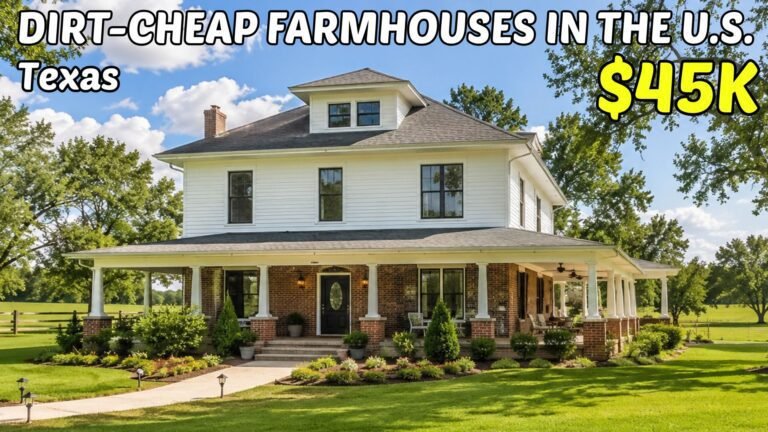
Every Texas list we have published, with the properties, the prices when we covered them, and what we found when we checked each one. The asking prices are a snapshot, not a quote.
Texas guides
The rules that cost Texas land buyers the most money, explained with the statute and the numbers behind them.
Keep exploring before you commit to Texas
Texas is the biggest land market we cover, and the one where the tax bill surprises people most. These are worth reading while you are still deciding which Texas you want.
- The best counties in East Texas for homesteading – the wet side of the state, county by county, with ten real properties.
- The best states to homestead – where Texas lands against the other 47 once land, tax and rain are scored together.
- The cheapest states to buy land in America – Texas against the rest, measured with the same federal survey.
- What it really costs to build a barndominium – the build most Texas land buyers are pricing, with the land included.
- Why cheap rural homes don’t sell – the reasons a low price sits on the market, and how to tell a fixable one from a real problem before you drive out.
- Rural property guides, the Rural Property Field Guide and how the AHO Score works – every guide we publish, the checks we run, and how a property earns a place on our lists.
Get the next batch of Texas listings first
We come back to Texas more than any other state. East Texas and the far west are where most of the value turns up. Leave your details and the next Texas list reaches you before it goes public.
Common questions about buying land in Texas
How much is an acre of land in Texas?
Texas farmland and farm buildings averaged $2,499 an acre in the 2022 USDA Census of Agriculture, and farm real estate averaged $3,100 in the USDA’s 2026 survey. The range is wide: $950 an acre in Roberts County up to $15,245 in Galveston County. West of the 100th meridian the average is $1,417, and east of the 98th it is $4,408.
Where is the cheapest land in Texas?
The cheapest land in Texas is in the dry west. The eight cheapest counties in the 2022 USDA census are Roberts, Val Verde, Crockett, Oldham, Cottle, Hudspeth, Presidio and Jeff Davis, all between $950 and $1,101 an acre. In East Texas the cheapest county is Marion, around Caddo Lake, at $2,245 an acre.
Why is land in West Texas so cheap?
West Texas land is cheap mostly because it is dry. Rainfall falls from over 55 inches a year at Beaumont to under 10 at El Paso, according to the Texas Water Development Board, and dry rangeland feeds few cattle per acre. Distance from jobs, stores and hospitals lowers the price further. Water, not acreage, is the real cost there.
Do you get the mineral rights when you buy land in Texas?
Not necessarily. In Texas the minerals can be owned separately from the surface, and much rural land is sold with minerals reserved by an earlier owner. The mineral estate is dominant, so its owner may use the surface as reasonably necessary to produce oil and gas. Check the title commitment’s Schedule B before closing to see what you are buying.
Do you need a permit to build a house on rural land in Texas?
Usually not from the county. Under Texas Local Government Code 233.153, a county cannot require approval before new home construction begins outside city limits. Counties that adopt a residential code require three private inspections instead. A septic permit is still needed almost everywhere, and city rules can apply inside a city’s extraterritorial jurisdiction or through deed restrictions.
Can you drill your own water well in Texas?
Yes, but where you drill matters. Under Texas Water Code 36.117, a household or livestock well is exempt from a groundwater district’s permit only on a tract of more than 10 acres, producing no more than 25,000 gallons a day. On smaller lots the local groundwater conservation district’s rules apply, so call the district before buying the land.
Can you live in an RV on your own land in Texas?
Often, outside city limits. Texas counties have very limited zoning power, so the usual barriers are deed restrictions, a city’s extraterritorial jurisdiction or local rules for mobile home and RV communities. Wastewater still has to go to a permitted septic system or an approved alternative. Read the deed restrictions and call the county before you buy.
Before you buy, the important part
American Home Opportunities is a publisher. We are not a real estate broker, agent, lender, appraiser, attorney or financial advisor, and nothing on this page is legal, tax or financial advice.
County farmland values come from the USDA Census of Agriculture 2022, Table 8, and measure farmland and the buildings on working farms rather than asking prices for small parcels; the regional bands are our own grouping of all 254 counties by longitude, weighted by land in farms. State farm real estate, pasture and cropland values come from the USDA NASS Land Values 2026 Summary. The effective property tax rate comes from the Tax Foundation, and the example rates from the Trinity County Appraisal District for 2025. Rainfall figures come from the Texas Water Development Board.
Legal references are to the Texas Tax Code sections 23.51 to 23.55, Water Code section 36.117, Local Government Code sections 233.152 to 233.154, 30 Texas Administrative Code section 285.3 and Property Code section 41.002, and to Hamrick v. Ward (Tex. 2014) and Getty Oil v. Jones (Tex. 1971). Veterans Land Board terms come from the Texas General Land Office, broadband figures from the Texas Comptroller, November 2025, and rural hospital figures from the Texas Organization of Rural and Community Hospitals. Listing-site prices come from LandSearch, September 2026.
Any price we quote for a property is an asking price at the time of writing, not a sale price. Rural land carries risks this page can introduce but not resolve for your parcel, including mineral reservations, water and wells, septic suitability, legal access, surveys, easements, title, flood exposure, repairs, insurance and financing. Verify everything with the appraisal district, the county, the groundwater district and licensed professionals before you commit money. Page published September 2026.