
How to Buy Land in Louisiana: Prices, Flood and Title
How to buy land in Louisiana, all 64 parishes: what an acre costs from the Delta to Acadiana, how a civil-law sale works, and the checks to run on flood zones, insurance, access, minerals, septic and wells.
How to buy land in Louisiana: the acre is cheap, the water is the price
If you are working out how to buy land in Louisiana, start with the federal numbers and then look at a flood map. The 2022 Census of Agriculture counts every farm in all 64 Louisiana parishes and puts the average value of farmland and its buildings at $3,600 an acre. The USDA’s 2026 survey puts Louisiana farm real estate at $3,950, about 12 percent below the national $4,500. That makes Louisiana a moderately priced land state, not a bargain-basement one.
What sets Louisiana apart is how little the price moves across the map. Six of the seven regions we built from the census average between $3,015 and $3,638 an acre, from the Delta bottoms in the northeast to the rice prairies of the southwest. In most states the cheap land is cheap because it is dry or rocky. Here it is mostly a question of water: how high the ground sits, how close it is to the Gulf, and what it costs to insure the house on it. So the first decision when buying land in Louisiana is not the parish. It is the elevation, the flood zone and the insurance quote, and only then the price.
On the ten Louisiana homes we covered, the land was 13 percent of the price
We checked the census against the ten properties in our list of cheap farmhouses in Louisiana with land, priced from $49,900 in Haynesville to $240,000 outside DeRidder. For each one we multiplied the acreage by its parish’s census value and compared the result with the asking price. On average the ground underneath came to 13.0 percent of what the seller was asking, but that average hides two kinds of listing. For the typical home, on two to five acres, the land was worth about 7 percent of the price; the lowest share was 3.3 percent, on 2 acres in Bastrop, Morehouse Parish, asking $209,900.
The two 20-acre listings broke the pattern. Outside Marion in Union Parish, 20 acres asking $169,900 sit on about $78,560 of census-value ground, 46.2 percent of the price. Outside DeRidder in Beauregard Parish, 20 acres asking $240,000 carry about $80,480 of land, 33.5 percent. Louisiana pasture is not cheap by national standards: USDA puts Louisiana pasture at $3,600 an acre, 1.8 times the US pasture average. On a small lot you are buying a house; on 20 acres in the north Louisiana hills, a big part of what you pay is land, and that is where the value can hide.
Buying land in Louisiana: the numbers in short
Louisiana land prices by region: what an acre actually costs
We pulled all 64 Louisiana parishes from the census and grouped them into the seven regions people actually shop in. Each average is weighted by the acres in farms, so a parish with a lot of farmland counts for more than one with a little. The last column names the cheapest parish inside each region, which in Louisiana is often a better guide than the regional average.
| Region | Farmland value per acre USDA, 2022 census | Land in farms | Cheapest parish in the region |
|---|---|---|---|
| Florida Parishes and Baton Rouge | $4,781 | 1,028,173 acres 12 of 64 parishes | Iberville, $2,562 |
| North Louisiana hills | $3,638 | 1,117,517 acres 13 parishes | Red River, $2,663 |
| Central | $3,542 | 581,329 acres 5 parishes | Grant, $3,170 |
| Northeast Delta | $3,427 | 2,343,814 acres 11 parishes | Tensas, $2,843 |
| Acadiana | $3,397 | 1,371,364 acres 8 parishes | Vermilion, $2,876 |
| Southwest prairie | $3,387 | 971,899 acres 5 parishes | Cameron, $2,737 |
| New Orleans, the river and the bayou coast | $3,015 | 572,285 acres 10 parishes | St. Bernard, $2,086 |
| Louisiana, all parishes | $3,600 | 7,986,381 acres 64 parishes | St. Bernard, $2,086 |
Why the cheapest parishes are on the coast, and the priciest are on the interstate
The three cheapest parishes in the census are St. Bernard ($2,086 an acre), Plaquemines ($2,130) and Jefferson ($2,176), all next to New Orleans. That looks like a bargain until you read the farm counts: St. Bernard has 50 farms, Jefferson 20, and much of what they hold is low coastal marsh, in the part of the state where the U.S. Geological Survey measured a loss of 2,006 square miles of land between 1932 and 2016. Those are not parishes where a homesteader finds a dry five acres.
At the other end, the Florida Parishes average $4,781 only because of five parishes along the Interstate 12 and Interstate 10 corridor: St. Tammany ($10,879), East Baton Rouge ($8,027), Tangipahoa ($7,045), Livingston ($6,940) and Ascension ($5,985). Together they average $7,908 an acre. The other seven parishes of the region, from Pointe Coupee and the Felicianas to Washington Parish on the Mississippi line, average $3,657, right at the state norm. Lafayette ($8,291) does the same thing to Acadiana. If you need to be near a city, you will pay suburban prices; if you do not, the parish next door is often priced as farmland.
Where the cheapest land in Louisiana is, and the honest reason it is cheap
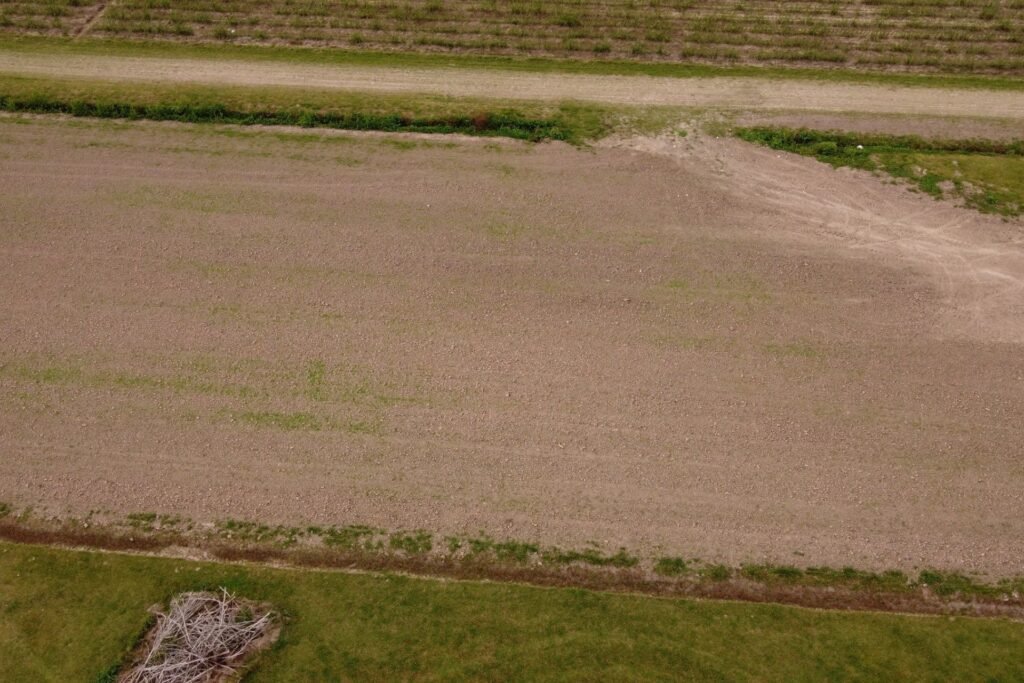
Leave out the coastal metro parishes and the cheapest farm country in Louisiana is spread across the whole state: Iberville ($2,562 an acre) west of Baton Rouge, Red River ($2,663) and Winn ($2,837) in the north, Cameron ($2,737) and Vermilion ($2,876) on the Gulf, and Tensas ($2,843) and Catahoula ($2,908) in the Delta. Together those seven parishes average $2,799 an acre across 1.3 million acres of farms. At that price, 20 acres of farmland is worth about $56,000 at census value, against $72,000 at the state average.
They are cheap for different reasons, and the reasons are what you are buying. Cameron and Vermilion are low coastal prairie and marsh facing the Gulf, exposed to every storm that comes ashore in southwest Louisiana. Tensas, Catahoula and Iberville are river-bottom parishes along the Mississippi, the Atchafalaya and the Ouachita, rich ground behind levees, with few towns and long drives. Red River and Winn are rolling pine and pasture country in the north, with small towns, timber and, in Red River, the Haynesville gas play underneath. None of that makes the land bad. It makes it priced for farmers, timber companies and hunters, and for anyone willing to check the flood map before the price.
If we were starting a search for a rural home with a few acres, we would begin in the north Louisiana hills and the central pine country: higher ground, farther from storm surge, and close to the state average at $3,542 to $3,638 an acre. Seven of the ten homes on our Louisiana list came from the north half of the state, from Haynesville and Marion to Winnsboro, Rayville and Ferriday, and of the two 20-acre tracts where land made up a third or more of the price, one was in the north hills and the other in the pine country around DeRidder.
The Delta trade-off
The Northeast Delta holds 29.3 percent of Louisiana’s farmland, more than any other region, at $3,427 an acre. It is big, flat, row-crop country, and much of it sits in the Mississippi River floodplain behind the levee system. Small towns like Winnsboro, Rayville and Ferriday have the lowest home prices on our lists, but the parishes are thinly populated, with long drives to specialist care. For a buyer who wants space and quiet on a fixed income, the Delta can work well; get the flood zone and an insurance quote before you fall for the price.
What to check before you buy land in Louisiana
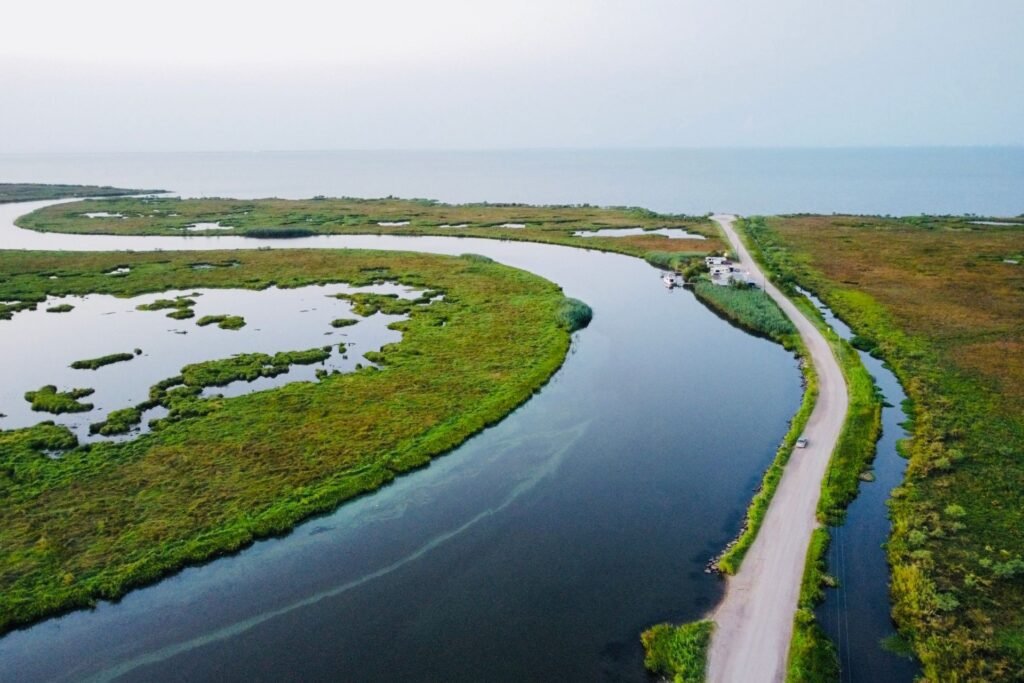
If you are learning how to buy land in Louisiana from another state, these are the six checks specific to it, in the order we would run them. The first two are about water and wind, because in Louisiana the insurance on the house can cost more each year than the property tax, and an uninsurable house is very hard to finance or resell.
The middle two are about Louisiana law, which is unlike any other state’s. Louisiana property law comes from its Civil Code rather than the common law used in the other 49 states, so the sale is signed before a notary, a spouse may have to sign, and a landlocked parcel has its own set of rules. The last two cover what lies beneath the land and what you can build on it: minerals, septic, wells and a building code that applies in every parish.
None of these checks shows up in the asking price, and on a cheap parcel any one of them can be worth more than the land. Each one costs far less to check before you sign a purchase agreement than after you close, and most of them start with the parish assessor, the clerk of court’s conveyance records and a call with the parcel number in hand.
1. Look up the flood zone and get a flood quote first
2. Get a homeowners quote for wind, and ask about the roof
3. Make sure the sale, the title and both spouses are in order
4. Confirm the road in, and know the enclosed-estate rules
5. Check the minerals, and the wells already drilled
6. Confirm septic, well and building permits with the parish
We check the census value, the flood map and the access before a Louisiana home makes our list
Every property we feature is run against its parish’s farmland value, its flood zone and its road in before it reaches the channel. Leave your email and you get the next list, with those checks already done.
What it costs to own rural land in Louisiana
If you buy land in Louisiana, the property tax on a modest home is low, and in some cases close to zero. The Tax Foundation puts the effective property tax rate on owner-occupied homes at 0.55 percent. The state income tax has been a flat 3 percent since tax year 2025, and there is no estate or inheritance tax. The catch is sales tax: the state rate is 5 percent, and with local add-ons the combined rate averages 10.11 percent, the highest in the country.
The mechanics: under Article VII, Section 18 of the state constitution, land and residential buildings are assessed at 10 percent of fair market value, and most other property at 15 percent. Bona fide agricultural, horticultural, marsh and timber land is assessed at 10 percent of its use value, not its market value. To qualify, the land must be at least 3 acres or have produced an average of at least $2,000 a year in gross income from that use over the previous four years, and the owner must sign an agreement to keep it in that use (R.S. 47:2303). Property must be reappraised at least every four years. The parish, the school board and the other local districts then apply their millage, where one mill is $1 of tax for every $1,000 of assessed value.
The arithmetic, and why we use a round number for the millage
Millage in Louisiana varies by parish and by ward inside each parish, and we could not verify a current parish total from an official source in time for this page. So the example below uses a hypothetical 100 mills, chosen only to make the arithmetic easy to follow; it is not any parish’s actual rate. A $150,000 house and lot that is your homestead is assessed at $15,000; the $7,500 homestead exemption leaves $7,500 taxable, about $750 a year at 100 mills. A $75,000 home that is your homestead owes nothing in state and parish taxes, although a city levy can still apply inside town limits. Ask the parish assessor for the real millage on your ward before you make an offer.
The homestead exemption, the senior freeze and use value
Once the house is your home, claim the homestead exemption with the parish assessor. It removes $7,500 of assessed value from state, parish and special taxes on a bona fide home, with up to 160 acres, that you own and live in, and each person can claim only one homestead in the state. Municipal taxes are not covered, except in Orleans Parish and for municipal school taxes. Owners 65 or older, owners who are permanently and totally disabled, and veterans with a VA service-connected disability rating of 50 percent or more can also freeze the assessed value of the homestead, the special assessment level, if adjusted gross income is no more than $100,000, rising to $150,000 from January 1, 2027, both adjusted for inflation. If you will run cattle, cut hay or grow timber on three acres or more, ask the assessor about use-value assessment before you buy.
Closing, broadband and the drive to a hospital
Most Louisiana closings are done by authentic act, signed before a notary public and two witnesses, and the act of sale is then recorded in the conveyance records of the parish clerk of court; until it is recorded, it does not bind third persons. Title work is customarily handled by Louisiana attorneys, so expect to pay for an attorney’s examination of the parish records as well as the notary. Budget for a survey too, especially on older tracts whose boundaries follow ditches, fences and tree lines.
Broadband is improving fast. Louisiana’s federal broadband program, GUMBO 2.0, has $1.355 billion to reach about 130,000 unserved and underserved locations, and in November 2025 it became the first state plan to win final federal approval, with a stated goal of closing the gap by 2028; check the exact address on the state’s GUMBO 2.0 map. Rural hospitals are a relative strength: the University of North Carolina’s Sheps Center counts only three rural Louisiana hospital closures or conversions since 2005, against 197 nationally. Still find the nearest emergency room and drive the route. Our guide to moving to Louisiana covers the cost of living, retirement taxes and the paperwork for your first 30 days.
Cheap land and homes we have covered in Louisiana
Every list we have published for people looking to buy land in Louisiana, with the parish data behind each property. Asking prices are from the date of each list and many of these homes have since sold.

Louisiana guides
Step-by-step guides for buying land and living in Louisiana, with the state’s own rules and the numbers behind them.
Keep exploring before you settle on Louisiana
Louisiana gives you farmland near the national average, a generous homestead exemption and some of the most distinctive country in America, at the price of serious flood and wind risk. These are worth a look while you are still deciding how to buy land in Louisiana, and whether Louisiana is the right state at all.
- 10 dirt cheap farmhouses in Louisiana with land – real homes from DeRidder to Haynesville, with the census value of the land under each one.
- Louisiana flood insurance – the NFIP rules, Risk Rating 2.0, the homeowners insurance crisis and how to check a parcel before you offer.
- Moving to Louisiana – the cost of living, taxes for retirees and your first 30 days.
- Why cheap rural homes don’t sell, and how to buy one anyway – the financing and inspection traps behind the lowest prices.
- The cheapest states to buy land in America – where Louisiana sits against Arkansas, Mississippi and Texas, measured with the same federal survey.
- The best states to homestead – land, tax and rain scored together.
- Rural property guides, the Rural Property Field Guide and how the AHO Score works – every guide we publish, the checks we run, and how a property earns a place on our lists.
Get the next batch of Louisiana listings first
We keep coming back to Louisiana, because in the north hills a house on real acreage can still cost little more than the land under it. Leave your details and the next Louisiana list reaches you before it goes public.
Common questions about how to buy land in Louisiana
How much is an acre of land in Louisiana?
Louisiana farmland and farm buildings averaged $3,600 an acre in the 2022 USDA Census of Agriculture, and farm real estate averaged $3,950 in the USDA’s 2026 survey, about 12 percent below the national $4,500. Pasture averaged $3,600, 1.8 times the US pasture average. By parish, the census runs from $2,086 an acre in St. Bernard, mostly coastal marsh, to $10,879 in St. Tammany, leaving out Orleans and its 171 acres of farms.
Where is the cheapest land in Louisiana?
Among parishes with real farm acreage, Iberville ($2,562 an acre), Red River ($2,663), Cameron ($2,737), Winn ($2,837), Tensas ($2,843), Vermilion ($2,876) and Catahoula ($2,908) are the cheapest in the 2022 USDA census, averaging $2,799 across 1.3 million acres. St. Bernard, Plaquemines and Jefferson rank lower still, but they are coastal metro parishes with few farms, much of it marsh.
Do you need a notary to buy land in Louisiana?
A sale of land must be made in writing, either by authentic act or by act under private signature (Civil Code art. 2440). An authentic act is signed before a notary public and two witnesses, which is how most Louisiana closings are done. The sale binds third persons only once it is recorded in the conveyance records of the parish where the land lies.
Is flood insurance required in Louisiana?
It is required if the home is in a FEMA Special Flood Hazard Area and the mortgage is federally regulated or federally backed. Otherwise it is optional, but about one third of NFIP claims from 2013 to 2023 came from outside high-risk zones. NFIP coverage usually starts 30 days after purchase, with no wait when it is bought at closing for a loan.
How are property taxes calculated in Louisiana?
Land and homes are assessed at 10 percent of fair market value, and the local millage is applied to that. The homestead exemption removes $7,500 of assessed value, which equals $75,000 of market value, from state and parish taxes on a home with up to 160 acres. Bona fide farm, timber and marsh land is assessed at 10 percent of its use value instead.
What happens if land has no road access in Louisiana?
Under Civil Code art. 689, the owner of an enclosed estate can claim a right of passage over a neighbor’s land to the nearest public road, paying the neighbor compensation, generally along the shortest, least damaging route. If the land was landlocked by a sale or partition, the seller’s side must give passage free (art. 694). An owner who encloses his own land voluntarily gets none (art. 693).
Do you get mineral rights when you buy land in Louisiana?
You get the minerals the seller owns and does not reserve. A reserved or sold mineral servitude is not permanent in Louisiana: it is extinguished by 10 years of nonuse (R.S. 31:27), and the minerals then return to the landowner. Whether a given servitude has expired depends on the well history, so have a Louisiana attorney check the parish records.
Before you buy, the important part
American Home Opportunities is a publisher. We are not a real estate broker, agent, lender, appraiser, attorney, notary, insurance agent or financial advisor, and nothing on this page is legal, tax, insurance or financial advice.
Parish farmland values come from the USDA Census of Agriculture 2022, Louisiana, Table 8, and measure farmland and the buildings on working farms rather than asking prices for small parcels; the regions are our own grouping of all 64 parishes, weighted by land in farms. State farm real estate, cropland and pasture values come from the USDA NASS Land Values 2026 Summary; the two surveys measure different things and are not a time series. The effective property tax rate and the income and sales tax rates come from the Tax Foundation. The worked tax example uses a hypothetical 100-mill rate for illustration only. Insurer insolvencies and Citizens policy counts come from the Louisiana Legislative Auditor (October 2022); the insurance cost ranking from the GAO (GAO-26-107867); wetland loss from the U.S. Geological Survey (2017); orphaned wells from the Legislative Auditor (October 2024); broadband figures from the Office of the Governor; hospital closures from the UNC Sheps Center.
Legal references are to La. Const. Art. VII, Secs. 18 and 20 (assessment, use value, reappraisal, the special assessment level and the homestead exemption), R.S. 47:2302 and 47:2303 (use-value qualification), Civil Code arts. 689 to 694 (enclosed estates), 1833 and 1839 (authentic acts and transfers of immovables), 2338 and 2347 (community property), 2440 (sales of immovables), 3338 and 3346 (public records), R.S. 31:27 (mineral servitudes), R.S. 40:1730.23 and 1730.28 (the Louisiana State Uniform Construction Code), R.S. 49:214.30 (coastal use permits), LAC 51:XIII (sewage systems) and the Department of Conservation and Energy’s water well registration rules. Flood insurance rules come from FEMA; the Fortify Homes program and FORTIFIED discounts from the Louisiana Department of Insurance.
Any price we quote for a property is an asking price at the time of writing, not a sale price. Rural land carries risks this page can introduce but not resolve for your parcel, including flooding and storm surge, wind and insurance, wetlands, minerals and old wells, water and wells, septic suitability, legal access, surveys, servitudes, title, repairs and financing. Verify everything with the parish assessor and clerk of court, the agencies named, a Louisiana attorney or notary and licensed professionals before you commit money. Page published October 2026.