
Why Are Houses So Cheap in West Virginia?
Census data on all 55 counties: the four real reasons prices are so low, where the cheapest houses are, and when cheap is a bargain or a warning.
Why is West Virginia so cheap? Because the state has more homes than buyers. It has lost people for most of the last 75 years, incomes are among the lowest in the country, and one home in seven sits empty. The result: the lowest median home value of all 50 states, $170,800 in the latest Census data.
That is less than half the national figure, and in parts of the southern coalfields it drops to $50,000 to $90,000. We feature these houses every week on our channel, and the question we get most in the comments is the obvious one: what’s the catch?
So we went to the source. We pulled the Census Bureau’s 2020 to 2024 American Community Survey for all 55 West Virginia counties and lined up home values against population change, vacancy, income and the age of the housing. In fact, the pattern is strong enough to put a number on: the counties that lost people are the counties where houses are cheap.
Below you’ll find the four reasons, why the land is cheap too, the full county table, where a cheap house is a bargain and where it is a warning, and what to check before you buy one.
Why is West Virginia so cheap? The numbers in short
Reason 1: West Virginia has been losing people since 1950
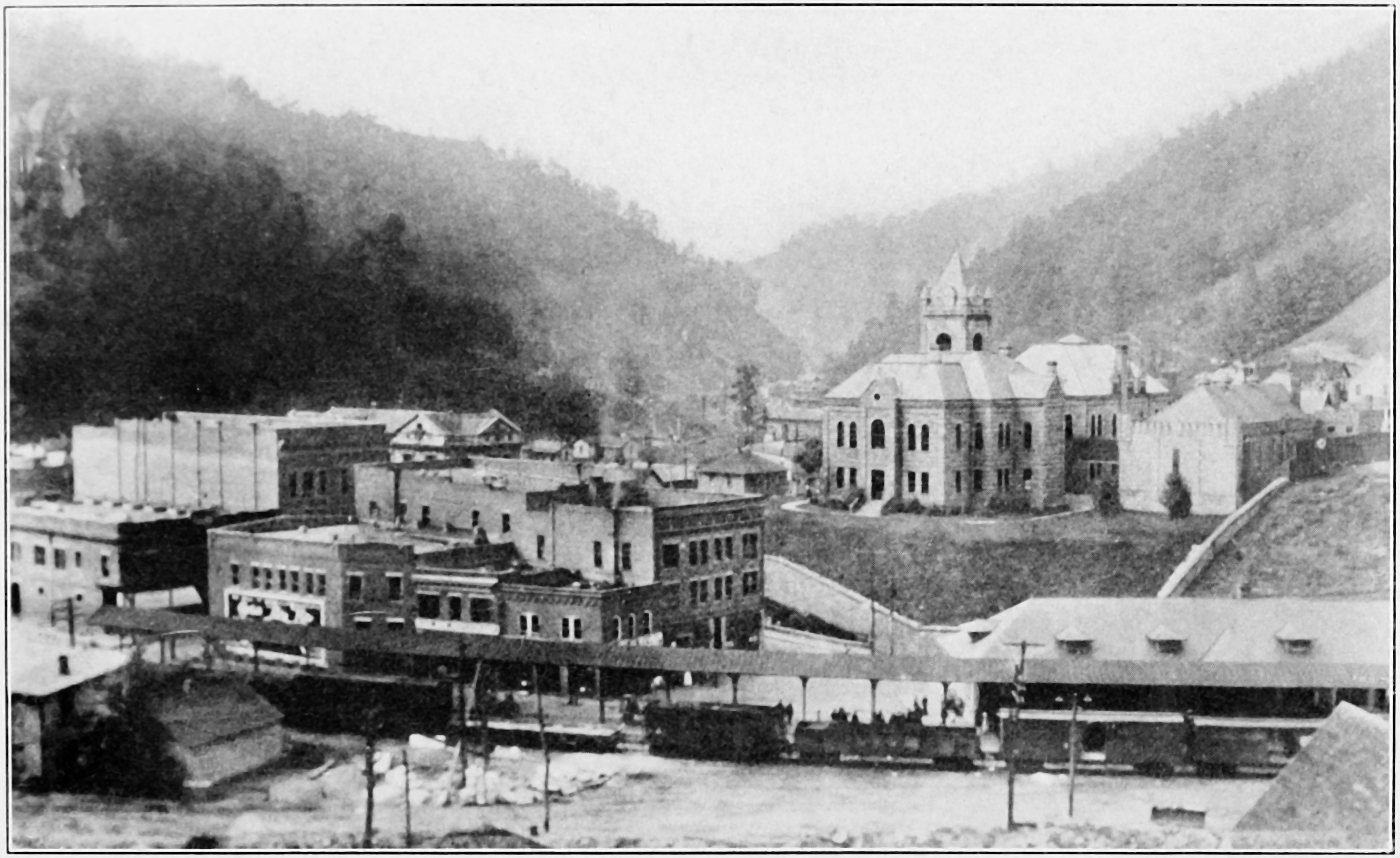
Most of the houses you see in a cheap West Virginia listing were built for a bigger state. West Virginia reached its peak of about 2 million people in 1950, when coal mining employed roughly 125,000 West Virginians. By 2024 the mines employed about 15,000, and the state’s population had slipped to about 1.78 million.
The coal counties emptied first
Nowhere is that clearer than McDowell County, once one of the richest coal counties in the nation. It counted 98,887 people in the 1950 census and 19,111 in 2020; the latest estimate is 17,943. Because of that, its median home value today is $50,000, the lowest in the state.
Meanwhile, the decline has not stopped. Comparing the Census Bureau’s 2010-2014 and 2020-2024 estimates, 48 of West Virginia’s 55 counties lost population. Seventeen of them lost 10% or more, and Calhoun, Pendleton and Ritchie lost close to a fifth of their residents in about a decade.
However, when a town loses people, it doesn’t lose houses. The homes stay, the number of buyers shrinks, and prices settle wherever the remaining local buyers can pay. In our data, that one mechanism explains more of West Virginia’s prices than anything else in our data.
Statistically, population change alone tracks home values closely across the 55 counties (a correlation of 0.77). The chart shows the three groups side by side.
Population and price
Typical median home value in West Virginia counties, by population change from 2010-2014 to 2020-2024
Median of the county medians in each group. Source: AHO analysis of U.S. Census Bureau American Community Survey 5-year estimates, tables B25077 and B01003.
Reason 2: There are more houses than buyers
Of West Virginia’s 861,325 homes, 132,670 were vacant in the 2020-2024 survey: 15.4%, against 10.1% for the country. Some of those, for example, are cabins and ski-country second homes. Pocahontas County, home to Snowshoe, has more vacant homes than occupied ones, most of them seasonal, and Tucker County, around Canaan Valley, is not far behind.
Homes nobody lives in
The number that matters more is the Census category called “other vacant”: homes that are not for sale, not for rent and not a vacation place. They are usually inherited houses nobody lives in, homes waiting on a family to settle an estate, or places too rundown to rent. In West Virginia that category is 8.9% of all housing, close to two and a half times the national rate of 3.6%.
In the counties that lost 10% or more of their people, 22.6% of homes are vacant and 13.6% are “other vacant.” In the counties that grew, total vacancy is 9.6%. In other words, every one of those empty houses is a potential listing, and every one keeps a lid on what the house next door can sell for.
This is also why the same towns keep producing the bargains we cover. Our list of cheap houses in West Virginia draws heavily from exactly these counties.
Reason 3: Prices follow local paychecks
A house is worth what people nearby can borrow against their income, and West Virginia’s median household income is $59,608 in the 2020-2024 estimates, against $80,734 nationally. In the 2024 one-year survey only Mississippi ranked lower.
As a result, that gap shows up directly in the price-to-income ratio. A typical West Virginia home costs about 2.7 times the typical household’s annual income; across the U.S. it is about 4.1 times. In McDowell, Boone and Wyoming counties the ratio falls below 1.75. Homes there are priced to coalfield wages, not to buyers from Washington or Columbus.
For an outside buyer, however, that is the opening. Someone with a remote job, a pension or equity from a house in a pricier state is bidding against local incomes, not against other outsiders. The cheapest places to retire in the U.S. work on the same math.
Reason 4: Older homes on hard ground
Of course, cheap also reflects what you are buying. Half of West Virginia’s homes were built before 1976, and in Ohio, Hancock and McDowell counties the median home dates to the late 1950s. Naturally, older houses come with older roofs, wiring, plumbing and heating, and a buyer prices those repairs in.
In addition, the land itself adds friction. West Virginia lies entirely within the Appalachian Mountains, and its towns sit in narrow valleys along rivers and rail lines. That means flood exposure: First Street estimates that 28% of the state’s homes face substantial flood risk, third highest in the nation after Louisiana and Florida. Similarly, steep lots make wells, septic fields and driveways harder and costlier.
What lies underneath
Then there is what lies underneath. Mineral rights in West Virginia are often owned separately from the surface, and coal-county homes can sit over old mine works. State law adds mine subsidence coverage, up to $200,000, to homeowners policies unless the owner rejects it, except in 15 counties without coal, where it is optional. Our guide to West Virginia mineral rights walks through what to check.
Why is land so cheap in West Virginia?
The same forces push down the price of land. West Virginia farmland averaged $3,640 an acre in USDA’s 2026 land values survey, against $4,500 nationally, and much of the state is steep forest rather than crop ground. In the 2022 Census of Agriculture, the central and Mid-Ohio Valley counties averaged about $2,593 an acre, while the Eastern Panhandle, within commuting range of Washington, averaged $6,873.
Large holdings also shape the market. A 2013 study by the West Virginia Center on Budget and Policy found that the 25 biggest private landowners held 17.6% of the state’s private land, much of it timber and coal company ground that rarely comes up for sale in small pieces. As a result, what does reach the market is often a hillside lot or an old farm a long drive from work. Small rural parcels advertised online ask far more per acre than the farm averages, often well over $10,000.
For prices by region, taxes and the buying steps, see our guide on how to buy land in West Virginia, and for the national picture, the cheapest states to buy land.
Median home value in all 55 West Virginia counties
Sorted from the cheapest county to the most expensive. Population change compares the Census Bureau’s 2010-2014 and 2020-2024 estimates; vacancy includes seasonal homes.
| County | Median home value | Population change | Homes vacant | Median household income |
|---|---|---|---|---|
| McDowell | $50,000 | -15.7% | 30.7% | $31,559 |
| Webster | $76,100 | -9.6% | 33.9% | $43,839 |
| Wyoming | $82,900 | -11.1% | 18.9% | $48,440 |
| Gilmer | $83,800 | -16.3% | 27.7% | $47,981 |
| Mingo | $90,500 | -14.1% | 19.4% | $38,119 |
| Boone | $93,100 | -13.3% | 21.9% | $57,093 |
| Calhoun | $100,500 | -20.2% | 20.7% | $43,980 |
| Logan | $103,400 | -13.1% | 13.6% | $49,723 |
| Lincoln | $105,300 | -7.9% | 20.0% | $46,205 |
| Fayette | $105,800 | -13.5% | 16.4% | $53,194 |
| Wetzel | $107,900 | -13.7% | 16.2% | $56,836 |
| Clay | $109,100 | -15.1% | 25.0% | $42,318 |
| Wirt | $115,800 | -13.0% | 25.1% | $49,867 |
| Ritchie | $115,900 | -18.9% | 18.8% | $50,582 |
| Braxton | $117,900 | -15.8% | 23.3% | $50,331 |
| Mason | $120,300 | -8.0% | 16.2% | $49,761 |
| Tyler | $121,300 | -11.2% | 19.8% | $63,693 |
| Nicholas | $121,600 | -6.9% | 24.6% | $54,639 |
| Mercer | $121,700 | -5.8% | 17.5% | $53,210 |
| Roane | $122,100 | -6.5% | 20.2% | $45,778 |
| Wayne | $127,100 | -8.6% | 13.7% | $58,878 |
| Hancock | $130,800 | -6.4% | 9.7% | $61,466 |
| Barbour | $131,900 | -7.8% | 13.6% | $51,394 |
| Summers | $140,100 | -14.4% | 28.5% | $40,699 |
| Brooke | $141,500 | -8.3% | 9.5% | $54,316 |
| Randolph | $144,800 | -6.4% | 18.3% | $52,757 |
| Kanawha | $147,300 | -7.9% | 15.4% | $60,943 |
| Taylor | $148,800 | -2.8% | 11.2% | $57,795 |
| Greenbrier | $149,000 | -9.1% | 17.4% | $48,218 |
| Marshall | $149,800 | -8.7% | 15.1% | $59,169 |
| Raleigh | $150,900 | -7.1% | 16.2% | $52,150 |
| Pleasants | $151,000 | -1.0% | 14.1% | $60,932 |
| Lewis | $151,800 | +2.0% | 15.2% | $56,477 |
| Pocahontas | $152,400 | -10.6% | 53.5% | $42,119 |
| Tucker | $154,800 | -4.9% | 39.0% | $53,358 |
| Monroe | $156,300 | -8.4% | 26.0% | $56,750 |
| Jackson | $157,200 | -5.2% | 10.5% | $58,845 |
| Wood | $158,500 | -3.7% | 11.0% | $57,810 |
| Doddridge | $160,800 | -6.9% | 21.1% | $57,401 |
| Preston | $162,800 | +1.3% | 15.6% | $61,880 |
| Cabell | $164,400 | -4.2% | 14.6% | $55,832 |
| Ohio | $166,000 | -5.4% | 13.2% | $57,094 |
| Harrison | $166,200 | -5.9% | 13.7% | $60,377 |
| Hardy | $166,300 | +2.1% | 28.1% | $49,272 |
| Marion | $166,700 | -1.4% | 11.2% | $67,370 |
| Upshur | $170,800 | -3.2% | 15.3% | $54,338 |
| Grant | $175,100 | -7.2% | 22.5% | $62,361 |
| Mineral | $180,400 | -3.8% | 11.1% | $69,375 |
| Pendleton | $183,800 | -19.7% | 36.6% | $64,931 |
| Hampshire | $219,200 | -0.9% | 31.6% | $63,116 |
| Putnam | $223,300 | +1.5% | 6.9% | $79,527 |
| Morgan | $240,600 | -0.1% | 20.6% | $72,179 |
| Berkeley | $266,300 | +20.7% | 5.2% | $80,815 |
| Monongalia | $267,700 | +6.8% | 10.6% | $65,346 |
| Jefferson | $350,800 | +8.4% | 8.0% | $98,806 |
| West Virginia | $162,600 | -4.1% | 15.4% | $59,608 |
| United States | $332,700 | +6.6% | 10.1% | $80,734 |
Source: U.S. Census Bureau, American Community Survey 2020-2024 5-year estimates (tables B25077, B01003, B25002, B19013) and 2010-2014 5-year estimates (B01003); compiled by American Home Opportunities. County figures carry margins of error, widest in the smallest counties.
Where the cheapest houses are
Six counties have a median home value under $100,000: McDowell ($50,000), Webster ($76,100), Wyoming ($82,900), Gilmer ($83,800), Mingo ($90,500) and Boone ($93,100). Four of the six are in the southern coalfields, and all six lost between 9.6% and 16.3% of their people in about a decade.
Where they are not
Jefferson ($350,800), Monongalia ($267,700) and Berkeley ($266,300) sit at the top. Jefferson and Berkeley are in the Eastern Panhandle, an hour or so from the Washington suburbs, and grew 8.4% and 20.7%. Monongalia is Morgantown and West Virginia University. In short, where people are moving in, West Virginia stops being cheap.
Cheap to buy, cheap to own?
Even so, a low price is only half the story. West Virginia’s effective property tax rate of 0.51% is one of the lowest in the country, so a $90,000 house typically carries a tax bill of roughly $450 to $650 a year. Taxes on a weekend place or vacant land outside a town run higher than on an owner-occupied home, but still low by national standards.
Still, the costs to watch are the ones the price doesn’t show: an old roof, a failing septic field, a well, flood insurance, and the drive. Here is how we sort a cheap West Virginia house.
When cheap is a bargain
The house is solid and the price is low because the town is small and quiet. Good signs: a recent roof, a working well or a public water line, an access road you can drive in winter, and a hospital and grocery store within 30 to 45 minutes.
When cheap is a warning
The price is low because of the house or the lot. Warning signs: a home in a mapped flood zone, cracks or sagging that point to mine subsidence, no permit record for the septic system, a shared driveway with no written easement, or a title that leaves the minerals with someone else.
What to check first
Pull the flood map, ask the county health department for the septic permit, order a home inspection and a title search, and confirm who owns the mineral rights. If you will work remotely, confirm the internet service at that exact address before you make an offer.
Septic is the hidden cost we see most often on cheap country houses; our guide to the cost to install a septic system has the numbers. And if the house has been on the market for a long time, our explainer on why cheap rural homes don’t sell covers the usual reasons.
Thinking about the move itself, not just the house? Our guide to moving to West Virginia covers the real monthly cost of rural living, the pros and cons, and the state’s Ascend WV relocation program for remote workers.
Common questions about why West Virginia is so cheap
Why are houses so cheap in West Virginia?
Houses are cheap in West Virginia because the state has more homes than buyers. It lost people for most of the past 75 years, 48 of its 55 counties shrank in the last decade, 15.4% of homes are vacant and incomes rank near the bottom. Its median home value, $170,800 in 2024 Census data, is the lowest of any state.
Why is land so cheap in West Virginia?
Land is cheap in West Virginia because much of it is steep, forested and far from jobs, and demand has fallen with the population. Farmland averaged $3,640 an acre in USDA’s 2026 survey versus $4,500 nationally. Large timber and coal holdings also keep good, buildable parcels scarce, so small lots near towns cost more.
What is the cheapest county to buy a house in West Virginia?
McDowell County is the cheapest place to buy a house in West Virginia, with a median home value of $50,000 in the Census Bureau’s 2020-2024 estimates. Webster ($76,100), Wyoming ($82,900), Gilmer ($83,800) and Mingo ($90,500) follow. Most of these southern and central counties have lost 10% or more of their residents.
Is West Virginia a cheap place to live?
Yes. West Virginia is one of the cheapest states to live in, mainly because housing costs so little: the median home value is about half the national figure, and the effective property tax rate is around 0.51%. Incomes are also lower, so the savings are biggest for people who bring remote work, a pension or savings.
Why are people moving out of West Virginia?
People have left West Virginia mostly for jobs. Coal mining employed about 125,000 West Virginians in 1950 and about 15,000 by 2024, and many younger residents moved to larger metro areas. The state’s population fell 4.1% between the 2010-2014 and 2020-2024 Census estimates, while the U.S. grew 6.6%. Many coal counties lost far more.
What is the downside to living in West Virginia?
The main downsides of living in West Virginia are fewer well-paying jobs, long drives to hospitals and shopping in rural counties, older housing that needs repairs, and flood risk in river valleys, where First Street estimates 28% of homes face substantial risk. Internet service can also be limited outside towns, so check before buying.
How much is the average home in West Virginia?
The median home in West Virginia was worth $170,800 in the Census Bureau’s 2024 one-year survey and $162,600 in its 2020-2024 estimates, the lowest of any state. Prices range from $50,000 in McDowell County to $350,800 in Jefferson County, in the Eastern Panhandle near Washington, D.C. More than half of the counties fall below $150,000.
Where to look next
Ready to look at real houses? Start with our list of cheap houses in West Virginia and the national roundup of cheap houses for sale in the USA. Buying land instead? Read how to buy land in West Virginia. Our rural property guides collect the rest, and the Field Guide covers due diligence on any parcel.
Get the cheapest West Virginia homes we find
We comb West Virginia listings every week for solid houses at coalfield prices. Leave your email and we will send you the best ones, with what to check on each, before they reach the channel.
Sources
- U.S. Census Bureau, American Community Survey 2020-2024 5-year estimates, tables B25077 (median value), B01003 (population), B25002 and B25004 (occupancy and vacancy status), B19013 (median household income), B25035 (median year built) and B25003 (tenure); 2010-2014 5-year table B01003; 2024 1-year tables B25077 and B19013 for state rankings. Tabulations by American Home Opportunities.
- e-WV: The West Virginia Encyclopedia, labor and coal employment history, coal mining jobs in 1950 and 2024.
- U.S. Census Bureau decennial censuses, 1950 and 2020, population of McDowell County.
- USDA National Agricultural Statistics Service, Land Values 2026 Summary, and the 2022 Census of Agriculture, county farmland values.
- Tax Foundation, effective property tax rates by state, 2026. First Street, flood risk by state. West Virginia Center on Budget and Policy, Who Owns West Virginia? (2013).
- West Virginia Code §33-30-6, mine subsidence insurance.
- Calculations, groupings, the chart and the county table by American Home Opportunities.
Before you act on any of this
American Home Opportunities is a publisher. We are not a real estate broker or agent, lender, appraiser, home inspector, attorney or financial advisor. This guide is editorial and independent: no agent, lender or seller paid for it or reviewed it, and nothing on this page is legal, lending or financial advice.
The figures come from public data and have margins of error; prices and availability change, so verify every listing through its official link and with local professionals. Rural property involves wells, septic, access, surveys, easements, repairs, insurance and financing, and each deserves a licensed professional’s review before you buy.