
How to Buy Land in South Carolina: Prices, Title and Tax
How to buy land in South Carolina, all 46 counties: why the Pee Dee costs half as much as the Upstate, why your home is taxed at 4% and a second home at 6%, and the checks to run on heirs’ property, access, flood, septic and wells.
How to buy land in South Carolina: where the acres are cheap and the paperwork is not
Anyone figuring out how to buy land in South Carolina should begin with two federal numbers that look like they disagree. The 2022 Census of Agriculture counts every farm in all 46 South Carolina counties and puts the average value of farmland and its buildings at $4,355 an acre. The USDA’s 2026 land values survey puts South Carolina farm real estate at $4,900, a little above the national $4,500, but about 18 percent below the $6,000 average of the USDA’s Southeast region. South Carolina is not the cheapest land in America. It is cheap for the South Atlantic, and in one corner of the state it is very cheap indeed.
The gap inside the state is wider than the gap between states. Greenville County, on the Interstate 85 corridor in the Upstate, averages $12,103 an acre. Lee County, in the Pee Dee, averages $2,655, less than a quarter as much. The Pee Dee, the flat farm and pine country of the northeast, holds a quarter of the state’s farmland at $2,952 an acre, and its counties fill the first six places on the cheap list. Then South Carolina adds a twist no price map shows: what you pay in property tax depends on whether you live in the house. So the first decision when buying land in South Carolina is not only where. It is whether this will be your home, or a second place you visit.
On the nine South Carolina homes we measured, the land was 6.3% of the price
We tested the census against our list of ten cheap farmhouses in South Carolina, which runs from $255,000 in Elgin down to a lakefront auction near Abbeville estimated at $10,000. For the nine homes with a set asking price, we multiplied the acreage by its county’s census value and compared the result with the price. On average the ground underneath came to 6.3 percent of what the seller was asking. The highest share was 15.3 percent, on 5 acres outside Laurens, in Laurens County, asking $150,000. The lowest, 3.0 percent, turned up twice: 2 acres in Elgin, Kershaw County, at $255,000, and a single acre in Newberry at $129,000.
That is a low share even for cheap rural markets, and it tells you where the money goes. Six of the nine homes sit on 1 to 3 acres, and at their counties’ census values that ground is worth between about $3,200 and $18,200. The rest of the price is the house, the roof, the septic tank, the well or water line, and a title that someone has to search. Judge a South Carolina property by the house, the chain of title and the flood map, not by the price per acre.
Buying land in South Carolina: the numbers in short
South Carolina land prices by region: what an acre actually costs
We pulled all 46 South Carolina counties from the census and sorted them into the six regions buyers actually search in. Each average is weighted by the acres in farms, so a county with a lot of farmland counts for more than one with a little. The last column names the cheapest county inside each region, which is often where the real bargains are.
| Region | Farmland value per acre USDA, 2022 census | Land in farms | Cheapest county in the region |
|---|---|---|---|
| The Upstate | $6,248 | 862,273 acres 10 of 46 counties | Greenwood, $3,514 |
| The Charlotte edge | $5,876 | 280,668 acres 3 counties | Chester, $3,702 |
| The Lowcountry and Grand Strand | $4,305 | 787,560 acres 9 counties | Georgetown, $2,960 |
| The Midlands | $4,167 | 806,340 acres 8 counties | Fairfield, $3,316 |
| The Savannah River and western Midlands | $3,947 | 685,079 acres 7 counties | Allendale, $2,964 |
| The Pee Dee | $2,952 | 1,132,002 acres 9 counties | Lee, $2,655 |
| South Carolina, all counties | $4,355 | 4,553,922 acres 46 counties | Lee, $2,655 |
Why the Upstate and the coast each hide two markets
The Upstate average blends two very different places. The five counties along the Interstate 85 and mountain-foothill belt, Greenville ($12,103), Spartanburg ($9,453), Pickens ($9,117), Oconee ($7,485) and Anderson ($7,011), average $8,468 an acre. The five counties south and east of them, Laurens, Abbeville, Union, Cherokee and Greenwood, average $4,058, below the state average. The Upstate is also small-farm country: its 7,824 farms average about 110 acres, against almost 400 in the Pee Dee. Many of those small farms are homes with pasture, and that kind of demand may be one reason South Carolina pasture, at $4,500 an acre, now outprices its cropland. That last point is our reading of the numbers, not the USDA’s.
The coast works the same way. Charleston County averages $11,145 an acre on fewer than 39,000 acres of farms; take it out and the other eight Lowcountry and Grand Strand counties average $3,951. Georgetown ($2,960), Hampton ($3,227) and Berkeley ($3,279) are cheaper than most of the Midlands. If you want salt air or a reachable drive to Charleston without Charleston prices, the inland counties of the coastal plain are where to look, with the flood and title checks further down this page done first.
Where the cheapest land in South Carolina is, and why it costs so little
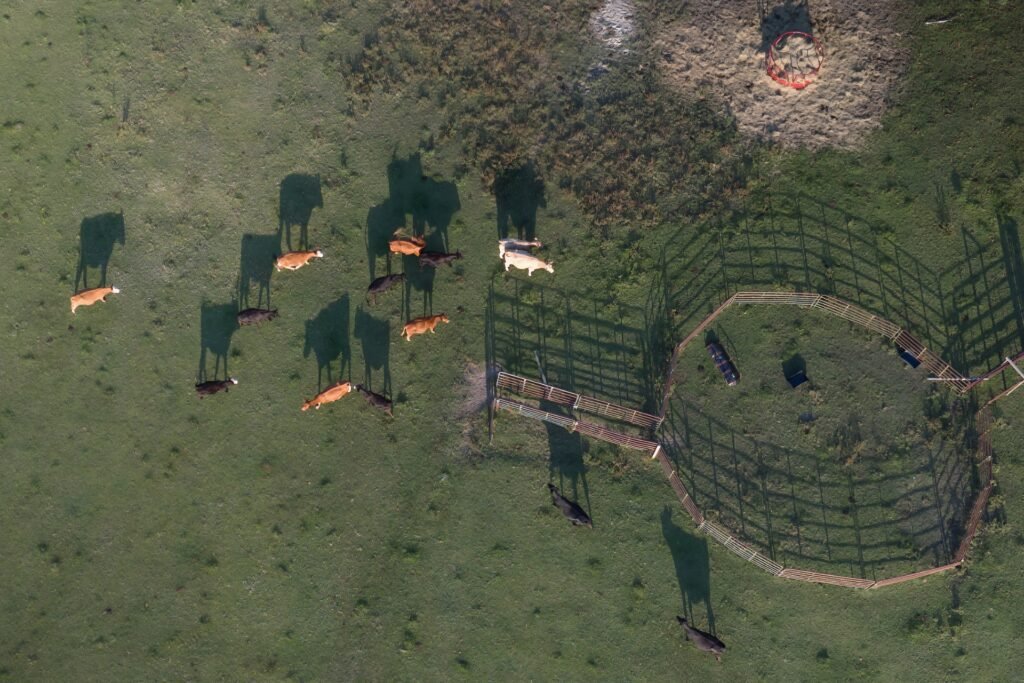
Eight South Carolina counties average less than $3,000 an acre in the census: Lee ($2,655), Marlboro ($2,752), Dillon ($2,757), Darlington ($2,794), Marion ($2,868), Williamsburg ($2,941), Georgetown ($2,960) and Allendale ($2,964). Together they average $2,828 an acre across 870,511 acres of farms, about a fifth of all the farmland in the state. Six of the eight are in the Pee Dee. Georgetown sits on the coast at the southern end of the Grand Strand, and Allendale on the Savannah River across from Georgia.
The plain reason is that this is working farm country, priced as farm country. The Pee Dee is the flat inner coastal plain of the northeast, and its farms are large: 2,868 of them on 1.13 million acres, close to 400 acres each on average. An acre there is valued by what row crops and pine timber can earn, not by what a commuter will pay for a view of the mountains or a short drive to the beach. It also sits away from the two places most newcomers to South Carolina are heading, the Upstate’s I-85 belt and the coast, and the services show it: Marlboro Park Hospital, in the second-cheapest county in the census, closed in 2015, one of four rural South Carolina hospitals to close since 2005.
None of that makes the land a poor buy. Florence, at the junction of Interstates 95 and 20, gives most of the Pee Dee a regional city with shopping and hospitals, and the flat ground is easy to build on, fence and garden. For a retiree or a remote worker who wants a few acres and a quiet road, the Pee Dee offers something the rest of the state no longer does: land priced for farmers rather than for buyers moving in from out of state. Drive to the nearest emergency room before you make an offer, and check broadband at the exact address.
The coastal exception: Georgetown, Hampton and Berkeley
Three coastal-plain counties break the rule that the coast is expensive. Georgetown ($2,960) is the seventh-cheapest county in the state, Hampton averages $3,227, and Berkeley, part of the Charleston metropolitan area, $3,279. The trade-off is water. These counties carry the hurricane and flood exposure of the coast, and they are also where heirs’ property is best documented: the only figure the Legislature’s own study committee could cite was a 2011 study that found about 40,000 acres of it in six coastal counties, Beaufort, Berkeley, Charleston, Dorchester, Georgetown and Jasper, and called that likely an undercount. Cheap coastal land can be a real find. Have the title searched all the way back before you fall for it.
What to check before you buy land in South Carolina
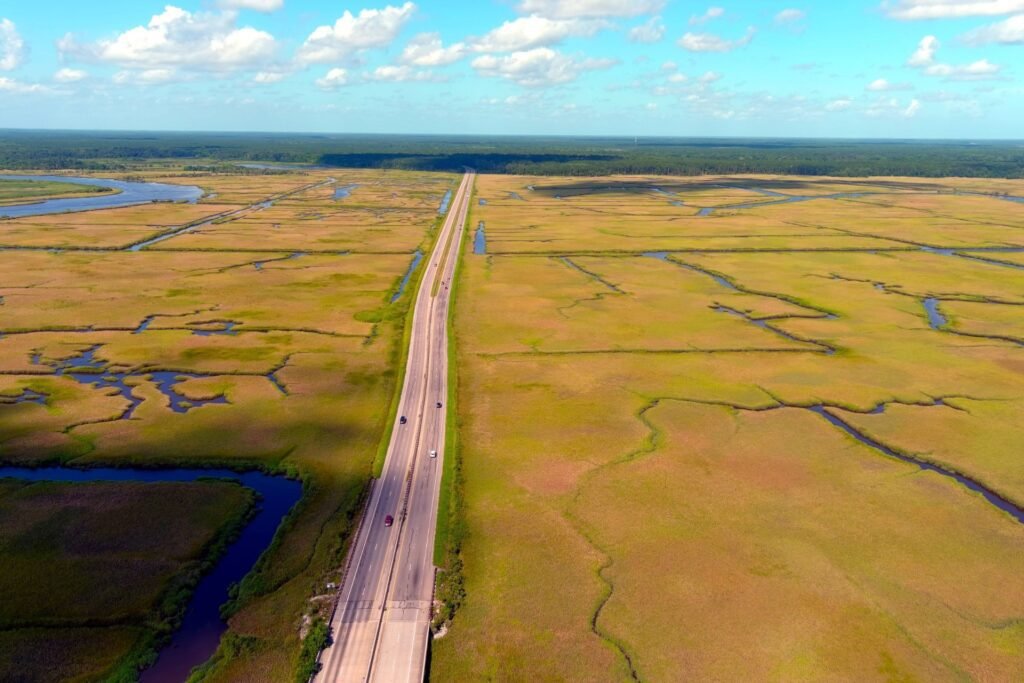
If you are learning how to buy land in South Carolina from another state, these are the six checks that matter most here, in the order we would run them. South Carolina is more regulated than many rural states: building codes apply in every county, a septic permit comes before a building permit, and a licensed South Carolina attorney has to supervise the closing. That helps you. It also means the hidden problems on a cheap parcel tend to be in the title and the land itself rather than in a lack of rules.
The first three can sink a deal even when the house is fine: heirs’ property in the chain of title, a road in that nobody ever recorded, and a flood zone or storm exposure that drives up insurance. The last three decide what you can build and what you will pay to hold it: the septic permit, the well and its distances, and a tax bill that can change sharply the moment the property changes hands.
None of them shows up in the asking price, and on a cheap tract any one of them can be worth more than the land. Each one costs far less to check before you sign a contract than after you close, and most of them start with the county register of deeds, the assessor and a closing attorney with the parcel number in hand.
1. Check the title for heirs’ property
2. Make sure the road in is a right, not a habit
3. Read the flood map and plan for hurricane season
4. Get the septic permit before you count on a building permit
5. Plan the well and keep it far enough from everything
6. Ask what the tax will be after you buy, not what the seller paid
We check the census value, the flood map and the access before a South Carolina home makes our list
Every property we feature is run against its county’s farmland value, its flood zone and its road in before it reaches the channel. Leave your email and you get the next list, with those checks already done.
What it costs to own rural land in South Carolina
If you buy land in South Carolina and live on it, the property tax is low. The Tax Foundation puts the effective property tax rate on owner-occupied homes at 0.49 percent, against a national range of 0.29 percent in Hawaii to 1.88 percent in New Jersey and Illinois. A law signed in spring 2026, Act 110, taxes income at 1.99 percent on the first $30,000 and 5.21 percent above it from tax year 2026, with further automatic cuts written in if revenue grows. The state sales tax is 6 percent, about 7.49 percent on average with local add-ons, and there is no estate or inheritance tax. Our guide to moving to South Carolina covers what that means for Social Security and pensions.
The mechanics are where South Carolina differs from almost everywhere else. Your legal residence, the home you own and live in, plus up to five contiguous acres, is assessed at 4 percent of fair market value, and it is exempt from the school operating levy, often the biggest single line on the bill. Everything else, second homes, rentals and vacant land not in farm use, is assessed at 6 percent and pays every levy; a legal residence rented out for more than 72 days a year loses its status. Farmland that qualifies for agricultural use is assessed at 4 percent of its use value, set by soil class, rather than its market value. Counties reassess every fifth year, and the increase from a reassessment is capped at 15 percent over five years until the property sells.
One county, one house, four different tax bills
Take unincorporated Marlboro County in the Pee Dee, where the South Carolina Association of Counties lists a combined 2025 rate of 335.3 mills: 128.3 for the county, 185.3 for school operations, 3.3 for school debt and 18.4 for rural fire. A $150,000 house that is your legal residence is assessed at $6,000 and, without the school operating levy, pays about $900 a year. The same house as a second home or a rental is assessed at $9,000 and pays about $3,018, more than three times as much. Twenty acres of vacant land worth $60,000, not in farm use, pay about $1,207. These are our estimates from the published rates; any local credits would lower them, and your county will differ, so ask the county auditor before you make an offer.
The 65-plus exemption, farm use and the rollback
Once you have been a South Carolina legal resident for a full year by December 31, owners who are 65 or older, totally and permanently disabled or legally blind can exempt the first $50,000 of their home’s value; apply with the county auditor. Farm-use valuation is the other big lever, with firm thresholds: a timber tract must be at least 5 acres and other farmland at least 10, or a smaller tract must show at least $1,000 of gross farm income in three of the last five years. When farm land changes to another use, the owner pays rollback taxes, the difference between the farm and market tax for the year of the change and the three years before it, and must report the change within six months.
A lawyer at the table, then the internet and hospital questions
South Carolina is an attorney state. In a line of Supreme Court decisions starting with State v. Buyers Service Co. in 1987, the court has held that a South Carolina-licensed attorney must supervise the title search, the deed and loan papers, the closing and the recording; a 2017 decision clarified that the attorney need not sit at the table so long as each critical step is supervised. The deed recording fee is $1.85 for every $500 of value, so $370 on a $100,000 sale, and the seller is primarily liable for it. Buy at a foreclosure or court-ordered sale, where the deed comes from a master-in-equity, and the buyer pays it instead. Budget for a survey too: older rural deeds describe lines by roads, ditches and trees.
Internet and health care are the weak points. South Carolina’s federal broadband plan, as summarized by the NTIA in November 2025, would reach the last 20,480 unserved locations for about $41.4 million of a $551.5 million allocation, and 48.7 percent of those locations would get low-earth-orbit satellite rather than fiber; the figures are still subject to federal review. Check service at the exact address, not the county. Four rural South Carolina hospitals have closed since 2005, according to the University of North Carolina’s Sheps Center: Bamberg County Memorial in 2012, Marlboro Park in 2015, Southern Palmetto in 2016 and Fairfield Memorial in 2018. Find the nearest emergency room and the nearest hospital that admits patients, and drive the route before you commit.
Cheap land and homes we have covered in South Carolina
Every list we have published for people looking to buy land in South Carolina, with the county data behind each property. Asking prices are from the date of each list and many of these homes have since sold.
South Carolina guides
Step-by-step guides for buying land and living in South Carolina, with the state’s own rules and the numbers behind them.
Keep exploring before you settle on South Carolina
South Carolina gives you Pee Dee farm prices, Upstate foothills and a long Atlantic coast, with a tax system that rewards living where you buy. These are worth a look while you are still deciding how to buy land in South Carolina, and whether South Carolina is the right state at all.
- 10 dirt cheap farmhouses in South Carolina with land – real homes from $255,000 in Elgin down to a lakefront auction near Abbeville.
- Moving to South Carolina – the cost of living, taxes for retirees, hurricanes and your first weeks after the move.
- Homesteading in South Carolina – farm-use tax, wells and septic, and how to steer clear of heirs’ property trouble.
- Why cheap rural homes don’t sell, and how to buy one anyway – the financing and inspection traps behind the lowest prices.
- The cheapest states to buy land in America and the best states to homestead – where South Carolina sits against its neighbors, measured with the same federal data.
- Rural property guides, the Rural Property Field Guide and how the AHO Score works – every guide we publish, the checks we run, and how a property earns a place on our lists.
Get the next batch of South Carolina listings first
We keep coming back to South Carolina, because outside the fast-growing corridors a house on real acreage is still priced for local buyers. Leave your details and the next South Carolina list reaches you before it goes public.
Common questions about how to buy land in South Carolina
How much is an acre of land in South Carolina?
South Carolina farmland and farm buildings averaged $4,355 an acre in the 2022 USDA Census of Agriculture, and farm real estate averaged $4,900 in the USDA’s 2026 survey, against $4,500 for the US. Pasture averaged $4,500 and cropland $4,100. By county the census runs from $2,655 an acre in Lee County to $12,103 in Greenville County.
Where is the cheapest land in South Carolina?
In the Pee Dee, the farm and timber country of the northeast. The six cheapest counties in the 2022 USDA census are all there, led by Lee at $2,655 an acre, Marlboro at $2,752 and Dillon at $2,757, and the region averages $2,952 across 1.13 million acres. Outside it, Georgetown on the coast ($2,960) and Allendale on the Savannah River ($2,964) are almost as cheap.
Do you need a lawyer to buy land in South Carolina?
Yes. The South Carolina Supreme Court has held in a line of cases since 1987 that a South Carolina-licensed attorney must supervise a residential closing: the title search, the deed and loan papers, the closing and disbursement, and the recording. Doing those steps without an attorney’s supervision is the unauthorized practice of law. Budget for the attorney’s fee alongside the title insurance.
How are property taxes calculated in South Carolina?
The county assesses your legal residence, and up to 5 contiguous acres with it, at 4 percent of fair market value, and that home is exempt from school operating millage. Second homes, rentals and vacant land not in farm use are assessed at 6 percent and pay every levy. In unincorporated Marlboro County in 2025, a $150,000 house paid about $900 as a legal residence and about $3,018 as a second home, plus a $235 solid waste fee.
What is heirs’ property in South Carolina?
Land owned by several relatives as tenants in common, usually because an owner died without a will and the title passed to all of the heirs in shares. No official count exists; a 2023 Southern Rural Development Center and Forest Service brief estimates 162,803 to 414,784 acres in South Carolina. One heir can sell only an undivided share, never the whole tract.
Do you need a permit for a septic system in South Carolina?
Yes. The state Department of Environmental Services must issue a septic permit before a county will issue a building permit for a house or manufactured home without public sewer. The site evaluation fee is $150, the soil work can be done by DES staff or a licensed professional soil classifier, and a permit stays valid for 5 years.
Who pays the deed stamps when you buy land in South Carolina?
The seller, in most sales. South Carolina’s deed recording fee is $1.85 for every $500 of value, $1.30 to the state and $0.55 to the county, so a $100,000 sale owes $370. The seller is primarily liable and the buyer only secondarily, but on a deed from a master-in-equity, as in a foreclosure or court-ordered sale, or from a government, the buyer pays.
Before you buy, the important part
American Home Opportunities is a publisher. We are not a real estate broker, agent, lender, appraiser, attorney or financial advisor, and nothing on this page is legal, tax or financial advice.
County farmland values come from the USDA Census of Agriculture 2022, South Carolina, Table 8, and measure farmland and the buildings on working farms rather than asking prices for small parcels; the regions are our own grouping of all 46 counties, weighted by land in farms. State farm real estate, cropland and pasture values come from the USDA NASS Land Values 2026 Summary; the two surveys measure different things and are not a time series. The effective property tax rate and the sales tax figures come from the Tax Foundation; the 2026 income tax brackets from Act 110 of 2026. The worked tax example uses Marlboro County’s 2025 levies as published by the South Carolina Association of Counties; the arithmetic is ours.
Legal references are to S.C. Code 12-43-220, 12-43-230 and 12-43-232 (assessment ratios, legal residence, agricultural use and rollback), 12-43-217 (reassessment), 12-37-220(B)(47) (school operating exemption), 12-37-250 (homestead exemption), 12-37-3140 and 12-37-3150 (the 15 percent cap and assessable transfers), 12-24-10 to 12-24-90 (deed recording fee), 15-61-310 and following (heirs’ property partition), DES Regulation 61-56 (septic) and Regulations 61-44 and 61-71 (wells), and the Supreme Court decisions in State v. Buyers Service Co. (1987), Kennedy v. Bedenbaugh (2002) and Boone v. Quicken Loans (2017). Heirs’ property estimates come from the Southern Rural Development Center and USDA Forest Service (2023) and the Heirs’ Property Study Committee report (2022); flood and hurricane figures from SCDNR and the State Climatology Office; broadband figures from the NTIA’s November 2025 summary of the state’s final proposal; hospital closures from the UNC Sheps Center.
Any price we quote for a property is an asking price at the time of writing, not a sale price. Rural land carries risks this page can introduce but not resolve for your parcel, including heirs’ property and other title defects, flooding and storms, water and wells, septic suitability, legal access, surveys, easements, repairs, insurance and financing. Verify everything with the county assessor, auditor and register of deeds, the agencies named, a South Carolina real estate attorney and licensed professionals before you commit money. Page published October 2026.