
The Cheapest Places to Buy a House With Land
Census data on 17.8 million homes on an acre or more shows the cheapest place to buy a house with land, state by state and county by county.
The cheapest place to buy a house with land in the United States is not a single town. It is a belt of rural counties that runs from the coalfields of eastern Kentucky down through Mississippi, Alabama, Arkansas and central Louisiana. There, a house on an acre or more is typically worth $100,000 to $150,000.
Most lists of “cheapest places” rank land alone, or houses alone, and neither answers the question most buyers are asking: where can I afford a house that comes with some ground around it? So we went to the source. The Census Bureau’s American Community Survey records the lot size of every surveyed home, together with what the owner says it is worth. We processed the 2024 microdata for all 50 states, covering about 17.8 million owner-occupied homes on an acre or more.
Below you will find the state ranking, the 20 county groups where a house with land is still cheapest, and a finding that surprised us: in 14 states, a house on 10 acres or more is worth less than a house on a small lot.
Cheapest place to buy a house with land: the numbers in short
The short answer
By state, the cheapest place to buy a house with land is a four-way tie: Mississippi, Kentucky, West Virginia and Arkansas, where the median house on 10 or more acres is worth $200,000. By area, eastern Kentucky’s coal counties come first, at about $100,000 for a house on an acre or more. Mississippi has the deepest pool of bargains: more than a third of its homes on 10+ acres are valued under $150,000.
State ranking: what a house on 10+ acres is worth
To find the cheapest place to buy a house with land at the state level, the ranking uses the median, the value in the middle: half of the homes are worth more and half are worth less. We picked 10 acres as the yardstick because that is roughly where a house stops being a house with a big yard and becomes a small homestead, with room for a garden, a few animals and some privacy.
Cheapest states for a house with land
Median value of an owner-occupied house on 10 or more acres
The 13 states at $250,000 or less, with California for scale. Source: U.S. Census Bureau, American Community Survey 2024 1-year microdata, processed by American Home Opportunities.
The cheap end of the table is almost entirely Southern and Appalachian, with a few Plains states mixed in. Oklahoma, Kansas and North Dakota join them at $250,000, in wide-open farm country. So does New Mexico, which has the cheapest farmland per acre in the country: a reminder that on a homestead, the house carries most of the price. At the other end, California, Idaho, Oregon, Massachusetts and Colorado all sit at $550,000 or more.
The full ranking also shows two columns that matter as much as the price: the share of homes on 10+ acres worth less than $150,000, and what the property tax would be on the median home. The first tells you how deep the bargain bin is. The second tells you what the house will cost you every year after you buy it.
| Rank | State | House on 10+ acres (median value) | Share under $150,000 | House on under 1 acre | Property tax rate | Yearly tax on the median |
|---|---|---|---|---|---|---|
| 1 | Mississippi | $200,000 | 36.5% | $180,000 | 0.58% | $1,160 |
| 1 | Kentucky | $200,000 | 33.3% | $220,000 | 0.74% | $1,480 |
| 1 | West Virginia | $200,000 | 32.8% | $150,000 | 0.51% | $1,020 |
| 1 | Arkansas | $200,000 | 32.1% | $200,000 | 0.56% | $1,120 |
| 5 | Louisiana | $220,000 | 28.8% | $210,000 | 0.55% | $1,210 |
| 6 | Alabama | $245,000 | 29.3% | $230,000 | 0.37% | $906 |
| 7 | Oklahoma | $250,000 | 30.3% | $200,000 | 0.79% | $1,975 |
| 7 | North Dakota | $250,000 | 27.3% | $250,000 | 0.92% | $2,300 |
| 7 | New Mexico | $250,000 | 26.7% | $269,000 | 0.63% | $1,575 |
| 7 | Kansas | $250,000 | 25.1% | $220,000 | 1.21% | $3,025 |
| 7 | South Carolina | $250,000 | 24.9% | $300,000 | 0.49% | $1,225 |
| 7 | Illinois | $250,000 | 24.8% | $270,000 | 1.88% | $4,700 |
| 7 | Missouri | $250,000 | 22.5% | $245,000 | 0.89% | $2,225 |
| 14 | Iowa | $280,000 | 17.7% | $200,000 | 1.33% | $3,724 |
| 15 | Georgia | $300,000 | 23.5% | $350,000 | 0.79% | $2,370 |
| 15 | South Dakota | $300,000 | 23.2% | $280,000 | 1.00% | $3,000 |
| 15 | Arizona | $300,000 | 21.3% | $400,000 | 0.48% | $1,440 |
| 15 | Nebraska | $300,000 | 20.9% | $250,000 | 1.44% | $4,320 |
| 15 | New York | $300,000 | 19.9% | $430,000 | 1.30% | $3,900 |
| 15 | North Carolina | $300,000 | 19.6% | $325,000 | 0.66% | $1,980 |
| 15 | Indiana | $300,000 | 18.7% | $225,000 | 0.76% | $2,280 |
| 15 | Pennsylvania | $300,000 | 18.4% | $250,000 | 1.26% | $3,780 |
| 15 | Michigan | $300,000 | 17.9% | $230,000 | 1.19% | $3,570 |
| 15 | Ohio | $300,000 | 16.6% | $220,000 | 1.36% | $4,080 |
| 15 | Wisconsin | $300,000 | 12.2% | $273,000 | 1.32% | $3,960 |
| 26 | Texas | $317,000 | 19.3% | $300,000 | 1.40% | $4,438 |
| 27 | Tennessee | $330,000 | 16.4% | $305,000 | 0.52% | $1,716 |
| 28 | Florida | $350,000 | 23.1% | $400,000 | 0.78% | $2,730 |
| 28 | Maine | $350,000 | 13.3% | $300,000 | 0.98% | $3,430 |
| 28 | Minnesota | $350,000 | 12.8% | $325,000 | 1.00% | $3,500 |
| 31 | Virginia | $370,000 | 16.8% | $400,000 | 0.78% | $2,886 |
| 32 | Nevada | $420,000 | 14.5% | $450,000 | 0.50% | $2,100 |
| 33 | Vermont | $430,000 | 8.9% | $300,000 | 1.51% | $6,493 |
| 34 | New Jersey | $475,000 | 9.5% | $490,000 | 1.88% | $8,930 |
| 35 | New Hampshire | $485,000 | 5.4% | $400,000 | 1.50% | $7,275 |
| 36 | Wyoming | $497,000 | 12.5% | $300,000 | 0.53% | $2,634 |
| 37 | Montana | $500,000 | 14.3% | $350,000 | 0.61% | $3,050 |
| 37 | Utah | $500,000 | 8.1% | $500,000 | 0.48% | $2,400 |
| 37 | Connecticut | $500,000 | 3% | $350,000 | 1.54% | $7,700 |
| 40 | Maryland | $520,000 | 10% | $400,000 | 0.92% | $4,784 |
| 41 | Washington | $525,000 | 7.5% | $575,000 | 0.75% | $3,938 |
| 42 | Colorado | $550,000 | 11.4% | $550,000 | 0.50% | $2,750 |
| 43 | Oregon | $600,000 | 9.4% | $480,000 | 0.81% | $4,860 |
| 43 | Idaho | $600,000 | 5.6% | $400,000 | 0.50% | $3,000 |
| 43 | Massachusetts | $600,000 | 4.1% | $600,000 | 1.00% | $6,000 |
| 46 | California | $683,000 | 10% | $750,000 | 0.70% | $4,781 |
Values are what owners told the Census Bureau their house and land would sell for, not asking prices. Medians come from a one-year survey sample and are rounded the way owners answer, which is why many states land on round numbers. Yearly tax is the median value times the state’s average effective rate on owner-occupied homes; your county’s rate and any farm or homestead exemption will change it.
The 20 cheapest areas to buy a house with land
State medians hide a lot. Kentucky as a whole sits at $200,000 for a house on 10+ acres, but its eastern counties run half that. To find the places, we went one level down, to the Census Bureau’s Public Use Microdata Areas: groups of neighboring counties with about 100,000 people each. We kept the roughly 1,000 areas with at least 60 surveyed owner-occupied homes on an acre or more and sorted them by median value. If you want the cheapest place to buy a house with land down to the county, this is the list.
| # | Area | State | House on 1+ acres (median value) | House on 10+ acres |
|---|---|---|---|---|
| 1 | Pike, Floyd, Johnson, Magoffin and Martin counties | Kentucky | $100,000 | $100,000 |
| 2 | Whitley, Harlan, Knox and Bell counties | Kentucky | $110,000 | $100,000 |
| 3 | Letcher, Perry, Breathitt, Knott and Leslie counties | Kentucky | $120,000 | $90,000 |
| 4 | Neshoba, Scott, Leake, Smith and Kemper counties | Mississippi | $120,000 | $125,000 |
| 5 | Washington, Bolivar and Sunflower (the Delta) counties | Mississippi | $120,000 | — |
| 6 | Wayne, Logan, Mingo, McDowell and Boone counties | West Virginia | $120,000 | $185,000 |
| 7 | Boyd, Greenup, Carter and Lawrence counties | Kentucky | $124,000 | $125,000 |
| 8 | Tazewell, Wise, Russell and Buchanan counties | Virginia | $125,000 | $120,000 |
| 9 | Jones, Wayne and Covington counties | Mississippi | $130,000 | $200,000 |
| 10 | Bibb, Marengo, Hale and Pickens counties | Alabama | $140,000 | $150,000 |
| 11 | Union, Ouachita and Columbia counties | Arkansas | $140,000 | $150,000 |
| 12 | Avoyelles, Grant and Concordia counties | Louisiana | $140,000 | $150,000 |
| 13 | Covington, Pike and Barbour counties | Alabama | $150,000 | $150,000 |
| 14 | Coffee, Ware and Pierce counties | Georgia | $150,000 | $170,000 |
| 15 | Saline, Union, White and Massac counties | Illinois | $150,000 | $200,000 |
| 16 | Alcorn, Prentiss and Tishomingo counties | Mississippi | $150,000 | $160,000 |
| 17 | Robeson, Columbus and Bladen counties | North Carolina | $150,000 | $160,000 |
| 18 | Orangeburg, Barnwell and Calhoun counties | South Carolina | $150,000 | $200,000 |
| 19 | Clearfield, McKean, Elk and Potter counties | Pennsylvania | $160,000 | $250,000 |
| 20 | St. Lawrence County | New York | $165,000 | $200,000 |
Three kinds of places fill the list, and each one is cheap for its own reason.
The coalfields of Appalachia
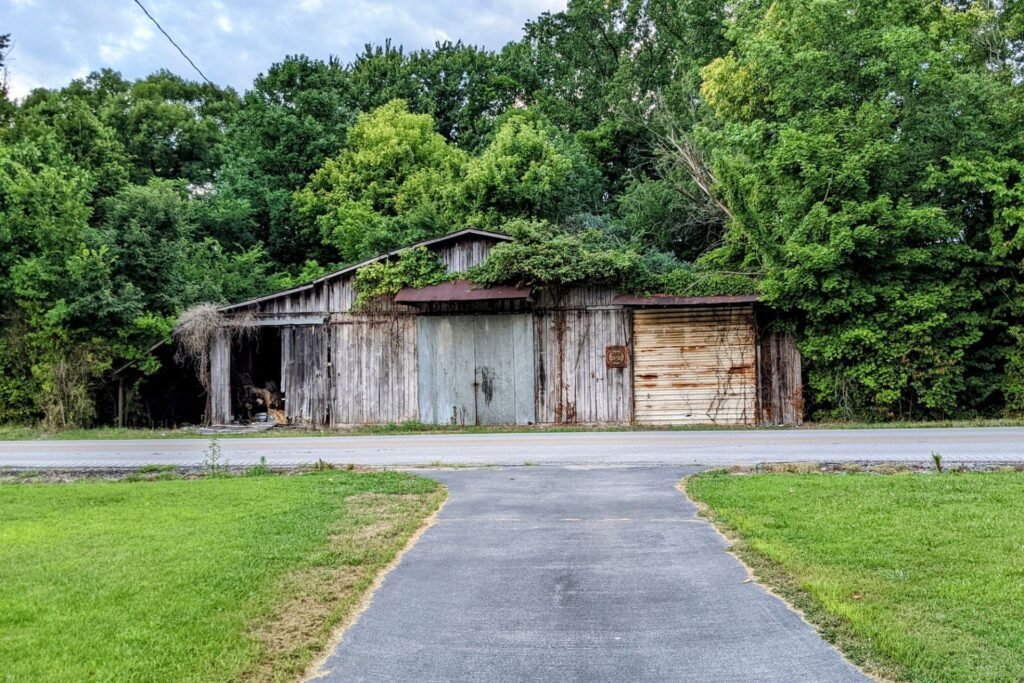
Eastern Kentucky, southern West Virginia and the southwest tip of Virginia hold six of the top ten. Coal jobs left, people followed, and houses on wooded hillsides now sell for a fraction of what the same house would bring near a city. The land is steep, often prone to creek flooding, and the minerals underneath are frequently owned by someone else.
The Deep South farm belts
Central Mississippi, the Delta, Alabama’s Black Belt, south Arkansas, central Louisiana and the Georgia piney woods. Flat to rolling, warm, with long growing seasons and low property taxes. Prices are low because there are few jobs nearby and the nearest big hospital can be an hour away.
The northern outliers
Southern Illinois, the forested counties of north-central Pennsylvania and St. Lawrence County in far northern New York. More snow, higher property taxes, but real four-season country, plenty of water and land that has been farmed and hunted for two centuries.
Cheap here is not a trick of the data, but it does come with a story. Many of these counties have been losing people for decades, which means older houses, fewer buyers and fewer services. That is exactly why the prices are low, and it is the trade you are making. If you work remotely, are retired, or want land more than you want a town, it can be a very good trade. If you need a local job, check the job market before you check the listings.
For the state-level rules on buying in these places, start with our guides to buying rural property in Kentucky, West Virginia, Virginia, Alabama, Arkansas and Louisiana.
The land that comes free
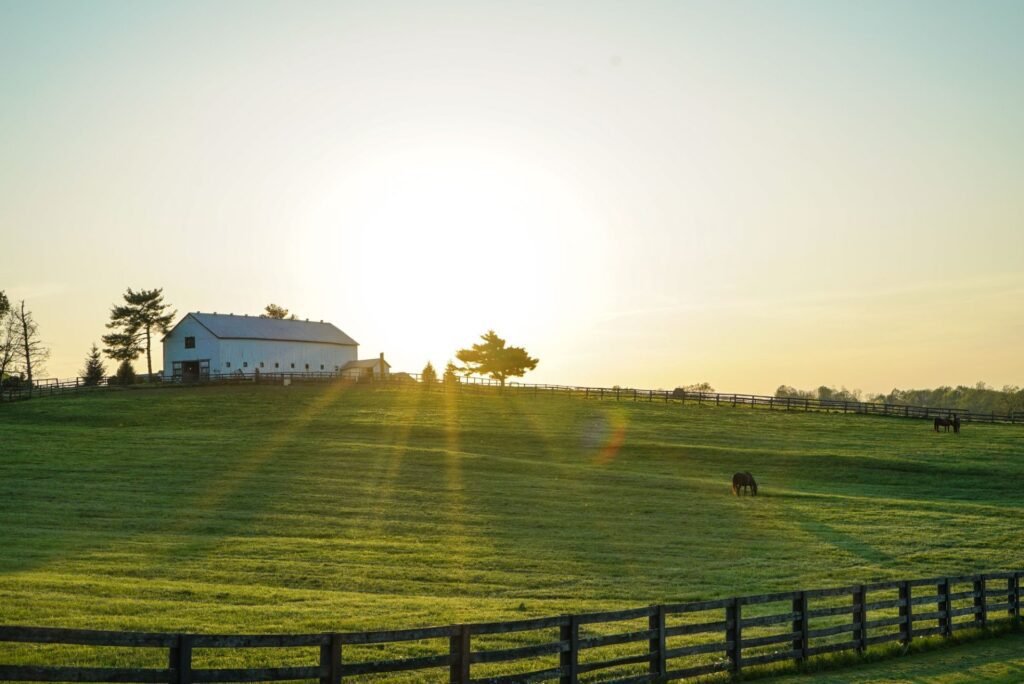
You would expect a house on 10 acres to be worth more than a house on a quarter acre. Ten acres is forty times the land. In most of the Midwest and the Mountain West, that is how it works: in Wyoming the house with acreage is worth 66% more, in Idaho 50% more.
The land that comes free
A house on 10+ acres, as a percent of a house on under 1 acre in the same state
Navy: the 14 states where the house with acreage is worth less than the house on a small lot. Gold: the five states with the biggest premium for acreage. Medians of owner-reported values. Source: U.S. Census Bureau, American Community Survey 2024 1-year microdata, processed by American Home Opportunities.
The reason is location. Houses on small lots are mostly in and around towns and cities, where jobs pull prices up. Houses on 10+ acres are mostly far from them. In New York, the house on a small lot is often in the suburbs of New York City or Albany, while the house on acreage is upstate, so the farmhouse ends up worth 30% less. In Georgia, the Carolinas, Florida and Kentucky the same split plays out between the metro areas and the countryside.
For a buyer, this is the most useful number on the page, and it changes what “the cheapest place to buy a house with land” means. In these 14 states, moving from a subdivision lot to a country place does not have to cost you more. You are mostly paying for the house, and the acreage comes along with it. In the gold states at the bottom of the chart, the opposite is true: land itself is in demand, and every extra acre shows up in the price.
House or mobile home on the land?
If the budget is tight, the single biggest lever is the type of home. A mobile or manufactured home on 10+ acres is typically worth a quarter to a third of a site-built house on the same amount of land. In Arkansas the median is $65,000 against $230,000.
| State | Mobile home on 10+ acres | Single-family house on 10+ acres |
|---|---|---|
| Arkansas | $65,000 | $230,000 |
| Alabama | $69,000 | $250,000 |
| Louisiana | $75,000 | $250,000 |
| Georgia | $75,000 | $350,000 |
| Mississippi | $80,000 | $220,000 |
| Kentucky | $80,000 | $250,000 |
| South Carolina | $80,000 | $300,000 |
| North Carolina | $82,000 | $350,000 |
| Michigan | $84,000 | $300,000 |
| Missouri | $85,000 | $290,000 |
Two cautions. Many of these homes are older units, some built before the 1976 federal construction standard, and lenders treat them very differently from newer homes on permanent foundations. And the value of a mobile home on land is mostly the land, so check the land as carefully as you would if it were vacant. Our guide to putting a manufactured home on land covers titles, foundations and financing in detail.
Cheap to buy is not always cheap to own
Illinois and Oklahoma share the same $250,000 median for a house on 10+ acres. At their average effective tax rates, the Illinois owner pays about $4,700 a year and the Oklahoma owner about $1,975. Over ten years, that difference is more than $27,000. Alabama, at 0.37%, has the lowest rate in the continental United States: about $907 a year on its median home with land.
Property tax is only the first line. A house with land also brings costs a city house does not:
- Well and septic. Most homes on acreage have both. Replacing a failed septic system often runs into five figures, so ask for the last inspection and pumping records before you make an offer.
- Insurance. Distance from a fire station raises premiums, and some carriers will not write older rural homes at all. In the Gulf states, flood and wind add more. Get a quote before closing, not after.
- The road. A private gravel drive is yours to maintain. On a hillside in Appalachia, that can mean regrading after every hard rain.
- Internet and distance. Many of the cheapest counties still lack fiber, and the drive to a hospital or a big grocery store can run 45 minutes or more. Price in the gas.
Our hidden costs calculator lets you add these up for a specific property before you commit.
How to buy a cheap house with land in these places
Cheap areas reward buyers who do their homework, because the problems that keep prices low are often invisible in the photos. Work through these in order:
- Search by lot size first, price second. On any listing site, set the lot size to 1 or 10 acres and up, then sort from low to high inside the counties above. Searching by price alone fills the screen with houses on small lots.
- Check the flood map before you fall for the house. The FEMA Flood Map Service Center is free. In the coalfield hollows and the Delta, a low price is often a flood zone in disguise.
- Ask who owns the minerals. In Kentucky, West Virginia and Virginia coal and gas rights were often sold off a century ago. Owning the surface does not always mean you control what happens under it. Our West Virginia guide explains how to check.
- Look hard at the title. In the Black Belt and the Delta, much land passed down without a will and is now owned by many heirs at once. Insist on a title search and owner’s title insurance.
- Get a full inspection. The cheapest houses tend to be the oldest. Budget for an inspector who checks the foundation, the roof, the wiring and the septic, and walk the property line.
How we got these numbers
Every figure on this page comes from the U.S. Census Bureau’s American Community Survey 2024 one-year Public Use Microdata Sample, the anonymous household records behind the survey. For each owner-occupied home, the survey records its lot size (under 1 acre, 1 to 10 acres, or 10 acres and more), the type of building, and the owner’s estimate of what the house and land would sell for. We kept houses and mobile homes owned by the people living in them, weighted each record by its survey weight, and took the median for each state and each area. That is about 240,000 surveyed homes on an acre or more, enough to compare the cheapest place to buy a house with land in one state against another.
Three limits to keep in mind. These are owners’ estimates, not sale or asking prices, and owners tend to round. A one-year sample is small in thinly populated places, so we required at least 100 homes on 10+ acres for the state ranking and at least 60 homes on an acre or more for each area; even so, treat the area figures as close estimates, not appraisals. And the data describes the homes people live in today, not what is for sale this week. To match the counties to each area we used the Census Bureau’s 2020 tract-to-PUMA relationship file.
Common questions about the cheapest places to buy a house with land
What is the cheapest place to buy a house with land in the US?
Eastern Kentucky’s coal counties: Pike, Floyd, Johnson, Magoffin and Martin. The median house on an acre or more there is worth about $100,000, according to Census Bureau survey data for 2024. Nearby Harlan, Bell and Letcher counties, southern West Virginia and central Mississippi follow at $110,000 to $120,000.
What is the cheapest state to buy a home with land?
Mississippi, Kentucky, West Virginia and Arkansas tie, with a median value of $200,000 for a house on 10 or more acres in Census Bureau data for 2024. Mississippi has the most bargains: 36.5% of its homes on 10+ acres are valued under $150,000. Louisiana ($220,000) and Alabama ($245,000) come next.
Can you buy a house with land for $100,000?
Yes, in a few regions. About one in three homes on 10+ acres in Mississippi, Kentucky, West Virginia and Arkansas is valued under $150,000, and the median for a house on an acre or more in eastern Kentucky is $100,000. Mobile homes on 10+ acres have medians of $65,000 to $80,000 across seven Southern states.
How much does a house with 10 acres cost?
It depends heavily on the state. The median owner-occupied house on 10 or more acres is worth $200,000 in Mississippi, Kentucky, West Virginia and Arkansas, about $300,000 in Texas, Georgia, North Carolina, Pennsylvania and Ohio, and $500,000 or more in Montana, Idaho, Oregon, Washington, California and Massachusetts.
Are houses on land cheaper than houses in town?
In 14 states, yes. In New York, Arizona, South Carolina, Georgia, Florida, Kentucky, North Carolina and seven others, the median house on 10+ acres is worth less than the median house on under an acre, because acreage sits far from jobs. In Wyoming, Idaho and Montana, acreage adds 43% to 66% instead.
Is it cheaper to buy a house with land or buy land and build?
In the cheapest areas, buying an existing house usually wins. A new double-section manufactured home plus 5 acres of pasture costs $154,000 to $260,000 depending on the state, while existing houses on an acre or more sell for $100,000 to $150,000 in the counties on this page. Building makes more sense where existing homes are scarce.
Why are houses with land so cheap in some places?
Mostly because of distance from jobs. The cheapest counties have lost population for decades, so there are fewer buyers and older houses. Flood risk, steep ground, mineral rights owned by someone else and tangled titles push prices down further. These are real costs to check, but for remote workers and retirees they can be a fair trade.
Where to look next
If the land matters more to you than the house, our ranking of the cheapest states to buy land uses USDA values per acre. If you plan to bring your own home, start with the manufactured home guide. And to weigh climate, taxes and growing season together, see the best states to homestead.
 Land only
Cheapest states to buy land
All 48 states ranked by USDA value per acre, and what it costs to keep the land.See the ranking → Bring your own home
Putting a manufactured home on land
Zoning, foundations, title and financing, plus what a new home and 5 acres cost by state.Read the guide → Homesteading
Best states to homestead
Land prices, property taxes and growing seasons combined into one index.See the index →Get the cheapest houses with land we find
Every week we track down cheap farmhouses with land, state by state, and write guides like this one. Leave your email and you will get the new lists and the best deals as they go up.
Sources
- U.S. Census Bureau, American Community Survey 2024 1-year Public Use Microdata Sample, housing records (variables ACR, VALP, TEN, BLD, WGTP), processed by American Home Opportunities.
- U.S. Census Bureau, 2020 Census Tract to 2020 PUMA relationship file, used to name the counties in each area.
- Tax Foundation, Property Taxes by State and County, 2026, using 2024 data. Effective property tax rate on owner-occupied housing.
- FEMA, Flood Map Service Center.
Before you act on any of this
American Home Opportunities is not a real estate broker, agent, lender, appraiser, or financial or legal advisor. The figures on this page are survey estimates of what owners believe their homes are worth, not prices you will be offered, and they describe 2024. Prices, taxes and availability change. Before you buy, verify everything through official sources and work with licensed professionals in the state. Rural property comes with its own checks: wells, septic systems, road access, surveys, easements, mineral rights, flood zones, repairs, insurance and financing.