
How to Buy Land in Georgia: What an Acre Costs, Region by Region
How to buy land in Georgia, all 159 counties: what an acre really costs on each side of the fall line, why the mountains cost more than Atlanta, and the checks the state leaves to its counties on covenants, access, flood, septic and wells.
How to buy land in Georgia: start with the fall line, not with Atlanta
If you are working out how to buy land in Georgia, start with one honest number and then split it in two. The 2022 Census of Agriculture counts every farm in all 159 Georgia counties and puts the average value of farmland and its buildings at $4,270 an acre. The USDA’s 2026 survey puts Georgia farm real estate at $4,950, a little above the national $4,500. Both are fair averages. Neither describes the land you will actually be shown.
Georgia is two states on one map. An old geological line runs from Columbus through Macon to Augusta, the fall line, where the hills of the Piedmont drop to the flat sandy plain of South Georgia. Below it lie 72 percent of the state’s farmland, at an average of about $3,500 an acre. Above it the census averages climb past $5,500, and in the North Georgia mountains they reach $6,809 an acre, more than the average across the whole Atlanta metro area. So the first decision when buying land in Georgia is not the county. It is which side of that line you want to live on, and whether you are paying for farmland or for a view.
On the ten Georgia homes we covered, the land was 11.9% of the price
We checked the census against the ten properties in our July 2026 Georgia list, priced from $29,999 in Baxley to $274,900 in Hephzibah. For each one we multiplied the acreage by its county’s census value and compared the result with the asking price. On average the ground underneath came to 11.9 percent of what the seller was asking. The highest share was 26.9 percent, on 18.52 acres at the edge of Sandersville in Washington County. The lowest was about 4 percent, on the town lots in Pelham, Fargo, Albany and Baxley.
That is how the cheap end of the Georgia market works. The 18.52 acres in Sandersville sit on about $49,800 of census-value ground under a $185,250 asking price; the rest is the house, the town water and sewer, and the road frontage. When you are buying land in Georgia with a house on it, you are mostly paying for the house and the hookups, and the acreage comes along cheaply. Judge a South Georgia property by the house, the septic and the paperwork, not by the price per acre.
Buying land in Georgia: the numbers in short
Georgia land prices by region: what an acre actually costs
We pulled all 159 Georgia counties from the census and grouped them into the five regions people actually shop in. Each average is weighted by the acres in farms, so a county with a lot of farmland counts for more than one with a little. The last column names the cheapest county inside each region.
| Region | Farmland value per acre USDA, 2022 census | Land in farms | Cheapest county in the region |
|---|---|---|---|
| North Georgia mountains and northwest | $6,809 | 634,410 acres 18 of 159 counties | Dade, $4,527 |
| Metro Atlanta (29-county metro) | $6,752 | 898,324 acres 29 counties | Heard, $4,425 |
| Piedmont outside Atlanta | $5,530 | 1,260,483 acres 30 counties | Talbot, $2,460 |
| Southwest Georgia | $3,749 | 3,981,238 acres 37 counties | Webster, $2,772 |
| East-central, southeast and the coast | $3,211 | 3,164,858 acres 45 counties | McIntosh, $2,056 |
| Georgia, all counties | $4,270 | 9,939,313 acres 159 counties | McIntosh, $2,056 |
Why the mountains cost more an acre than metro Atlanta
It looks backwards, but the census explains it. The Atlanta average is not downtown farmland, which barely exists: DeKalb County reports 72 acres of farms in total. It is the outer ring of the metro, counties like Carroll, Morgan and Meriwether with tens of thousands of acres of pasture and timber still priced as farmland, between $4,592 and $6,433 an acre. In the mountains the opposite happens. Farms are few and small, and they compete with cabin lots, lake frontage and retirement buyers: Rabun averages $11,517 an acre, White $11,468, Fannin $10,817 and Union $8,109. The census is measuring a second-home market there, not a farming one. If you want North Georgia, expect to pay for the scenery, and expect steep lots where a level house site, a septic field and a year-round road are worth more than the acreage.
Where the cheapest land in Georgia is, and the honest reason it is cheap
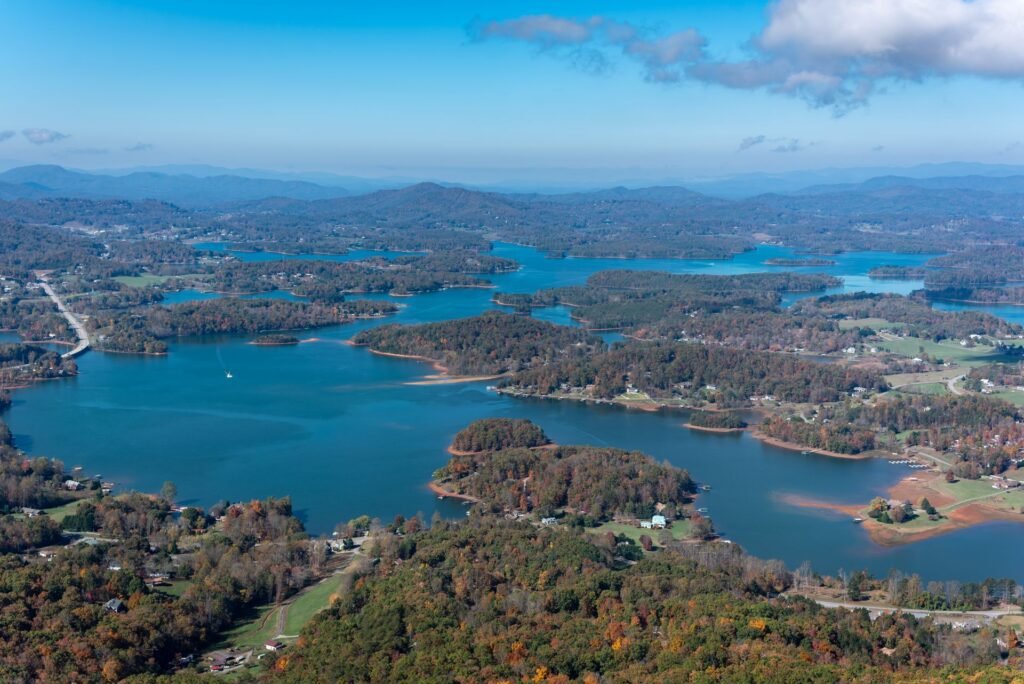
The cheapest real farmland in Georgia sits in a belt east and south of Macon, along and just below the fall line. Wilkinson County averages $2,292 an acre, Treutlen $2,356, Twiggs $2,361, Glascock $2,364, Telfair $2,451 and Laurens $2,459. Laurens matters most of those, because its average covers 155,200 acres of farms around Dublin. This is not a handful of odd parcels; it is the largest block of cheap farmland in the state.
The reasons are plain. Much of the ground is sandy, cut-over pine or clay hills worked for kaolin, the white clay mined across Washington, Wilkinson and Twiggs counties, so an acre grows less than an acre of the irrigated row-crop land farther southwest. The towns are small, the population of several of these counties has been flat or falling for decades, and the drive to a large hospital or a big employer often runs 45 minutes to an hour on two-lane roads. None of that makes the land bad. It makes it priced for people who can work remotely, retire, or live on less.
Southwest Georgia is the next step up, at $3,749 an acre across almost four million acres. It is better farmland, the peanut, cotton and pecan country around Albany, Tifton and Thomasville, and the census price reflects what that ground can grow. Webster ($2,772) and Stewart ($3,010) are the bargains there, both along the Alabama line.
The coast looks cheapest on paper, and that is misleading
McIntosh County, on the coast between Savannah and Brunswick, has the lowest census value in Georgia: $2,056 an acre. But the census counts only 15,559 acres of farms there, mostly timber and marsh edge. A few miles south, Glynn County averages $32,706 an acre on 1,894 acres. The six coastal counties hold 0.7 percent of Georgia’s farmland between them. On the coast you are buying flood zone, marsh setbacks and resort demand, not farmland, so set the county average aside and price each parcel on its elevation and its insurance quote.
The counties at the top, and why
Among counties with real farm acreage, Hall ($13,855) and Forsyth ($12,514) lead because Lake Lanier and Gainesville pull Atlanta north up Interstate 985 and Georgia 400. Clarke ($19,535) is Athens. Barrow ($10,026), Jackson ($8,356) and Madison ($7,085) are the next ring out. If you need a commute to Atlanta or Athens, you will pay for it. If you do not, most of the state south of Macon is priced at half the mountains or less.
What to check before you buy land in Georgia
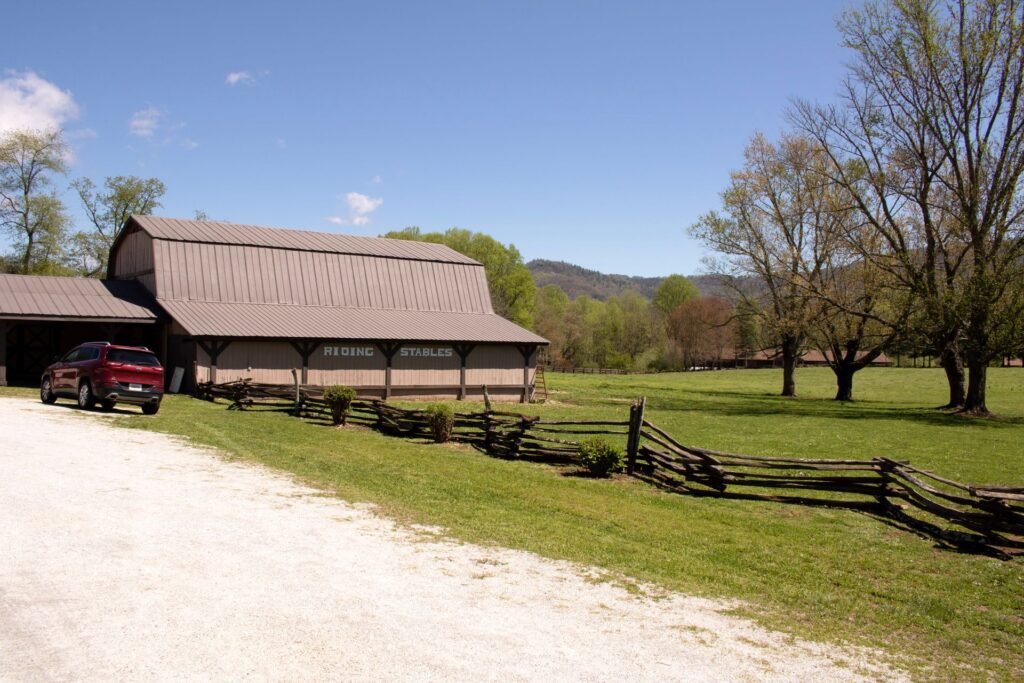
If you are learning how to buy land in Georgia from another state, these are the six checks specific to it, in the order we would run them. The first three can cost you money after closing even when the land itself is fine: a tax covenant you inherit without knowing it, a road you have no recorded right to use, and water that comes up from a creek or the marsh.
The last three decide whether you can build at all: whether the soil will take a septic system, whether you can drill a well and who must drill it, and what the county actually enforces. Georgia leaves much of this to its 159 counties, so the answer changes at every county line.
In short, the six are: the conservation use covenant, legal access, flood and wetlands, the septic soil evaluation, the well, and the county’s own codes and zoning. None of them shows up in the asking price, and on a cheap parcel any one of them can be worth more than the land. Each one costs far less to check before you sign a contract than after you close.
1. Ask whether the land is under a conservation use covenant
2. Confirm the road in is yours to use
3. Look up the flood zone, the creek and the wetlands
4. Get the septic soil evaluation before you buy
5. Find out who may drill the well, and what the county asks
6. Ask the county what it actually enforces
We check the census value, the flood map and the access before a Georgia home makes our list
Every property we feature is run against its county’s farmland value, its flood zone and its road in before it reaches the channel. Leave your email and you get the next list, with those checks already done.
What it costs to own rural land in Georgia
If you buy land in Georgia, the taxes are moderate. The Tax Foundation puts the effective property tax rate on owner-occupied homes at 0.79 percent, against a national range of 0.29 percent in Hawaii to 1.88 percent in New Jersey and Illinois. The state income tax is a flat 5.19 percent in 2026, sales tax averages 7.49 percent with local add-ons, and there is no estate or inheritance tax.
The mechanics are simpler than in many states. Every county assesses property at 40 percent of its fair market value, and then each taxing body, mainly the county and the school district, applies a millage rate: one mill is $1 of tax for every $1,000 of assessed value. Vacant land, a weekend cabin and your own home are assessed the same way. What changes the bill is the local millage, the exemptions you qualify for, and conservation use.
The arithmetic, with one county’s real 2025 rates
Take Ben Hill County, around Fitzgerald in South Georgia, where the county adopted 14.290 mills and the school district 15.089 for 2025, a total of 29.379. A $150,000 house on ten acres is assessed at $60,000, and the tax comes to about $1,763 a year. If it is your home, the statewide homestead exemption takes $2,000 off the assessed value and the bill falls to about $1,704, a saving of only $59. Forty acres of bare land at the county’s census value of $3,024 an acre, $120,960 in all, pays about $1,421. Your county will be different, so ask the tax commissioner for the current millage before you make an offer.
Conservation use, the homestead exemption and HB 581
Conservation Use Valuation taxes qualifying farm and timber land at 40 percent of its current use value, set from soil-productivity tables by the state Revenue Commissioner, instead of 40 percent of market value. The owner signs a ten-year covenant; at least half the tract must be in good-faith production of crops, livestock or timber; one owner can covenant up to 2,000 acres; tracts under 10 acres need extra proof of farm use; and the house and up to two acres under it stay out of the covenant. Applications go to the county tax assessor by the return deadline, usually April 1. The homestead exemption is for your primary residence, and since 2025, under HB 581, the assessed value of a homestead can rise only with inflation in every county, city and school district that did not opt out by March 1, 2025.
Closing, broadband and the drive to a hospital
Georgia closings are handled by an attorney, and a loan is secured with a security deed rather than a mortgage. The state transfer tax is $1 for every $1,000 of the price, usually paid by the seller, and a loan adds the intangible recording tax of $1.50 for every $500 borrowed. Budget for a survey: older rural deeds describe boundaries by roads, creeks and trees, and a fence line is not a property line.
Internet and health care are the weak points in rural Georgia. Look the address up on the state’s broadband map rather than trusting the county average, and ask the provider whether it actually serves the parcel. Do the same with care: find the nearest emergency room, the nearest hospital that admits patients and the nearest maternity ward if it matters to you, and drive the route before you commit.
Why the price per acre on a listing site is not the price of land
Search online for land for sale and you will see averages far above the census. In October 2026 LandSearch showed 18,921 Georgia listings asking an average of $39,927 an acre, about 9.4 times the census value of farmland. That is not because land is nine times more expensive than the USDA says. A listing-site average divides asking prices, houses and lake lots included, by acres, and its average listing is only 15.5 acres. Small parcels near Atlanta and in the mountains carry most of their price in the location and the improvements. Compare price per acre only between parcels of similar size in the same county.
Cheap land and homes we have covered in Georgia
Every list we have published for people looking to buy land in Georgia, with the county data behind each property. Asking prices are from the date of each list and many of these homes have since sold.
Georgia guides
The two questions that come right after the land: what it really costs to move to Georgia and live there, and how to set up a homestead under Georgia’s rules.
Keep exploring before you settle on Georgia
Georgia gives you two very different markets on either side of the fall line. These are worth a look while you are still deciding how to buy land in Georgia, and whether Georgia is the right state at all.
- Moving to Georgia: the real cost of rural living – cost of living town by town, taxes for retirees and your first 30 days.
- Homesteading in Georgia – land, water, conservation use and the county rules, step by step.
- 10 cheap farmhouses with land in Georgia – real homes from Hephzibah to Baxley, with the price per acre and the AHO Score on each one.
- Why cheap rural homes don’t sell, and how to buy one anyway – the financing and inspection traps behind the lowest prices.
- The cheapest states to buy land in America – where Georgia sits against its neighbors, measured with the same federal survey.
- The best states to homestead – land, tax and rain scored together.
- Rural property guides, the Rural Property Field Guide and how the AHO Score works – every guide we publish, the checks we run, and how a property earns a place on our lists.
Get the next batch of Georgia listings first
We keep coming back to Georgia, because below the fall line a house with real acreage still costs less than a lot near Atlanta. Leave your details and the next Georgia list reaches you before it goes public.
Common questions about buying land in Georgia
How much is an acre of land in Georgia?
Georgia farmland and farm buildings averaged $4,270 an acre in the 2022 USDA Census of Agriculture, and farm real estate averaged $4,950 in the USDA’s 2026 survey, against $4,500 nationally. Counties with real farm acreage range from about $2,300 an acre in Wilkinson to $13,855 in Hall. Listing sites ask far more, about $39,927 an acre in October 2026.
Where is the cheapest land in Georgia?
The cheapest farmland is in east-central Georgia, along and below the fall line east of Macon. In the 2022 USDA census Wilkinson County averaged $2,292 an acre, Treutlen $2,356, Twiggs $2,361, Telfair $2,451 and Laurens $2,459 across 155,200 acres. McIntosh, on the coast, is lower at $2,056, but it has very little farmland.
Which area in Georgia is the best to buy land?
It depends on what you need. For the most acreage per dollar, look below the fall line, where 72 percent of Georgia’s farmland averages about $3,500 an acre. For mountains and lakes, North Georgia averages $6,809 an acre in the 2022 census. Between the two, the Piedmont around Athens, Augusta and Macon averages $5,530.
What is conservation use in Georgia?
Conservation Use Valuation is a Georgia property tax program for farm and timber land. The owner signs a ten-year covenant and the land is taxed on its current use value instead of market value. At least half the tract must be in production, the limit is 2,000 acres per owner, and breaking the covenant costs twice the tax saved, plus interest.
Can you live in a camper on your own land in Georgia?
Georgia has no single statewide rule; the county decides through its zoning. Many rural counties allow a camper only for a limited time while a house is under construction, often with a permit, and some do not allow it at all. Any septic tank or well that serves it still needs a county permit. Call the county planning office first.
Do you need a permit to build in Georgia?
Georgia’s minimum construction codes apply to every building in the state, but each county decides whether to enforce them with building permits and inspections. Whatever the county does on building permits, a septic system needs a permit from the county environmental health office, wells must be drilled by a licensed contractor, and zoning still applies.
How much are property taxes on land in Georgia?
Georgia assesses property at 40 percent of fair market value and taxes it at the local millage rate. In Ben Hill County, at the 2025 total of 29.379 mills, 40 acres worth $120,960 pays about $1,421 a year. The Tax Foundation puts the effective rate on owner-occupied homes at 0.79 percent. Conservation use can lower the tax on farm and timber land.
Before you buy, the important part
American Home Opportunities is a publisher. We are not a real estate broker, agent, lender, appraiser, attorney or financial advisor, and nothing on this page is legal, tax or financial advice.
County farmland values come from the USDA Census of Agriculture 2022, Georgia, Table 8, and measure farmland and the buildings on working farms rather than asking prices for small parcels; the regions are our own grouping of all 159 counties, weighted by land in farms, and Metro Atlanta is the federal 29-county metropolitan area. State farm real estate values come from the USDA NASS Land Values 2026 Summary. The effective property tax rate and the income and sales tax rates come from the Tax Foundation. The worked tax example uses Ben Hill County’s adopted 2025 millage.
Legal references are to O.C.G.A. § 48-5-7 (assessment at 40 percent), § 48-5-7.4 (conservation use covenants), § 48-5-44 (homestead exemption), HB 581 of 2024 (floating homestead exemption), § 44-9-40 (private ways), § 48-6-1 (transfer tax), § 48-6-61 (intangible recording tax) and § 8-2-25 (local enforcement of the state minimum codes), and to the Department of Public Health’s on-site sewage rules and the Environmental Protection Division’s water well licensing. Listing-site prices come from LandSearch, October 2026.
Any price we quote for a property is an asking price at the time of writing, not a sale price. Rural land carries risks this page can introduce but not resolve for your parcel, including tax covenants, flooding and wetlands, water and wells, septic suitability, legal access, surveys, easements, title, repairs, insurance and financing. Verify everything with the county tax assessor, the environmental health office, a Georgia closing attorney and licensed professionals before you commit money. Page published October 2026.