
Log Home Insurance: Why It’s Harder to Get, and Where to Turn
Log home insurance comes down to four underwriting questions. And in half the states where wildfire threatens homes most, there’s no FAIR Plan to fall back on.
Log home insurance is not hard to find because logs burn. It is hard because a log home fails four checks that standard homeowners underwriting runs on autopilot — whether it is a year-round house or a seasonal cabin, what it would cost a log crew to rebuild, how far it sits from a fire truck, and who is living in it. Answer those four in writing before you ask for a quote, and most carriers stop treating the logs as the problem.
The price, however, is a separate question. No government series tracks log home insurance cost, so nobody can honestly quote you a log home premium per square foot. What does exist, instead, is the average homeowners premium in every state, compiled from state regulators by the National Association of Insurance Commissioners. It runs from $893 a year in Oregon to $2,677 in Florida, and the national average is $1,569.
For a log home buyer, the bigger risk is not the price but a flat no, and that is why the state matters most. We set the U.S. Forest Service’s wildfire risk-to-homes ranking for all 50 states next to the list of states that run a FAIR Plan, the insurer of last resort for property the regular market turns down. Five of the ten states where wildfire puts homes at the highest risk have no FAIR Plan at all: Nevada, Idaho, Utah, Arizona and Oklahoma.
Log home insurance: the numbers in short
Why log homes are harder to insure
Most homeowners policies are priced by software that already knows the house: a wood frame behind drywall, a floor plan like thousands of others, a fire station a few minutes away. A log home breaks that pattern in four places. Each one is a question the underwriter has to settle. As a result, an unanswered question tends to come back as a higher price or a decline.
Question one: is it a log home or a log cabin?
Carriers draw this line differently, and it decides whether you get a quote at all. Openly, a national homeowners carrier, publishes its version: a log home with a thermostatically controlled heat source, built for year-round living, either with log siding over conventional framing or as stacked logs over 1,500 square feet, is eligible. A traditional stacked-log cabin used seasonally, without regulated heat, is “out of appetite.”
Other carriers set the line elsewhere. Still, the questions are the same: how is the wall built, how is the house heated, and is anyone living there in January?
Question two: what would it cost to rebuild?
Replacement-cost estimators are built on conventional houses. A full-log wall, hand-scribed corners, a timber-frame great room and a stone fireplace don’t match anything in the database, and rebuilding them takes a crew that does log work. The National Association of Home Builders’ log home guide warns that some carriers leave it to the homeowner to track the full replacement value every year. If you get that number wrong, the policy shrinks the claim, as the section on the 80% rule shows in dollars.
Question three: how far is the fire truck?
ISO’s Public Protection Classification grades local fire protection from 1 to 10, and any building more than five road miles from a fire station, or outside a department’s service area, is class 10. The NAHB guide is blunt about the worst case: a house on the edge of a national forest, with nothing but well water to fight a fire, gets a higher fire rating and a higher price. In other words, a great many log homes sit exactly there.
Question four: who lives there, and when?
Many log homes, moreover, are bought as getaways. American Family Insurance notes that insuring a log home isn’t necessarily more expensive, but insuring it as a second or vacation home can be, because a house that sits empty is less likely to be maintained and more likely to produce a claim. The standard policy also has its own rules for that, covered below.
| What the underwriter needs | Why it matters | What to have ready |
|---|---|---|
| Log home or cabin | Some carriers write year-round log homes but not seasonal cabins. | Wall system (full log, half log or log siding on a frame), square footage, year built. |
| Heat source | Regulated heat is an eligibility test at some carriers, and a frozen pipe is an excluded loss if heat isn’t kept on. | Primary heat type, thermostat, and how any wood stove was installed and inspected. |
| Rebuild cost | Estimators have no template for scribed logs and timber framing. | The builder’s or log producer’s estimate to rebuild the finished house. |
| Fire protection | Beyond five road miles from a station, the fire class drops to 10. | Road miles to the nearest station, distance to a hydrant or other water supply. |
| Occupancy | Vacant and seasonal homes carry different exclusions and prices. | Primary, secondary or rental use, and how many months a year it is lived in. |
| Roof | Wood shake is a poor fire risk; metal and Class A roofs help. | Roof material, age and any fire or impact rating. |
Do log homes burn faster? What the fire rating actually measures
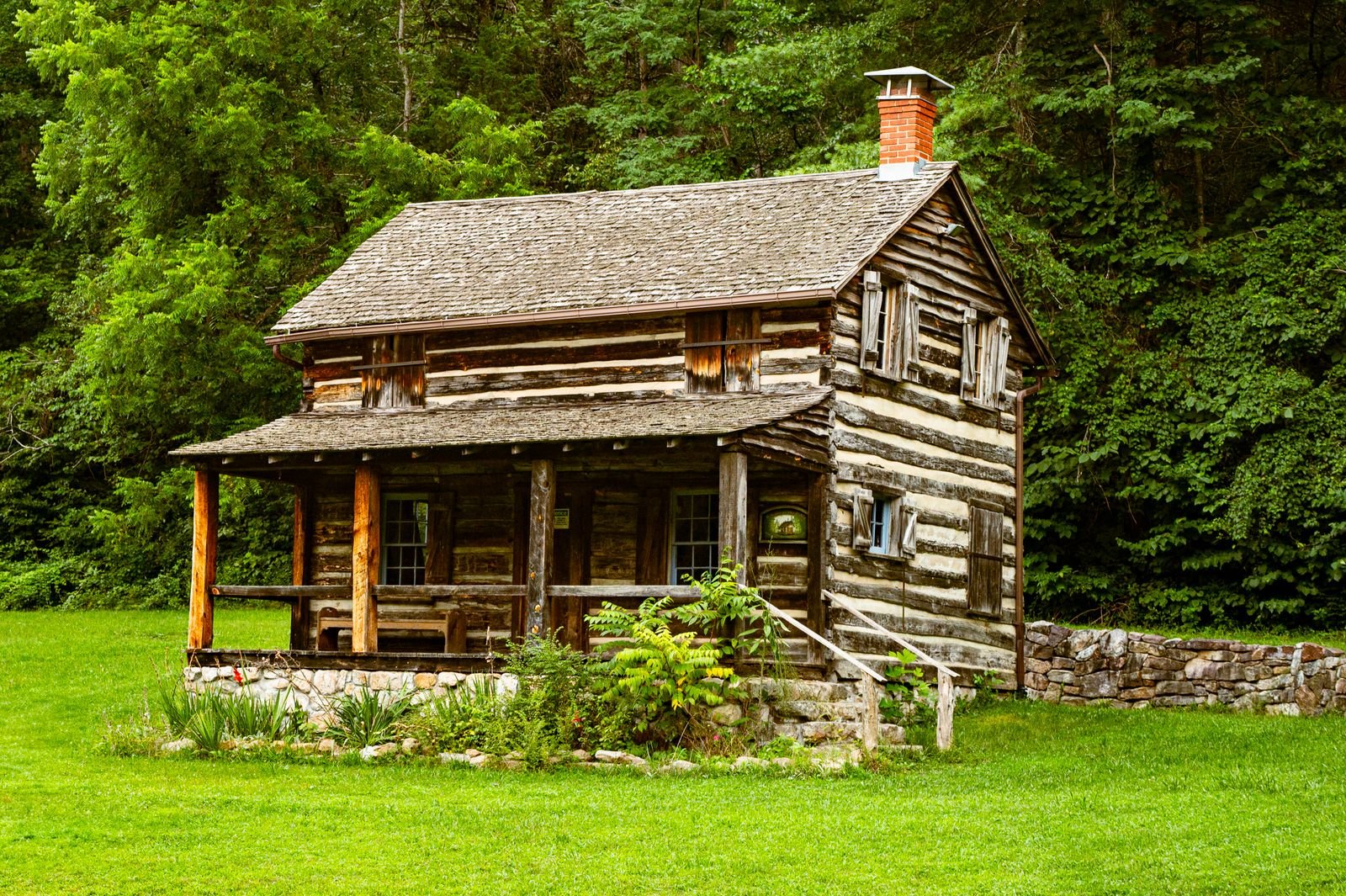
The fear behind most log home declines is fire. However, it is only half right. A thick log does not catch like framing lumber. Log Home magazine’s insurance guide notes that fire in a log home tends to smolder instead of bursting into flames, allowing a longer response time, and that The Log Home Agency, a specialist that has insured log homes since 1999, discounts homes built with logs eight inches or larger.
The part that is fully right, on the other hand, is location. What moves a fire rating most is not the wall but the ground around it: how far the fire department is, whether there is water to pump, and what is growing up to the deck. On a log home, three things carry most of the weight.
Wildfire
The Insurance Institute for Business & Home Safety found that embers account for up to 90% of home ignitions in wildfires: in gutters, under decks, through vents and against wood piled by the house. A log home in the trees is judged on its surroundings as much as its logs. The table below ranks all 50 states.
The roof
Log Home magazine flags wood shake roofs as poor fire risks, and the NAHB guide lists fire-resistant roofing among the upgrades that can lower a premium. For this reason, a metal or Class A roof is often the single biggest fire improvement you can make, and the easiest one to document.
Wood heat
A woodstove is common in log homes, and carriers commonly ask about it. Expect questions on who installed it, whether it is a listed appliance, and when the chimney was last inspected and cleaned. A permit or an inspection report answers all three before the underwriter has to guess.
The NAHB guide adds sprinkler systems, anti-backflow plumbing devices and surge protection to the list of features that can reduce a premium. None of it is required. Even so, all of it gives an underwriter something to price instead of something to guess.
Log home insurance where wildfire risk is highest
When the regular market says no, the fallback in most states is the FAIR Plan, a pool that every licensed insurer in the state funds in proportion to its market share. It is the insurer of last resort, and it is thin: the NAIC describes FAIR Plans as usually covering the dwelling, with personal property and other structures as add-ons, no liability or loss-of-use coverage, and prices that typically run higher than the regular market. Thin, but at least it exists.
Which states have a FAIR Plan
However, not every state has one. The Insurance Information Institute’s FAIR Plan table for fiscal 2024 lists 31 states and Washington, D.C., and Colorado opened its own plan in 2025. That leaves 18 states with no FAIR Plan at all. Then we set that list against the U.S. Forest Service’s Wildfire Risk to Communities ranking of risk to homes, which scores every state.
The 15 states where wildfire puts homes most at risk
And whether there is a FAIR Plan behind the market
Bar length: the state’s risk-to-homes score relative to Nevada, the highest. Gold: no FAIR Plan. Navy: FAIR Plan. Sources: USDA Forest Service, Wildfire Risk to Communities, version 2.3 (2026); Insurance Information Institute FAIR Plan table, fiscal 2024; Colorado FAIR Plan. Ranking and pairing by American Home Opportunities.
Where log home buyers get stuck
That is the map of where a log home in the trees can get stuck. Idaho, Utah and Montana are exactly where people go looking for log homes on acreage, and none of them has a FAIR Plan. Oklahoma ranks ninth for wildfire risk to homes, carries the fourth-highest average premium in the country at $2,268, and has no FAIR Plan either.
No FAIR Plan: what happens instead
In a state without one, a property the admitted carriers decline usually goes to the surplus lines market: specialty insurers allowed to write risks the regular market won’t. The NAIC notes that their policyholders don’t get the protection of the state guaranty fund if an insurer fails, although surplus lines insolvencies have historically been rare. That coverage can be perfectly good. On the other hand, it can also be more expensive and narrower, with higher deductibles and more exclusions. The time to find out which market will take a specific house is before you are under contract on it, not after.
Even so, the states that do have a FAIR Plan are not off the hook. California ranks second for wildfire risk to homes, and its FAIR Plan has become the default for a large share of rural homes in fire country. Our guide to the California FAIR Plan covers what it pays, what it leaves out, and the policy that fills the gap.
Wildfire risk and FAIR Plans in all 50 states
Ranked by the Forest Service’s risk-to-homes score, highest first, with the state’s average homeowners premium alongside. The average is across every HO-3 policy in the state, not a log home quote. If you are shopping in Montana, our Montana homes with land list is a good place to see what that ranking looks like on the ground.
| Wildfire risk to homes (rank) | State | FAIR Plan | Avg. homeowners premium (2022) |
|---|---|---|---|
| 1 | Nevada | No | $948 |
| 2 | California | Yes | $1,492 |
| 3 | Idaho | No | $1,002 |
| 4 | Washington | Yes | $1,151 |
| 5 | Oregon | Yes | $893 |
| 6 | Utah | No | $937 |
| 7 | Hawaii | Yes | — |
| 8 | Arizona | No | $1,018 |
| 9 | Oklahoma | No | $2,268 |
| 10 | New Mexico | Yes | $1,322 |
| 11 | Florida | Yes | $2,677 |
| 12 | Alaska | No | — |
| 13 | Texas | Yes | $2,397 |
| 14 | Montana | No | $1,639 |
| 15 | Colorado | Yes | $2,079 |
| 16 | Wyoming | No | $1,596 |
| 17 | Kansas | Yes | $1,583 |
| 18 | New Jersey | Yes | $1,417 |
| 19 | South Dakota | No | $1,756 |
| 20 | Nebraska | No | $1,869 |
| 21 | South Carolina | No | $1,571 |
| 22 | Mississippi | Yes | $1,907 |
| 23 | West Virginia | Yes | $1,113 |
| 24 | Louisiana | Yes | $2,603 |
| 25 | Kentucky | Yes | $1,359 |
| 26 | Alabama | No | $1,748 |
| 27 | Georgia | Yes | $1,655 |
| 28 | Arkansas | No | $1,740 |
| 29 | North Carolina | Yes | $1,621 |
| 30 | Tennessee | No | $1,492 |
| 31 | Virginia | Yes | $1,332 |
| 32 | Missouri | Yes | $1,668 |
| 33 | North Dakota | No | $1,325 |
| 34 | Maryland | Yes | $1,392 |
| 35 | Minnesota | Yes | $1,774 |
| 36 | Delaware | Yes | $1,103 |
| 37 | Iowa | Yes | $1,268 |
| 38 | Pennsylvania | Yes | $1,120 |
| 39 | Michigan | Yes | $1,056 |
| 40 | Connecticut | Yes | $1,814 |
| 41 | Wisconsin | Yes | $957 |
| 42 | Ohio | Yes | $995 |
| 43 | Massachusetts | Yes | $1,871 |
| 44 | Rhode Island | Yes | $2,074 |
| 45 | New York | Yes | $1,628 |
| 46 | Illinois | Yes | $1,343 |
| 47 | New Hampshire | No | $1,188 |
| 48 | Indiana | Yes | $1,191 |
| 49 | Maine | No | $1,077 |
| 50 | Vermont | No | $1,109 |
What a homeowners policy won’t pay for on a log home
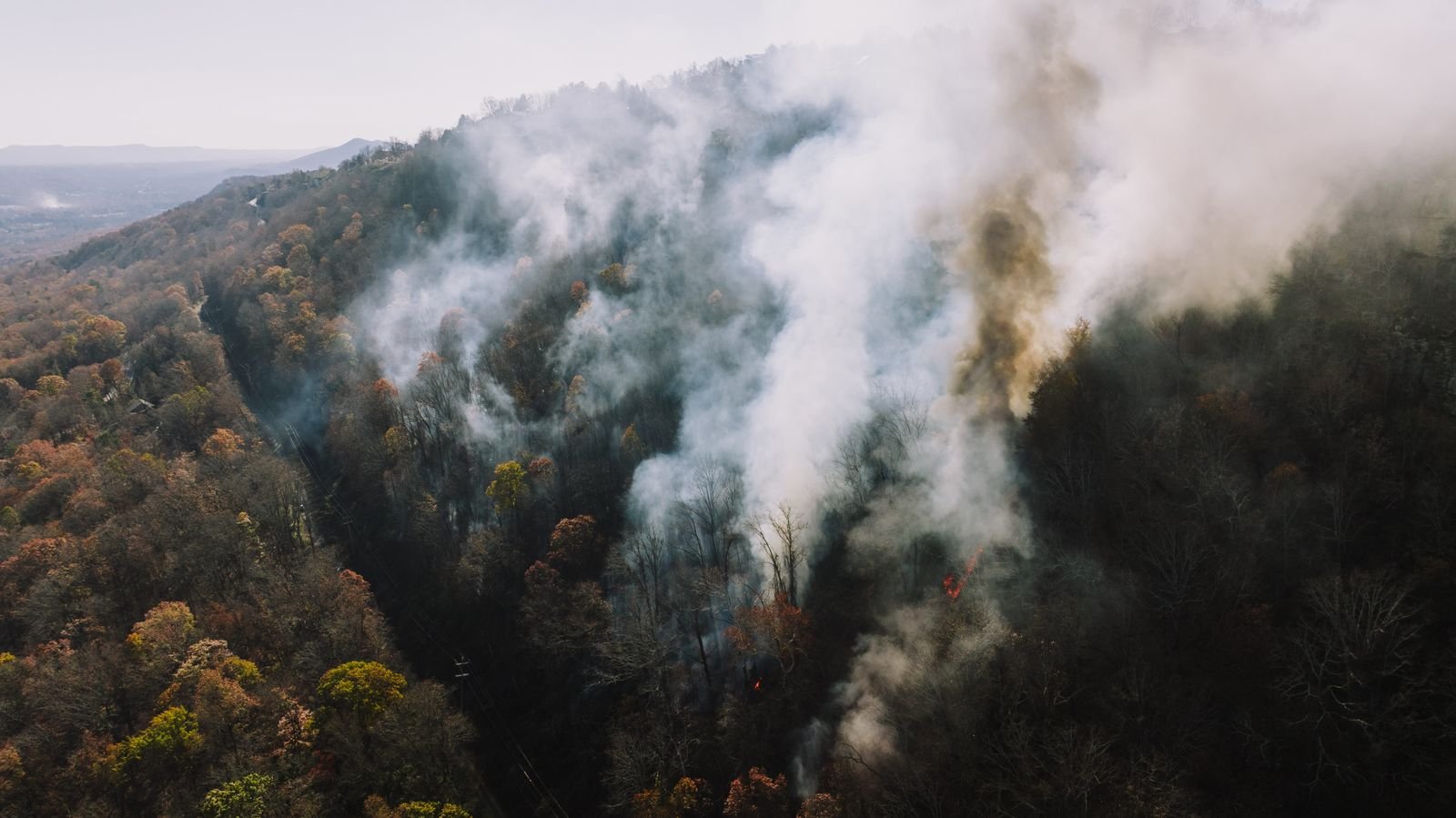
A log wall is a living thing. First it dries, shrinks, settles, checks and weathers, and it needs its finish renewed on a schedule. The standard homeowners form treats almost all of that as maintenance, not damage. These are the exclusions in the ISO HO-3 form that land hardest on a log home:
- Settling and shrinking. The form excludes settling, shrinking, bulging or expansion, including the cracking that results, of foundations, walls, floors, roofs and ceilings. Logs that settle and open a gap at a window are not a covered loss.
- Insects and animals. Damage from birds, rodents or insects is excluded, and so is nesting or infestation. Carpenter bees and wood-boring beetles in a log wall are an owner’s problem.
- Wear, deterioration and dry rot. Wear and tear, deterioration and dry rot are excluded. A log end that rots because the stain wore off and water got in is maintenance that came due.
- An empty house. Vandalism is not covered once the dwelling has been vacant for more than 60 consecutive days, and freezing of the plumbing is covered only if heat was kept on or the water was shut off and the system drained.
That is also, in fact, the honest answer to the question of log home maintenance cost. There is no government figure for it, and builders’ estimates vary with climate, sun exposure and finish. What the policy does make clear, though, is who pays: every dollar of staining, sealing, re-chinking and pest treatment the owner skips can come back later as damage the insurer won’t cover.
Insure the rebuild, not the price
Three numbers get attached to a rural log home, and only one belongs on the policy. The purchase price includes land, which doesn’t burn and is never insured. Meanwhile, the appraised value reflects what similar homes sold for, which in a thin rural market may say little about construction cost. The number the policy needs is what it would cost to rebuild the finished house on that site, with a crew that does log work, at today’s prices.
The standard homeowners form enforces this through the 80% rule. On the ISO HO-3 policy, the insurer pays the full cost to repair or replace, without depreciation, only if the house is insured for at least 80% of its full replacement cost at the time of the loss. Below that line, therefore, the payout shrinks in proportion. It is the same rule that catches barndominium owners who insure the kit price; on a log home the trap is the purchase price.
A worked example on the standard ISO HO-3 form
The same chimney fire, insured two ways
Payout below the floor: ($60,000 − $2,500) × $260,000 ÷ $304,000 = $49,178. The form pays the larger of that figure or the depreciated value of the damage. The dollar amounts are a hypothetical chosen for the arithmetic, not a cost survey.
After a total loss
The $8,322 shortfall on a partial loss is the small version of the problem. A policy never pays more than its limit, so after a total loss the log home insured at $260,000 comes back $120,000 short of a $380,000 rebuild, whatever the percentage says. An extended replacement cost endorsement, which Policygenius describes as adding 25% or 50% above the dwelling limit, is a cushion against an estimate that turns out low. Even so, it is not a substitute for a correct one.
Land is never insured. On a rural log home the purchase price is the wrong number twice: it includes ground the policy won’t cover, and it may sit well below what a log crew would charge to put the house back.
How to finance a log home, and why insurance comes first
Log homes get financed every day, and insurance sits in the middle of the process. If the loan is a conventional mortgage sold to Fannie Mae, the insurance terms are written in Fannie Mae’s Selling Guide: the house has to be covered on a replacement-cost basis, the roof is the one exception, and the deductible can’t exceed 5% of the coverage amount. In short: no policy, no closing.
The appraisal, in turn, is the other gate. Fannie Mae requires at least three closed comparable sales, and it says outright that rural properties often lack recent, truly comparable sales nearby. The guide lets the appraiser use sales that are farther away, or older than twelve months, if they are the best indicators of value and the report explains why. For example, for a log home in a county with few log home sales, that flexibility is what makes the appraisal possible, and a lender who knows rural appraisals is worth more than a slightly lower rate.
Building a log home: construction loans and kits
Most new log homes start as a kit or a log package, so the first loan is a construction loan, not a mortgage. Farm Credit lenders are a common route. Rural 1st, the consumer brand of several Farm Credit associations, advertises a one-time-close construction-to-permanent loan for log homes with up to a year to build, a 15% minimum down payment and no private mortgage insurance, and it pays the builder and the kit company in separate disbursements. Its products are available only in the territories of participating associations.
Before the walls go up, the house also needs builder’s risk insurance, a separate policy for property under construction, because a homeowners policy is written for a finished, occupied house. A log package delivered to an open parcel is exposed to theft, weather and fire for weeks. Settle who carries it, the owner or the builder, and make sure the homeowners policy starts the day it ends.
Portfolio lenders, the banks and farm credit associations that keep loans on their own books, set their own terms and can be stricter about construction type and acreage. Ask for the insurance requirements in writing before you choose a lender, because the insurance binder is one of the last documents a closing needs.
What to have ready before you ask for a log home insurance quote
- The wall system: full log, half log or log siding over a frame, with log diameter and the producer’s specification sheet if you have it.
- A rebuild estimate for the finished house from a log builder or the log producer, not the purchase price.
- Heat: the primary heat source, the thermostat, and the permit or inspection report for any woodstove and chimney.
- Road miles to the nearest fire station, and the distance to a hydrant, pond or other water supply.
- Roof material and age, and any fire or impact rating.
- How the house will be used: primary home, second home or rental, and how many months a year someone lives in it.
- Defensible space: what is growing and stacked within 30 feet of the house, and any work you have done to clear it.
After that, get quotes from more than one kind of seller. An independent agent can shop several carriers at once, and specialist log home agencies and farm carriers are worth including. In a state without a FAIR Plan, ask early whether the house will need the surplus lines market, because that answer can change what the house is worth to you.
Common questions about log home insurance
Why won’t insurance companies insure log homes?
Most refusals are not about logs burning. Carriers turn a log home down when it reads as a seasonal cabin without regulated heat, sits more than five road miles from a fire station, has no reliable rebuild estimate, or stands in high wildfire risk. Openly, for example, writes year-round log homes but treats seasonal stacked-log cabins as out of appetite.
Is it more expensive to insure a log home?
Not automatically. American Family Insurance says insuring a log home isn’t necessarily more expensive, though a second or vacation home can cost more. The price follows rebuild cost, fire protection class, roof, wildfire exposure and occupancy. Nationally the average homeowners premium was $1,569 a year in 2022, from $893 in Oregon to $2,677 in Florida.
Does homeowners insurance cover a log home?
Yes, a standard HO-3 policy can cover a log home like any other house, if a carrier accepts it. What it won’t pay for are the problems logs are prone to: the ISO form excludes settling and shrinking, insects, wear and dry rot, and vandalism after 60 days of vacancy. Those are maintenance costs that stay with the owner.
What insurance companies insure log homes?
Several kinds do: national carriers with published log home rules, such as Openly’s year-round requirement; specialist agencies such as The Log Home Agency, which has insured log homes since 1999; and farm carriers. American Home Opportunities doesn’t recommend any carrier. An independent agent can quote several at once, and that is usually the fastest way to find one.
What if no one will insure my log home?
In 32 states and Washington, D.C., the fallback is the state FAIR Plan, which usually covers the dwelling but not liability. The other 18 states have no FAIR Plan, including Idaho, Utah, Montana, Arizona and Oklahoma, so the fallback there is the surplus lines market. Five of the ten highest wildfire-risk states have no FAIR Plan.
Can you get a mortgage on a log cabin?
Yes, if it is a year-round home that appraises. Fannie Mae requires three closed comparable sales but lets rural appraisers use older or more distant sales when they are the best evidence. The lender will also require replacement-cost insurance with a deductible no higher than 5%. Farm Credit lenders such as Rural 1st also finance log homes, including kits.
Are log homes hard to sell?
There is no national data on how long log homes take to sell. The practical friction is financing and insurance: a buyer’s lender needs an appraisal with three comparable sales, which can be scarce for log homes, and the buyer needs a carrier willing to write the house. A maintained log home with documentation removes most of that friction.
Where to look next
Insurance is the cost that recurs. These go deeper on the fallback market and on the other rural build that underwriters look at twice.
 California
The California FAIR Plan
What the insurer of last resort pays for a rural home in fire country, what it leaves out, and how to get off it.Read the guide → National data
Barndominium Insurance
The three questions that make a barndominium hard to insure, and what a year of premiums costs against the land.Read the guide → Build cost
How Much Does It Cost to Build a Barndominium?
$65 to $160 per square foot for the building, and the land that no cost guide includes, in all 48 states.Read the guide →For every state, our rural property guides go state by state, and the cheapest states to buy land ranks all 48 on the land side.
Get the next rural insurance and financing guide
Financing the rural homes that don’t fit the mold is next in this series. Leave your email and you will get it, plus every data guide we publish, as each one goes up.
Sources
- USDA Forest Service, Wildfire Risk to Communities, version 2.3, updated April 2026. State risk-to-homes scores, ranked by American Home Opportunities.
- Insurance Information Institute, Insurance provided by FAIR Plans by state, fiscal year 2024. Colorado FAIR Plan launch as reported by Insurance Business.
- National Association of Insurance Commissioners, Fair Access to Insurance Requirements (FAIR) Plans, and Homeowners Insurance Report: Data for 2022, average HO-3 premium by state as tabulated by the Insurance Information Institute in Facts + Statistics: Homeowners and renters insurance.
- ISO homeowners policy form HO 00 03 05 11, as filed with the Nevada Division of Insurance. Exclusions, vacancy and freezing conditions, and the loss settlement condition. Individual carriers use later editions and their own forms; read your own policy.
- Openly, Log Homes vs. Log Cabins, underwriting eligibility.
- National Association of Home Builders, Insuring Your Dream Log Home; Log Home magazine, Insurance for Log Homes; American Family Insurance, article on log homes; Policygenius, article on cabins and log homes.
- Insurance Institute for Business & Home Safety, damage analysis of the 2017 and 2018 wildfires, July 13, 2020; NAIC, Surplus lines.
- Texas Department of Insurance, FAQ: Public Protection Classification.
- Fannie Mae, Selling Guide B7-3-02, Property Insurance Requirements for One- to Four-Unit Properties, and B4-1.3-08, Comparable Sales.
- Rural 1st, Log home loans. Loan terms as advertised; they change and depend on credit approval.
Before you act on any of this
American Home Opportunities is a publisher. We are not an insurance company, insurance agent or broker, licensed insurance producer, adjuster, builder, real estate broker or agent, lender, appraiser, attorney, tax professional or financial advisor, and nothing on this page is insurance, legal, construction, investment, tax or financial advice. We do not sell or recommend insurance or lenders. The figures here are statewide averages, published rankings and published policy terms. They are not a quote and will not predict what any specific log home will cost to insure or finance.
Policy forms, premiums, discounts, eligibility rules and FAIR Plan terms differ by carrier and by state, and they change. The terms described here come from the standard ISO homeowners form and the public sources listed above; your own policy may read differently, and the policy wording always controls. A rural log home carries questions no national average can answer: wildfire, wind, hail and flood exposure, distance to fire protection, wall system and condition, wood heat, occupancy, well, septic, access and easements, and lender requirements. Before you commit money, confirm coverage in writing with a licensed insurance agent in your state, read the policy itself, and check lender requirements, local building rules and the flood zone with the relevant authorities.