
VA Loans for Manufactured Homes: What Rural Buyers Need to Know
A VA loan can buy a manufactured home and its land with nothing down, if the home is real estate on a permanent foundation. Here is what qualifies, what doesn’t, and the 24 states where it matters most.
Yes, a VA loan can buy a manufactured home, but only one kind of manufactured home: one that sits on a permanent foundation, on land that goes with it, and counts as real estate under your state’s law. The VA treats that home and its lot like any other house, with no down payment as long as the price doesn’t exceed the appraised value and no monthly mortgage insurance.
The other kind is where most buyers get stuck. A home on a rented lot, or one titled like a vehicle, falls under a separate program in federal law, Section 3712, that is still on the books. According to the Congressional Research Service, the VA has not guaranteed a new loan under it since 1996. And in 2024, 78% of manufactured homes sold, leased or placed on a site in the U.S. were titled as personal property, so most new units leave the lot in a form the VA no longer finances.
To see where this matters most, we set two Census Bureau counts side by side for every state: mobile and manufactured homes as a share of all homes, and veterans as a share of adults. In 24 states both are above the national average. South Carolina, New Mexico, Wyoming, Montana, Alabama and West Virginia lead the list.
VA loan for a manufactured home: the numbers in short
What the VA requires of a manufactured home
The VA’s rules for the house itself sit in one short topic of its lenders handbook, Chapter 12, Topic 40, “Manufactured Homes Classified as Real Estate.” It has four tests that decide whether a manufactured home can carry a VA-guaranteed mortgage, and a fifth line that tells the appraiser to know the state rules on top of them.
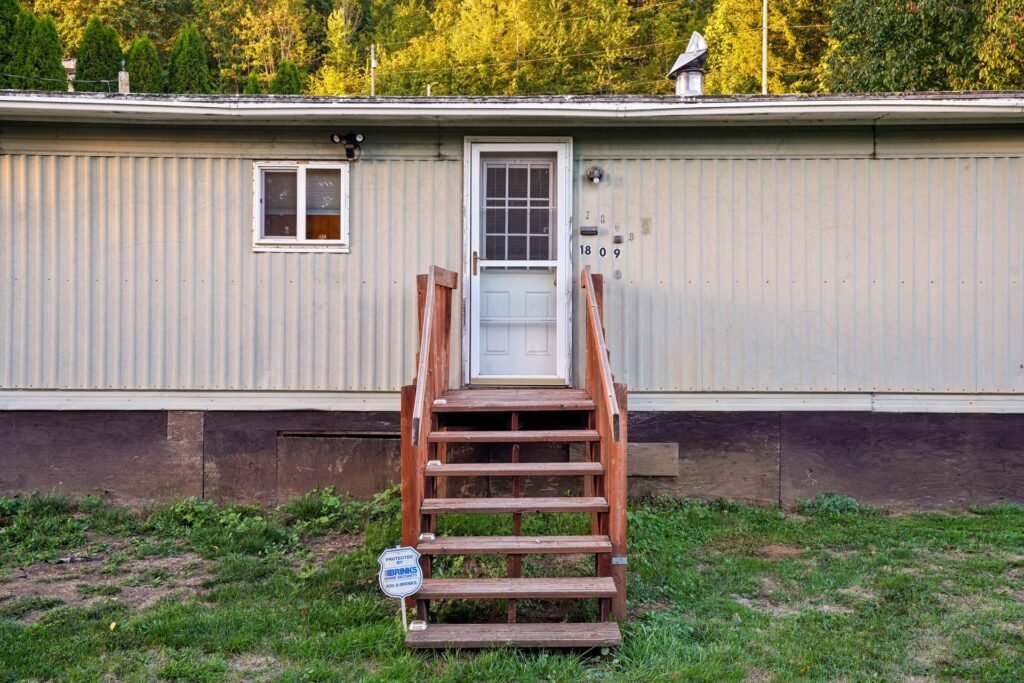
It has to be real estate, home and land together
The VA’s wording is that “the manufactured home and site must be considered a real estate entity in accordance with state law and meet all local zoning requirements for real estate.” In practice that means the home is titled or recorded with the land, not registered like a vehicle, and the buyer gets both in one deed. How a state converts a manufactured home title to real property varies, so the county recorder or the state titling agency is where to confirm it.
It has to sit on a permanent foundation
The handbook requires a permanent foundation “constructed to withstand both supporting loads and wind-overturning loads” that meets state and local requirements. What counts as permanent is set by those state and local codes, so a home on blocks and tie-downs may or may not pass. Many lenders also ask for an engineer’s letter certifying the foundation, which is a lender rule rather than a VA one.
It has to be built to the HUD Code
The VA requires a home “built to HUD Manufactured Home Construction and Safety Standards.” That federal code took effect on June 15, 1976, so a unit built before then, which is what the term mobile home technically describes, can’t qualify. Each section of a HUD Code home carries a metal certification label on the outside, and inside there is a paper data plate, often in a kitchen cabinet, a bedroom closet or near the electrical panel.
It has to be big enough
The floor area can’t be less than 400 square feet for a single-wide or 700 square feet for a double-wide. Most single-wides on the market clear that easily; the test catches small older park models and converted units.
| What the VA checks | What it says | What to look for before you offer |
|---|---|---|
| Real estate entity | Home and site are one real estate entity under state law and meet local zoning. | A deed that conveys home and land together, and a title that has been surrendered or converted under state law. |
| Permanent foundation | Built to carry supporting and wind-overturning loads, meets state and local rules. | Ask what the home sits on and whether it meets the state’s permanent foundation rules; a lender may want an engineer’s certification. |
| HUD Code | Built to HUD Manufactured Home Construction and Safety Standards. | A build date of June 15, 1976, or later, the red HUD label on each section and the data plate inside. |
| Size | At least 400 sq ft for a single-wide, 700 sq ft for a double-wide. | Square footage on the property record card matches the home. |
| Alterations | Appraisers are told to watch for missing HUD labels, additions and component replacements. | Additions, enclosed porches or a replaced roof system: ask whether they were permitted. |
Two VA programs, and only one is open in practice
Federal law gives the VA two separate ways to back a manufactured home, and the difference between them is the whole story for a rural buyer. Lenders also layer their own rules on top, which is why two VA lenders can give you two different answers about the same house.
Section 3710: the regular VA home loan
Covers a manufactured home, or a home plus its lot, “to which the home will be permanently affixed.” It is an ordinary VA mortgage: up to 30 years, no down payment on a qualifying home, no monthly mortgage insurance, and for borrowers with full entitlement no county loan limit since January 1, 2020.
Section 3712: homes that are not real estate
Written for homes on rented sites or titled as personal property. It caps the loan at 95% of the price, so 5% down, limits the VA guaranty to 40% of the loan or $20,000, whichever is less, and sets short terms: 20 years and 32 days for a single-wide. The VA has not guaranteed a new one since 1996.
Lender overlays: the third set of rules
Many VA lenders add their own requirements for manufactured homes: double-wides only, a minimum credit score, no homes that were moved from another site, an engineer’s foundation letter. These are not VA rules, so a no from one lender is not a no from the VA. Ask each lender for its manufactured home guidelines in writing.
The practical test is simple. If the seller can deliver a deed to the land with the home permanently attached, it’s a Section 3710 loan and most VA lenders can look at it. If the home sits on a lot you would rent, or comes with a vehicle-style title that can’t be converted, a VA mortgage is very unlikely, and the financing will be a chattel loan from a lender that specializes in manufactured homes.
Can you use a VA loan to buy land?
Not land on its own. The VA purchase loan exists to buy, build or improve a home the veteran will live in, and federal law has no purpose for raw land by itself. Land comes into a VA loan only together with a home, in one of these ways:
- Land and a manufactured home, in one loan. Section 3710 allows a loan “to purchase a manufactured home and a lot to which the home will be permanently affixed.” This is the path for most rural listings that already have a home set on the land.
- Land and a new home you build. A VA construction loan can cover building a home “on property that you already own or want to buy as part of the loan,” in the words of the VA Buyer’s Guide. Fewer lenders offer it, and the home has to be finished and meet VA standards.
- A lot for a manufactured home you already own. Section 3712 allows a loan to buy a lot for a home the veteran already owns, with a maximum term of 15 years and 32 days. It belongs to the same program the VA has not used for new loans since 1996, so don’t count on finding it.
- Land with no home at all. Not a VA loan. Land loans come from Farm Credit associations, local banks, credit unions and seller financing, usually with a larger down payment and a shorter term.
That last point is where many rural plans change shape. A buyer who wants to put a new manufactured home on bare acreage usually needs the land paid for first, or a lender willing to finance land, home and setup together as one VA construction-to-permanent loan, which only some lenders offer.
Where a VA manufactured home loan matters most
No federal series counts how many veterans live in manufactured homes state by state, and the VA doesn’t publish how many of its loans go to them. What the Census Bureau does publish, every year, is how many homes in each state are mobile or manufactured homes and how many adults are veterans. We put the two together for all 50 states from the 2024 American Community Survey, ranked each state on both, and ordered them by the average of the two ranks.
Nationally, 5.4% of homes are mobile or manufactured homes and 5.9% of civilian adults are veterans. The states at the top of the list are where both run well above that: more than one home in eight in South Carolina, New Mexico and West Virginia, with veteran shares from 7.3% to 8.1%.
Where manufactured homes and veterans overlap
The top 12 states: bar = share of homes that are mobile or manufactured
U.S. average: 5.4% of homes, 5.9% of adults are veterans. Source: U.S. Census Bureau, American Community Survey 2024 1-year estimates, tables B25024 and B21001. Ranking by American Home Opportunities.
The third column below is the Census median value of owner-occupied mobile homes, including the land when the owner also owns it. It is a rough guide to how cheap these homes run, and it is low: $55,400 in Alabama, $59,000 in West Virginia, $60,000 in Mississippi. Those are the price points where a VA loan’s no-down-payment terms help most, and where the foundation and title questions above decide whether the loan happens at all.
If one of the top states is on your list, our state guides cover land prices, taxes and the buying process: New Mexico, Alabama, West Virginia, Arizona, North Carolina, Arkansas and Tennessee.
| Rank | State | Homes that are mobile or manufactured | Adults who are veterans | Median value, owner-occupied mobile home |
|---|---|---|---|---|
| 1 | South Carolina | 12.8% | 8.1% | $79,100 |
| 2 | New Mexico | 15.0% | 7.5% | $99,500 |
| 3 | Wyoming | 11.3% | 8.1% | $58,200 |
| 4 | Montana | 9.6% | 8.4% | $86,000 |
| 5 | Alabama | 11.6% | 7.5% | $55,400 |
| 6 | West Virginia | 13.2% | 7.3% | $59,000 |
| 7 | Maine | 8.2% | 7.6% | $96,900 |
| 8 | Oklahoma | 8.0% | 7.5% | $79,800 |
| 9 | Arizona | 9.0% | 7.4% | $113,400 |
| 10 | North Carolina | 10.4% | 7.2% | $89,600 |
| 11 | South Dakota | 7.2% | 7.4% | $47,300 |
| 12 | Idaho | 6.5% | 7.4% | $133,700 |
| 13 | Virginia | 4.4% | 8.9% | $74,400 |
| 14 | Mississippi | 14.0% | 6.3% | $60,000 |
| 15 | Arkansas | 10.5% | 6.9% | $63,300 |
| 16 | Tennessee | 7.5% | 7.1% | $97,000 |
| 17 | Delaware | 7.3% | 7.2% | $87,900 |
| 18 | Alaska | 3.3% | 9.9% | $57,700 |
| 19 | Georgia | 7.4% | 7.0% | $66,300 |
| 20 | Florida | 7.8% | 7.0% | $104,700 |
| 21 | Louisiana | 12.2% | 6.0% | $65,400 |
| 22 | Washington | 5.3% | 7.3% | $197,800 |
| 23 | Kentucky | 10.3% | 6.2% | $62,400 |
| 24 | New Hampshire | 5.5% | 7.0% | $126,800 |
| 25 | Nevada | 5.2% | 7.2% | $142,500 |
| 26 | Oregon | 6.7% | 6.8% | $187,200 |
| 27 | North Dakota | 5.7% | 6.9% | $54,100 |
| 28 | Missouri | 5.0% | 7.0% | $59,500 |
| 29 | Hawaii | 0.3% | 7.6% | — |
| 30 | Texas | 6.2% | 6.0% | $85,000 |
| 31 | Colorado | 3.3% | 7.0% | $106,000 |
| 32 | Kansas | 4.0% | 6.6% | $43,300 |
| 33 | Vermont | 6.4% | 5.7% | $106,700 |
| 34 | Indiana | 4.2% | 5.9% | $43,700 |
| 35 | Ohio | 3.3% | 6.2% | $40,600 |
| 36 | Michigan | 5.0% | 5.4% | $46,700 |
| 37 | Iowa | 3.2% | 6.2% | $36,700 |
| 38 | Nebraska | 2.6% | 6.4% | $39,500 |
| 39 | Maryland | 1.4% | 6.8% | $65,700 |
| 40 | Pennsylvania | 3.4% | 5.8% | $56,100 |
| 41 | Wisconsin | 3.0% | 5.8% | $49,600 |
| 42 | California | 3.4% | 4.0% | $159,800 |
| 43 | Minnesota | 2.7% | 5.5% | $47,900 |
| 44 | Utah | 3.0% | 4.3% | $81,600 |
| 45 | Illinois | 2.2% | 4.5% | $41,900 |
| 46 | Rhode Island | 0.8% | 4.8% | $153,600 |
| 47 | New York | 2.1% | 3.5% | $66,800 |
| 48 | Connecticut | 0.7% | 4.4% | $76,400 |
| 49 | Massachusetts | 0.9% | 3.9% | $150,800 |
| 50 | New Jersey | 0.9% | 3.4% | $87,500 |
States in bold are above the U.S. average on both measures. The rank is the average of each state’s rank on the two shares. Census counts mobile and manufactured homes together in one housing category; the median value is the owner’s estimate and includes the lot when it is owned. Hawaii’s median is not published. Source: U.S. Census Bureau, ACS 2024 1-year, tables B25024, B21001 and B25083.
Wells, septic and the road: the rural checks
A rural manufactured home has to pass the same VA minimum property requirements as any house in the country, and three of them do most of the damage on country listings. The VA appraiser checks them, and anything that fails has to be fixed before closing or the loan doesn’t go through.
- The well gets tested by a third party. Water from a private well has to meet the local health authority’s standards, or EPA guidelines where the county has none, and the sample has to be collected and tested by a disinterested party, never the buyer or seller. Results are valid for 90 days.
- Unusual water sources need your signature. Dug wells, springs, cisterns, hauled water, rainwater catchment and chlorinators are not automatic disqualifiers, but the appraiser has to comment and the veteran has to acknowledge them in writing.
- The septic has to work. An individual sewage system must dispose of waste without creating a nuisance or a health risk. Health authority approval is required on proposed construction, when the appraiser notes a problem, or where the soil is known to percolate poorly.
- A private road needs paper. The home needs all-weather access from a public or private street. A private road must be protected by a permanent easement and maintained under a homeowners association or a joint maintenance agreement.

What it costs: the funding fee, the down payment and the limits
The VA charges a one-time funding fee on most loans, set as a percentage of the loan amount and usually rolled into it. The current rates apply to loans closed from April 7, 2023, through November 13, 2031.
| Down payment | First use | After first use |
|---|---|---|
| Less than 5% | 2.15% | 3.3% |
| 5% or more | 1.5% | 1.5% |
| 10% or more | 1.25% | 1.25% |
| Manufactured home not permanently affixed | 1% | 1% |
Two details matter for manufactured homes in particular. If you once used a VA loan only to buy a manufactured home, the VA still charges you the first-use rate. And the fee is waived entirely for veterans receiving compensation for a service-connected disability, surviving spouses receiving Dependency and Indemnity Compensation, and active-duty service members with a Purple Heart.
A worked example at the funding fee table’s rates
A $90,000 double-wide on 5 acres, bought with no money down
Illustration only. It excludes closing costs, taxes and insurance, and assumes the appraisal comes in at or above the price.
On limits: since January 1, 2020, veterans with full entitlement have no VA county loan limit. A veteran with a VA loan still open, and only part of the entitlement left, is held to the county limit for the guaranty. None of that is likely to bind on a rural manufactured home, where the real constraint is the property, not the amount.
Before you make an offer on a manufactured home
- Get your Certificate of Eligibility through VA.gov or a VA lender, so you know your entitlement.
- Ask the listing agent whether home and land are sold together on one deed, and whether the title has been surrendered or converted to real property under state law.
- Confirm the build date is June 15, 1976, or later, and that the HUD label and data plate are present.
- Ask what the home sits on, and whether there is an engineer’s foundation certification or what one would take.
- Call two or three VA lenders and ask each for its manufactured home rules in writing: single-wide, moved homes, credit score, foundation letter.
- Plan the water test and the septic check early: the well test has to be done by a third party and is good for 90 days.
- If the road is private, ask for the recorded easement and the road maintenance agreement before you sign.
If a lender says no, ask which rule it was. A VA requirement can’t be negotiated, but a lender overlay often can be avoided by trying another lender.
Common questions about VA loans for manufactured homes
Can you use a VA loan for a manufactured home?
Yes, when the manufactured home is permanently affixed to a foundation, built to the 1976 HUD Code, and classified as real estate together with its land under state law. The VA then treats it like any house: no down payment if the price is at or below appraised value, and no monthly mortgage insurance. Homes titled as personal property rarely qualify.
What are the VA loan manufactured home requirements?
The VA Lenders Handbook, Chapter 12, requires four things: home and site form one real estate entity under state law and local zoning, a permanent foundation built for supporting and wind loads, construction to HUD Manufactured Home Construction and Safety Standards, and at least 400 square feet for a single-wide or 700 for a double-wide.
Can you use a VA loan for a mobile home?
Not for a true mobile home built before June 15, 1976, when the HUD Code took effect, because the VA requires HUD Code construction. A newer manufactured home qualifies if it sits on a permanent foundation and counts as real estate with its land. A home on a rented lot generally doesn’t, since the VA stopped guaranteeing those loans in 1996.
Can I buy land and a mobile home with the same VA loan?
Yes, if it is a HUD Code manufactured home that will be permanently affixed to the land. Federal law, 38 U.S.C. 3710, allows a VA loan to purchase a manufactured home and the lot it sits on as one loan. The home must be classified as real estate under state law and pass VA minimum property requirements, including water, septic and access.
Can you use a VA loan to buy land only?
No. A VA purchase loan has to finance a home the veteran will live in, so raw land alone does not qualify. Land can be included when it comes with a manufactured home or a site-built home, or when a construction loan finances building a new home on it. Bare land is usually financed by Farm Credit, local banks or the seller.
Can you get a VA loan for a manufactured home on leased land?
In practice, almost never. A regular VA loan requires the home and its site to be one real estate entity under state law, which a rented lot usually rules out. Federal law has a separate program for homes on rented sites, Section 3712, but the Congressional Research Service reports the VA has not guaranteed a new one since 1996.
Can you use a VA loan for a single-wide?
The VA itself allows it. Its minimum is 400 square feet for a single-wide, plus the same foundation, HUD Code and real estate tests as any manufactured home. Many lenders add their own limits, though, and some accept only double-wides. If one lender refuses a single-wide, ask whether the reason is a VA rule or the lender’s own policy.
Where to look next
The VA loan is one way to pay for a cheap rural home. These cover the rest of the picture: why so many country homes sit unsold, and where the land itself is cheapest.
 Financing
Why cheap rural homes don’t sell
The lending rules, from foundations to private roads, that keep good country homes on the market for months.Read the guide → Land prices
The cheapest states to buy land
All 48 contiguous states ranked by what an acre of farmland and pasture actually costs.Read the guide →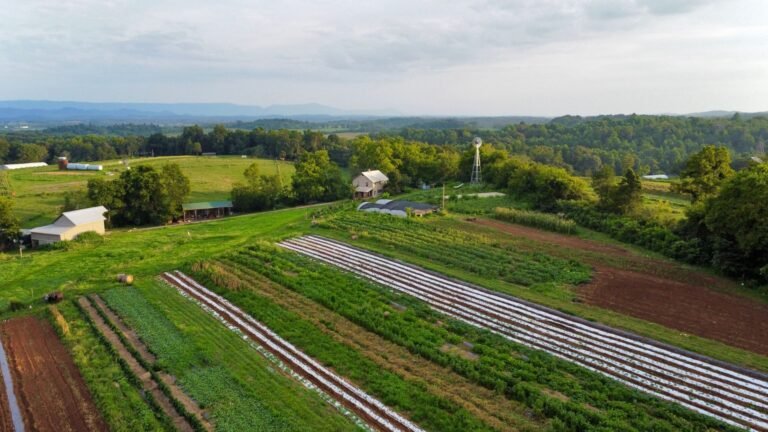 Homesteading
The best states to homestead
Land, taxes and growing season combined into one index for every state.Read the guide →For every state, our rural property guides go state by state, and the Rural Property Buyer’s Field Guide walks through the due diligence on any country home.
Get the next rural financing guide
We are working through the loans that cheap rural homes fall between: small mortgages, seller financing and land. Leave your email and you will get each guide, plus every data piece we publish, as it goes up.
Sources
- U.S. Department of Veterans Affairs, VA Pamphlet 26-7, Chapter 12, Minimum Property Requirements (effective after May 1, 2026): Topic 4, Access; Topic 16, Individual Water Supply; Topic 17, Individual Sewage Disposal; Topic 40, Manufactured Homes Classified as Real Estate.
- 38 U.S.C. § 3710 and § 3712; 38 CFR § 36.4301, § 36.4204 and § 36.4205.
- Congressional Research Service, VA Home Loan Programs, R42504, updated May 20, 2026: Section 3712 guaranties since 1996 and 2024 titling of manufactured homes, citing U.S. Census Bureau data.
- VA.gov, VA funding fee and loan closing costs, Purchase loan and VA home loan limits; VA Circular 26-19-30 on loan limits from January 1, 2020.
- VA, VA Home Loan Guaranty Buyer’s Guide.
- U.S. Census Bureau, American Community Survey 2024 1-year estimates, tables B25024 (units in structure), B21001 (veteran status) and B25083 (median value of mobile homes). State ranking and calculations by American Home Opportunities.
- U.S. Department of Housing and Urban Development, Office of Manufactured Housing Programs, for the HUD Code and its June 15, 1976, effective date.
Before you act on any of this
American Home Opportunities is a publisher. We are not a lender, mortgage broker, VA-approved lender, real estate broker or agent, appraiser, attorney, tax professional or financial advisor, and we are not affiliated with the Department of Veterans Affairs. Nothing on this page is legal, lending, tax, investment or financial advice, and we do not recommend lenders. The rules described here come from the public VA, federal and Census sources listed above as of October 2026.
VA rules, funding fees and lender guidelines change, and every lender applies its own requirements on top of the VA’s. Whether a specific manufactured home qualifies depends on its title, foundation, condition and site, and on your entitlement and credit. A rural property also raises questions no national rule settles: wells, septic, access and easements, surveys, zoning, flood zone, repairs, insurance and taxes. Before you commit money, confirm your eligibility and the property’s eligibility in writing with a VA-approved lender, read the official VA sources, and check title, zoning and health department requirements with the county.