Land Loans in California: Who Lends on Rural Land and What They Ask For
Land loans in California exist, but they are not mortgages, and the lender you choose matters more than the rate you see advertised. A California lender that writes land loans asks for at least 20 percent down on a 10-year term. Farm Credit will lend on bare and timbered land. A California veteran can buy a home or a working farm through the state’s own program. And a buyer who will actually farm can put 5 percent down through the USDA.
The reason land is financed differently is simple. A home loan can be sold to Fannie Mae or Freddie Mac. A loan on vacant land usually cannot, so the lender keeps it and prices the risk itself. That is why land loans in California are shorter, cost more and ask for more cash up front. This guide goes through who lends on rural land in the state, what each one asks for, and what a California lender will check before it says yes. For what the land itself is worth in each of the 58 counties, start with our guide to buying land in California.
Land loans in California: the numbers in short
Why a land loan in California is not a mortgage
Most home loans in the United States are written to the standards of Fannie Mae and Freddie Mac so the lender can sell them. Those standards are built around a house someone lives in. Bare land does not fit them, so a land loan stays on the lender’s own books for its whole life, and the lender charges for carrying that risk.
Three things follow. The term is shorter, often 10 years instead of 30. The rate is higher than a comparable home loan. And the down payment depends on how close the land is to being a homesite and how easily the lender could sell it after a default. In California a fourth thing matters as much as the other three: whether the property can be insured. A lender will not close on a house it cannot get insured, and in fire country that is often the step that takes longest.
Banks, credit unions and land lenders
A community bank or credit union in the county where you are buying is the most common place to start. These lenders keep land loans in their own portfolio, so their terms vary from one to the next. To give one published example, JVM Lending, a California lender, tells borrowers to plan on at least 20 percent down and a credit score of 680 or higher, on a 10-year fixed-rate loan with no prepayment penalty. Its land loans run from $50,000 to $500,000, on up to 20 acres.
The advantage of a local lender is local knowledge. A bank in the county seat knows which subdivisions never got water, which roads wash out in winter, and what land actually sells for. The disadvantage is reach: a small lender may not lend far outside its county. Ask two or three, and ask each one the same questions about term, rate, any balloon payment and the down payment.
Farm Credit in California
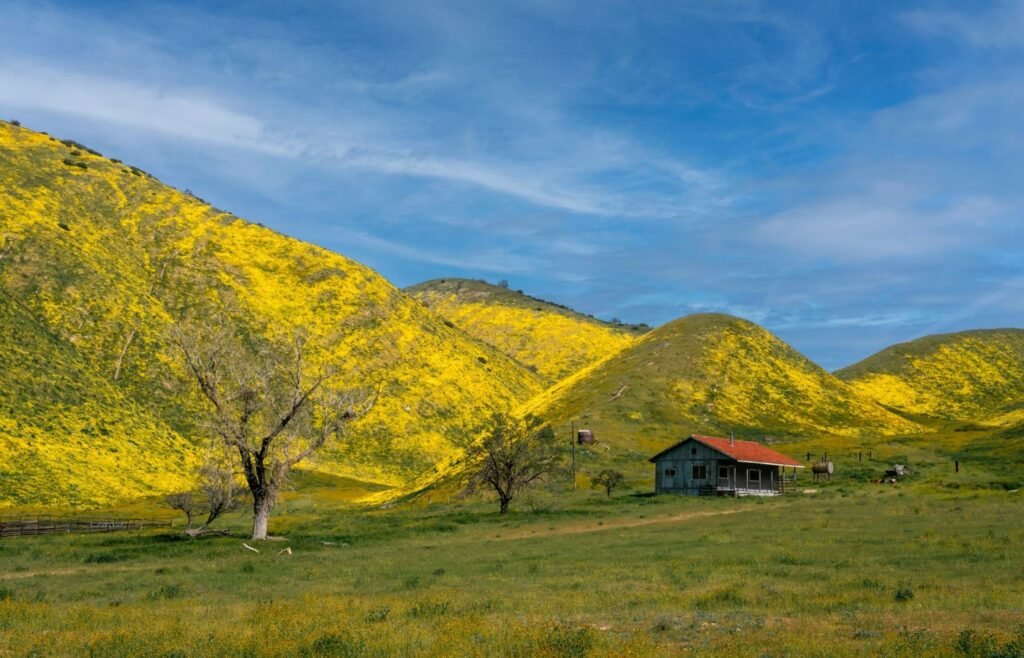
The Farm Credit System is a network of borrower-owned lending cooperatives created by Congress to finance agriculture and rural America. In California, associations such as American AgCredit and Farm Credit West lend on farms and ranches. American AgCredit, through its partnership with Rural 1st, also lends to rural buyers who do not farm, with four kinds of rural home loans: home loans, home lot loans, construction loans and land loans.
Two details make Farm Credit worth calling first on a rural purchase. Its lot loans finance bare land you plan to build on later, and power, a well and a septic system are not typically required before it lends. When you are ready, the lot loan can be switched into a construction loan with fewer fees. And its appraisers are used to rural property: large acreage, barns and shops, and custom, modular, log and manufactured homes. A lender that knows what a well log is will not be surprised by one.
CalVet: California’s own home loan for veterans
California is one of very few states that lends directly to its veterans. CalVet Home Loans, run by the California Department of Veterans Affairs, finances single-family homes, manufactured homes on land and working farms, and offers construction and rehabilitation loans. In 2026 the loan limit is $832,750 in most counties and higher in high-cost ones. Many borrowers combine it with the federal VA guaranty to buy with little or nothing down. CalVet keeps servicing its own loans for their whole life, and its package includes flood and earthquake coverage that most homeowners buy separately.
What CalVet does not do is finance a vacant lot to hold. Like the federal VA loan, it finances a home and the land under it. Eligibility and current rates change, and the program’s own site is the only place to confirm them, so check directly with CalVet before you plan around it.
Can you use a VA loan to buy land in California?
Not bare land on its own. A federal VA home loan finances a home, and it can include the lot the home sits on or a home you build, but it does not finance vacant land you plan to build on someday. In California, a veteran who wants acreage usually buys a property that already has a house, or pairs a land loan with a later construction loan.
USDA programs: what they do and do not cover in California
The USDA has two land-related lenders, and people mix them up. The Farm Service Agency lends to people who will farm or ranch. Its direct farm ownership loans go up to $600,000, at 6.250 percent from October 1, 2026, with terms up to 40 years. Its down payment program lets beginning farmers and ranchers buy with 5 percent down, with the agency financing up to 45 percent of the price at 2.250 percent. You need farming experience and a real operation; a weekend homestead does not count.
USDA Rural Development is the home loan side. Its direct and guaranteed programs finance a modest house in an eligible rural area, with the land under it, for households within the income limits, often with nothing down. They are not a way to buy vacant land to hold. One trap is worth naming: search for land loans in California and the first result is often USDA’s Rural Housing Site Loans. Those are for nonprofits and public agencies developing building sites for low-income housing, not for individual buyers.
Owner financing in California, and the rule that protects you
When no lender will touch a parcel, the seller often will. Seller financing is legal and common on rural California land, usually as a promissory note secured by a deed of trust, so you own the land from closing and the seller holds a lien, as a bank would. Terms are whatever you negotiate, often a short balloon on a longer payment schedule.
California gives the buyer a protection here that most states do not. Under Code of Civil Procedure section 580b, when a seller finances part of the purchase price with a deed of trust on the property sold, the seller cannot get a deficiency judgment against you if you default. The seller can take the land back, but cannot come after you for the rest. Two more rules are worth knowing:
- The seller financing disclosure. When an agent or another arranger of credit is involved in seller financing on a home of one to four units, Civil Code sections 2956 to 2967 require a written disclosure of the terms and risks, including any balloon payment.
- The land sale contract. Under a real property sales contract, Civil Code section 2985, the seller keeps title until you finish paying. You build equity in land you do not yet own, so treat it as the riskier form and insist on a title search and a recorded memorandum of the contract.
Whatever the form, have a California real estate attorney read the documents, buy a title policy, and confirm the seller does not owe a mortgage on the land. A seller who stops paying their own lender can lose the land while you are paying them.
What a California land lender will check
A land loan gets underwritten on the land as much as on you. Have these answers ready before you apply:
- A legal lot. A parcel split off without approval under the Subdivision Map Act may not get a building permit, and a lender will not lend on it. Ask the county for a certificate of compliance if there is any doubt.
- Insurance you can actually get. On any house, the lender wants proof of coverage before closing. In fire country that often means a FAIR Plan policy plus a difference in conditions policy. See our guide to the California FAIR Plan.
- Legal access. A recorded easement or frontage on a public road. A lender will not lend on a landlocked parcel, and a shared private road should come with a maintenance agreement.
- Water and septic. A permitted well with a recent flow and quality test, or a recorded water source, and a septic system the county has approved.
- An appraisal with real comparables. The fewer similar sales nearby, the more cautious the value and the bigger the down payment.
- Any Williamson Act contract. It lowers the tax but limits what you can build, and it follows the land to you.
California land a lender can say yes to
We check access, water and fire exposure before a California property reaches our list, because those are the things that sink a loan. Leave your email and get the next list first.
Common questions about land loans in California
Can you get a loan to buy land in California?
Yes. Community banks, credit unions, Farm Credit associations such as American AgCredit and specialist land lenders all finance rural land in California. Expect a shorter term and a higher rate than a home mortgage. One California land lender asks for at least 20 percent down and a 680 credit score, on a 10-year fixed-rate loan.
How much down payment do you need for land in California?
For bare land, plan on at least 20 percent down at a California land lender, and more on raw parcels with no road or utilities. A home with land can need much less: USDA Rural Development direct loans and CalVet often require nothing down, and the FSA down payment program lets beginning farmers buy with 5 percent.
Can you use a CalVet loan to buy land?
Not vacant land on its own. CalVet Home Loans finances single-family homes, manufactured homes on land and working farms for eligible California veterans, plus construction and rehabilitation loans. The 2026 loan limit is $832,750 in most counties. To buy bare acreage, a veteran usually needs a land loan from a bank or Farm Credit.
Can you use a VA loan to buy land in California?
Not bare land by itself. A federal VA home loan finances a home and the lot it sits on, or a home you build, but not vacant land held for later. Veterans in California who want acreage usually buy a property that already has a house, or use a land loan now and a construction loan later.
Does USDA finance land in California?
Only in specific cases. The USDA Farm Service Agency lends up to $600,000 to people who will farm, at 6.250 percent from October 1, 2026. USDA Rural Development finances a modest home with its land for income-eligible households. Neither finances vacant land to hold, and USDA’s Rural Housing Site Loans are for organizations, not individuals.
Is owner financing legal in California?
Yes. Seller financing is legal and common on rural California land, usually as a note secured by a deed of trust. Under Code of Civil Procedure section 580b, a seller who finances part of the price cannot get a deficiency judgment against the buyer after foreclosure. Have an attorney review the documents and buy a title policy.
How long are land loans in California?
Land loans in California are often 10-year fixed-rate loans, much shorter than a 30-year mortgage, and some carry a balloon payment. Farm Credit lenders offer longer terms on farms and rural homes, and USDA Farm Service Agency farm ownership loans can run up to 40 years. The term depends on the lender and the land.
Keep reading
- Buying land in California – what an acre is worth in all 58 counties, and the six checks only California asks of you.
- The California FAIR Plan – how to insure a rural home in fire country, which a lender will require before closing.
- The best places to homestead in Northern California – ten real properties, with the county numbers behind each one.
- The Rural Property Field Guide – our free walkthrough of the checks, in the order to run them.
Before you buy, the important part
American Home Opportunities is a publisher. We are not a lender, mortgage broker, real estate broker, agent, attorney or financial advisor, we do not arrange loans, and nothing here is legal, tax or financial advice. No lender paid to be mentioned on this page.
Loan terms come from JVM Lending (California land loans, updated July 2026), American AgCredit (rural home loans with Rural 1st), the USDA Farm Service Agency (rates effective October 1, 2026), USDA Rural Development and CalVet Home Loans’ 2026 program materials, and change often. Legal references are to California Code of Civil Procedure section 580b, Civil Code sections 2956 to 2967 and 2985, and the Subdivision Map Act. Rates, fees and eligibility depend on the lender, the property and your credit. Get written terms from at least two lenders, and have a California real estate attorney review any seller-financed contract before you sign. Page published October 2026.