
Buying Land in California: What an Acre Really Costs, Region by Region
Buying land in California, all 58 counties: the water line that sets the price, and the checks only California asks of you on fire insurance, defensible space, wells, legal lots and the Williamson Act.
Buying land in California gets cheap where the irrigation ends and the forest begins
If you are buying land in California, the statewide average will mislead you before you start. The 2022 Census of Agriculture counts every farm in the state and puts the average value of California farmland and its buildings at $13,131 an acre. The USDA’s 2026 survey puts farm real estate at $14,100. Both figures are real. Both are set by irrigated almonds, grapes, rice and citrus on the floor of the Central Valley, which is not where most people go looking for a homestead.
Climb out of the valley and the number falls by more than half. In the seven counties of the Far North, from Siskiyou down to Tehama, the census averages $5,187 an acre. The North Coast averages $5,871 and the Sierra foothills $6,184. On the eastern side of the Sierra, in Inyo and Mono counties, it is $1,379. Water is the line. Land that can be irrigated is priced as a farm. Land that cannot is priced as timber, grazing and a view. When you are buying land in California, decide first which side of that line you want to live on, because the cheap side pays for it in fire risk, distance and winter roads.
On the ten Northern California homes we covered, the census overstated the land
We checked the census against the ten properties in our Northern California homestead list, priced from $49,000 to $259,000. For each one we multiplied the acreage by its county’s census value and compared the result with the asking price. On average the ground alone came to 54 percent of the price. In Texas the same test gave 11 percent. In two cases in Covelo, in Mendocino County, the land on paper was worth more than the whole property, house included. One of them was 20 acres with a home for $114,000, or $5,700 an acre, under the county’s census average of $6,511 for bare farmland.
That is not a bargain hiding in plain sight. It is the census being the wrong yardstick. Mendocino’s average includes the vineyards of the Anderson Valley and the irrigated ground around Ukiah. A wooded hillside above Round Valley is a different market that happens to share a county line. In the California mountains, read the county average as a ceiling, not a floor. To judge a mountain parcel, compare it with recent sales of similar parcels nearby, not with the census.
Buying land in California: the numbers in short
California land prices by region: what an acre actually costs
We pulled all 58 California counties out of the 2022 census and checked the extraction against the census’s own state totals. The county farm counts add back to exactly 63,134, the published number. The census withholds the acreage for two small counties, Alpine and Del Norte, which is why their regions show one county fewer in the weighting. We grouped the counties into the nine regions buyers actually talk about, and weighted each region by land in farms, not by a plain average of counties.
| Region | Farmland value per acre USDA, 2022 census | Land in farms | Cheapest counties |
|---|---|---|---|
| Eastern Sierra Inyo, Mono, Alpine | $1,379 2 of 3 counties | 318,223 acres | Inyo $961 · Mono $3,138 · Alpine $4,950 |
| Shasta Cascade (Far North) Siskiyou to Tehama | $5,187 7 counties | 2,872,666 acres | Trinity $2,661 · Siskiyou $4,174 · Plumas $4,222 · Modoc $4,267 |
| North Coast Del Norte to Lake | $5,871 3 of 4 counties | 1,360,447 acres | Humboldt $4,578 · Mendocino $6,511 · Lake $7,833 |
| Sierra foothills (Gold Country) Sierra to Mariposa | $6,184 8 counties | 1,029,998 acres | Sierra $2,427 · Mariposa $4,306 · Tuolumne $4,337 · Calaveras $4,909 |
| Sacramento Valley Butte to Solano | $12,226 8 counties | 2,831,459 acres | Glenn $10,262 · Colusa $11,119 · Yuba $11,174 |
| Central Coast Monterey to Ventura | $14,189 5 counties | 3,726,544 acres | San Benito $5,362 · San Luis Obispo $12,118 |
| San Joaquin Valley San Joaquin to Kern | $14,803 8 counties | 9,076,368 acres | Kings $10,391 · Kern $10,539 · Madera $13,239 |
| Southern California Los Angeles to Imperial | $18,443 6 counties | 1,421,427 acres | Imperial $11,892 · Orange $15,003 |
| Bay Area and Wine Country Marin to Santa Cruz | $25,857 9 counties | 1,536,578 acres | Marin $7,636 · Contra Costa $9,199 |
| California statewide | $13,131 all 58 counties | 24,190,604 acres | Inyo, $961 |
County by county the gap is enormous, 64 to 1, from $961 in Inyo to $61,295 in Napa. Region by region it is still about five to one between the Far North and the Bay Area, wide enough that the region you pick decides your budget before the property does. Thirteen California counties average under $5,000 an acre. Every one of them is in the mountains, the far north or the high desert east of the Sierra. None is on the valley floor.
Marin, next door to San Francisco, is cheaper than Nevada County
The table hides two surprises, and both teach the same lesson. Marin County, across the Golden Gate Bridge from San Francisco, averages $7,636, less than Nevada County’s $8,650 in the Sierra foothills. West Marin’s farmland is dairy and beef ranch land. Much of it is zoned for agriculture in very large minimum parcels, and much of it is under permanent conservation easements. It cannot be split into homesites, so it is priced as grazing. In the Far North the outlier runs the other way. Shasta County, at $10,930, sits in a cheap region because Redding and the irrigated flats around Anderson pull it up. Take Shasta out and the rest of the Far North averages $4,552.
Where the cheapest land in California is, and the honest reason it is cheap
Inyo County is the cheapest in the state on paper, and the reason is that almost none of it is for sale. The county itself says that more than 98 percent of its land is owned and managed as public land. What farmland there is lies in the Owens Valley, in the rain shadow of the highest mountains in the lower 48, and it is priced as dry grazing. Mono County, to the north, is the same story at higher elevation. The census average is low, but the supply of private land is so thin that a buyer rarely gets to pay it.
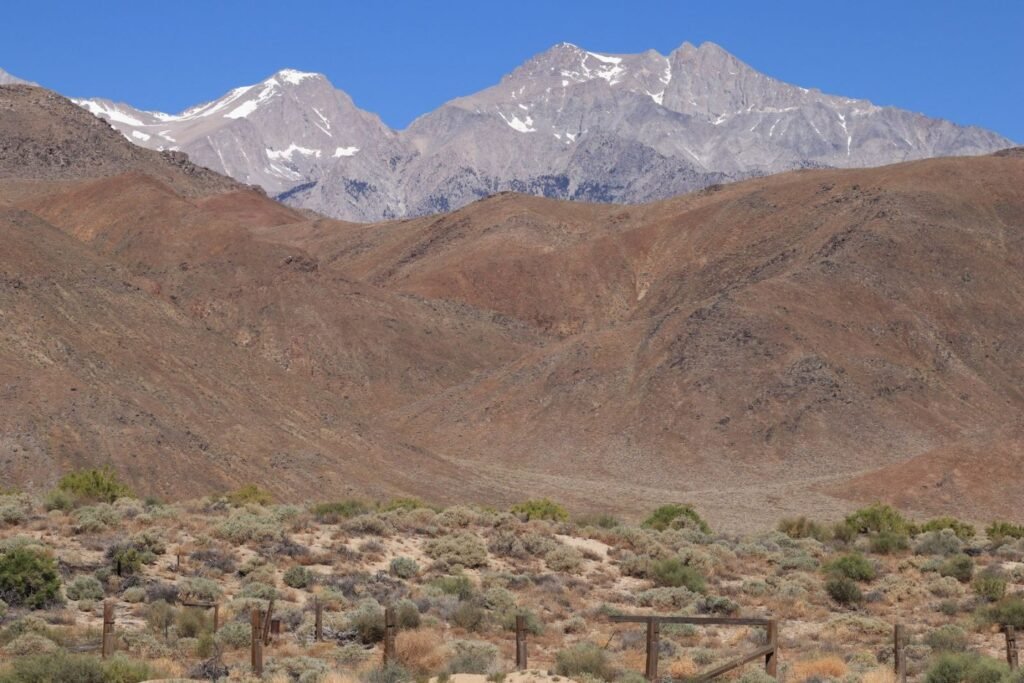
The cheap land a homesteader can actually buy is in the Far North and the mountains. Trinity County, at $2,661 an acre, is steep, forested and mostly national forest, with one small hospital, in Weaverville, and no freeway. Sierra County, at $2,427, has fewer than 3,500 residents and long, snowy winters. Siskiyou, Modoc, Lassen and Plumas are high plateau and ranch country where snow and distance set the price. The land is cheap because it does not grow much without water, because the nearest town with a supermarket can be an hour away, and because almost all of it sits inside the state’s fire hazard maps.
Northern California, where most of our California homes come from
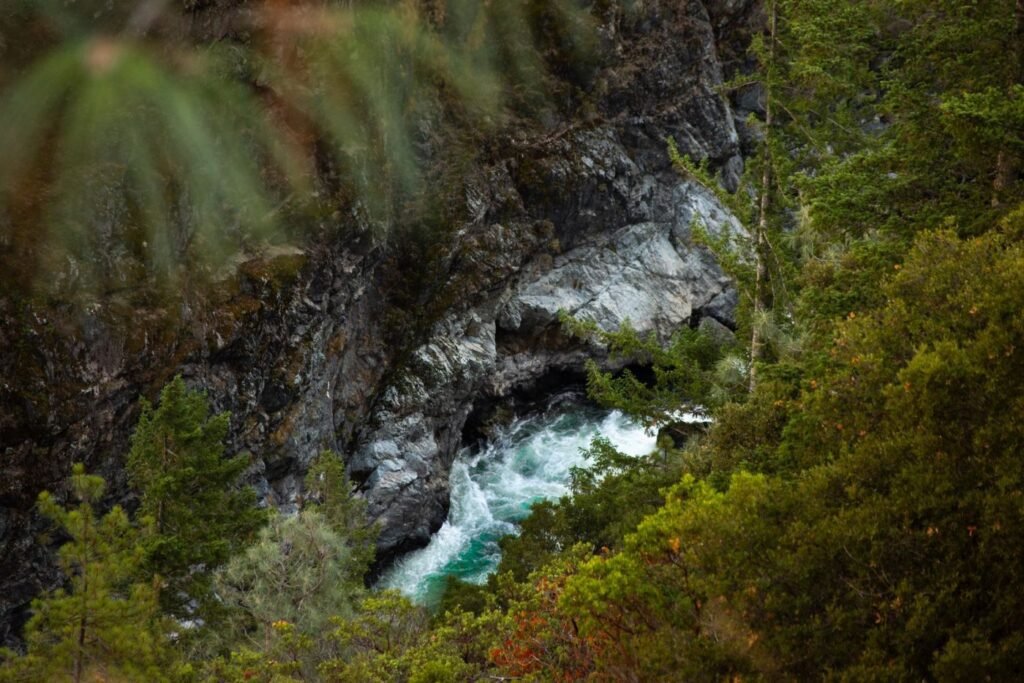
Mendocino, Trinity and Butte are where we keep finding homes under $260,000 with acreage. Mendocino has the most to choose from, with towns like Laytonville, Covelo and Potter Valley two to three hours north of the Bay Area. Trinity is cheaper and emptier. Butte’s mountain towns, Berry Creek and Magalia, sit above an expensive valley and were burned over in the 2018 and 2020 fires, which is part of why homes there are priced the way they are.
To see what that looks like in real listings, read our list of the best places to homestead in Northern California, with ten properties and what the land is worth under each one, and our list of cabins for sale in Northern California.
The counties at the top, and why
Napa is the most expensive farmland in California at $61,295 an acre, and it is vineyards, priced on what a ton of Cabernet sells for. San Francisco, at $48,425, has 127 acres of farmland in the whole county, so its figure is a curiosity. San Bernardino, at $47,339, has only about 37,000 acres of farmland left, most of it on the edge of the Inland Empire and priced as future development. Santa Cruz ($38,401) and San Diego ($36,053) are berries, nurseries and avocados on expensive coastal ground. If a rural listing in one of those counties looks cheap, find out why before you fall for it.
What to check before buying land in California
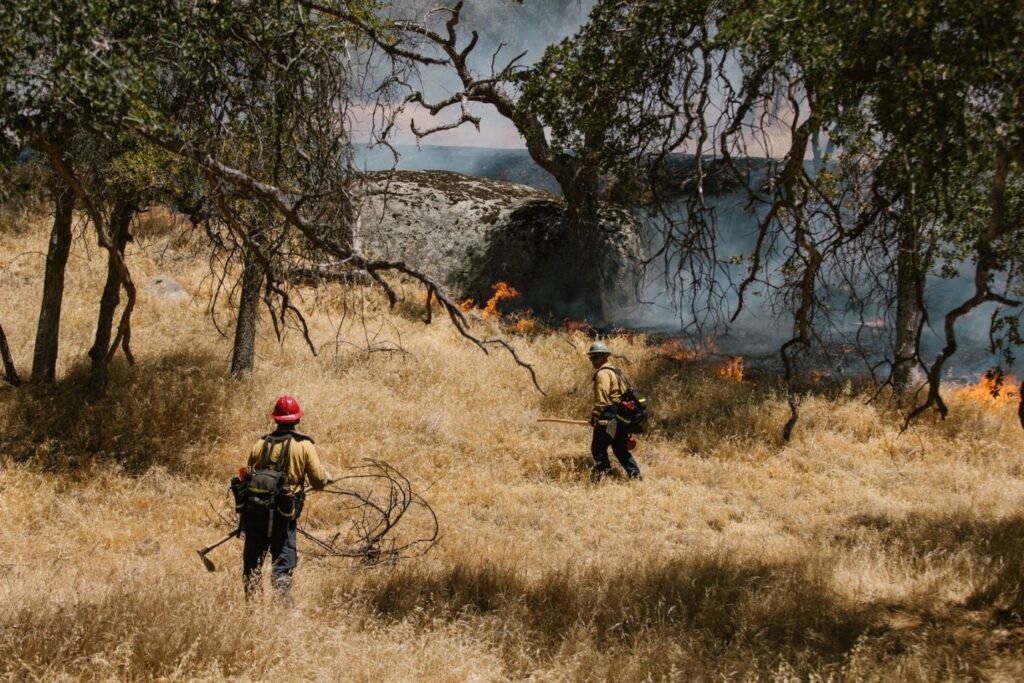
Six checks that are specific to California, in the order we would run them. The first one is the one out-of-state buyers skip, and it is the one that has changed the most in the last five years.
California is also stricter than most states in ways that protect you and cost you at the same time. The state building code applies everywhere, including the remotest county. The fire rules are written into the sale itself. And a parcel that looks like a lot on a map may not legally be one. That makes the checks below worth doing before you make an offer, not after.
1. Get an insurance quote before you make an offer, not after
2. Defensible space is part of the sale, and Zone 0 is coming
3. The water: well, spring or creek, and the paperwork behind each
4. Every county enforces the building code, and many rural houses grew without permits
5. Make sure the parcel is a legal lot, and find out if it is under a Williamson Act contract
6. Legal access, the road and the power, the three that sink cheap mountain parcels
We run the fire, water and access checks before a California home makes our list
Every California property we feature is checked against its county census value, its fire zone, its water source and its road before it reaches the channel. Leave your email and you get the next list with that work already done.
What it costs to own rural land in California
California’s property tax works differently from almost every other state’s, and it helps to understand it before you look at any figure. Under Proposition 13, the base tax is 1 percent of the assessed value, plus whatever local bonds the voters have approved. The assessed value is set at the price you pay when you buy, and after that it can rise by no more than 2 percent a year until the property changes hands again. The Tax Foundation puts California’s effective property tax rate at 0.70 percent, which looks low. It is low because millions of owners are still taxed on what they paid decades ago. As a new buyer, you start at the full rate on today’s price.
Two more costs catch new owners. Soon after you close, the county sends a supplemental tax bill for the difference between the old assessment and your purchase price, for the rest of the tax year. It comes on top of the regular bill the seller may already have paid. And many rural areas add fixed charges to the bill, such as fire district or county service area fees, that are not part of the percentage. Ask the county tax collector for last year’s full bill on the parcel.
The arithmetic, with a real rural tax rate
Take Covelo, in Round Valley, where we have covered two properties. Mendocino County’s 2025 rate for that tax rate area is 1.104 percent. That is the 1 percent general levy, 0.085 percent for the Round Valley Unified School District bond and 0.019 percent for the Mendocino-Lake Community College bond. Now buy a $150,000 home on 10 acres there.
If the home is your principal residence, the homeowners’ exemption takes $7,000 off the assessed value, worth about $77 a year at that rate. Land under a Williamson Act contract is assessed on what it can produce instead, which on grazing land can cut the bill sharply. Then there is the insurance. On a rural home in a high fire zone it can be the largest yearly cost of ownership after the mortgage, larger than the tax. Get the quote before you settle on a budget.
Closing, broadband and hospitals
California land closes through escrow, with a neutral escrow company holding the money and the documents, and a deed of trust securing any loan. The seller must give you a Natural Hazard Disclosure statement, which tells you whether the parcel sits in a fire hazard severity zone, a flood zone or an earthquake fault zone. Read it the day you get it. Who pays the transfer tax and the title policy is negotiable and follows local custom, which differs between counties. If you are a California veteran, the state’s own CalVet program lends on rural homes, and our guide to land loans in California covers it with the other lenders.
Rural internet is being built out now. On July 21, 2026, federal regulators approved California’s plan to spend $1.42 billion connecting 270,571 locations, 52.9 percent of them with fiber, 27 percent with low-orbit satellite and the rest with fixed wireless. Maternity care is moving the other way: nearly 60 California hospitals have closed their labor and delivery units since 2012. Before you buy, look up the nearest emergency room and the nearest hospital that still delivers babies, and drive the route, in winter if you can.
Why the price per acre on a listing site is not the price of land
Search for California land and you will see an average asking price per acre far above anything on this page. When we checked LandSearch in October 2026, it showed $36,872 an acre across 17,079 California listings, 2.6 times the USDA’s 2026 figure for farm real estate. Both numbers are honest. They are measuring different things.
A listing site averages whatever is for sale, and most of what is for sale in California is small: a lot near a town, priced per acre as a homesite. The census and the USDA survey measure working farms and ranches, which trade in hundreds of acres. The smaller the tract, the higher the price per acre, every time. Use the census to compare counties and to see which way a region leans. To judge a particular parcel, use recent sales of similar parcels nearby, which a local agent or an appraiser can pull for you.
Cheap land and homes we have covered in California
Every California list we have published, with the properties, the prices when we covered them, and what we found when we checked each one. The asking prices are a snapshot, not a quote.
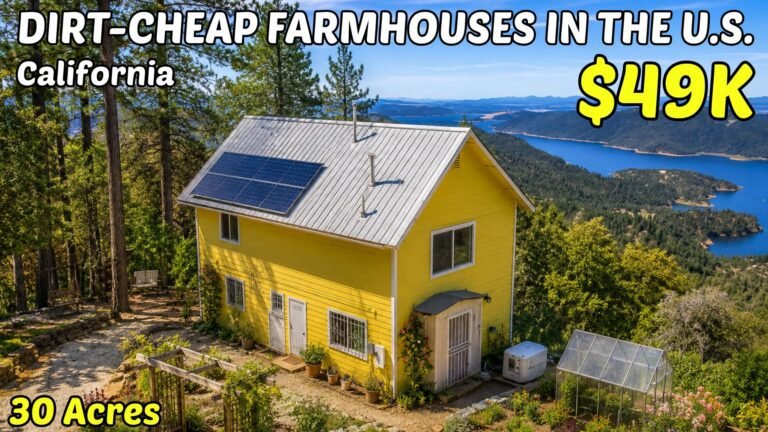
California guides
The two questions that decide most California purchases: how you insure a rural home in fire country, and how you finance land the banks do not like to lend on.
Keep exploring before you settle on California
California is the most expensive state we cover and the one where the cheap places come with the most conditions. These are worth reading while you are still comparing it with the rest of the map.
- The best places to homestead in Northern California – ten real properties in Mendocino, Trinity and Butte, with the county numbers behind each one.
- The cheapest states to buy land in America – where California sits against the rest, measured with the same federal survey.
- The best states to homestead – land, tax and rain scored together, and what California’s high land prices do to its ranking.
- Barndominium insurance – if you plan to build a metal home in fire country, how insurers look at it.
- Rural property guides, the Rural Property Field Guide and how the AHO Score works – every guide we publish, the checks we run, and how a property earns a place on our lists.
Get the next batch of California listings first
Good rural homes under $260,000 are hard to find in California, and they do not last. We find them in the North Coast, the Far North and the Sierra foothills. Leave your details and the next California list reaches you before it goes public.
Common questions about buying land in California
How much is an acre of land in California?
California farmland and farm buildings averaged $13,131 an acre in the 2022 USDA Census of Agriculture, and farm real estate averaged $14,100 in the USDA’s 2026 survey. The range is huge: $961 an acre in Inyo County up to $61,295 in Napa. The Far North averages $5,187, the San Joaquin Valley $14,803 and the Bay Area $25,857.
Where is the cheapest land in California?
The cheapest land in California is in the mountains and the far north. In the 2022 USDA census, Inyo ($961), Sierra ($2,427), Trinity ($2,661), Mono ($3,138) and Siskiyou ($4,174) are the five cheapest counties. Inyo is more than 98 percent public land, so for a homestead, Trinity, Siskiyou and the Sierra foothills offer more to buy.
How much does California property tax increase each year?
Under Proposition 13, the assessed value of California property can rise by no more than 2 percent a year while you own it. The tax is 1 percent of that value plus local voter-approved bonds, about 1.1 percent in many rural areas. A sale resets the value to the new purchase price, and the buyer gets a supplemental bill.
Can you build a house on agricultural land in California?
Usually, yes. Most California counties allow one single-family home on a legal parcel zoned for agriculture, with a building permit and a septic permit. Check two things first: that the parcel was legally created under the Subdivision Map Act, and whether it is under a Williamson Act contract, which limits building to uses compatible with farming or ranching.
Can you legally live off grid in California?
Yes. California does not require a home to connect to the power grid, and many rural homes run on solar and batteries. An off-grid home still needs a building permit under the state building code, an approved water source such as a permitted well, and a permitted septic system. Counties set the details, so ask the planning department before buying.
Can you live in an RV on your own land in California?
Usually only for a limited time. Most California counties allow living in an RV on your own land temporarily, typically while a permitted house is being built, and some allow a set number of days a year. Living in one full time generally means meeting the rules for a dwelling, including approved water and sewage. Rules vary by county.
Can you get fire insurance on rural land in California?
Yes, but often not from a private insurer. In many high fire risk areas the fallback is the California FAIR Plan, which held 696,562 policies in June 2026 and covers fire up to $3 million on a dwelling. It does not cover theft, water damage or liability, so most owners add a separate difference in conditions policy.
Before you buy, the important part
American Home Opportunities is a publisher. We are not a real estate broker, agent, lender, appraiser, insurance agent, attorney or financial advisor, and nothing on this page is legal, tax, insurance or financial advice.
County farmland values come from the USDA Census of Agriculture 2022, Table 8, and measure farmland and the buildings on working farms rather than asking prices for small parcels; the nine regions are our own grouping of all 58 counties, weighted by land in farms, with Alpine and Del Norte left out of the weighting because the census withholds their acreage. The 2026 farm real estate figures come from the USDA NASS Land Values 2026 Summary. The effective property tax rate comes from the Tax Foundation, and the example rate from the Mendocino County Auditor-Controller for 2025. FAIR Plan figures come from the California FAIR Plan’s published statistics through June 2026 and the California Department of Insurance’s approval of the October 2026 rate change. Inyo County land ownership comes from Inyo County’s federal legislative platform.
Legal references are to Article XIII A of the California Constitution, Revenue and Taxation Code 11911, Public Resources Code 4291, Civil Code 845, 1102.19 and 1103, the Board of Forestry’s Zone 0 emergency regulation adopted August 19, 2026, the Sustainable Groundwater Management Act, the Subdivision Map Act, the California Land Conservation Act of 1965 (the Williamson Act, with figures from the Department of Conservation), Chapter 7A of the California Building Code and the State Water Board’s OWTS Policy. Broadband figures come from the approval of California’s BEAD plan on July 21, 2026, and the maternity ward figure from CalMatters, July 2025. Listing-site prices come from LandSearch, October 2026.
Any price we quote for a property is an asking price at the time of writing, not a sale price. Rural land carries risks this page can introduce but not resolve for your parcel, including fire exposure and insurability, water and wells, septic suitability, legal lot status, legal access, surveys, easements, title, flood exposure, repairs, insurance and financing. Verify everything with the county, the insurer, the water agencies and licensed professionals before you commit money. Page published October 2026.