
Moving to Texas: What Rural Living Really Costs
Moving to Texas usually gets sold in three words: no income tax. That part is true, and it is about half the story. The other half is a property tax bill and a home insurance bill that both run well above the national middle. This guide puts real numbers on the cost of rural living in Texas, shows where the savings actually are, and lists what to do in your first 30 days.
Moving to Texas: the numbers in short
What moving to Texas really costs
The cleanest way to compare the cost of living in Texas with where you live now is the federal government’s regional price parities, which measure what the same basket of goods and housing costs in each place. Texas as a whole comes in at 97.1 against a national 100. That is barely a discount, and it surprises people who expected a bargain. The bargain exists, but only once you leave the big metro areas.
Almost all of that gap is housing. Everyday prices in rural Texas are close to national levels: utilities on the state index sit at 100.6, and groceries at 96.0. Two more costs do not follow the discount at all. Home insurance is priced on its own market, and a rural move usually means two vehicles and longer drives.
Housing and land: what moving to rural Texas buys you
The typical Texas home sold for $333,611 in August 2026, according to Redfin, about 1.3 percent less than a year earlier, and it took 68 days to find a buyer. That is a statewide number pulled up by the suburbs of Dallas, Houston and Austin. A slow market also favors the person moving in: our list of homes with land for sale in Texas explains why specific rural houses have sat, and who each one is really for.
Land follows the rain. The USDA census puts Texas farmland at $2,499 an acre on average, but the 83 counties west of the 100th meridian average $1,417 while the counties east of the 98th average $4,408. The cheap half asks for its savings back in wells, hauled water and distance. Our guide to buying land in Texas has the full breakdown and the checks only Texas asks of you, including a county that will not inspect your house.
Taxes after moving to Texas: the no-income-tax trade
Texas has no state income tax, and its constitution prohibits one. Wages, pensions, IRA withdrawals and Social Security owe nothing to the state, and there is no estate or inheritance tax. For someone still earning, or drawing a sizable pension, that is real money every year. For a retiree living mainly on Social Security it may be close to nothing, because most states already leave those benefits alone.
The state collects elsewhere. Sales tax is 6.25 percent, up to 8.25 percent with local taxes, though most groceries and medications are exempt. And the property tax is among the highest in the country: the Tax Foundation puts the effective rate on owner-occupied homes at 1.40 percent. Here is what that means on the same house in different states.
The exemption that matters most on a cheap rural house
That statewide average hides good news for modest homes. School taxes are usually the largest line on a Texas bill, and since the 2025 changes every school district must exempt $140,000 of a home’s value if it is your main residence. Owners 65 or older, or disabled, get another $60,000. In plain terms, a 65-year-old living in a home appraised at $200,000 or less owes no school tax on it, and a younger owner of a $140,000 home owes none either. County, city and special district taxes still apply.
Owners 65 or older also get a ceiling: school taxes stop rising above the amount paid in the first year they qualify, unless they make significant improvements, and the percentage of savings can transfer to a new home within Texas, though not from another state. None of this applies to a second home or to vacant land, so it only starts once you actually live there. If the parcel is being taxed on agricultural use, read our guide to the agricultural exemption in Texas before you close: the new owner has to apply again.
The word homestead means two things in Texas
Newcomers looking up homesteading in Texas quickly find that most results are about taxes and creditors, not chickens. Besides the tax exemption above, the Texas homestead is a legal protection. Under Property Code section 41.002, a rural homestead can cover up to 200 acres for a family or 100 acres for a single adult, against 10 acres in a city, and it shields your home from most creditors. It is worth asking a Texas attorney how it applies to you.
Home insurance: the bill newcomers do not budget for
The Texas Department of Insurance puts the average homeowners premium at a preliminary $3,489 for 2025, up from $2,795 in 2023 and $3,291 in 2024. Average rate increases ran 21.1 percent in 2023 and 18.7 percent in 2024 before slowing to 4.3 percent in 2025, and wind and hail have made up 62 percent of homeowners losses since 2019. Insurify ranked Texas fourth highest among the states at the end of 2025. Get a real quote on the exact address before you make an offer, because two houses a few miles apart can differ widely.
Read the deductible as closely as the premium. In most of Texas, wind and hail claims carry a separate deductible set as a percentage of the insured value, and industry sources describe 2 percent as the common standard: on a $300,000 policy, that is the first $6,000 of every hail claim. On the coast, the private policy may leave out wind and hail altogether. The Texas Windstorm Insurance Association is the insurer of last resort for 14 coastal counties and parts of Harris County, and your lender will likely require that coverage if you have a mortgage.
Where to live in rural Texas: five different states in one
East Texas and the Piney Woods are the green end of the state, with tall timber, lakes and rain: Beaumont gets more than 55 inches a year. Longview and Tyler sit well below the state average, at 89.5 and 92.2 on the price index, and farmland averages about $4,400 an acre. Summers are humid. Our best counties in East Texas for homesteading goes county by county.
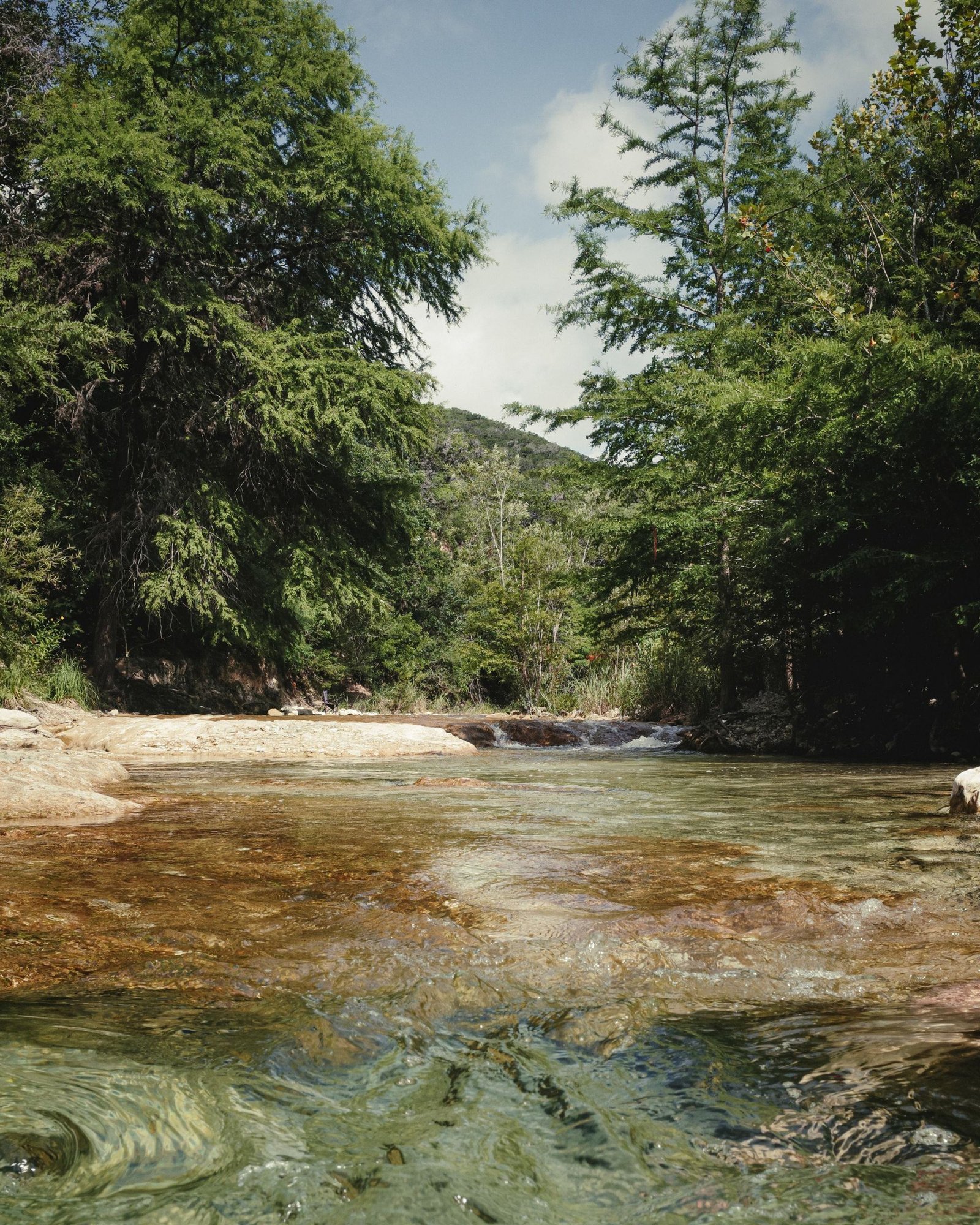
The Hill Country and the I-35 belt are the most wanted. Rivers, limestone hills and an easy drive to Austin or San Antonio have pushed prices up, especially close to the cities. Farther out, the transition counties between the 98th and 100th meridians average about $2,600 an acre, and water becomes the first question to ask.
The Gulf Coast offers mild winters and fishing, along with hurricanes, flood maps and the windstorm market described above. Price the insurance before you price the house.
The Rolling Plains and the Panhandle are big-sky ranch and cotton country around Abilene, Lubbock and Amarillo, where the index runs from 90.4 to 91.8 and land is about $1,400 an acre. Expect wind, hail and real winters.
Far West Texas has the cheapest ground and the widest views, under 10 inches of rain at the far end, and the longest drives. It rewards people who have already lived with hauled water or a deep well, and who know how far they are from a hospital.
Hospitals and health coverage in rural Texas
This is the check most relocation guides skip. Of the 254 Texas counties, 177 are rural, and 64 have no hospital at all, according to the State Office of Rural Health; the Texas Comptroller counted 71 rural counties without one in 2022. The state also has 93 critical access hospitals, small rural hospitals that stabilize and transfer serious cases. A study published in JAMA Network Open in 2026 tied 14 rural Texas hospital closures to about 12 additional deaths a year per 100,000 residents from time-sensitive conditions in the affected counties. Find the nearest emergency room and the nearest hospital that admits patients before you fall for a property, and drive the route.
Coverage matters too if you are moving before 65. Texas has the highest uninsured rate in the country, 21.6 percent of adults in 2024 against 11.3 percent nationally, and it has not expanded Medicaid, so an early retiree or self-employed buyer should price a marketplace plan first. If you are on Medicare, check that your plan’s network actually reaches the county you are moving to.
The pros and cons of moving to Texas
What works
No state income tax, housing about 38% below the national level outside the metros, land from about $1,400 an acre in the west, school tax exemptions that wipe out that line on many modest homes, a rural homestead protected up to 200 acres, and a market where sellers are waiting 68 days for a buyer.
What to weigh
Property tax among the highest in the country, home insurance that averages about $3,489 and carries percentage deductibles, at least 64 counties with no hospital, the country’s highest uninsured rate, long hot summers, and a cheap western half where water and distance are the real price.
The honest summary: moving to Texas pays best if you still have income to shelter, or if you buy a modest home in a nonmetro county and live in it. A retiree on Social Security buying a $400,000 suburban house may find the math goes the other way. Run your own numbers with a real tax estimate and a real insurance quote before you pack.
Your first 30 days after moving to Texas
- Get Texas auto insurance first, with at least $30,000 per injured person, $60,000 per accident and $25,000 for property damage. You need proof of it to register.
- Register your vehicle within 30 days at the county tax office, with Form 130-U and your out-of-state title or registration, as the Texas DMV explains here. Expect a $90 new resident tax and a state base fee of $51.75, plus county fees. Residents of 18 urban counties also need an emissions test first.
- Get your Texas driver license within 90 days at a Department of Public Safety office.
- File the homestead exemption, Form 50-114, with the county appraisal district once the home is your main residence. The general deadline is before May 1, and it is free to file.
- Ask the appraisal district about any agricultural valuation on the land, and apply again in your own name if you intend to keep it.
- Read your wind and hail deductible and photograph the roof and outbuildings, so you have a dated record before the next storm season.
- Find your nearest emergency room and full-service hospital, and drive the route once in daylight.
See the next Texas homes with land before you move
We publish new Texas listings as we find them, with the county numbers already checked. Tell us your budget and timeline, and the next list reaches you first.
Keep reading
- How to buy land in Texas – what an acre costs, east to west, and the checks only Texas asks of you.
- Agricultural exemption in Texas – how the 1-d-1 valuation works and what a new owner must file.
- Land loans in Texas – who finances raw land, and how much you need down.
- Homes with land for sale in Texas – ten real listings, and why each one is still available.
- All our rural property guides – state by state.
Common questions about moving to Texas
Is it cheaper to live in Texas?
Yes, modestly, and mostly outside the cities. Federal price parities put Texas at 97.1 against a US average of 100 in 2024, and at 87.8 outside its metro areas. Housing costs in those nonmetro counties run about 38 percent below the national level, while Dallas-Fort Worth, at 103.1, costs more than the average.
What is the downside to living in Texas?
For a rural buyer the main downsides are costs and distance. Texas homeowners pay about 1.40 percent a year in property tax, home insurance averaged about $3,489 in 2025, and at least 64 of the 254 counties have no hospital. Summer heat, hail and hurricanes on the coast also shape what a Texas house costs to own.
Is Texas a good place to retire?
It can be, especially on a modest home. Texas has no income tax, and owners 65 or older get a $200,000 school tax exemption plus a ceiling on school taxes. Weigh that against home insurance that averaged about $3,489 in 2025, and against long drives to a hospital in much of rural Texas.
Does Texas tax Social Security or pensions?
No. Texas has no state income tax, and its constitution prohibits one, so Social Security, pensions and IRA withdrawals owe nothing to the state. Federal tax may still apply. If you already live in a state that exempts Social Security, a retiree on benefits alone saves little by moving to Texas for that reason.
How long do you have to get a Texas driver’s license after moving?
New residents have 90 days after moving to Texas to get a Texas driver license from the Department of Public Safety. The vehicle deadline is shorter: 30 days to register at the county tax office, with proof of insurance of at least $30,000, $60,000 and $25,000, plus a $90 new resident tax on the vehicle.
How does the Texas homestead exemption work for new residents?
Once a Texas home is your main residence, file Form 50-114 with the county appraisal district, generally before May 1. School districts must exempt $140,000 of its value, plus $60,000 more if you are 65 or older or disabled. A home bought after January 1 may qualify for the rest of that tax year.
How much is home insurance in Texas?
The Texas Department of Insurance puts the average homeowners premium at a preliminary $3,489 for 2025, up from $2,795 in 2023 and $3,291 in 2024. Insurify ranked Texas fourth highest among the states at the end of 2025. Wind and hail deductibles are usually a percentage of the insured value, often 2 percent.
Sources and the important part
Price levels: US Bureau of Economic Analysis, regional price parities 2024 (via FRED); MERIC cost of living data series, Q2 2026. Home prices: Redfin, Texas, August 2026. Property tax: Tax Foundation; exemptions: Texas Comptroller, Tax Code section 11.13, Form 50-114. Tax ceiling: Hereford ISD and Bexar Appraisal District summaries of Texas law. Income, sales and estate taxes: AARP Texas tax guide, March 2026. Insurance: Texas Department of Insurance market overview, 2025 preliminary; Insurify, via Community Impact, April 2026; wind and hail deductible practice: industry sources, not an agency figure; TWIA: Texas Department of Insurance. New residents: Texas Department of Motor Vehicles. Rural counties and hospitals: State Office of Rural Health, Texas Department of Agriculture, undated infographic; Texas Comptroller, October 2022; Rural Health Information Hub, August 2026; closures study: JAMA Network Open, 2026. Medicaid expansion status: KFF, October 2026. Uninsured rate: US Census Bureau American Community Survey 2024, via Texans Care for Children. Homestead acreage: Texas Property Code section 41.002. Land values and rainfall: USDA Census of Agriculture 2022; Texas Water Development Board.
American Home Opportunities is a publisher. We are not a real estate broker, agent, lender, appraiser, attorney, insurance, tax or financial advisor, and nothing on this page is legal, tax, insurance or financial advice. Rural property involves wells, septic systems, access, surveys, easements, mineral rights, repairs, insurance and financing that are specific to each parcel. Rules and amounts change every year: verify everything with the county appraisal district, the relevant state agency and licensed professionals before you move or buy.